GE
RFQ Ready
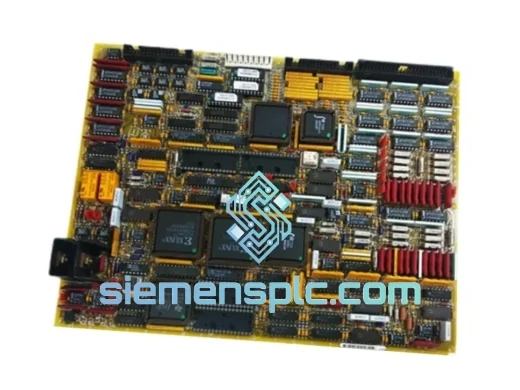
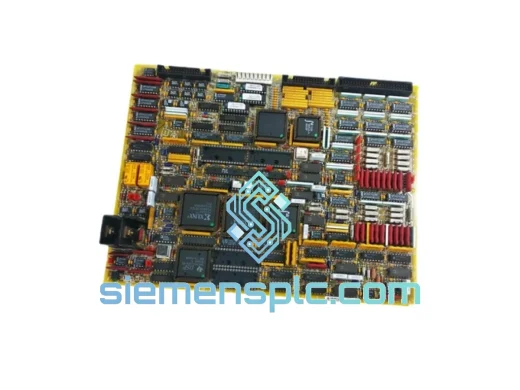
GE DS200TCQCG1BKG Turbine Control Module – Mark V Series
Mark V
Origin US
Turbine Control Module
Request verified availability, condition, replacement risk review, packing options and courier lead time for DS200TBQDG1ACC.
Click Request Quote and the part number is inserted into the inquiry form automatically.
Core fields for model confirmation and RFQ routing. Detailed product narrative remains below.
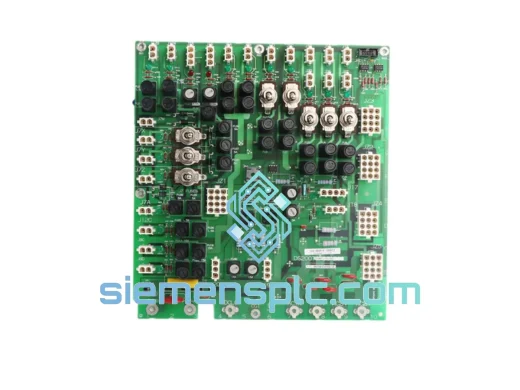
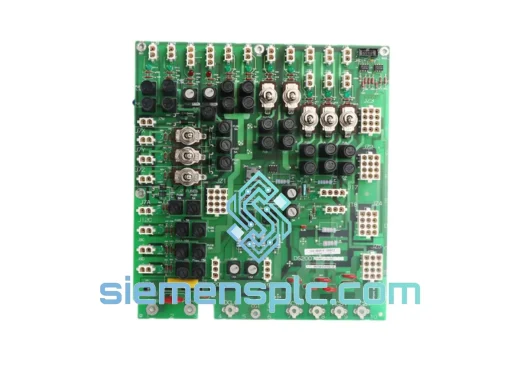
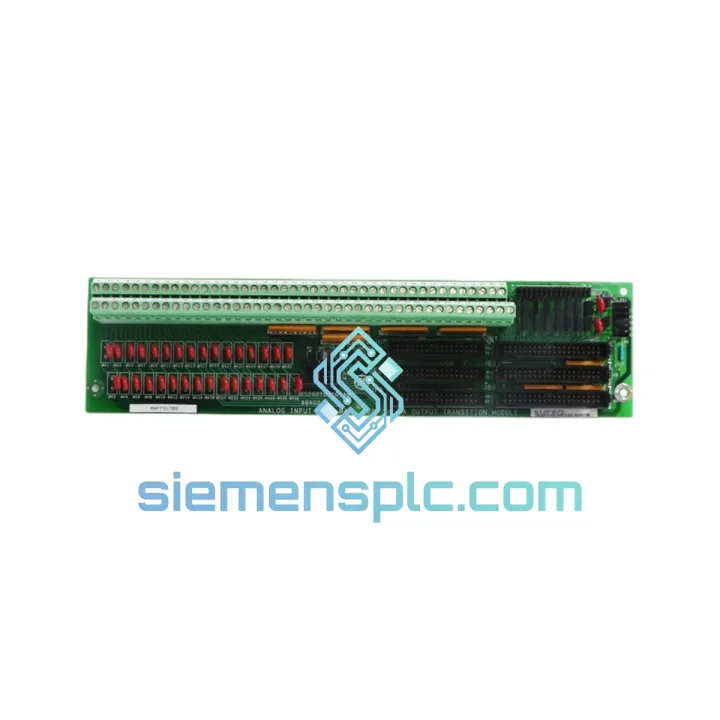
The DS200TBQDG1ACC is a passive field-wiring termination board engineered for deployment within GE’s Mark V turbine control system. Its function is structurally non-negotiable: it serves as the physical and electrical boundary between field instrumentation cables and the Mark V controller’s internal I/O backplane. Without a correctly functioning termination board at this junction, analog and discrete signals from thermocouples, RTDs, pressure transmitters, proximity probes, and solenoid valve feedback circuits cannot reach the controller’s processing layer. Signal loss at this interface does not degrade performance gradually — it causes immediate, hard faults that trigger turbine protection trips.
The Mark V platform, introduced by GE in the early 1990s, remains operational across hundreds of gas turbine, steam turbine, and combined-cycle installations worldwide. Its longevity is a function of its robust Triple Modular Redundancy (TMR) architecture, which distributes control logic across three independent processing channels (R, S, T) with a voter circuit arbitrating output commands. The DS200TBQDG1ACC interfaces with this architecture at the I/O termination layer, providing the structured wiring discipline that TMR signal integrity demands. Each field signal must arrive at the controller with consistent impedance characteristics and without ground loops — conditions that the termination board’s PCB layout and connector design are specifically engineered to maintain.
For MRO teams managing aging Mark V fleets, the DS200TBQDG1ACC represents a high-priority spare. Its passive nature means it carries no firmware and requires no configuration after installation, but its physical condition — connector pin integrity, PCB trace continuity, and terminal block clamping force — directly determines whether the control system receives accurate field data. Degraded termination boards are a documented root cause of intermittent I/O faults that are difficult to diagnose without board-level inspection.
Real-time Stock & RFQ: [email protected] | WhatsApp: +86 18359268345
| Manufacturer | General Electric (GE) |
| Part Number / SKU | DS200TBQDG1ACC |
| Series | Mark V Turbine Control System |
| Board Classification | Field I/O Termination Board |
| Form Factor | PCB module, rack-mount compatible with Mark V panel chassis |
| Signal Interface | Analog inputs (thermocouple, RTD, 4–20 mA), discrete I/O, relay feedback |
| Connector Type | Screw-terminal field wiring blocks; backplane edge connector to Mark V I/O card |
| Operating Temperature | 0°C to +60°C (panel ambient, per Mark V environmental spec) |
| Storage Temperature | –40°C to +85°C |
| PCB Material | FR4 glass-epoxy laminate, multi-layer |
| Weight | Approx. 300 g |
| Compatibility | GE Mark V control panel ecosystem (TCCA, TCDA, TCCB controller cards) |
| Country of Origin | United States |
| Warranty | 12 months from date of shipment |
The DS200TBQDG1ACC operates at the physical layer of the Mark V I/O subsystem, and its hardware design reflects the signal discipline requirements of a safety-rated turbine control environment.
Passive Signal Routing Architecture: Unlike active I/O modules that perform analog-to-digital conversion on-board, the DS200TBQDG1ACC is a passive routing substrate. Field wiring lands on screw-terminal blocks, and traces route signals to the backplane edge connector that mates with the corresponding Mark V I/O processor card. This passive architecture eliminates a potential active failure point at the field interface — there are no ICs on the termination board that can fail due to voltage transients from field wiring.
EMC and Ground Plane Design: Industrial field environments generate significant conducted and radiated electromagnetic interference from variable-frequency drives, large motor contactors, and high-current bus bars. The DS200TBQDG1ACC’s PCB incorporates a dedicated ground plane layer that provides a low-impedance reference for signal traces, suppressing common-mode noise pickup on long field cable runs. Terminal block layouts follow GE’s wiring discipline guidelines, which mandate physical separation between analog signal pairs and discrete I/O circuits to prevent capacitive crosstalk.
Terminal Block Clamping Mechanism: The screw-terminal field wiring interface uses a cage-clamp or screw-clamp design rated for repeated connection cycles. In MRO scenarios where boards are removed and reinstalled during maintenance outages, terminal block integrity is a critical wear point. GE’s terminal block specification for Mark V termination boards requires a minimum clamping force retention after 50 insertion cycles — a parameter that should be verified on refurbished units before installation.
Backplane Edge Connector Tolerance: The board-to-backplane interface uses a multi-pin edge connector. Contact plating (typically gold over nickel) determines long-term contact resistance stability. Oxidation or fretting corrosion at this interface is a documented failure mode in Mark V panels operating in humid or coastal environments. Boards sourced from controlled storage conditions with intact connector protection are preferred for critical spare applications.
Thermal Management: As a passive board, the DS200TBQDG1ACC generates negligible self-heating. However, its position within the Mark V panel chassis means it is subject to the thermal environment of adjacent active cards. The FR4 substrate and component selection are rated for continuous operation at panel ambient temperatures up to 60°C, consistent with GE’s Mark V environmental qualification envelope.
Every DS200TBQDG1ACC unit dispatched from our Xiamen, China facility undergoes a structured pre-shipment inspection protocol. Visual examination covers PCB surface condition, solder joint integrity, terminal block clamping mechanism function, and backplane edge connector pin condition. Electrical continuity verification confirms that signal routing paths between field terminals and backplane connector pins are intact and within specification. Units that do not pass inspection are quarantined and not offered for sale.
Sourcing traceability is maintained for each unit. Documentation — including sourcing records, inspection reports, and certificates of conformance — is available upon request and is standard practice for customers with documented spare parts management requirements.
Packaging uses multi-layer ESD-safe anti-static bags, foam cushioning inserts, and rigid outer cartons rated for international air freight handling. Export documentation — commercial invoice, packing list, and country of origin certificate — is prepared for all international shipments. DHL Express, FedEx International Priority, and UPS Worldwide Express are the primary carriers, with typical transit times of 3–7 business days to major industrial hubs in Europe, the Middle East, Southeast Asia, and the Americas. Expedited same-day dispatch is available for confirmed orders received before 14:00 CST.
All units are covered by a 12-month warranty from the date of shipment, covering defects in materials and workmanship under normal operating conditions.
Email: [email protected]
WhatsApp: +86 18359268345
Web: siemensplc.com
Location: Xiamen, China
© 2026 siemensplc.com. All rights reserved.
We check the full part number, brand, series and visible nameplate information before quotation.
Sales confirms stock path, condition option, quantity and realistic lead time for export dispatch.
DHL, FedEx, UPS or buyer courier arrangements can be reviewed with packing requirements.
Similar brand or category products for fast comparison and multi-item RFQ lists.