GE
RFQ Ready
GE DS200TCQCG1BKG Turbine Control Module – Mark V Series
Mark V
Origin US
Turbine Control Module
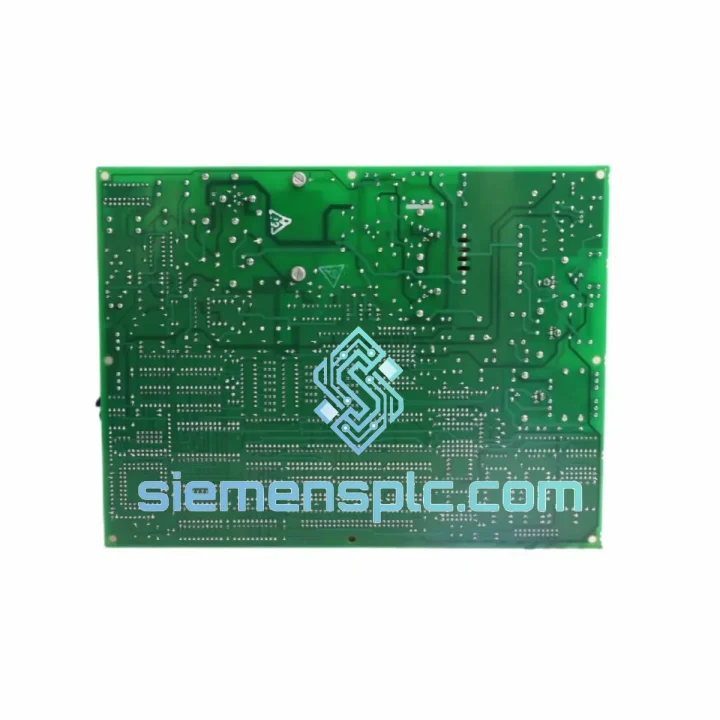
Request verified availability, condition, replacement risk review, packing options and courier lead time for DS200TCCAG1AHB.
Click Request Quote and the part number is inserted into the inquiry form automatically.
Core fields for model confirmation and RFQ routing. Detailed product narrative remains below.
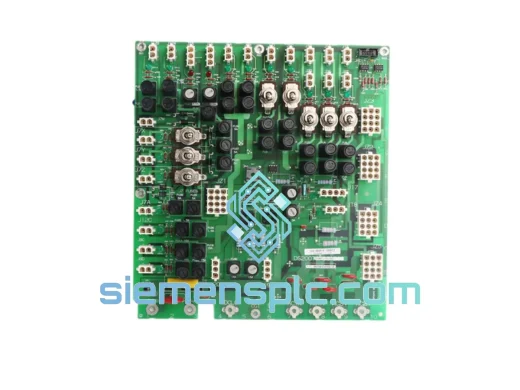
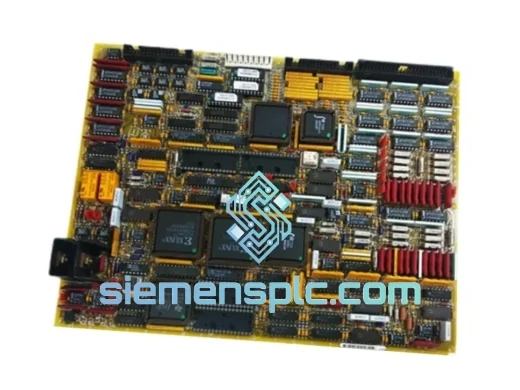
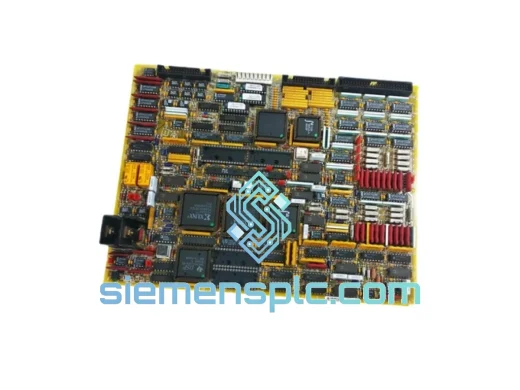
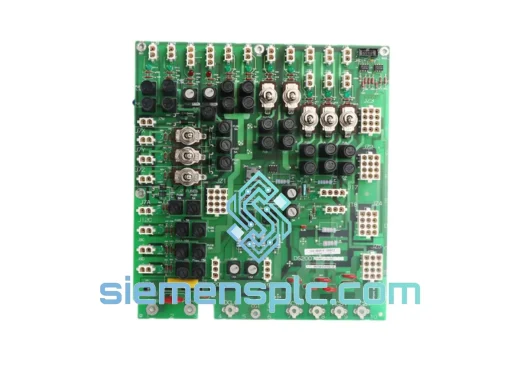
The DS200TCCAG1AHB is a factory-original analog input/output conditioning board manufactured by General Electric, belonging to the DS200 I/O board family and purpose-engineered for deployment within the Mark V Speedtronic turbine control platform. Its primary function is to serve as the calibrated signal interface between field-mounted process instrumentation — including thermocouples, resistance temperature detectors (RTDs), 4–20 mA pressure transmitters, and valve positioner feedback transducers — and the Mark V controller racks designated <R>, <S>, and <T>. In a fully redundant Mark V architecture, three DS200TCCAG1AHB boards operate concurrently, one per controller rack, with the TCQA voting arbitration module continuously comparing inter-channel readings and resolving discrepancies to sustain deterministic control output under single-board fault conditions without process interruption.
The board occupies a dedicated slot within the Mark V I/O panel and communicates with the processor board (TCPS) via the Mark V proprietary parallel backplane bus, operating at a fixed scan rate phase-locked to the turbine control execution cycle. All signal conditioning is performed on-board: raw analog voltages are routed through low-pass anti-aliasing filters, scaled to the ADC input range, and digitized by a 12-bit successive-approximation ADC before transmission across the backplane. Analog output channels source regulated 4–20 mA current loops, with an on-board voltage-to-current converter maintaining loop accuracy within ±0.1% of full scale across the full rated operating temperature envelope of 0°C to +60°C.
The part number suffix encodes engineering-critical configuration data. DS200 identifies the DS200 I/O board family. TCCA designates the Terminal Control Conditioning Analog functional block. G1 specifies the first hardware generation of this design. A denotes the PCB assembly revision level. HB identifies the hardware build variant — associated with a defined conformal coating specification and screw-terminal connector termination style. Substituting a board with a differing suffix without engineering review introduces risk of signal channel mapping errors or firmware handshake failures in revision-locked Mark V systems where hardware and firmware revisions must be matched at system startup.
Real-time Stock & RFQ: [email protected] | WhatsApp: +86 18359268345
| Parameter | Specification |
|---|---|
| Part Number | DS200TCCAG1AHB |
| Manufacturer | General Electric (GE) |
| Product Series | DS200 / Mark V Speedtronic |
| Functional Block | Terminal Control Conditioning Analog (TCCA) |
| Hardware Generation | G1 (first generation) |
| Build Variant | HB (conformal coated, screw-terminal) |
| Analog Input Types | 4–20 mA, 0–10 V DC, Thermocouple (J, K, T types), RTD Pt100 3-wire |
| Analog Output Types | 4–20 mA regulated current loop |
| ADC Resolution | 12-bit successive approximation |
| Output Accuracy | ±0.1% of full scale |
| Output Loop Compliance | Up to 600 Ω at 20 mA |
| Channel Isolation Voltage | 500 V DC common-mode per input channel |
| Supply Voltage | +5 V DC (backplane logic); ±15 V DC (analog rails) |
| Power Dissipation | <8 W at full load |
| Backplane Interface | Mark V proprietary parallel I/O bus (TCPS-polled) |
| Compatible Racks | Mark V <R>, <S>, <T> controller racks |
| Operating Temperature | 0°C to +60°C (forced-air cooled rack) |
| Storage Temperature | −40°C to +85°C |
| Humidity | 5%–95% RH, non-condensing |
| Form Factor | PCB module, rack-mounted, Mark V I/O panel slot |
| Conformal Coating | Applied (HB build variant) |
| Connector Type | Screw-terminal, 0.5–2.5 mm² wire range |
| Weight | Approx. 980 g |
| Warranty | 12 months from date of shipment |
Per-Channel Optocoupler Galvanic Isolation: Each analog input channel is routed through a discrete optocoupler isolation stage before reaching the ADC input rail. The isolation barrier sustains common-mode voltages up to 500 V DC, blocking ground loop currents that originate in field cable runs spanning hundreds of meters across electrically active plant environments. In turbine installations where instrumentation cables share cable trays with medium-voltage power conductors, this per-channel isolation is a functional requirement — not a design margin. Ground potential differences between field instruments and the controller chassis, if uncorrected, inject DC offset errors into the ADC that corrupt temperature and pressure readings used directly in fuel control and compressor protection algorithms.
Analog/Digital Ground Plane Partitioning: The PCB layout enforces strict physical separation between the analog signal ground plane (AGND) and the digital logic ground plane (DGND), joined at a single star-point node at the power entry connector. This topology prevents high-frequency switching transients generated by the backplane bus drivers and any on-board FPGA logic from coupling into the analog measurement paths via shared ground impedance. Decoupling capacitors are placed at each IC power supply pin, and the board’s metal faceplate provides a Faraday enclosure against radiated EMI from adjacent boards — a relevant concern given that power supply boards and communication interface boards occupy adjacent slots in the Mark V I/O panel.
On-Board Cold Junction Compensation for Thermocouple Inputs: Thermocouple input channels incorporate a precision thermistor mounted directly at the field terminal block to measure cold junction temperature in real time. The board applies this measurement as an offset correction to the raw thermocouple millivolt reading before ADC conversion, eliminating the need for external isothermal terminal blocks in most installations. Compensation accuracy is maintained within ±1°C across the full operating temperature range — sufficient for exhaust gas temperature monitoring in gas turbine applications where measurement uncertainty directly affects turbine protection setpoint margins and fuel scheduling accuracy.
Precision Current Loop Output Topology: The 4–20 mA output channels are implemented using a precision voltage-to-current converter built around a low-offset operational amplifier with a precision resistor feedback network. The output stage incorporates short-circuit protection: if the field loop is inadvertently shorted during maintenance, output current is clamped to a safe level, preventing thermal damage to the output transistor or the connected actuator’s input circuitry. Loop compliance voltage is rated to drive loads up to 600 Ω at 20 mA, covering the input impedance range of standard industrial valve positioners, I/P converters, and electro-hydraulic servo amplifiers used in turbine fuel and inlet guide vane control.
Hardware Watchdog and Backplane Fault Assertion: A dedicated hardware watchdog circuit monitors the backplane communication polling cycle independently of the board’s own firmware. If the TCPS processor fails to poll the DS200TCCAG1AHB within the expected scan window — due to processor lockup, backplane fault, or firmware exception — the watchdog asserts a fault signal on the backplane bus. The Mark V system responds by flagging the board as failed and executing the configured protective action. This mechanism ensures that a software failure on the processor board cannot leave the analog I/O board in an indeterminate output state capable of driving actuators to an unsafe position.
Every DS200TCCAG1AHB unit dispatched by siemensplc.com is a genuine General Electric original component, sourced through established industrial automation supply channels. Each unit undergoes a structured pre-shipment inspection protocol: visual examination of the PCB for physical damage, component presence verification, and solder joint integrity assessment; functional bench verification against a reference Mark V I/O panel confirming all analog input and output channels perform within published specification; and ESD-safe packaging in anti-static shielding bags with closed-cell foam cushioning inside double-wall corrugated cartons rated for international freight handling.
Inventory is held in a climate-controlled warehouse in Xiamen, China, maintained at 18°C–25°C with relative humidity below 60% — storage conditions that preserve electrolytic capacitor charge retention, conformal coating adhesion, and connector contact plating integrity over extended storage periods. Units are tracked by serial number, and traceability documentation including inspection photographs and bench test records is available upon request for quality-audited procurement processes in regulated industries.
International shipments are dispatched via DHL Express, FedEx International Priority, and UPS Worldwide Expedited, with typical door-to-door transit times of 3–7 business days to Europe, North America, Southeast Asia, the Middle East, and South America. All export documentation — commercial invoice, packing list, and certificate of origin — is prepared in compliance with destination-country customs requirements. HS code 8537.10 is applied for customs classification. For volume procurement, sea freight consolidation from Xiamen Port is available with competitive lead times and full documentation support. A 12-month warranty from the date of shipment covers all units against manufacturing defects and functional failure under normal operating conditions. Warranty claims are acknowledged within 48 hours, and replacement units are dispatched from Xiamen stock to minimize control system downtime.
Email: [email protected]
WhatsApp: +86 18359268345
Web: siemensplc.com
Location: Xiamen, China
© 2026 siemensplc.com. All rights reserved.
We check the full part number, brand, series and visible nameplate information before quotation.
Sales confirms stock path, condition option, quantity and realistic lead time for export dispatch.
DHL, FedEx, UPS or buyer courier arrangements can be reviewed with packing requirements.
Similar brand or category products for fast comparison and multi-item RFQ lists.