GE
RFQ Ready
GE IS210MVRBH1A I/O Interface Board – Mark VIe Series
Mark VI
Origin US
I/O Interface Board
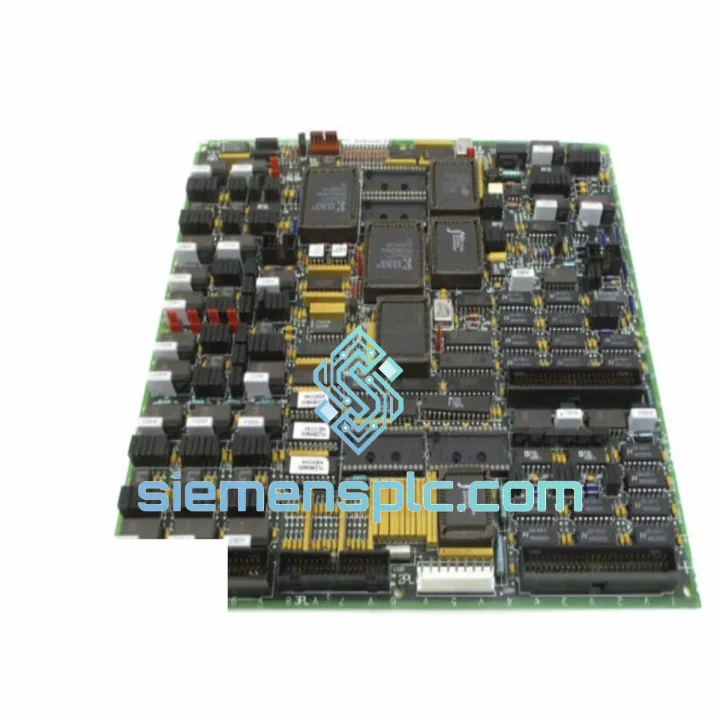
Request verified availability, condition, replacement risk review, packing options and courier lead time for DS200TCCBG1AKC.
Click Request Quote and the part number is inserted into the inquiry form automatically.
Core fields for model confirmation and RFQ routing. Detailed product narrative remains below.
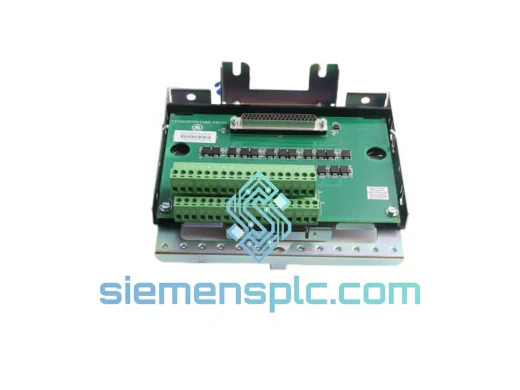
The GE DS200TCCBG1AKC is a factory-original termination board designed for integration within General Electric’s Mark VI Turbine Control System. It functions as the structured boundary between field instrumentation — thermocouples, RTDs, proximity probes, and 24 V DC discrete devices — and the Mark VI’s I/O processor cards. The board does not merely provide passive terminal points; it incorporates active signal conditioning circuitry that normalizes analog inputs, applies cold-junction compensation, enforces galvanic isolation on discrete channels, and distributes conditioned signals to upstream I/O packs with fixed, documented propagation latency. This deterministic behavior is a prerequisite for the Mark VI’s closed-loop turbine protection algorithms, where scan-cycle jitter exceeding 1 ms can compromise trip response fidelity.
Within the Mark VI I/O chain, the DS200TCCBG1AKC occupies the field-side termination layer. Field cables land on the board’s screw terminals or D-sub connectors; the board then interfaces to one or three I/O packs via dedicated ribbon connectors, depending on whether the system is configured in simplex or Triple Modular Redundancy (TMR) mode. This physical separation of field wiring from I/O pack electronics is a deliberate EMC containment strategy — transient energy from long cable runs is absorbed at the termination layer, preventing surge propagation into the processor-side logic ground plane. The PCB assembly carries a conformal coating compliant with IPC-CC-830, providing continuous protection against humidity, condensation, and airborne particulates in coastal or tropical power plant environments.
Real-time Stock & RFQ: [email protected] | WhatsApp: +86 18359268345
| Parameter | Specification |
|---|---|
| Part Number | DS200TCCBG1AKC |
| Manufacturer | General Electric (GE) |
| Product Series | Mark VI Turbine Control System |
| Module Classification | Termination Board — TC / RTD / Discrete I/O Interface |
| Supply Voltage | 24 V DC via I/O pack backplane connector |
| Operating Temperature Range | –20 °C to +65 °C |
| Storage Temperature Range | –40 °C to +85 °C |
| Relative Humidity | 5 % to 95 %, non-condensing |
| PCB Surface Protection | Conformal coating, IPC-CC-830 compliant |
| Field Connector Type | Screw terminals (field side) + D-sub / ribbon (I/O pack side) |
| Thermocouple Types Supported | J, K, T, E, R, S, B |
| RTD Input | Pt100, 3-wire configuration |
| Discrete I/O Voltage | 24 V DC, sourcing / sinking compatible |
| Channel Isolation | Optical isolation, ≥1,500 V RMS, discrete input channels |
| Surge Protection | TVS diodes, ±600 V peak clamp per terminal pair |
| CMRR (50/60 Hz) | ≥80 dB |
| Mounting Standard | Mark VI rack-compatible, DIN rail / panel mount |
| Approximate Weight | 980 g |
| Regulatory Compliance | CE, UL, RoHS |
| Warranty | 12 months from shipment date |
The DS200TCCBG1AKC’s circuit architecture addresses three distinct failure modes that are endemic to turbine control environments: thermocouple measurement drift caused by cold-junction error, common-mode noise injection through ground potential differences across long cable runs, and transient surge damage from inductive field devices. Each is handled at the hardware level rather than through software compensation, which is the correct approach for a safety-instrumented system where firmware updates are subject to change-management constraints.
Cold-Junction Compensation (CJC) Architecture: Precision NTC thermistors are embedded directly at each thermocouple terminal block. These sensors measure the local PCB temperature at the point of wire termination and supply a continuous correction offset to the upstream I/O processor. The Seebeck voltage generated at the terminal junction — which would otherwise introduce a systematic temperature measurement error proportional to ambient fluctuation — is cancelled in real time. In exhaust gas temperature monitoring applications, where a 2 °C offset can trigger a spurious over-temperature protection trip, this on-board CJC implementation is not optional; it is a functional requirement.
Two-Stage EMC Filter Network: Each analog input channel passes through a cascaded filter consisting of a first-stage ferrite bead (effective above 10 MHz) followed by a second-stage RC low-pass network with a –3 dB corner frequency near 50 Hz. The ferrite bead suppresses RF interference radiated by variable-frequency drives and ignition systems common in turbine halls. The RC stage attenuates power-line-frequency interference. The combined filter achieves a common-mode rejection ratio exceeding 80 dB at 50/60 Hz — the threshold GE specifies for reliable thermocouple measurement in electrically noisy generation environments.
Optocoupler Isolation on Discrete Channels: Each discrete input channel is galvanically isolated via a 4N25-class optocoupler rated at ≥1,500 V RMS. This barrier prevents ground potential differences — which can reach several volts in large installations where field cable runs exceed 200 m — from injecting common-mode current into the controller’s logic ground. The isolation also absorbs inductive kickback from solenoid valves and relay coils, protecting the I/O pack’s input comparator circuits from voltage spikes that would otherwise cause latent damage over time.
TMR Signal Fan-Out Without Impedance Mismatch: In Triple Modular Redundancy configurations, the board distributes each field signal simultaneously to three independent I/O packs via separate ribbon connectors. The passive fan-out network is impedance-matched across all three branches, ensuring that the signal amplitude and phase presented to each I/O pack are identical within measurement tolerance. Any asymmetry in the fan-out would introduce a systematic offset between the three measurement channels, corrupting the 2-of-3 voting logic that underpins the Mark VI’s SIL 2 / SIL 3 safety integrity.
TVS Surge Clamp on Field Terminals: Bidirectional transient voltage suppression diodes rated at ±600 V peak are fitted across each field terminal pair. These devices clamp lightning-induced surges and switching transients within nanoseconds, before the energy reaches the signal conditioning circuitry. This is particularly relevant for outdoor or semi-outdoor turbine installations where field cables are routed through cable trays exposed to atmospheric discharge events.
Each DS200TCCBG1AKC dispatched from siemensplc.com is a factory-original General Electric component. Inventory is sourced through documented industrial channels — decommissioned plant stock with traceable service records, OEM-authorized distribution, and bonded warehouse holdings — and is not sourced from unverified secondary markets. Prior to shipment from our Xiamen, China facility, every unit undergoes a structured pre-dispatch inspection: PCB and connector visual examination against GE reference standards, label and date-code authenticity verification, terminal continuity check, and anti-static packaging per ANSI/ESD S20.20. A 12-month warranty covering manufacturing defects and functional failure under normal operating conditions accompanies every unit.
Shipping capabilities from Xiamen:
Email: [email protected]
WhatsApp: +86 18359268345
Web: siemensplc.com
Location: Xiamen, China
© 2026 siemensplc.com. All rights reserved.
We check the full part number, brand, series and visible nameplate information before quotation.
Sales confirms stock path, condition option, quantity and realistic lead time for export dispatch.
DHL, FedEx, UPS or buyer courier arrangements can be reviewed with packing requirements.
Similar brand or category products for fast comparison and multi-item RFQ lists.