GE
RFQ Ready
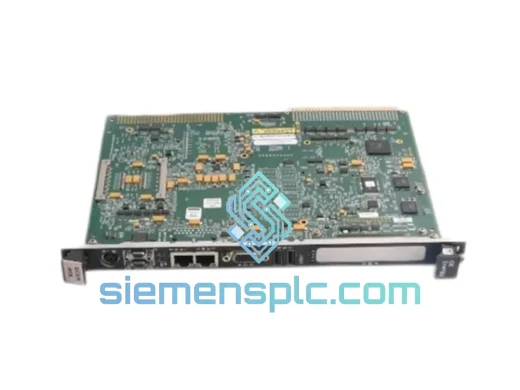
GE IS210MVRBH1A I/O Interface Board – Mark VIe Series
Mark VI
Origin US
I/O Interface Board
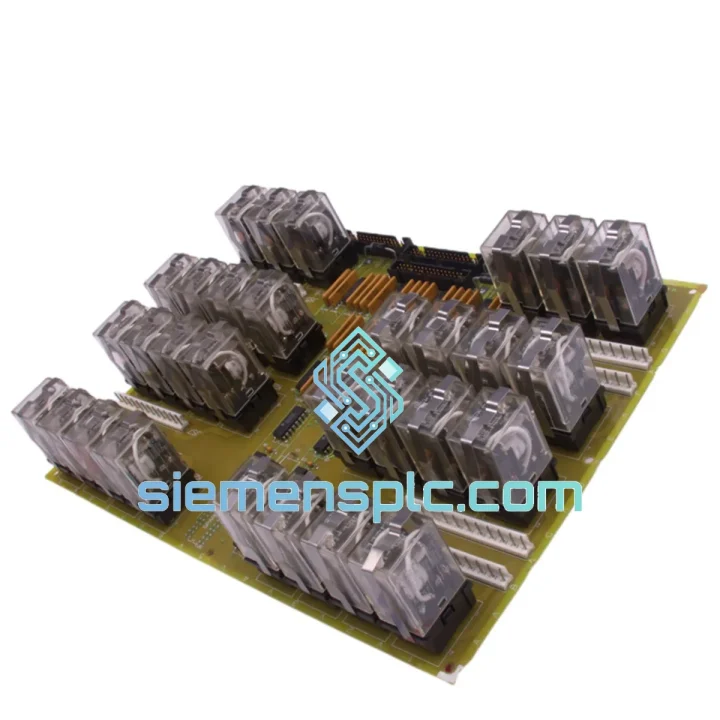
Request verified availability, condition, replacement risk review, packing options and courier lead time for DS200TCRAG1ABC.
Click Request Quote and the part number is inserted into the inquiry form automatically.
Core fields for model confirmation and RFQ routing. Detailed product narrative remains below.
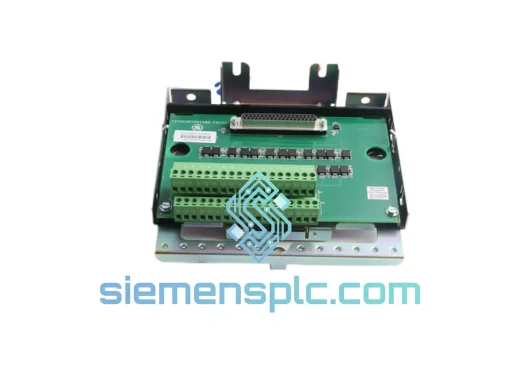
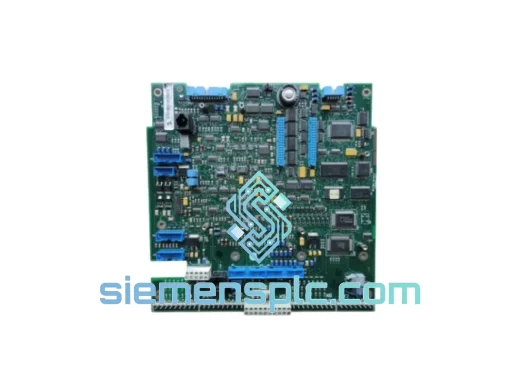
The DS200TCRAG1ABC is a dedicated analog I/O termination board engineered for GE’s Mark VI Turbine Control System — a triple-redundant, TMR-architecture platform deployed across gas turbines, steam turbines, and combined-cycle power trains globally. Within the Mark VI signal chain, this board functions as the physical interface layer between field-mounted transmitters and the controller’s processing core. It does not perform computation; it performs conditioning, isolation, and routing — tasks that are deceptively simple in description but operationally critical in execution.
In a Mark VI TMR configuration, three independent I/O paths carry the same process signal to three separate controller cards. The analog termination board sits at the entry point of this triplicated path. Any degradation at this stage — impedance mismatch, ground loop injection, or connector oxidation — propagates identically into all three voting channels, defeating the redundancy architecture entirely. The DS200TCRAG1ABC is designed to prevent exactly this failure mode through its signal conditioning topology and board-level EMC layout.
Field signals handled by this board include 4–20 mA current loops from pressure and flow transmitters, thermocouple inputs from exhaust temperature arrays (Type K and Type J), and RTD inputs (Pt100) from bearing temperature monitoring circuits. Each input type requires a distinct front-end conditioning stage: current-to-voltage conversion for 4–20 mA loops, cold junction compensation for thermocouples, and precision excitation current sourcing for RTDs. The DS200TCRAG1ABC integrates all three conditioning topologies on a single PCB, reducing the wiring complexity that would otherwise be required with discrete signal conditioners.
For plant engineers managing aging Mark VI installations, the DS200TCRAG1ABC represents a finite and diminishing spare parts resource. GE’s transition to the Mark VIe platform — which uses a fundamentally different IONET-based distributed I/O architecture — means that DS200-series boards are no longer in active production. Sourcing verified, functionally tested stock from qualified distributors is the primary strategy for extending Mark VI asset life in compliance with IEC 62402 obsolescence management frameworks.
Real-time Stock & RFQ: [email protected] | WhatsApp: +86 18359268345
| Parameter | Specification |
|---|---|
| Part Number | DS200TCRAG1ABC |
| Manufacturer | General Electric (GE) |
| Compatible Platform | GE Mark VI Turbine Control System |
| Board Classification | Analog I/O Termination / PC Board |
| Analog Input Types | 4–20 mA current loop, Thermocouple (Type K/J), RTD (Pt100) |
| Analog Output Types | 4–20 mA (per Mark VI controller command) |
| Signal Isolation | Optical isolation per channel group (per Mark VI architecture) |
| Operating Voltage | Per Mark VI backplane supply (24 VDC nominal) |
| Operating Temperature | 0°C to +60°C |
| Storage Temperature | -40°C to +85°C |
| Relative Humidity | 5–95% RH, non-condensing |
| Form Factor | Plug-in PC Board, Mark VI card format |
| Connector Interface | Mark VI standard edge connector + terminal block |
| PCB Weight | Approx. 280–320 g |
| Functional Safety | Compliant as part of Mark VI TMR system (IEC 61511) |
| Warranty | 12 months from date of shipment |
The DS200TCRAG1ABC’s PCB layout reflects GE’s design philosophy for industrial control hardware: signal integrity is treated as a first-order constraint, not an afterthought. Several hardware-level design decisions are worth examining in detail.
Optical Isolation Architecture: Analog input channels are grouped and isolated from the digital backplane domain using optocoupler stages. This prevents ground potential differences between field devices — which can reach several volts in large industrial installations — from injecting common-mode noise into the measurement path. The isolation barrier also protects the Mark VI controller cards from transient overvoltage events originating at field terminals, a failure mode that is disproportionately common in turbine environments where high-energy ignition systems and large motor starters operate in proximity to control wiring.
EMC Layout and Ground Plane Strategy: The board uses a segmented ground plane topology that separates the analog signal ground from the digital logic ground, with a single controlled crossing point. This prevents high-frequency switching noise from the digital backplane from coupling into the analog measurement circuitry via the ground plane. In environments with variable-frequency drives and large transformer banks — typical of combined-cycle power plants — this layout discipline is the difference between a stable 4–20 mA reading and a signal with 50–100 mV of superimposed noise that degrades PID loop performance.
Cold Junction Compensation for Thermocouple Inputs: Thermocouple accuracy depends on precise measurement of the reference junction temperature at the terminal block. The DS200TCRAG1ABC incorporates an on-board temperature sensor at the terminal interface to perform this compensation in hardware, rather than relying on a fixed assumed ambient temperature. In a turbine control panel where internal temperatures can vary by 15–20°C depending on load and ambient conditions, this hardware compensation eliminates a systematic measurement error that would otherwise bias exhaust temperature readings and affect turbine firing temperature control.
RTD Excitation Current Precision: RTD measurement accuracy is directly dependent on the stability of the excitation current source. The board’s excitation circuitry is designed for low drift over temperature, maintaining measurement accuracy across the full operating temperature range without requiring periodic field calibration adjustments — a significant operational advantage in remote or unmanned turbine installations.
Every DS200TCRAG1ABC unit supplied by siemensplc.com is sourced from documented, traceable supply chains and subjected to a structured incoming inspection and functional verification process before dispatch.
Incoming Inspection: Physical examination covers board surface condition, component integrity, silkscreen part number and revision marking, and connector pin condition. Counterfeit screening follows AS6081 guidelines, including verification of component date codes and manufacturer markings against known-good reference samples.
Functional Bench Test: Each board is powered on using a Mark VI-compatible test fixture. Analog input channels are stimulated with calibrated signals across the full input range (4–20 mA, thermocouple millivolt equivalent, RTD resistance simulation). Output channels are verified for correct response to controller commands. Boards that do not meet specification are quarantined and not shipped.
Packaging: Boards are packaged in anti-static (ESD) bags with desiccant, placed in foam-lined rigid cartons rated for international air freight handling. Each shipment includes a pre-shipment photograph, functional test record, and certificate of conformance.
Logistics from Xiamen, China: Our warehouse is located in Xiamen, Fujian Province — a major international logistics hub with direct air freight connections to Singapore, Dubai, Frankfurt, Los Angeles, and other major distribution centers. Standard international delivery times are 3–7 business days via DHL, FedEx, or UPS express services. Emergency same-day dispatch is available for confirmed in-stock items when orders are placed before 14:00 CST. Export documentation including commercial invoice, packing list, and certificate of origin is prepared for all international shipments.
📧 Email: [email protected]
📱 WhatsApp: +86 18359268345
🌐 Web: siemensplc.com
📍 Location: Xiamen, China
© 2026 siemensplc.com. All rights reserved.
We check the full part number, brand, series and visible nameplate information before quotation.
Sales confirms stock path, condition option, quantity and realistic lead time for export dispatch.
DHL, FedEx, UPS or buyer courier arrangements can be reviewed with packing requirements.
Similar brand or category products for fast comparison and multi-item RFQ lists.