GE
RFQ Ready
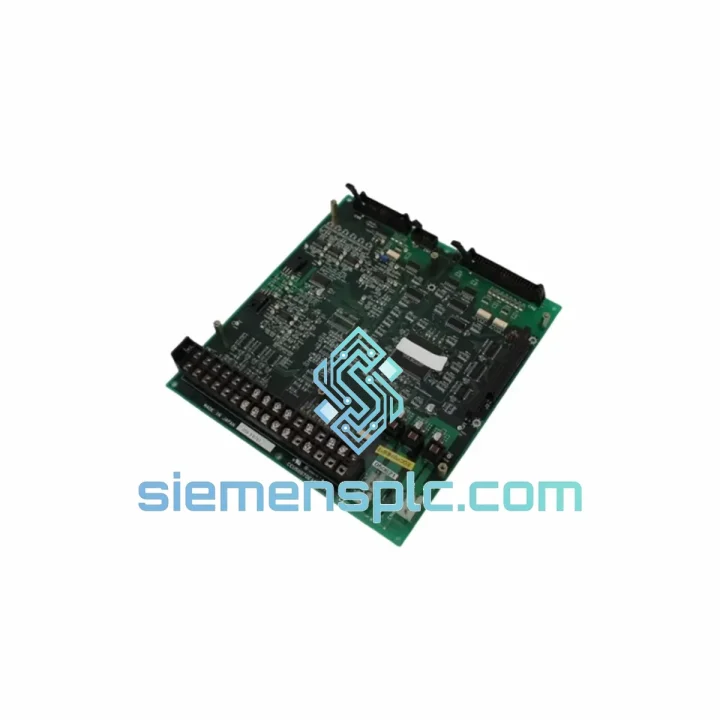
GE IS200VTCCH1CBD Thermocouple Processor Board – Mark VI IS200 Series
Mark VI
Origin US
Thermocouple Processor Board
Request verified availability, condition, replacement risk review, packing options and courier lead time for DS200UCVAH1ABC-IS215UCVDH7AM.
Click Request Quote and the part number is inserted into the inquiry form automatically.
Core fields for model confirmation and RFQ routing. Detailed product narrative remains below.
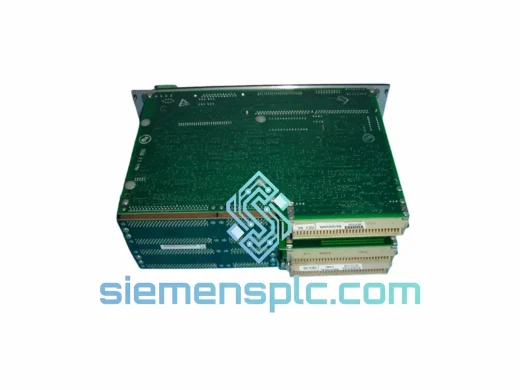
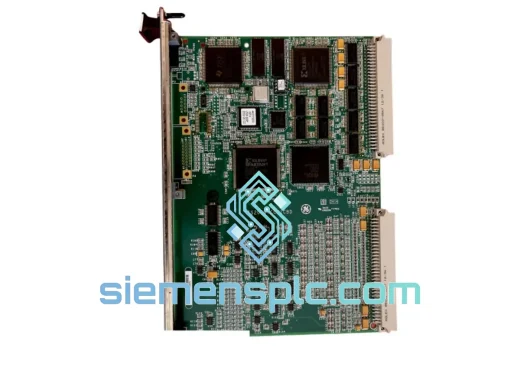
The DS200UCVAH1ABC (Universal Controller Voter Board) and IS215UCVDH7AM (Universal Controller VME Board) form the computational and voting core of GE’s Mark VI Turbine Control System. Deployed across gas turbine, steam turbine, and combined-cycle power generation facilities, this board pair governs the triple-redundant (TMR) control logic that underpins safe, deterministic turbine operation. Each board occupies a 6U VME slot within the Mark VI R, S, or T controller rack, communicating over a high-speed VME backplane at 40 MB/s sustained throughput. The voter board (DS200UCVAH1ABC) arbitrates between three independent controller channels, resolving discrepancies within a single scan cycle to maintain output integrity without operator intervention. The VME board (IS215UCVDH7AM) hosts the primary CPU, local SRAM, and dual-port memory structures that feed the voter arbitration bus.
In a TMR configuration, all three controller channels execute identical control algorithms in parallel. The DS200UCVAH1ABC samples each channel’s output at the end of every scan, applies a 2-of-3 majority vote, and drives the final actuator command. This architecture tolerates a single-channel hard fault without process interruption — a critical requirement in turbine applications where an unplanned trip carries six-figure downtime costs. The IS215UCVDH7AM’s onboard watchdog timer operates independently of the main CPU clock, ensuring that a firmware hang or memory fault triggers a controlled channel isolation rather than a silent failure.
Real-time Stock & RFQ: [email protected] | WhatsApp: +86 18359268345
| Parameter | DS200UCVAH1ABC | IS215UCVDH7AM |
|---|---|---|
| Board Function | Universal Controller Voter Board | Universal Controller VME Board |
| Form Factor | 6U VME Eurocard | 6U VME Eurocard |
| Backplane Interface | VME32 / VME64 compatible | VME32 / VME64 compatible |
| Backplane Bus Speed | 40 MB/s sustained | 40 MB/s sustained |
| Supply Voltage | +5 VDC ±5%, ±12 VDC ±5% | +5 VDC ±5%, ±12 VDC ±5% |
| Typical Power Draw | ≤ 8 W | ≤ 12 W |
| CPU Architecture | Voter ASIC + supervisory MCU | 32-bit RISC processor |
| Local Memory | 512 KB SRAM (voter state) | 4 MB SRAM + 8 MB Flash |
| Communication Ports | IONet Ethernet (10/100 Mbps) | IONet Ethernet, RS-232, RS-485 |
| Scan Cycle Time | Arbitration: < 1 ms | Control loop: 10–40 ms (configurable) |
| Operating Temperature | 0°C to +60°C | 0°C to +60°C |
| Storage Temperature | -40°C to +85°C | -40°C to +85°C |
| Relative Humidity | 5%–95% non-condensing | 5%–95% non-condensing |
| EMC Compliance | IEC 61000-4-2/3/4/5/6 | IEC 61000-4-2/3/4/5/6 |
| Vibration Rating | IEC 60068-2-6: 2g, 10–150 Hz | IEC 60068-2-6: 2g, 10–150 Hz |
| Connector Type | DIN 41612 96-pin (P1/P2) | DIN 41612 96-pin (P1/P2) |
| Warranty | 12 months from shipment date — full replacement or refund on verified defects | |
The DS200UCVAH1ABC implements a dedicated voter ASIC rather than relying on software-based arbitration. This is a deliberate architectural decision: a software voter running on the same CPU as the control algorithm introduces a common-cause failure mode — a CPU fault could corrupt both the control output and the vote simultaneously. By offloading arbitration to a discrete ASIC with its own clock domain and power rail, GE isolates the voting function from the computational substrate. The ASIC samples all three channel outputs at the trailing edge of each scan pulse, computes the majority result in combinational logic (no sequential state machine), and drives the output bus within 200 µs of the scan boundary.
The IS215UCVDH7AM’s dual-port SRAM architecture deserves specific attention. The board maintains two independent memory banks: one written exclusively by the local CPU (control algorithm state) and one written exclusively by the backplane DMA controller (I/O data from the IONET network). A hardware arbiter manages access priority, ensuring that I/O data updates never stall the control loop execution. This eliminates the priority inversion problem common in single-bus memory architectures, where a large I/O burst can delay a time-critical control calculation by several milliseconds.
EMC hardening on both boards follows a layered approach. The PCB stackup uses a dedicated ground plane between every signal layer, reducing inter-layer crosstalk below -60 dB at 100 MHz. All I/O lines crossing the board boundary pass through ferrite bead arrays (impedance ≥ 600 Ω at 100 MHz) and TVS diode clamps rated for ±2 kV surge per IEC 61000-4-5 Level 4. The IONet Ethernet magnetics are transformer-isolated to 1500 V AC, preventing ground loop currents from coupling noise into the digital logic domain. These measures allow the boards to operate without degradation in switchgear rooms where conducted emissions from VFDs and contactors routinely exceed 10 V/m field strength.
Every DS200UCVAH1ABC and IS215UCVDH7AM unit supplied by siemensplc.com is sourced from verified OEM channels or decommissioned installations with full part traceability. Before dispatch, each board undergoes a four-stage verification protocol: visual inspection of PCB condition, component markings, and connector integrity; powered bench test against GE Mark VI diagnostic initialization sequences; IONet communication handshake verification; and final ESD-safe packaging per IEC 61340-5-1.
Shipments originate from our Xiamen, China warehouse. Standard in-stock orders ship within 1–3 business days via DHL Express, FedEx International Priority, or UPS Worldwide Expedited. Full export documentation — commercial invoice, packing list, certificate of origin, and ESD test report — is included with every shipment. We support EXW, FOB Xiamen, and CIF Incoterms for volume orders. Customs HS code 8537.10 applies to these control boards; we provide pre-classified documentation to minimize customs clearance delays in the EU, US, and GCC markets.
A 12-month warranty covers all units against manufacturing defects and verified functional failures. Warranty claims are processed within 5 business days of receipt of the returned unit, with replacement shipment or full refund issued upon confirmation.
Email: [email protected]
WhatsApp: +86 18359268345
Web: siemensplc.com
Location: Xiamen, China
© 2026 siemensplc.com. All rights reserved.
We check the full part number, brand, series and visible nameplate information before quotation.
Sales confirms stock path, condition option, quantity and realistic lead time for export dispatch.
DHL, FedEx, UPS or buyer courier arrangements can be reviewed with packing requirements.
Similar brand or category products for fast comparison and multi-item RFQ lists.