GE
RFQ Ready
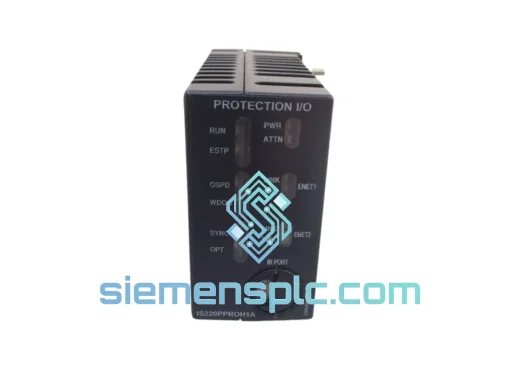
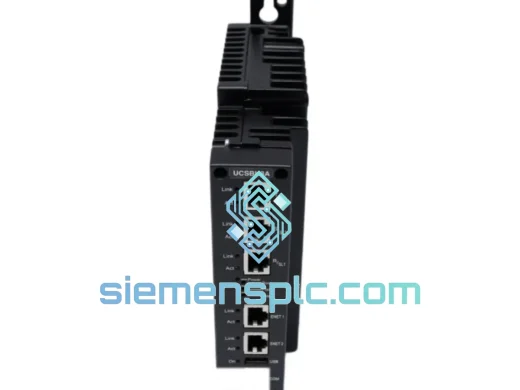
GE IS420UCSBH3A DCS Controller Module – Mark VIe
Mark VI
Origin US
DCS Controller Module
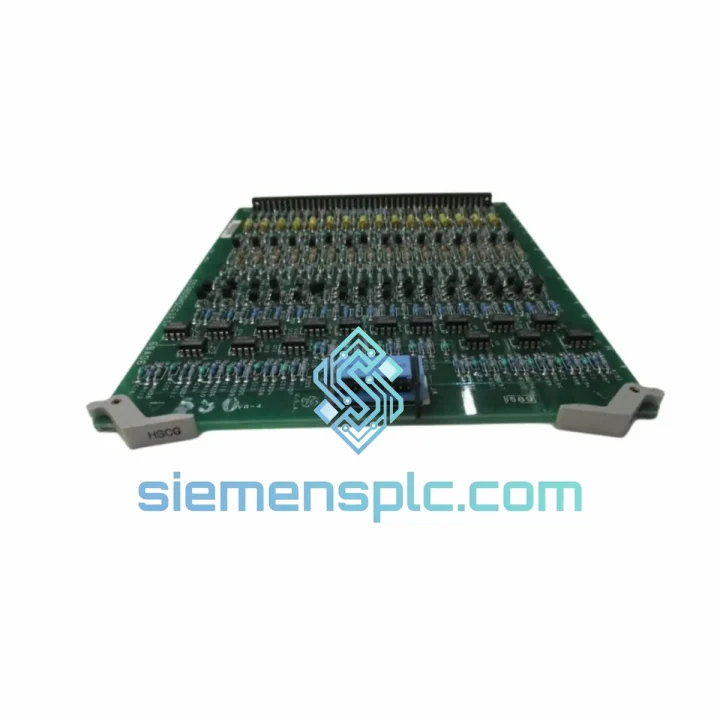
Request verified availability, condition, replacement risk review, packing options and courier lead time for DS3800HSCG1E1F.
Click Request Quote and the part number is inserted into the inquiry form automatically.
Core fields for model confirmation and RFQ routing. Detailed product narrative remains below.
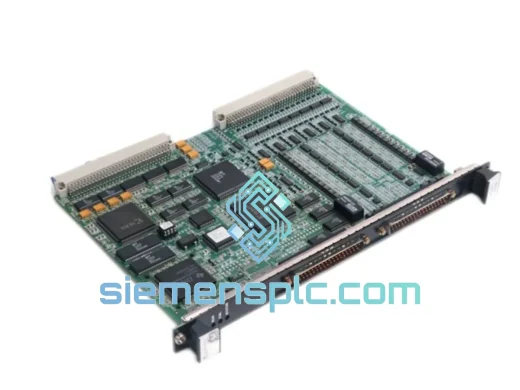
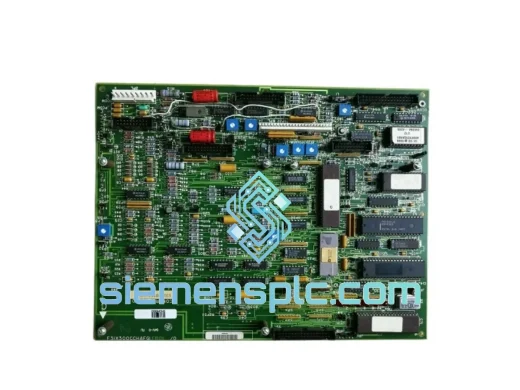
The DS3800HSCG1E1F is a channel-level signal isolator and ground fault supervision board engineered by General Electric for deployment within the Mark VI Speedtronic™ distributed turbine control platform. Its primary function is to establish a hard galvanic barrier between field-side instrumentation wiring and the control-side backplane logic, a structural requirement in any installation where field cables traverse high-voltage switchyard environments, share conduit with power conductors, or interface with rotating machinery generating significant common-mode electrical noise.
Within the Mark VI cabinet architecture, the DS3800HSCG1E1F occupies a defined slot between the field terminal board (TB) and the downstream I/O processor module. Each analog or discrete signal arriving from thermocouples, RTDs, proximity probes, or 4–20 mA transmitters passes through an isolated channel stage before being presented to the control backplane. This physical separation eliminates the ground loop paths that would otherwise allow fault currents to corrupt measurement data or, in worst-case scenarios, damage the I/O processor itself.
Beyond passive isolation, the board implements continuous isolation resistance monitoring on each channel. When the measured resistance between the isolated field side and the control-side reference falls below a configurable threshold, the board asserts a diagnostic flag to the Mark VI toolbox HMI. This alarm is non-latching and does not interrupt the active control loop, allowing maintenance personnel to schedule corrective action during the next planned outage window rather than initiating an emergency shutdown. This architecture reflects GE’s design philosophy of maximizing turbine availability while preserving diagnostic transparency.
Real-time Stock & RFQ: [email protected] | WhatsApp: +86 18359268345
| Parameter | Value |
|---|---|
| Part Number | DS3800HSCG1E1F |
| Manufacturer | General Electric (GE Power / GE Vernova) |
| Platform | Mark VI Speedtronic™ Turbine Control |
| Board Function | Signal Isolator / Ground Fault Supervision |
| Isolation Technology | Galvanic — optical + transformer-coupled stages |
| Common-Mode Rejection | ≥ ±1500 V transient withstand per channel |
| Supply Voltage | 24 VDC nominal (backplane-supplied) |
| Power Consumption | ≤ 5 W (typical, all channels active) |
| Operating Temperature | 0 °C to +60 °C |
| Storage Temperature | −40 °C to +85 °C |
| Relative Humidity | 5–95% RH, non-condensing |
| Form Factor | Plug-in PCB, card-cage mount |
| Revision Suffix | 1E1F (production release) |
| Compliance | CE, UL (per GE platform certification) |
| Weight | ~300 g |
| Warranty | 12 months from date of shipment |
The DS3800HSCG1E1F implements a two-stage isolation topology per signal channel. The first stage uses an optocoupler array to transfer discrete state information across the isolation barrier with sub-millisecond propagation delay, preserving the timing integrity required by the Mark VI’s deterministic scan cycle. The second stage employs a small-signal transformer for analog channels, maintaining linearity across the 4–20 mA measurement range without introducing the offset drift associated with single-stage optical analog isolation.
The ground fault detection circuit operates on a superimposed low-frequency AC test signal injected onto the isolated field bus. The board’s measurement circuit continuously samples the return current of this test signal; a reduction in return amplitude indicates a degraded isolation path. The detection threshold is set conservatively to flag faults well before the isolation resistance drops to a level that would allow meaningful fault current to flow into the control backplane. This approach avoids nuisance alarms from normal capacitive coupling while reliably detecting genuine insulation failures in field cable runs.
From an EMC standpoint, the board’s PCB layout routes high-frequency return currents through a dedicated ground plane segment that is physically separated from the analog signal traces. Decoupling capacitors are placed at each power entry point to suppress conducted emissions from the 24 VDC backplane supply. The card-cage slot connector provides a low-impedance chassis bond, ensuring the board’s shield reference is tied to the cabinet’s equipotential bonding network rather than floating — a detail that significantly reduces susceptibility to radiated interference from adjacent variable-frequency drives or high-current bus bars.
Every DS3800HSCG1E1F unit supplied by siemensplc.com is sourced from verified OEM channels and undergoes a structured pre-shipment inspection protocol. Each board is visually examined for PCB damage, component displacement, and connector pin integrity. Functional bench testing confirms correct power-up behavior and channel isolation resistance above the minimum specification threshold. Units are packaged in anti-static bags within foam-lined cartons rated for international air freight handling, with ESD caution labeling on all outer surfaces.
Shipments originate from our Xiamen, China warehouse, positioned within the Xiamen Free Trade Zone for streamlined customs clearance on export documentation. Standard international delivery to Europe, the Middle East, Southeast Asia, and North America is achieved within 3–7 business days via DHL Express or FedEx International Priority. For urgent plant outage scenarios, same-day dispatch is available for orders confirmed before 14:00 CST. Commercial invoice, packing list, and HS code 8537.10 export documentation are provided with every shipment. A 12-month warranty covers functional defects from the date of shipment.
Email: [email protected]
WhatsApp: +86 18359268345
Web: siemensplc.com
Location: Xiamen, China
© 2026 siemensplc.com. All rights reserved.
We check the full part number, brand, series and visible nameplate information before quotation.
Sales confirms stock path, condition option, quantity and realistic lead time for export dispatch.
DHL, FedEx, UPS or buyer courier arrangements can be reviewed with packing requirements.
Similar brand or category products for fast comparison and multi-item RFQ lists.