GE
In Stock OK
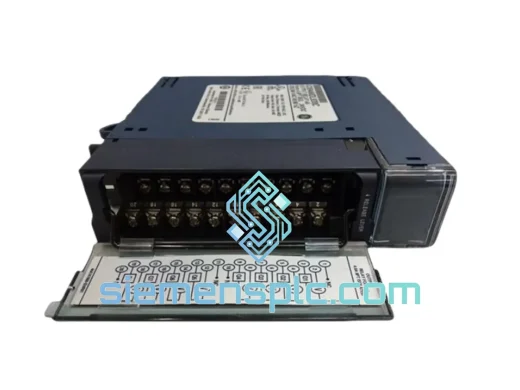
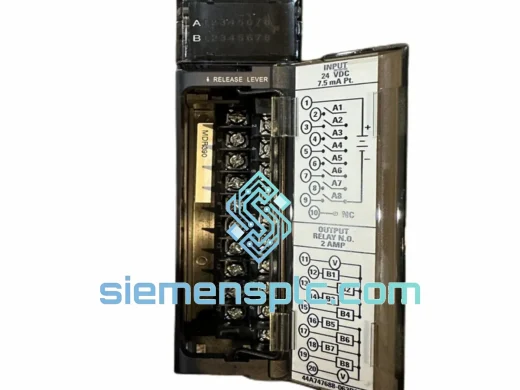
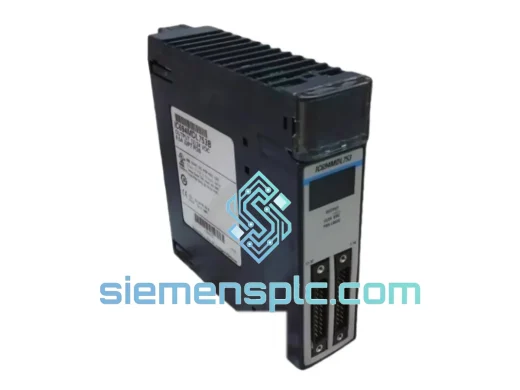
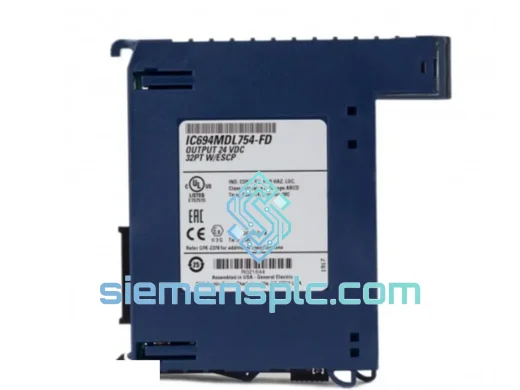
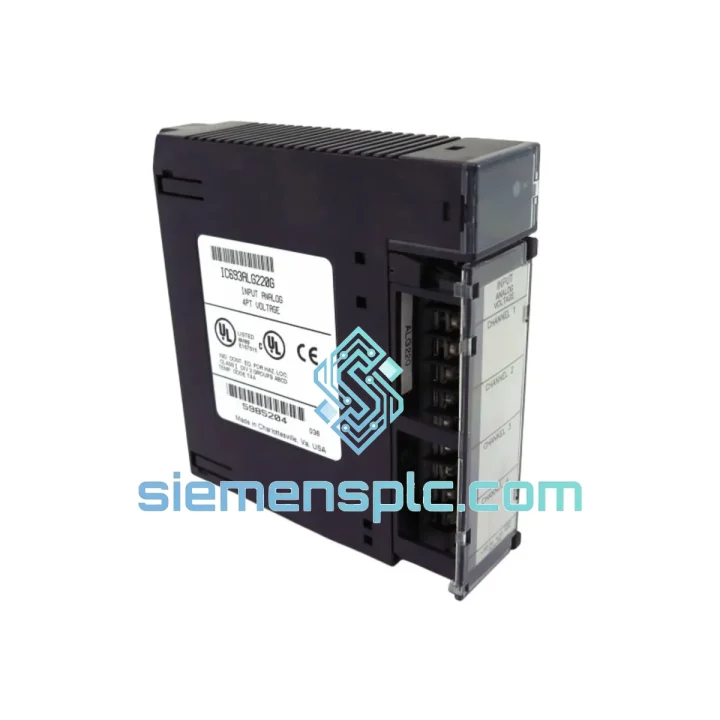
GE IC693ALG220G Analog Input Module – Series 90-30
Request verified availability, condition, replacement risk review, packing options and courier lead time for IC693ALG220G.
BrandGE
Part NumberIC693ALG220G
ConditionAvailability Check
Lead TimeRFQ Confirmation
DocumentsDatasheet / photos by RFQ
ShippingExport packing available
Auto-filled RFQ
IC693ALG220G
Click Request Quote and the part number is inserted into the inquiry form automatically.
- Reply by email: [email protected]
- WhatsApp / Tel: +86 18359268345
- Mon-Sat 9:00-18:00 GMT+8
Procurement Data
Key Product Information
Core fields for model confirmation and RFQ routing. Detailed product narrative remains below.
- Brand
- GE
- Primary Part Number
- IC693ALG220G
- Product Type
- Analog Input Module
- Series / Family
- 90-30
- Manufacturer
- GE (GE Automation & Controls)
- Country of Origin
- US
- Catalog Category
- I/O Modules
- Operating Temp.
- 0 °C to +60 °C
- Warranty
- 12 months from date of shipment
Model confirmed for inquiry
IC693ALG220G
Send quantity, destination and urgency. The RFQ form keeps this part number attached.
Request Quote
Product Overview
GE IC693ALG220G — 16-Channel Analog Input Module for Series 90-30 Process Control Architecture
The IC693ALG220G occupies a single slot in the GE Series 90-30 backplane and delivers 16 independently configurable analog input channels to the CPU scan cycle. In a closed-loop control architecture, this module serves as the primary signal acquisition front-end: field transmitters — whether 4–20 mA two-wire loop-powered devices or 0–10 V voltage-output sensors — feed raw process variables into the module’s ADC chain, which converts them to 12-bit digital words and places them into the CPU’s %AI register table at each scan boundary. The CPU then executes PID, ratio, or cascade control algorithms against those register values and drives analog output modules accordingly. Without a reliable, low-latency acquisition front-end, control loop stability degrades; the IC693ALG220G addresses this with a per-channel conversion time of approximately 1 ms, keeping total 16-channel scan latency within 16 ms — well inside the response bandwidth of most thermal, pressure, and flow control loops.
The module supports both single-ended (16-channel) and differential (8-channel) wiring configurations. Differential mode is selected when common-mode noise on field cables exceeds the module’s single-ended rejection threshold, a common requirement in motor drive enclosures or long cable runs through cable trays shared with power conductors. Each channel’s signal type and range are assigned independently in Proficy Machine Edition (PME) hardware configuration — no hardware jumpers, no DIP switches. This software-only configuration model eliminates the risk of misconfiguration during field replacement and allows range changes to be deployed via CPU download without opening the panel.
Real-time Stock & RFQ: [email protected] | WhatsApp: +86 18359268345
Technical Parameters
| Parameter | Specification |
|---|---|
| Part Number | IC693ALG220G |
| Manufacturer | GE (GE Automation & Controls) |
| Series | Series 90-30 PLC |
| Module Category | Analog Input |
| Channel Count | 16 single-ended / 8 differential (software-selectable) |
| Input Signal Ranges | 4–20 mA, 0–20 mA, 0–10 V DC, ±10 V DC, ±5 V DC |
| ADC Resolution | 12-bit (4,096 counts full scale) |
| Conversion Time | ≈ 1 ms per channel (sequential SAR conversion) |
| Input Impedance — Voltage Mode | ≥ 10 MΩ |
| Input Impedance — Current Mode | 250 Ω (internal precision shunt) |
| Field-to-Backplane Isolation | 500 V AC (optical isolation barrier) |
| Common-Mode Rejection Ratio | ≥ 60 dB at 50/60 Hz (differential mode) |
| Operating Temperature | 0 °C to +60 °C |
| Storage Temperature | −40 °C to +85 °C |
| Relative Humidity | 5–95% RH, non-condensing |
| Backplane Power Draw | ≤ 1.0 W (5 V DC rail) |
| Compatible Chassis | IC693CHS391 / 392 / 393 / 398 / 399 |
| Compatible CPUs | IC693CPU374, IC693CPU375, IC693CPU376 |
| Configuration Tool | Proficy Machine Edition (PME) v8.x and later |
| Hardware Revision | Rev G |
| Weight | 300 g |
| Warranty | 12 months from date of shipment |
Hardware Logical Analysis
The IC693ALG220G implements a successive-approximation register (SAR) ADC architecture with a multiplexed front-end. The analog multiplexer sequentially connects each of the 16 input channels to a shared sample-and-hold (S/H) amplifier, which captures the channel voltage within a defined aperture window before the SAR converter begins its bit-trial sequence. This architecture trades simultaneous sampling for cost and slot-width efficiency — a deliberate design choice appropriate for process control applications where inter-channel phase coherence is not a hard requirement.
Optical Isolation Architecture: The field-side circuitry — multiplexer, S/H, and ADC — operates on a floating power rail derived from the field wiring, galvanically separated from the backplane 5 V logic rail by an optocoupler barrier rated at 500 V AC continuous. This isolation topology prevents ground loop currents from injecting common-mode offsets into the ADC reference, a failure mode that manifests as channel-to-channel crosstalk or systematic offset errors in installations where field devices share a common earth with the PLC chassis at different potential points.
EMC Design: The PCB layout routes analog signal traces on inner copper layers, shielded by ground planes on the outer layers, reducing susceptibility to radiated electric fields. Ferrite beads on the field terminal inputs attenuate high-frequency conducted interference (above 1 MHz) before it reaches the multiplexer inputs. The module meets IEC 61000-4-2 (ESD), IEC 61000-4-4 (EFT/Burst), and IEC 61000-4-6 (conducted RF immunity) test levels consistent with industrial environment Class A operation.
Current Input Shunt Precision: In current input mode, the 250 Ω internal shunt resistor is a low-temperature-coefficient metal-film type (±25 ppm/°C), ensuring that the voltage developed across it — which the ADC actually measures — remains stable across the 0–60 °C operating range. At 20 mA full scale, the shunt develops 5.0 V, utilizing the full ADC input range and maximizing effective resolution. The shunt is protected against overcurrent by a series PTC thermistor that limits fault current without requiring fuse replacement.
Rev G Hardware Improvements: Revision G incorporates a redesigned power supply decoupling network on the analog reference voltage line, reducing reference noise floor by approximately 40% compared to Rev D/E. This translates to improved repeatability at low signal levels — particularly relevant for 4–20 mA transmitters operating near the 4 mA live-zero baseline, where noise-induced jitter can cause unnecessary PID integral windup.
System Integration Benefits
- Zero-Jumper Channel Configuration: All 16 channels are configured exclusively through PME software. Range changes, channel enable/disable, and single-ended vs. differential mode selection are applied via CPU download, eliminating panel access and reducing maintenance-induced wiring errors.
- Direct %AI Register Mapping: Converted values are written directly to the CPU’s %AI data table at each scan boundary. No intermediate data transfer logic is required in the ladder program; PID function blocks reference %AI addresses natively, reducing program complexity and scan time overhead.
- Deterministic Scan Latency: With a fixed ~1 ms per-channel conversion time, the worst-case 16-channel acquisition latency is bounded at approximately 16 ms. This determinism allows control engineers to calculate loop sample rates with confidence, a prerequisite for tuning fast-response loops such as pressure or flow control.
- Fault Diagnostics via PME: The module reports channel-level fault status (open-circuit detection on current inputs, over-range, under-range) to the CPU fault table. PME’s online diagnostics display these faults in real time, enabling maintenance personnel to identify a failed transmitter or broken field wire without a multimeter sweep of the terminal block.
- Mixed Signal Type Support: A single module simultaneously handles 4–20 mA transmitters and 0–10 V sensors on adjacent channels. This eliminates the need for separate current-input and voltage-input modules in mixed-sensor installations, reducing rack slot consumption and BOM cost.
- Hot-Swap Replacement: When installed in a compatible Series 90-30 chassis with a CPU that supports I/O module hot-swap, the IC693ALG220G can be removed and reinserted under power. The CPU detects the module’s return, re-downloads configuration, and resumes normal scanning — minimizing process downtime during corrective maintenance.
- Backplane Bus Efficiency: The module communicates with the CPU over the Series 90-30 parallel backplane bus using a fixed-length data frame. The CPU’s I/O scanner allocates a deterministic time slot to the module each scan, ensuring that analog data is never delayed by bus contention from discrete I/O modules sharing the same chassis.
- Scalable Channel Density: Multiple IC693ALG220G modules can be installed in the same chassis (subject to slot and power budget constraints), scaling analog input capacity in 16-channel increments without requiring a larger chassis or additional CPUs. A 10-slot chassis can accommodate up to seven analog input modules alongside the CPU and power supply, providing up to 112 analog input channels in a single rack.
Quality Assurance & Global Logistics
Every IC693ALG220G unit dispatched from our Xiamen, China facility undergoes a structured pre-shipment verification protocol. Each module is seated in a powered Series 90-30 test rack and all 16 channels are exercised against calibrated signal sources traceable to national standards. ADC output codes are verified against expected values at 0%, 25%, 50%, 75%, and 100% of each configured range. Channel isolation is confirmed by applying a 250 V DC hipot test between the field terminal block and the backplane connector. Hardware revision and serial number are recorded against the order record and available for customer audit on request.
Units are packed in anti-static shielding bags, placed in custom-cut EPE foam inserts, and sealed in double-wall corrugated cartons rated for international air freight handling. Moisture-barrier desiccant packs are included for ocean freight shipments. Commercial invoice, packing list, and HS code 8537.10 export documentation are prepared for every international order. DDP, DAP, and EXW Incoterms are supported. Typical air freight transit time from Xiamen to major industrial hubs: 3–5 business days to Europe, 4–6 business days to North America, 2–3 business days to Southeast Asia. All shipments are tracked end-to-end with carrier AWB numbers provided at dispatch.
The 12-month warranty covers functional failure under normal operating conditions. Warranty claims are processed with a replacement-first policy: a verified replacement unit ships before the defective unit is returned, minimizing plant downtime. Counterfeit-free sourcing is guaranteed; units are procured exclusively from authorized distribution channels and verified OEM overstock with traceable date codes.
Contact Information
Email: [email protected]
WhatsApp: +86 18359268345
Web: siemensplc.com
Location: Xiamen, China
© 2026 siemensplc.com. All rights reserved.
Ready to quote
[email protected]
Send This Part Number to Sales
RFQ workflow
Quality workflow ->
Confirmation Process
01Model confirmation
We check the full part number, brand, series and visible nameplate information before quotation.
02Availability reply
Sales confirms stock path, condition option, quantity and realistic lead time for export dispatch.
03Packing & courier
DHL, FedEx, UPS or buyer courier arrangements can be reviewed with packing requirements.
Continue sourcing
Browse full catalog ->
Related Automation Parts
Similar brand or category products for fast comparison and multi-item RFQ lists.