GE Fanuc
In Stock OK
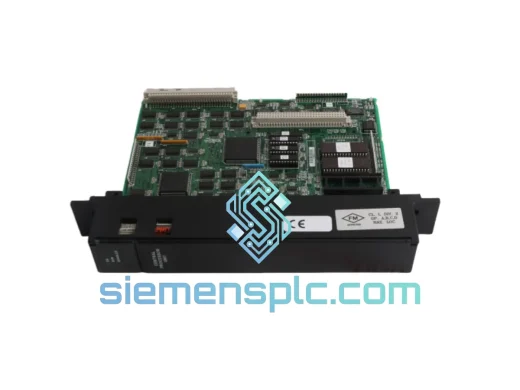
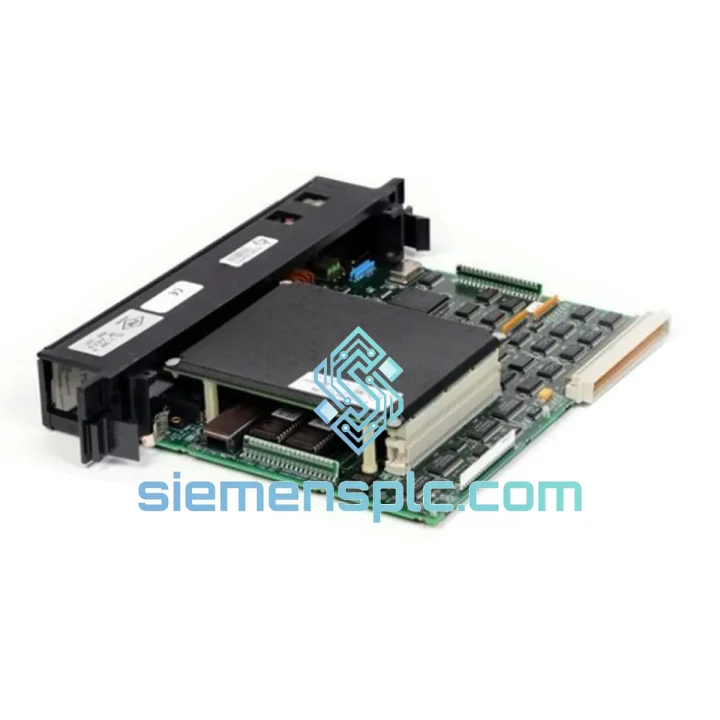
GE IC697CPU772 PLC CPU Module – Series 90-70
Request verified availability, condition, replacement risk review, packing options and courier lead time for IC697CPU772.
BrandGE Fanuc
Part NumberIC697CPU772
ConditionAvailability Check
Lead TimeRFQ Confirmation
DocumentsDatasheet / photos by RFQ
ShippingExport packing available
Auto-filled RFQ
IC697CPU772
Click Request Quote and the part number is inserted into the inquiry form automatically.
- Reply by email: [email protected]
- WhatsApp / Tel: +86 18359268345
- Mon-Sat 9:00-18:00 GMT+8
Procurement Data
Key Product Information
Core fields for model confirmation and RFQ routing. Detailed product narrative remains below.
- Brand
- GE Fanuc
- Primary Part Number
- IC697CPU772
- Product Type
- PLC CPU Module
- Series / Family
- Fanuc
- Country of Origin
- US
- Catalog Category
- Robotics & Motion
- Operating Temp.
- 0 °C to +60 °C
- Warranty
- 12 months from date of shipment
Model confirmed for inquiry
IC697CPU772
Send quantity, destination and urgency. The RFQ form keeps this part number attached.
Request Quote
Product Overview
GE IC697CPU772: 512 KB Deterministic Execution Engine for Series 90-70 Rack-Based Control Systems
The IC697CPU772 is the high-memory CPU module within GE Fanuc’s Series 90-70 (S90-70) rack-based PLC platform. Designed for large-scale discrete and analog process control, this module occupies Slot 1 of any S90-70 rack and serves as the sole scan-cycle arbiter for all I/O modules installed in the same chassis and across expansion racks. Its 512 KB user memory capacity — double that of the IC697CPU771 — positions it as the preferred processing node in applications where program density, large data tables, and multi-rack I/O point counts would otherwise cause scan overruns on lower-tier CPUs.
The module’s 32-bit RISC processor executes ladder logic, function block diagrams, and structured text programs compiled under GE Proficy Machine Edition. Backplane communication is handled via the VME-derived S90-70 proprietary bus, where the CPU arbitrates I/O slot addressing through a hardware-implemented token-passing mechanism — not a firmware polling loop. This distinction is operationally significant: bus arbitration latency remains bounded regardless of program size or the number of active I/O slots, preserving scan-time determinism under worst-case loading conditions.
Battery-backed SRAM retains both program and data tables during power interruptions. The onboard lithium cell sustains memory state for up to six months without rack power, eliminating the need for program reload after unplanned outages — a critical requirement in continuous-process industries where restart sequencing must follow a defined state rather than a cold-boot default.
Genius Bus communication is offloaded to a dedicated co-processor embedded in the CPU module. This co-processor manages the Genius Bus scan independently of the main ladder scan cycle, so field device polling on networks with 32 or more Genius blocks does not consume CPU execution time. The result is a predictable, additive I/O architecture: adding Genius Bus devices does not degrade ladder scan performance.
The RS-232 programmer port accepts direct connection from a PC running Proficy Machine Edition for program upload, download, and online monitoring. For networked access, the IC697CMM742 Ethernet TCP/IP module installed in the same rack provides SRTP-based communication to SCADA systems and HMI platforms without requiring a dedicated communications CPU.
Thermal design is rated for continuous operation from 0 °C to +60 °C ambient, with the PCB conformal-coated against humidity and airborne contaminants. The module meets IEC 68-2-6 vibration and IEC 68-2-27 shock specifications, making it suitable for installation in panel enclosures subject to mechanical vibration from adjacent rotating equipment — a common condition in pump stations, compressor buildings, and mill drive rooms.
The IC697CPU772 is a direct slot-compatible replacement for the IC697CPU771 (same pinout, larger memory) and can substitute for the IC697CPU760 following a firmware update. It is not interchangeable with CPX-series modules (IC697CPU915) or any Series 90-30 CPU, as those platforms use different backplane architectures and rack form factors.
📩 Real-time Stock & RFQ: [email protected] | WhatsApp: +86 18359268345
Technical Parameters
| Parameter | Specification |
|---|---|
| Model | IC697CPU772 |
| Platform | GE Fanuc Series 90-70 (S90-70) |
| Processor Architecture | 32-bit RISC |
| User Memory | 512 KB (program + data, battery-backed SRAM) |
| Battery Backup Duration | Up to 6 months without rack power |
| Backplane Bus | VME-derived S90-70 proprietary bus |
| Slot Requirement | Slot 1 (mandatory) |
| Power Draw | 5 VDC @ 2.0 A (from rack power supply) |
| Programmer Port | RS-232 serial (front panel) |
| Supported Networks | Genius Bus, Profibus-DP (via adapter), Ethernet TCP/IP (via IC697CMM742) |
| Compatible Racks | IC697CHS750 (5-slot), IC697CHS782 (9-slot), IC697CHS790 (16-slot) |
| Operating Temperature | 0 °C to +60 °C |
| Storage Temperature | −40 °C to +85 °C |
| Relative Humidity | 5% to 95% non-condensing |
| Vibration Rating | IEC 68-2-6, 10–57 Hz, 0.075 mm amplitude |
| Shock Rating | IEC 68-2-27, 15 g, 11 ms half-sine |
| Certifications | UL 508, CE (EMC 2014/30/EU, LVD 2014/35/EU), RoHS |
| Backplane Connector | 96-pin DIN 41612 |
| Weight | ~500 g |
| Warranty | 12 months from date of shipment |
Hardware Logical Analysis
The IC697CPU772’s backplane interface is built on a hardware arbitration engine rather than a software-managed polling scheme. Each I/O module slot is assigned a fixed VME address range; the CPU’s bus controller issues slot-select signals in a deterministic sequence during each scan cycle. Because arbitration logic is implemented in gate-array hardware, the worst-case bus grant latency is bounded to a fixed number of clock cycles — a property that cannot be guaranteed in firmware-polled architectures where interrupt latency and task preemption introduce variable delays.
EMC performance is achieved through a multi-layer PCB design with dedicated ground planes separating the processor core, SRAM array, and backplane transceiver circuits. The RS-232 front-panel port is isolated from the backplane ground reference via an optocoupler stage, preventing ground-loop currents from the programming cable from coupling noise into the backplane bus. This isolation is particularly relevant in industrial environments where the programming laptop may share a ground reference with variable-frequency drives or other high-dV/dt switching equipment.
The Genius Bus co-processor operates on a separate clock domain from the main RISC core. Inter-processor communication uses a dual-port SRAM mailbox with hardware semaphore arbitration, ensuring that Genius Bus data updates are atomic from the main CPU’s perspective — the input image table is never read in a partially-updated state mid-scan. This architecture eliminates a class of race-condition faults that can occur in single-processor designs where I/O update and program execution share the same execution thread.
The SRAM array is organized in byte-wide banks with hardware parity checking on each read cycle. A parity fault triggers a CPU fault log entry and, depending on the configured fault action, either a controlled program halt or a fault-tolerant continuation with the faulted address flagged in the diagnostic table. This hardware-level memory integrity check provides a detection mechanism for SRAM cell degradation — a failure mode that becomes statistically relevant in modules operating continuously for 10+ years in elevated-temperature environments.
System Integration Benefits
- Deterministic scan-time preservation under full I/O load: Hardware bus arbitration ensures that adding I/O modules to expansion racks does not introduce variable scan-time penalties, allowing control engineers to calculate worst-case scan times analytically rather than empirically.
- Zero-loss program retention across power interruptions: Battery-backed SRAM eliminates cold-start reprogramming after unplanned outages, reducing restart time from hours (manual reload) to seconds (automatic resume from retained state).
- Genius Bus isolation from ladder scan: The dedicated Genius co-processor prevents field device polling latency from propagating into the ladder execution cycle, maintaining PID loop update rates independent of Genius Bus network size.
- Transparent fault diagnostics via hardware parity: SRAM parity checking generates structured fault log entries readable in Proficy Machine Edition, enabling predictive maintenance decisions before a parity fault escalates to a program halt.
- Direct drop-in compatibility with IC697CPU771: Identical backplane pinout and instruction set allow memory upgrade without rack rewiring, I/O module reconfiguration, or program modification — minimizing planned maintenance window duration.
- Proficy Machine Edition 9.x toolchain support: Full backward compatibility with current GE programming software preserves existing engineering investment in program libraries, function block definitions, and HMI tag databases.
- Scalable multi-rack architecture: The CPU supports up to seven expansion racks via the S90-70 bus expander, allowing I/O point counts to scale from a single 16-slot rack to a distributed multi-rack configuration without changing the CPU module or reprogramming the I/O addressing scheme.
- Ethernet SCADA integration without a dedicated communications CPU: Pairing with the IC697CMM742 in the same rack provides SRTP Ethernet connectivity, eliminating the cost and slot consumption of a separate communications processor for HMI and historian data exchange.
Quality Assurance & Global Logistics
Every IC697CPU772 unit offered through siemensplc.com undergoes a structured four-stage incoming inspection before it is listed as available stock. Stage one is a visual examination of the PCB under 10× magnification, checking for corrosion on connector pins, electrolytic capacitor bulging, burnt component signatures, and cracked solder joints at high-stress locations near the backplane connector. Stage two is a functional power-on test in a live S90-70 test rack, confirming the CPU boot sequence completes without fault LEDs and that the programmer port responds to Proficy Machine Edition connection requests. Stage three is a memory verification cycle: the battery-backed SRAM is written with a known data pattern, power is removed for 30 minutes, and the pattern is verified on power restoration to confirm cell retention and battery integrity. Stage four is serial number and firmware revision logging, creating a traceable inspection record that ships with the unit on request.
Shipments originate from Xiamen, China, a major southeastern port city with direct air freight connections to international hubs including Hong Kong, Singapore, Frankfurt, Los Angeles, and Dubai. Standard export documentation — commercial invoice, packing list, and certificate of origin — is prepared for all international orders. For time-critical plant shutdowns, same-day dispatch on confirmed orders placed before 14:00 CST is available via DHL Express or FedEx International Priority, with typical transit times of 3–5 business days to Europe and North America. EMS and sea freight options are available for cost-sensitive, non-urgent procurement. All units are packed in anti-static bags within foam-lined cartons rated for the IEC 68-2-27 shock specification, protecting the module against handling impacts during air and ground transit.
Contact Information
📧 Email: [email protected]
📱 WhatsApp: +86 18359268345
🌐 Web: siemensplc.com
📍 Location: Xiamen, China
© 2026 siemensplc.com. All rights reserved.
Ready to quote
[email protected]
Send This Part Number to Sales
RFQ workflow
Quality workflow ->
Confirmation Process
01Model confirmation
We check the full part number, brand, series and visible nameplate information before quotation.
02Availability reply
Sales confirms stock path, condition option, quantity and realistic lead time for export dispatch.
03Packing & courier
DHL, FedEx, UPS or buyer courier arrangements can be reviewed with packing requirements.
Continue sourcing
Browse full catalog ->
Related Automation Parts
Similar brand or category products for fast comparison and multi-item RFQ lists.