GE
RFQ Ready
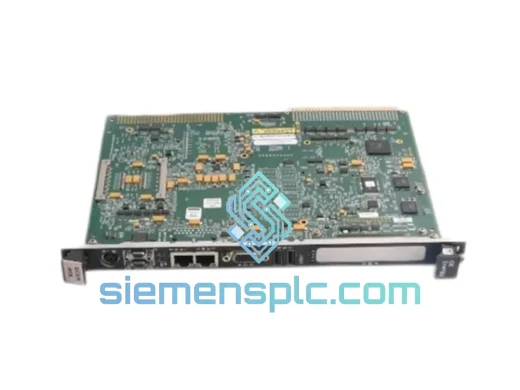
GE IS210MVRBH1A I/O Interface Board – Mark VIe Series
Mark VI
Origin US
I/O Interface Board
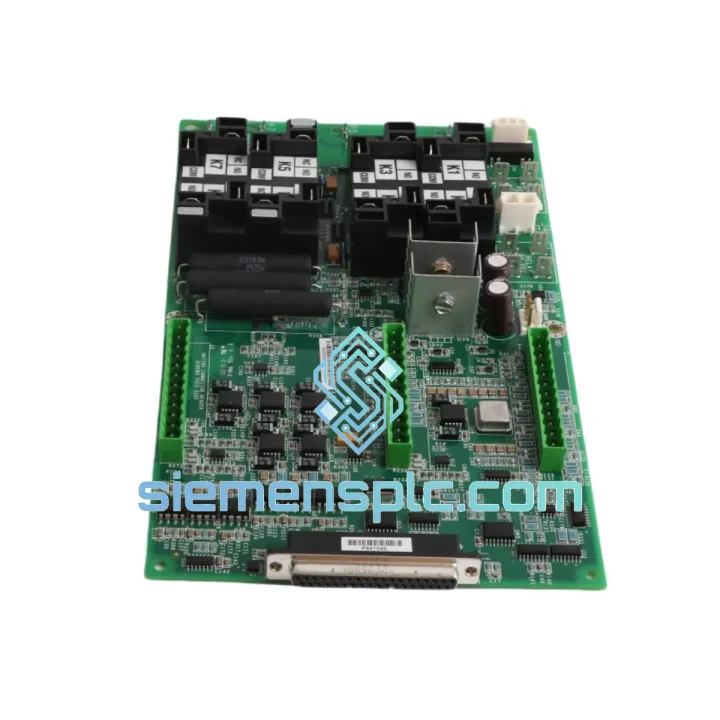
Request verified availability, condition, replacement risk review, packing options and courier lead time for IS200AEADH4A.
Click Request Quote and the part number is inserted into the inquiry form automatically.
Core fields for model confirmation and RFQ routing. Detailed product narrative remains below.
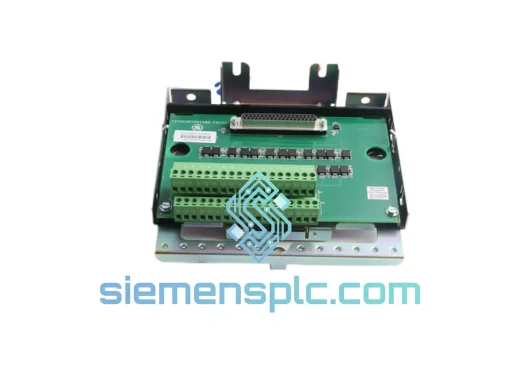
The IS200AEADH4A is a field-side analog and discrete input termination board engineered for deployment within GE’s Mark VI turbine control platform. Its primary function is to serve as the physical interface layer between field instrumentation — thermocouples, RTDs, 4–20 mA transmitters, and dry-contact discrete inputs — and the Mark VI I/O controller modules seated on the VME-based backplane. In a closed-loop turbine control architecture, this board occupies the termination tier: it receives raw field signals, conditions them through onboard passive and active circuitry, and presents them to the controller via a defined connector interface. Without a correctly matched and fully functional termination board, the controller cannot acquire process variables, rendering the entire control loop inoperative. The IS200AEADH4A is therefore not a peripheral accessory — it is a load-bearing element of the signal acquisition chain.
The H4A hardware revision designates a specific termination layout and connector pinout. This suffix is not interchangeable with H1A or H2A variants without verifying wiring compatibility against the site-specific I/O assignment drawing. Engineers replacing this board in the field must confirm the suffix against the existing termination wiring to avoid signal misassignment, which in a turbine protection context can have safety-critical consequences.
Real-time Stock & RFQ: [email protected] | WhatsApp: +86 18359268345
| Parameter | Specification |
|---|---|
| Part Number | IS200AEADH4A |
| Series | GE Mark VI Turbine Control System |
| Board Classification | Analog/Discrete Input Terminal Board |
| Compatible Platforms | GE Mark VI, Mark VIe |
| Analog Input Signal Types | 4–20 mA (2-wire/3-wire), Type J/K/T Thermocouple, 100Ω Pt RTD |
| Discrete Input Types | Dry contact, 24 VDC wet contact |
| Isolation Method | Optical isolation on discrete channels; galvanic isolation on analog channels |
| Operating Temperature | 0°C to +60°C (ambient, within enclosure) |
| Storage Temperature | –40°C to +85°C |
| Relative Humidity | 5% to 95% non-condensing |
| Mounting | Panel-mount within Mark VI I/O enclosure; guided card-edge connector |
| Board Dimensions | Conforms to Mark VI I/O enclosure slot standard |
| Weight | 520 g |
| Country of Origin | United States of America |
| Warranty | 12 months from date of shipment |
| Condition Available | New surplus / Tested refurbished (specify at RFQ) |
The IS200AEADH4A implements a layered signal conditioning architecture that addresses the specific electromagnetic and thermal challenges present in turbine generator environments.
Optical Isolation on Discrete Input Channels: Each discrete input channel passes through a dedicated optocoupler stage. This provides galvanic separation between the field wiring — which may carry transient voltages from inductive loads such as solenoid valves and relay coils — and the logic-level circuitry connected to the Mark VI controller. The isolation barrier is rated to withstand common-mode transients consistent with IEC 61000-4-5 surge immunity requirements. In practice, this prevents ground loop currents from corrupting the digital state read by the controller, a failure mode that is particularly prevalent in large turbine enclosures where multiple earthing points exist across the plant.
Analog Channel Galvanic Isolation: Analog input channels handling 4–20 mA signals employ transformer-based or capacitive isolation to reject common-mode voltages. This is essential when the field transmitter and the controller share different ground references — a common condition in geographically distributed sensor installations. The isolation also suppresses 50/60 Hz power-frequency interference induced on long cable runs through cable trays adjacent to high-voltage bus ducts.
Thermocouple Cold-Junction Compensation: For thermocouple inputs, the board incorporates a local cold-junction reference sensor. The compensation circuit continuously measures the terminal block temperature and applies a correction offset to the raw thermocouple EMF reading. This eliminates the systematic error that would otherwise arise from ambient temperature variation inside the control enclosure — a variation that can reach ±15°C over a plant operating cycle, translating to a raw thermocouple error of several degrees Celsius if uncompensated.
EMC Design Discipline: The PCB layout follows a segregated ground plane strategy: analog signal ground, digital logic ground, and chassis ground are maintained as separate copper pours, connected only at a single star point. This topology prevents high-frequency switching noise from the digital logic from coupling into the high-impedance analog input traces. Decoupling capacitors are placed at each IC power pin, and ferrite beads are used on the power supply rails entering the analog section. The board’s metal faceplate provides a continuous shielding surface that bonds to the enclosure chassis, completing the Faraday cage around the termination circuitry.
Connector and Wiring Integrity: Field wiring terminates on screw-type terminal blocks rated for 0.5–2.5 mm² conductors. The terminal block design incorporates a captive screw mechanism that maintains specified torque under vibration, addressing the mechanical fatigue failure mode observed in turbine installations where continuous vibration at 50–100 Hz is present on the enclosure structure.
Every IS200AEADH4A unit dispatched from our Xiamen, China facility undergoes a structured verification protocol before shipment. Visual inspection covers PCB surface condition, component seating, connector pin integrity, and terminal block torque. Functional verification is performed against GE Mark VI I/O specifications using dedicated test fixtures that simulate field signal inputs and confirm correct signal conditioning output at the board’s controller-side connector.
Units sourced from OEM surplus channels are accompanied by traceability documentation identifying the originating facility and manufacturing date code. Refurbished units carry a full test report. All boards are packaged in ESD-safe anti-static bags, placed in foam-lined inner cartons, and shipped in double-wall corrugated outer cartons rated for international air freight handling.
Logistics from Xiamen covers all major industrial markets: standard air freight transit times are 3–5 business days to Southeast Asia, 5–7 days to the Middle East and Europe, and 7–10 days to North and South America. DHL, FedEx, and UPS express services are available for urgent requirements. Export documentation including commercial invoice, packing list, and certificate of origin is prepared for all international shipments. HS Code 8537.10 applies to this product category for customs classification purposes.
A 12-month warranty covers defects in materials and workmanship from the date of shipment. Warranty claims are processed with a target replacement dispatch of 5 business days upon receipt of the defective unit.
Email: [email protected]
WhatsApp: +86 18359268345
Web: siemensplc.com
Location: Xiamen, China
© 2026 siemensplc.com. All rights reserved.
We check the full part number, brand, series and visible nameplate information before quotation.
Sales confirms stock path, condition option, quantity and realistic lead time for export dispatch.
DHL, FedEx, UPS or buyer courier arrangements can be reviewed with packing requirements.
Similar brand or category products for fast comparison and multi-item RFQ lists.