GE
RFQ Ready
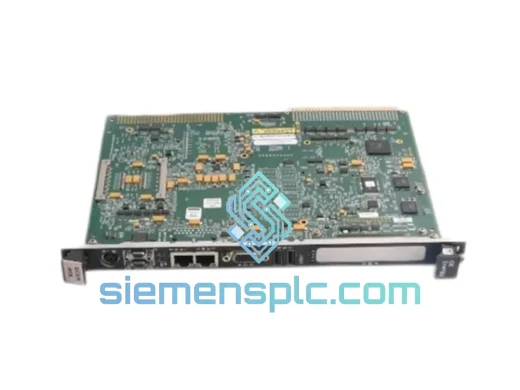
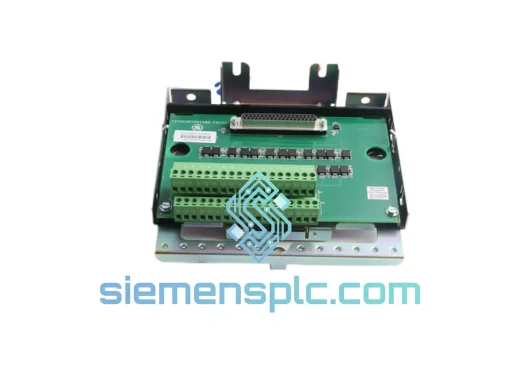
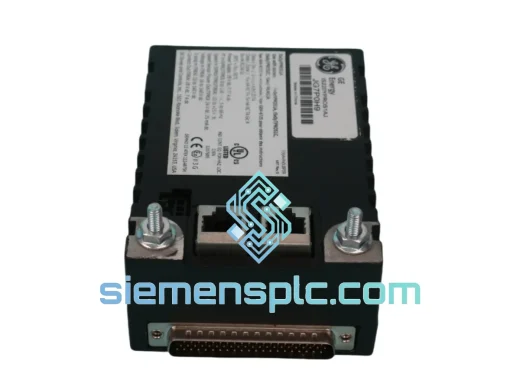
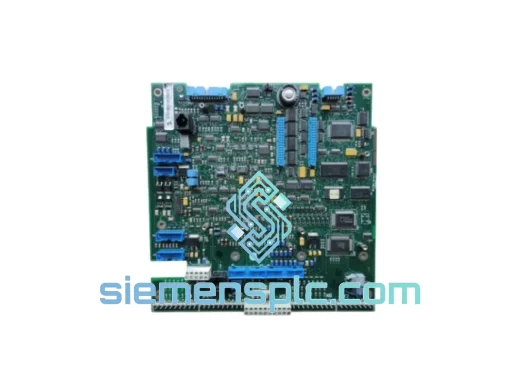
GE IS210MVRBH1A I/O Interface Board – Mark VIe Series
Mark VI
Origin US
I/O Interface Board
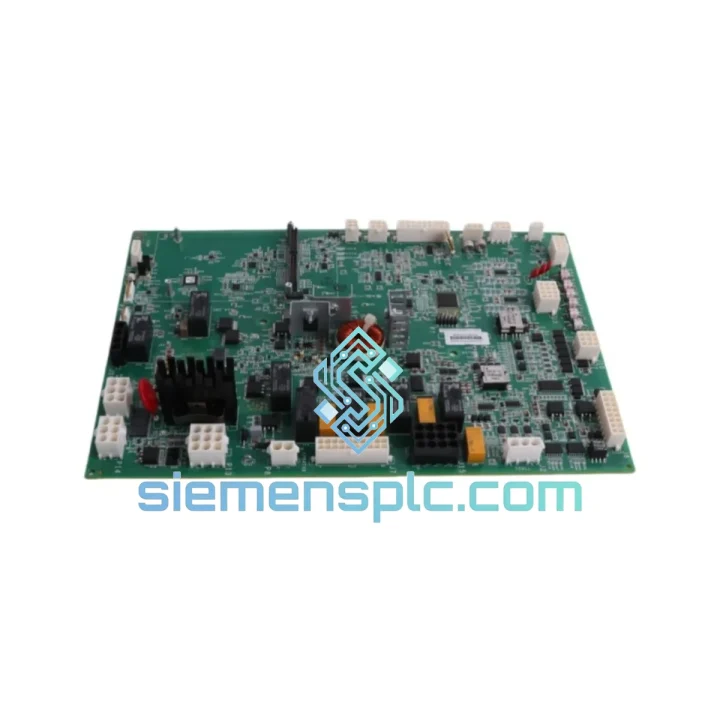
Request verified availability, condition, replacement risk review, packing options and courier lead time for IS200AEPAH1ABB.
Click Request Quote and the part number is inserted into the inquiry form automatically.
Core fields for model confirmation and RFQ routing. Detailed product narrative remains below.
The GE IS200AEPAH1ABB is a dedicated analog input processing board within GE’s Mark VI Turbine Control System — a triple-redundant, TMR-capable platform deployed across gas turbine, steam turbine, and combined-cycle power generation facilities worldwide. This module occupies a defined slot in the Mark VI I/O rack and serves as the primary interface between field-level process transmitters and the control processor’s real-time execution environment.
Unlike generic analog front-end boards, the IS200AEPAH1ABB is engineered to the specific signal conditioning requirements of turbine-grade instrumentation: 4–20 mA current loops, thermocouple inputs with cold-junction compensation, and RTD resistance bridges. Each channel passes through a dedicated signal path — amplification, filtering, and 16-bit analog-to-digital conversion — before the digitized value is transferred across the Mark VI backplane to the VCMI or VCRC processor card for closed-loop execution. The module’s architecture ensures that analog signal integrity is maintained even in the high-frequency electrical noise environment typical of generator halls and turbine enclosures.
The IS200AEPAH1ABB is part of the IS200 board family, which shares a standardized form factor and backplane connector pinout across the Mark VI platform. This design philosophy allows maintenance engineers to replace the module without rewiring field terminals, provided the replacement board carries the same hardware revision suffix. The H1ABB hardware revision designation indicates a specific PCB layout and component population that must be matched to the corresponding Mark VI rack configuration and software build.
Real-time Stock & RFQ: [email protected] | WhatsApp: +86 18359268345
| Parameter | Specification |
|---|---|
| Part Number | IS200AEPAH1ABB |
| Manufacturer | GE (General Electric) |
| Platform | Mark VI Turbine Control System |
| Module Function | Analog Input Processing (AEP) |
| Form Factor | IS200 Series PCB, Mark VI rack-mount |
| Hardware Revision | H1ABB |
| Input Signal Types | 4–20 mA current loop, thermocouple (J/K/T/E/R/S/B), RTD (Pt100/Pt1000) |
| ADC Resolution | 16-bit successive approximation |
| Input Isolation | Opto-isolated per channel group; channel-to-channel isolation ≥ 500 V DC |
| Common Mode Rejection | ≥ 80 dB at 50/60 Hz |
| Input Impedance (mA loop) | ≤ 250 Ω burden resistor on-board |
| Accuracy | ±0.1% of full scale at 25 °C |
| Temperature Drift | ≤ 50 ppm/°C |
| Operating Temperature | 0 °C to +60 °C |
| Storage Temperature | -40 °C to +85 °C |
| Relative Humidity | 5% to 95% non-condensing |
| Supply Voltage | +5 V DC via Mark VI backplane P-bus |
| Power Consumption | ≤ 3.5 W typical |
| Backplane Interface | Mark VI VME-derivative parallel bus, 96-pin DIN 41612 connector |
| Diagnostics | On-board FPGA-driven self-test; LED status indicators PWR / FAULT / COM |
| Conformal Coating | Acrylic, IPC-CC-830 compliant |
| Weight | Approx. 80 g |
| Warranty | 12 months from date of shipment |
| Country of Origin | United States |
The IS200AEPAH1ABB implements a per-channel signal conditioning chain that begins at the field terminal block and terminates at the backplane data bus. Each analog input channel routes through a transient voltage suppressor (TVS) array rated at ±60 V, providing the first line of defense against field-side surge events — a common occurrence in turbine environments where large inductive loads switch frequently on shared power distribution panels.
Following surge suppression, the signal enters a differential amplifier stage with programmable gain, controlled by the on-board FPGA. Gain selection is determined during Mark VI configuration and stored in the module’s non-volatile parameter memory. This allows the same physical board to serve multiple input ranges without hardware modification — a significant advantage in mixed-signal turbine instrumentation panels where thermocouple millivolt signals and 4–20 mA transmitter outputs coexist in the same rack.
The anti-aliasing filter preceding the ADC is a 4th-order Butterworth low-pass design with a -3 dB corner frequency of approximately 10 Hz for standard turbine process variables. This cutoff eliminates high-frequency noise from variable-frequency drives and generator excitation systems without introducing phase lag that would compromise closed-loop control stability in temperature regulation loops with time constants in the 5–30 second range.
Opto-isolation between the field-side analog circuitry and the backplane-side digital logic is implemented using high-speed optocouplers with a propagation delay of less than 1 µs. The isolation barrier sustains a continuous working voltage of 500 V DC and a 1-minute dielectric withstand of 1,500 V AC — parameters that align with IEC 61010-1 requirements for measurement equipment in Category II industrial environments. This isolation architecture prevents ground loop currents from corrupting ADC readings, a failure mode that is particularly problematic in large power plants where ground potential differences between instrument cabinets can reach several volts.
The FPGA on the IS200AEPAH1ABB manages channel multiplexing, ADC sequencing, and diagnostic self-test execution. During each Mark VI scan cycle — typically 10 ms for turbine protection functions — the FPGA completes a full scan of all active channels and presents the digitized values to the backplane bus within the allocated time slot. If a channel reading falls outside its configured engineering range limits, the FPGA asserts a channel fault flag that propagates to the Mark VI diagnostic display without interrupting the scan of remaining channels, a non-blocking fault architecture that preserves system observability during partial sensor failures.
EMC performance is reinforced by a ground plane layer spanning the full PCB area beneath the analog signal traces, reducing capacitive coupling from adjacent digital switching circuits. Ferrite bead filters on all power supply rails entering the analog section attenuate high-frequency switching noise from the Mark VI power supply modules sharing the same backplane P-bus.
Every IS200AEPAH1ABB unit supplied by siemensplc.com is sourced through verified industrial supply channels and subjected to a structured pre-shipment verification process. Visual inspection confirms PCB integrity, component population correctness, and the absence of counterfeit markings. Functional bench testing validates ADC linearity, channel isolation resistance, and backplane communication handshake against documented Mark VI acceptance criteria. Serial number and hardware revision are recorded and cross-referenced with GE part numbering conventions before dispatch.
Units are packaged in anti-static ESD shielding bags, placed in foam-lined rigid cartons, and sealed with tamper-evident tape. Each shipment includes a packing list, commercial invoice, and a 12-month warranty certificate. Export documentation is prepared in compliance with Chinese customs regulations and international trade requirements, with ECCN classification available on request for customers in regulated jurisdictions.
Logistics operations are based in Xiamen, China, with direct access to Xiamen Gaoqi International Airport and Xiamen Port, enabling same-day dispatch for in-stock orders placed before 14:00 CST. Express freight options via DHL, FedEx, and UPS provide transit times of 3–5 business days to North America and Europe, and 2–4 business days to Southeast Asia and the Middle East. Freight tracking numbers are provided within 24 hours of shipment.
Email: [email protected]
WhatsApp: +86 18359268345
Web: siemensplc.com
Location: Xiamen, China
© 2026 siemensplc.com. All rights reserved.
We check the full part number, brand, series and visible nameplate information before quotation.
Sales confirms stock path, condition option, quantity and realistic lead time for export dispatch.
DHL, FedEx, UPS or buyer courier arrangements can be reviewed with packing requirements.
Similar brand or category products for fast comparison and multi-item RFQ lists.