GE
RFQ Ready
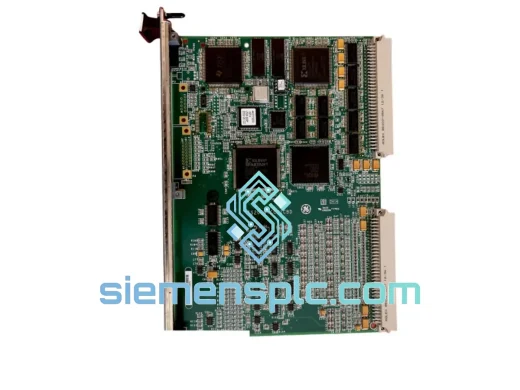
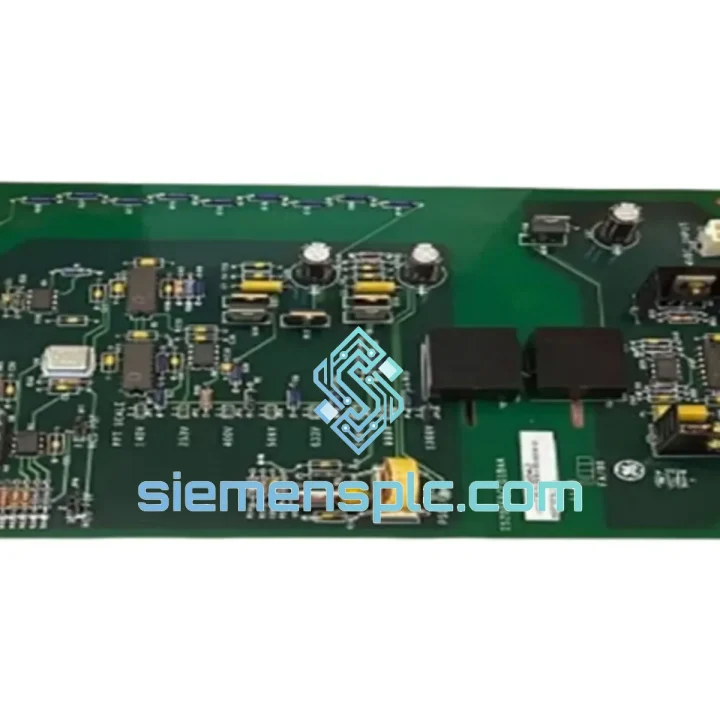
GE IS200VTCCH1CBD Thermocouple Processor Board – Mark VI IS200 Series
Mark VI
Origin US
Thermocouple Processor Board
Request verified availability, condition, replacement risk review, packing options and courier lead time for IS200EDCFG1BAA.
Click Request Quote and the part number is inserted into the inquiry form automatically.
Core fields for model confirmation and RFQ routing. Detailed product narrative remains below.
The GE IS200EDCFG1BAA is a dedicated Exciter DC Feedback Board operating within the Mark VI Turbine Control System — GE’s distributed, triple-redundant control platform deployed across gas turbine, steam turbine, and combined-cycle power generation assets worldwide. Within the Mark VI I/O architecture, this board occupies the exciter feedback slot of the IS200-series I/O rack, where it conditions, scales, and transmits DC excitation voltage and current signals back to the VCMI (VME Communications and Memory Interface) controller for closed-loop AVR (Automatic Voltage Regulator) processing.
Unlike generic analog input modules, the IS200EDCFG1BAA is purpose-engineered for the high-voltage, high-noise environment of a generator excitation circuit. Its signal conditioning chain is optimized for the DC bus voltage range typical of brushless exciter systems, with hardware-level filtering to suppress switching transients generated by thyristor-based excitation rectifiers. The board interfaces directly with the Mark VI backplane via the IS200-series VME-compatible connector, ensuring deterministic data transfer latency aligned with the controller’s 10 ms or 20 ms scan cycle.
In the control loop, the IS200EDCFG1BAA provides the feedback path that closes the AVR regulation loop: measured field voltage and field current values are digitized on-board, transmitted across the backplane, and compared against setpoints in the VCMI’s real-time control algorithm. Any deviation triggers corrective output to the excitation thyristor firing angle, maintaining terminal voltage within ±0.5% of rated under steady-state conditions. This board is therefore a critical deterministic element — its failure or signal degradation directly impacts generator voltage stability and, in TMR (Triple Modular Redundancy) configurations, triggers a voted alarm or controlled shutdown sequence.
Real-time Stock & RFQ: [email protected] | WhatsApp: +86 18359268345
| Parameter | Specification |
|---|---|
| Part Number | IS200EDCFG1BAA |
| Manufacturer | GE (General Electric) |
| Series | Mark VI / IS200 |
| Module Function | Exciter DC Feedback Board |
| Form Factor | PCB module, IS200-series rack-mount |
| Backplane Interface | VME-compatible IS200 backplane connector |
| Signal Type | DC voltage and current feedback (analog) |
| Isolation | Galvanic isolation between field circuit and backplane logic |
| Operating Temperature | 0 °C to +60 °C (panel-mounted, forced-air cooling) |
| Storage Temperature | -40 °C to +85 °C |
| Humidity | 5% to 95% RH, non-condensing |
| Power Supply | Supplied via IS200 backplane (±15 V DC, +5 V DC logic) |
| Compatible Controller | GE Mark VI VCMI, TCCB, SDCC |
| Compatible Software | ToolboxST configuration environment |
| Weight | Approx. 680 g |
| Revision | BAA (hardware revision B, assembly A) |
| Warranty | 12 months from date of shipment |
The IS200EDCFG1BAA’s hardware design reflects the engineering constraints of operating in close electrical proximity to high-power excitation equipment. Several design decisions are worth examining in detail:
Galvanic Isolation Architecture: The board employs transformer-coupled isolation between the field-side signal acquisition circuitry and the backplane logic domain. This isolation barrier — rated to withstand the transient overvoltages common in thyristor-commutated excitation circuits — prevents ground loop currents from corrupting the digitized feedback values. The isolation boundary is placed immediately after the input scaling resistor network, ensuring that the ADC and backplane interface logic operate entirely within the clean 5 V logic domain.
EMC Filtering and Shielding: Input traces on the field-side PCB layer are routed with differential pair geometry and terminated with common-mode chokes to suppress conducted EMI from the excitation bus. The board’s metal faceplate provides a Faraday shield for the front-panel connector area, reducing capacitively coupled interference from adjacent high-voltage wiring in the turbine control enclosure. This design approach is consistent with IEC 61000-4-4 (EFT/Burst) and IEC 61000-4-5 (Surge) immunity requirements applicable to industrial control equipment.
Signal Conditioning Chain: Raw field voltage is attenuated through a precision resistor divider network with a temperature coefficient below 25 ppm/°C, ensuring measurement drift remains within acceptable limits across the full operating temperature range. The conditioned signal passes through a second-order active low-pass filter (cutoff frequency selected to reject thyristor switching harmonics above 1 kHz) before reaching the on-board ADC. This filtering strategy preserves the fundamental DC component while eliminating high-frequency noise that would otherwise alias into the digitized feedback value.
Backplane Data Transfer: Digitized feedback values are transferred to the VCMI via the IS200 VME backplane using a deterministic, time-slotted protocol. The transfer latency is bounded and predictable, a prerequisite for the Mark VI’s hard real-time control loops. The board’s local microcontroller manages the backplane handshake, performs self-diagnostic checks on the ADC conversion result (range validation, stuck-at-fault detection), and sets the appropriate diagnostic status bits readable by ToolboxST.
Redundancy Support: In TMR Mark VI configurations, three IS200EDCFG1BAA boards (one per control path: R, S, T) provide independent feedback measurements. The VCMI performs median-select voting across the three values before passing the result to the AVR algorithm. A single board failure or signal deviation beyond the voting threshold triggers a diagnostic alarm without forcing a turbine trip, supporting the Mark VI’s fault-tolerant operational philosophy.
Every IS200EDCFG1BAA unit supplied by siemensplc.com is sourced through verified industrial supply channels with full traceability documentation. Prior to shipment, each board undergoes visual inspection for physical damage, connector pin integrity check, and where applicable, functional bench verification against known-good reference signals. Anti-static packaging (ESD bag + foam insert + sealed carton) is standard for all PCB module shipments.
Our logistics operation is based in Xiamen, China — a major international port city with direct air freight connections to Singapore, Dubai, Frankfurt, Los Angeles, and Tokyo. Standard international shipments are dispatched within 2–3 business days of order confirmation. Express air freight options (DHL, FedEx, UPS) are available for urgent requirements, with typical transit times of 3–5 business days to most destinations in Europe, Southeast Asia, the Middle East, and the Americas. All export documentation — commercial invoice, packing list, and certificate of origin — is prepared in compliance with destination country import requirements. HS Code: 8537.10.
A 12-month warranty covers manufacturing defects and functional failures under normal operating conditions. Warranty claims are processed with a replacement-first policy to minimize downtime for operational power plants.
Email: [email protected]
WhatsApp: +86 18359268345
Web: siemensplc.com
Location: Xiamen, China
© 2026 siemensplc.com. All rights reserved.
We check the full part number, brand, series and visible nameplate information before quotation.
Sales confirms stock path, condition option, quantity and realistic lead time for export dispatch.
DHL, FedEx, UPS or buyer courier arrangements can be reviewed with packing requirements.
Similar brand or category products for fast comparison and multi-item RFQ lists.