GE
RFQ Ready
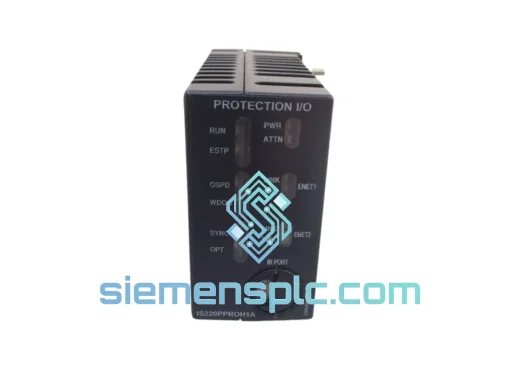
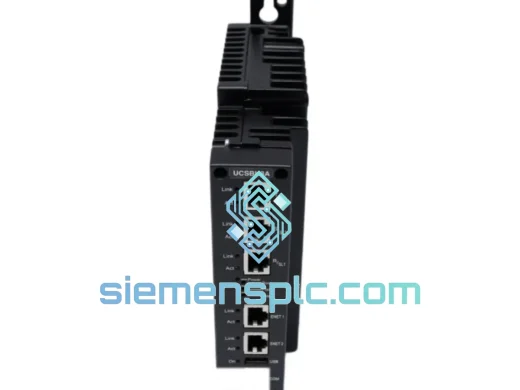
GE IS420UCSBH3A DCS Controller Module – Mark VIe
Mark VI
Origin US
DCS Controller Module
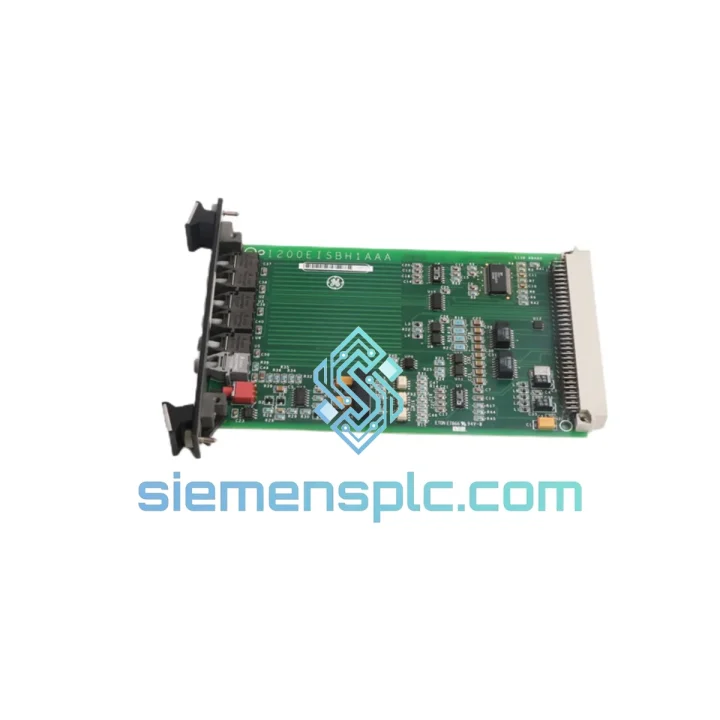
Request verified availability, condition, replacement risk review, packing options and courier lead time for IS200EISBH1A.
Click Request Quote and the part number is inserted into the inquiry form automatically.
Core fields for model confirmation and RFQ routing. Detailed product narrative remains below.
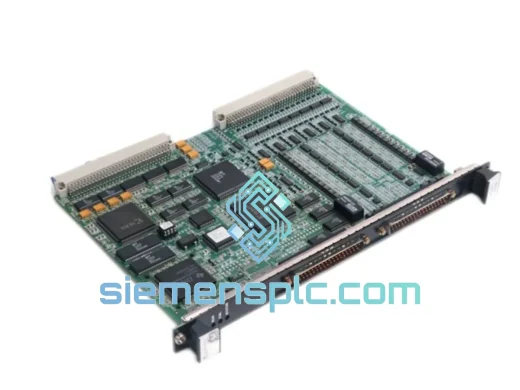
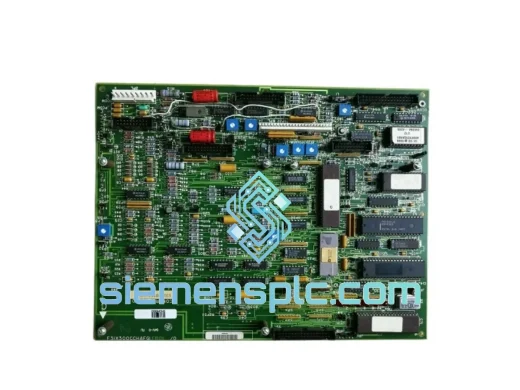
The IS200EISBH1A is a dedicated fiber optic communication interface board engineered by General Electric for deployment within the Mark VI Turbine Control System — GE’s distributed control platform for gas turbines, steam turbines, and combined-cycle power generation units. Within the Mark VI architecture, the IS200EISBH1A occupies a critical position in the inter-controller communication fabric, providing the physical and logical layer that enables deterministic data exchange between the VCMI (VME Communication Module Interface), I/O packs, and the supervisory HMI layer.
Unlike copper-based signal paths, the fiber optic medium used by this board eliminates ground loop interference and galvanic coupling — two failure modes that are endemic to high-voltage switchyard environments. The board’s optical transceivers operate at 820 nm wavelength using multi-mode fiber, achieving a nominal data rate sufficient to sustain the Mark VI’s 10 ms control cycle without frame loss under rated electrical stress conditions. This makes the IS200EISBH1A not merely a passive conduit but an active determinism-preserving element in the control loop.
The board interfaces with the Mark VI’s IONet — GE’s proprietary deterministic Ethernet derivative — and bridges it to the fiber backbone connecting distributed I/O racks. Each optical port on the IS200EISBH1A is independently buffered, meaning a fault on one fiber segment does not propagate latency or data corruption to adjacent channels. This architectural isolation is essential in TMR (Triple Modular Redundancy) configurations where voting logic depends on independent, uncorrupted data streams from three separate I/O paths.
Real-time Stock & RFQ: [email protected] | WhatsApp: +86 18359268345
| Parameter | Specification |
|---|---|
| Part Number | IS200EISBH1A |
| Manufacturer | General Electric (GE) |
| Product Series | Mark VI Turbine Control System |
| Board Function | Fiber Optic Communication Interface |
| Optical Wavelength | 820 nm (multi-mode fiber) |
| Fiber Connector Type | ST (IEC 60874-10) |
| Communication Protocol | GE IONet (deterministic Ethernet derivative) |
| Data Rate | Compatible with Mark VI 10 ms control cycle |
| Channel Isolation | Per-port independent optical buffering |
| EMC Compliance | IEC 61000-4 series (conducted & radiated immunity) |
| Operating Temperature | 0°C to +60°C |
| Storage Temperature | -40°C to +85°C |
| Relative Humidity | 5% to 95% non-condensing |
| Form Factor | PCB module, VME-compatible form factor |
| Power Supply | Derived from Mark VI backplane (+5 V, +/-12 V) |
| Weight | Approx. 120 g |
| Condition Available | New OEM / Tested Surplus |
| Warranty | 12 months from shipment date |
| Country of Origin | United States |
The IS200EISBH1A’s hardware design reflects GE’s engineering philosophy for high-availability industrial control: fault containment at the physical layer, not just at the software layer. Several design decisions are worth examining in detail.
Optical Isolation Architecture: The board employs opto-electronic transceivers that provide complete galvanic isolation between the electrical backplane domain and the fiber transmission domain. This means that even a catastrophic ground fault on the turbine generator — producing transient voltages in the kilovolt range — cannot couple into the control logic through the communication path. The isolation barrier is rated to withstand common-mode transients consistent with IEC 61000-4-5 surge immunity testing at the 2 kV level.
Per-Channel Buffering Logic: Each fiber port on the IS200EISBH1A contains an independent FIFO buffer and clock recovery circuit. This design prevents a degraded fiber link (exhibiting increased bit error rate due to connector contamination or bend radius violation) from introducing jitter into adjacent channels. In a TMR Mark VI system, this is architecturally significant: the voting arbitration logic in the VCMI requires that the three data streams arrive within a defined time window. A jitter-contaminated channel that falls outside this window is flagged as a voter mismatch, triggering a diagnostic alarm rather than a silent data error.
EMC Design Measures: The PCB layout employs a multi-layer stackup with dedicated ground planes separating the analog optical front-end from the digital logic section. Ferrite beads are placed on all power supply entry points to suppress high-frequency conducted noise from the backplane. The board’s metal faceplate provides a Faraday shield for the optical transceiver section, reducing susceptibility to radiated fields from adjacent high-power switching equipment in the control cabinet.
Thermal Management: The IS200EISBH1A operates without active cooling, relying on conduction through the VME card guides and convection within the Mark VI enclosure. The optical transceivers are rated for junction temperatures up to 85°C, providing adequate thermal margin in enclosures with functioning forced-air cooling systems. Thermal derating is not required at ambient temperatures below 50°C.
Every IS200EISBH1A unit dispatched from our Xiamen facility has passed a structured incoming inspection protocol. Visual examination covers PCB surface condition, connector pin integrity, optical port cleanliness, and label authenticity against GE’s documented part marking standards. Functional verification confirms that the board’s optical transceivers produce output power within the specified range when energized on a test bench configured to replicate the Mark VI backplane power environment.
Units sourced as tested surplus are subjected to an extended burn-in period at elevated temperature (50°C, 48 hours) to screen for latent component failures before dispatch. All units ship with an anti-static bag, foam-lined carton, and a test record documenting the inspection results and the technician’s identification. A Certificate of Conformance is issued with every order.
From Xiamen, we dispatch via DHL Express, FedEx International Priority, and UPS Worldwide Express. Transit times to major industrial hubs are typically 3–5 business days to Europe, 4–6 days to North America, and 2–3 days to Southeast Asia. Full export documentation — commercial invoice, packing list, and certificate of origin — is prepared for every international shipment. HS code 8537.10 is applied for customs classification. Emergency same-day dispatch is available for orders confirmed before 14:00 CST.
Email: [email protected]
WhatsApp: +86 18359268345
Web: siemensplc.com
Location: Xiamen, China
© 2026 siemensplc.com. All rights reserved.
We check the full part number, brand, series and visible nameplate information before quotation.
Sales confirms stock path, condition option, quantity and realistic lead time for export dispatch.
DHL, FedEx, UPS or buyer courier arrangements can be reviewed with packing requirements.
Similar brand or category products for fast comparison and multi-item RFQ lists.