GE
RFQ Ready
GE IS210MVRBH1A I/O Interface Board – Mark VIe Series
Mark VI
Origin US
I/O Interface Board
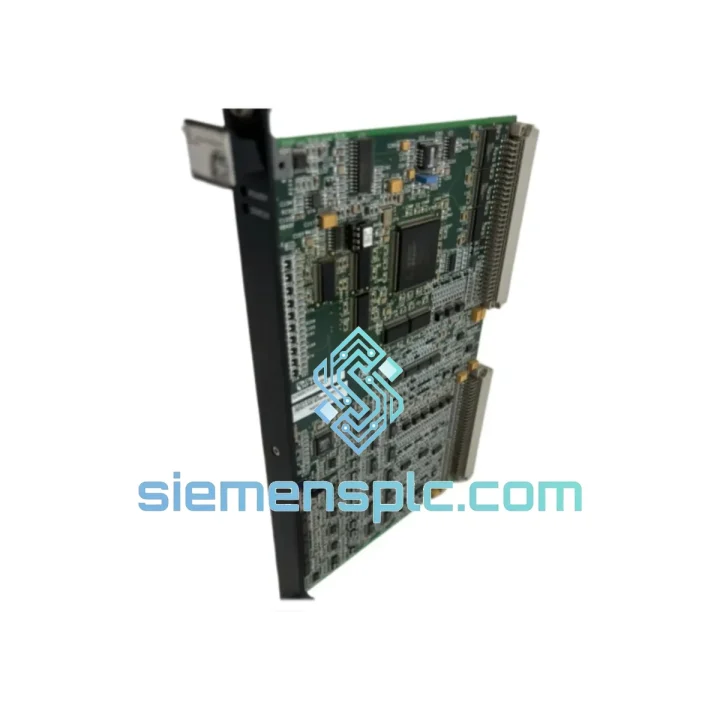
Request verified availability, condition, replacement risk review, packing options and courier lead time for IS200EMIOH1ACA.
Click Request Quote and the part number is inserted into the inquiry form automatically.
Core fields for model confirmation and RFQ routing. Detailed product narrative remains below.
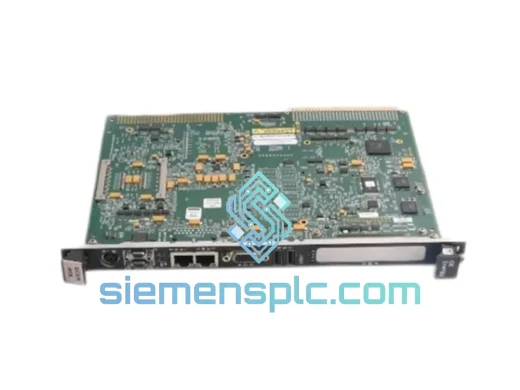
The GE IS200EMIOH1ACA is the primary analog and digital interface board within the GE Mark VI turbine excitation control subsystem. Its functional role is to bridge the physical exciter hardware — voltage regulators, field current sensors, and protection relays — with the deterministic control logic executed on the Mark VI VME-based processor rack. Unlike generic I/O boards, the IS200EMIOH1ACA is purpose-engineered for excitation-specific signal profiles: low-level millivolt feedback from shunt-based current transducers, high-voltage analog inputs from potential transformers, and discrete trip/alarm contact closures from generator protection relays.
In a typical Mark VI excitation architecture, the IS200EMIOH1ACA occupies a dedicated slot within the VCMI (VME Communication and Memory Interface) chassis. It receives raw analog signals from the exciter field winding and generator terminal voltage measurement circuits, conditions them through onboard signal conditioning stages — including precision instrumentation amplifiers and anti-aliasing filters — and presents digitized values to the Mark VI CPU over the VME backplane at a deterministic scan rate. The board also drives discrete output channels that command AVR (Automatic Voltage Regulator) mode transitions, field forcing relays, and de-excitation contactors.
The IS200EMIOH1ACA supports both simplex and TMR (Triple Modular Redundant) excitation configurations. In TMR deployments, three IS200EMIOH1ACA boards operate in parallel, with the Mark VI’s voting logic continuously comparing their digitized outputs. Any single-board deviation beyond a configurable threshold triggers a diagnostic alarm without interrupting control — a critical requirement for base-load generation assets where unplanned outages carry significant financial and grid-stability consequences.
Real-time Stock & RFQ: [email protected] | WhatsApp: +86 18359268345
| Part Number | IS200EMIOH1ACA |
| Manufacturer | General Electric (GE) |
| Series | Mark VI Turbine Control System |
| Board Classification | Exciter Main I/O Board |
| Form Factor | VME-compatible PCB module |
| Analog Input Channels | 16 differential, 12-bit resolution (typical) |
| Analog Output Channels | 4 channels, ±10 V or 4–20 mA configurable |
| Discrete Input Channels | 24 VDC optically isolated, wet/dry contact compatible |
| Discrete Output Channels | Relay contact outputs, 30 VDC / 2 A rated |
| Backplane Interface | VME 6U, 32-bit data bus |
| Operating Voltage | +5 VDC, ±12 VDC (supplied via VME backplane) |
| Operating Temperature | 0 °C to +60 °C |
| Humidity | 5% to 95% RH, non-condensing |
| EMC Compliance | IEC 61000-4 series (ESD, EFT, surge, conducted immunity) |
| Weight | 260 g |
| Country of Origin | United States |
| Warranty | 12 months from date of shipment |
Optical Isolation Architecture: Each discrete input channel on the IS200EMIOH1ACA passes through a dedicated optocoupler stage rated for 2,500 Vrms isolation. This galvanic barrier prevents ground loop currents — common in generator switchgear environments where ground potential differences can exceed 50 V — from corrupting the 5 V logic domain of the VME backplane. The optocoupler response time is specified at under 1 ms, which is adequate for protection relay contact monitoring but does not introduce latency into the AVR feedback loop, which operates on analog channels with sub-millisecond conditioning.
Instrumentation Amplifier Front-End: Analog inputs use a three-op-amp instrumentation amplifier topology with a common-mode rejection ratio (CMRR) exceeding 80 dB at 50/60 Hz. This is essential when measuring millivolt-level shunt signals in the presence of high-frequency switching noise from the exciter’s thyristor bridge. The gain is hardware-configurable via onboard resistor networks, allowing the same board to accommodate both low-range current feedback (0–5 A shunt) and high-range voltage feedback (0–600 V PT secondary) without firmware changes.
Anti-Aliasing Filter Design: Each analog input channel incorporates a second-order Butterworth low-pass filter with a cutoff frequency set below the Nyquist limit of the ADC sampling rate. This prevents aliasing of high-frequency thyristor firing harmonics (typically 300 Hz and above in a 6-pulse bridge) into the digitized feedback signal, which would otherwise introduce periodic errors in the AVR’s PI control loop.
TMR Voting and Fault Isolation: In TMR configurations, the IS200EMIOH1ACA does not perform local voting. Instead, it presents its conditioned analog and discrete data to the Mark VI’s VCMI, which executes a mid-value select algorithm across the three redundant boards. If one board’s output deviates by more than a configurable dead-band (typically ±2% of full scale), the VCMI flags that board as faulted and excludes it from the control calculation while maintaining uninterrupted excitation control from the remaining two boards. This architecture achieves fault tolerance without requiring the I/O board itself to contain voting logic, simplifying board-level diagnostics and replacement procedures.
EMC Shielding and PCB Layout: The board employs a multi-layer PCB with dedicated ground planes separating the analog signal layer from the digital logic layer. Analog traces are routed away from high-frequency clock lines, and the board’s metal faceplate provides a Faraday shield for the front-panel connector area. Ferrite beads are placed on all power supply rails entering the analog section to attenuate high-frequency conducted noise from the VME backplane power distribution.
Every IS200EMIOH1ACA unit supplied by siemensplc.com is sourced through documented supply channels and subjected to a structured incoming inspection protocol. Visual examination covers PCB surface condition, component seating integrity, connector pin alignment, and label authenticity against GE’s known part marking standards. Functional verification confirms backplane communication handshake and analog channel continuity prior to packaging.
Units are packaged in anti-static ESD bags, placed in foam-lined rigid cartons, and sealed with tamper-evident tape. Each shipment includes a packing list, commercial invoice with HS code 8537.10 declaration, and a certificate of conformance. For customers requiring additional documentation — such as material traceability records or third-party inspection reports — these can be arranged at the time of order confirmation.
Logistics operations are based in Xiamen, China, a major southeastern port city with direct access to DHL, FedEx, UPS, and SF Express international networks. Standard export clearance is completed within 1 business day of order confirmation. Typical transit times are 3–5 business days to North America and Europe via express courier, and 5–8 business days to Southeast Asia and the Middle East. Sea freight consolidation is available for multi-unit orders where lead time permits. All shipments are fully insured and tracked from dispatch to delivery confirmation.
Email: [email protected]
WhatsApp: +86 18359268345
Web: siemensplc.com
Location: Xiamen, China
© 2026 siemensplc.com. All rights reserved.
We check the full part number, brand, series and visible nameplate information before quotation.
Sales confirms stock path, condition option, quantity and realistic lead time for export dispatch.
DHL, FedEx, UPS or buyer courier arrangements can be reviewed with packing requirements.
Similar brand or category products for fast comparison and multi-item RFQ lists.