GE
RFQ Ready
GE IS210MVRBH1A I/O Interface Board – Mark VIe Series
Mark VI
Origin US
I/O Interface Board
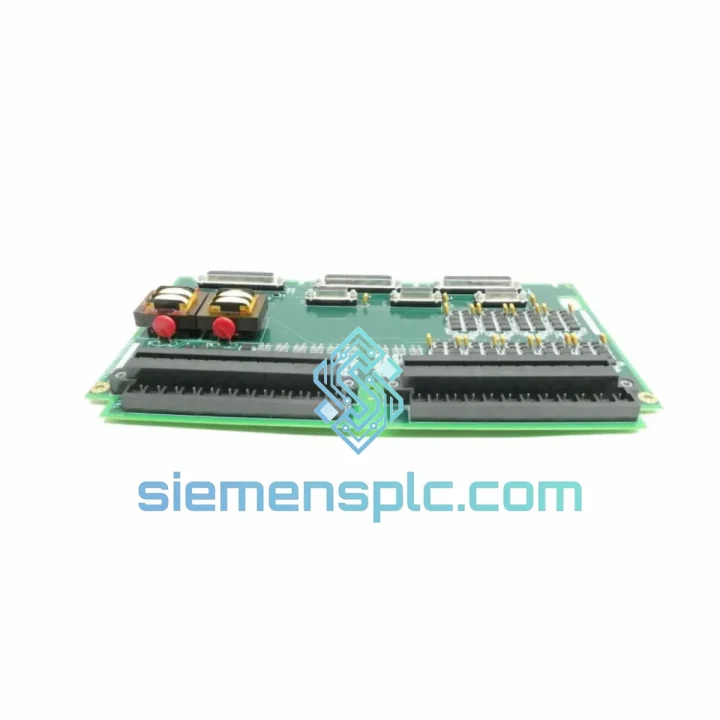
Request verified availability, condition, replacement risk review, packing options and courier lead time for IS200TPROH1B.
Click Request Quote and the part number is inserted into the inquiry form automatically.
Core fields for model confirmation and RFQ routing. Detailed product narrative remains below.
The IS200TPROH1B is a single-slot protective termination board produced by General Electric for deployment within the Mark VI and Mark VIe Speedtronic turbine control platform. Its architectural role is unambiguous: it forms the hardwired boundary between field-side protective instrumentation — overspeed pickups, flame scanner outputs, vibration transducer contacts, and emergency shutdown relay coils — and the logic-side I/O processor pack that feeds the Mark VI’s protective function execution engine. This is not a general-purpose I/O termination board. The TPRO designation indicates a board class engineered specifically for protective-grade signal paths where deterministic response, galvanic isolation, and fail-safe logic convention are mandatory design requirements, not optional features.
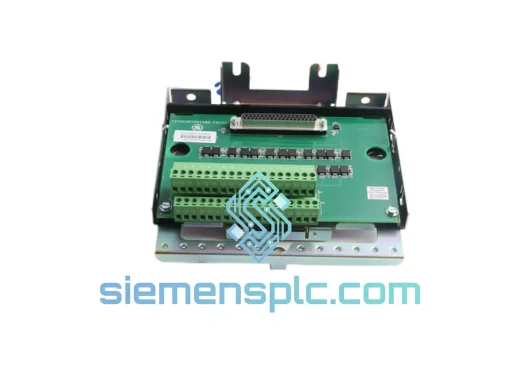
Within the Mark VI cabinet architecture, the IS200TPROH1B occupies a terminal board slot on the I/O rack and connects to its paired I/O pack via a 37-pin D-subminiature interface. Field conductors — rated for 0.5 mm² to 2.5 mm² cross-section — land on the board’s screw-terminal blocks, which are torque-rated and vibration-resistant to withstand the mechanical environment of a turbine hall. Each field input is routed through dedicated signal conditioning circuitry before the signal crosses the isolation barrier into the logic domain. This physical separation of field and logic ground references is the foundational design principle that allows the board to operate reliably in environments where ground potential differences between field instruments and the control cabinet can reach several hundred volts during fault events.
The board’s passive architecture — no onboard microcontroller, no firmware, no programmable logic — is a deliberate engineering choice. In protective applications, firmware introduces version management overhead, potential for software-induced failure modes, and uncertainty in signal propagation timing. The IS200TPROH1B eliminates all three concerns. Signal transit from field terminal to I/O pack connector is governed entirely by passive component characteristics: optocoupler forward current, phototransistor switching time, and pull-up resistor bias. The result is a propagation delay that is deterministic, temperature-stable, and independent of any software scheduling cycle — a property that is directly relevant to the Mark VI’s protective function response time budget.
Real-time Stock & RFQ: [email protected] | WhatsApp: +86 18359268345
| Parameter | Specification |
|---|---|
| Part Number | IS200TPROH1B |
| Manufacturer | General Electric (GE) |
| Platform | Mark VI / Mark VIe Speedtronic Turbine Control |
| Board Classification | Protective Termination Board (TPRO Class) |
| Form Factor | IS200 Single-Slot Terminal Board, DIN-rail compatible |
| Field Supply Voltage | 24 VDC or 125 VDC (field circuit dependent) |
| Input Signal Types | Discrete protective inputs — dry contact and voltage-sourced |
| Isolation Barrier | Optical isolation, ≥1,500 V RMS field-to-logic |
| Logic Convention | De-energize-to-trip (fail-safe open-circuit behavior) |
| Signal Propagation Delay | <1 ms (field terminal to I/O pack connector, full path) |
| Transient Protection | TVS diodes per input channel, rated to field voltage |
| Conductor Cross-Section | 0.5 mm² – 2.5 mm² (screw-terminal field wiring blocks) |
| I/O Pack Interface | 37-pin D-subminiature connector |
| PCB Surface Finish | Conformal coated (solder side), gold-plated edge connectors |
| Operating Temperature | 0°C to +60°C (forced-air cabinet ambient) |
| Storage Temperature | -40°C to +85°C |
| Relative Humidity | 5% – 95% non-condensing |
| Unit Weight | 360 g |
| Country of Origin | United States of America |
| Warranty | 12 months from shipment date |
The IS200TPROH1B implements a two-domain signal topology that enforces a hard physical boundary between field-side wiring and the logic-side I/O pack interface. Each protective input channel is routed through a dedicated optocoupler stage — a high-speed phototransistor device with a series current-limiting resistor sized for the nominal field voltage. The optocoupler provides a minimum 1,500 V RMS galvanic isolation barrier, which is the primary mechanism preventing ground fault currents and common-mode transients from propagating into the Mark VI’s digital processing domain.
On the logic side of each optocoupler output, a pull-up resistor network biases the signal to a defined logic-high state when the field input is open (de-energized). This de-energize-to-trip convention means that an open-circuit wiring fault — broken conductor, failed relay contact, or disconnected field device — drives the protective input to its tripped state. This behavior is consistent with IEC 61511 functional safety design principles for safety instrumented systems, where the failure mode of the signal path must default to the safe state without requiring active intervention from the controller.
EMC performance is addressed through a layered approach. Each field input terminal is bridged by a transient voltage suppressor (TVS) diode rated for the applicable field voltage, clamping inductive kickback from relay coils, solenoid valves, and contactor coils to levels below the optocoupler’s absolute maximum input voltage. Where multi-conductor field cables are anticipated to carry differential-mode noise from variable-frequency drives or high-current switching equipment, common-mode chokes are placed at the cable entry points. The PCB ground plane is partitioned into a field-side analog ground and a logic-side digital ground, joined at a single-point star connection at the board’s chassis ground lug. This layout prevents circulating ground currents — a common source of low-frequency noise coupling in mixed-signal industrial PCBs — from modulating the signal paths.
The absence of onboard programmable logic is a deliberate reliability strategy. With no firmware to manage, there are no version compatibility constraints when the Mark VI controller software is upgraded, no risk of configuration data loss during power cycling, and no requirement for periodic firmware integrity checks as part of the plant’s preventive maintenance program. The board’s mean time between failures (MTBF) is governed entirely by passive component reliability — a well-characterized failure mode with predictable Arrhenius-model degradation curves — rather than by the more complex failure statistics of embedded processors and flash memory.
Every IS200TPROH1B unit offered by siemensplc.com is sourced as genuine General Electric OEM hardware through verified industrial distribution and authorized surplus channels, with full traceability documentation retained on file. Incoming inspection covers physical condition assessment of the PCB, connector integrity, component population verification against the GE bill of materials, and label authenticity checks. Electrical verification includes continuity measurement of the field-to-logic signal path for each channel and isolation resistance measurement between field and logic ground domains using a 500 VDC megohmmeter. Units that do not meet acceptance criteria are quarantined and removed from available inventory — they are not offered for sale at any price point.
Packaging follows anti-static handling protocols throughout. Each board is placed in a conductive foam tray inside an ESD shielding bag, heat-sealed, and placed in a rigid double-wall corrugated carton with die-cut foam corner protection. This configuration is rated to withstand the mechanical shock and vibration levels of ASTM D4169 Distribution Cycle 13 for international air freight — the primary shipping mode for time-critical spare parts orders where transit time directly affects plant availability.
Dispatch is from Xiamen, China, with access to DHL Express, FedEx International Priority, and UPS Worldwide Express services. In-stock orders are typically dispatched within 1–2 business days of payment confirmation. Export documentation — commercial invoice, packing list, certificate of origin, and HS code declaration — is prepared as standard for every international shipment. For customers in regions requiring import permits or end-user certificates, advance documentation support is provided to prevent customs clearance delays. A 12-month warranty from the shipment date covers all units against manufacturing defects and latent component failures, with a target warranty claim response time of one business day and replacement dispatch from Xiamen stock upon claim approval.
Email: [email protected]
WhatsApp: +86 18359268345
Web: siemensplc.com
Location: Xiamen, China
© 2026 siemensplc.com. All rights reserved.
We check the full part number, brand, series and visible nameplate information before quotation.
Sales confirms stock path, condition option, quantity and realistic lead time for export dispatch.
DHL, FedEx, UPS or buyer courier arrangements can be reviewed with packing requirements.
Similar brand or category products for fast comparison and multi-item RFQ lists.