
GE
In Stock OK
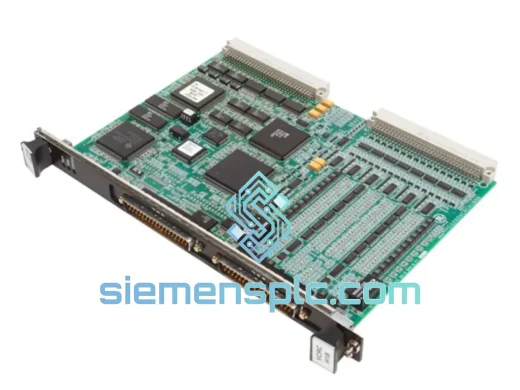
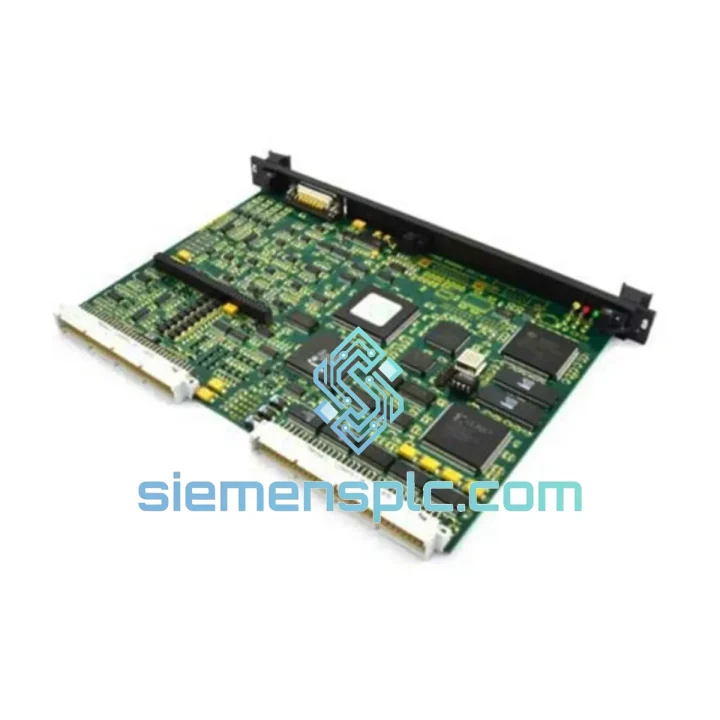
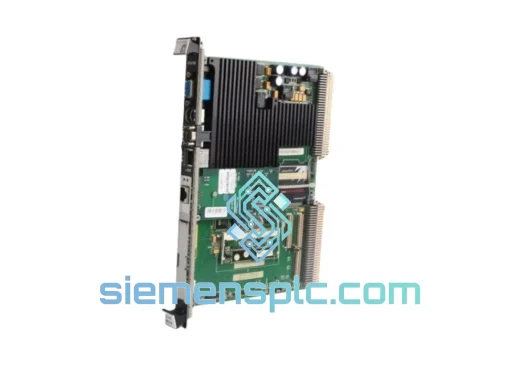
GE IS200VTURH1BAC Turbine Protection Card – Mark VI
Request verified availability, condition, replacement risk review, packing options and courier lead time for IS200VTURH1BAC.
BrandGE
Part NumberIS200VTURH1BAC
ConditionAvailability Check
Lead TimeRFQ Confirmation
DocumentsDatasheet / photos by RFQ
ShippingExport packing available
Auto-filled RFQ
IS200VTURH1BAC
Click Request Quote and the part number is inserted into the inquiry form automatically.
- Reply by email: [email protected]
- WhatsApp / Tel: +86 18359268345
- Mon-Sat 9:00-18:00 GMT+8
Procurement Data
Key Product Information
Core fields for model confirmation and RFQ routing. Detailed product narrative remains below.
- Brand
- GE
- Primary Part Number
- IS200VTURH1BAC
- Product Type
- Turbine Protection Card
- Series / Family
- Mark VI
- Manufacturer
- GE (General Electric)
- Country of Origin
- US
- Catalog Category
- Relays & Protection
- Operating Temp.
- 0°C to +60°C
- Warranty
- 12 months — functional defect coverage from dispatch date
Model confirmed for inquiry
IS200VTURH1BAC
Send quantity, destination and urgency. The RFQ form keeps this part number attached.
Request Quote
Product Overview
GE IS200VTURH1BAC — Overspeed Trip Logic and Emergency Protection at the Heart of Mark VI TMR Architecture
In a gas turbine control system, the protection card is not a peripheral — it is the last line of defense between a controlled shutdown and a catastrophic mechanical failure. The GE IS200VTURH1BAC occupies the turbine protection slot within the Mark VI VME-based control rack, executing overspeed detection, emergency trip relay logic, and real-time speed signal arbitration across the R, S, and T controller triad in a Triple Modular Redundancy (TMR) configuration. When this card fails, the turbine cannot be safely operated. There is no workaround, no bypass, and no delay that is acceptable — replacement must happen on the shortest possible timeline.
This page provides the engineering-grade technical reference, hardware logic analysis, and sourcing information required to make a confident, fast procurement decision for the IS200VTURH1BAC.
Real-time Stock & RFQ: [email protected] | WhatsApp: +86 18359268345
Technical Parameters
| Parameter | Specification |
|---|---|
| Part Number | IS200VTURH1BAC |
| Manufacturer | GE (General Electric) |
| Series | Mark VI Turbine Control System |
| Card Function | Primary Turbine Protection — Overspeed Trip, Emergency Shutdown Logic |
| Form Factor | VME-bus plug-in card (6U) |
| Supply Voltage | 24 VDC (rack bus powered) |
| Speed Input Channels | 3 × magnetic pickup / proximity probe inputs |
| Trip Relay Output | Hardwired 2-of-3 voted relay output |
| Communication Bus | IONet (GE proprietary Ethernet-based) |
| Operating Temperature | 0°C to +60°C |
| Storage Temperature | -40°C to +85°C |
| Humidity (Operating) | 5% to 95% RH, non-condensing |
| Vibration Resistance | IEC 60068-2-6 compliant |
| EMC Compliance | CE marked; IEC 61000-4 series |
| Firmware Tool | GE Toolbox (GEH-6421 reference) |
| Hardware Revision | BAC (confirmed in-stock revision) |
| Weight | ~100 g |
| Stock Status | ✅ Ready to Ship — Contact for live availability |
| Warranty | 12 months — functional defect coverage from dispatch date |
Hardware Logical Analysis
The IS200VTURH1BAC is not a general-purpose I/O card repurposed for protection duty. It is a dedicated hardware protection processor with logic architecture designed specifically around the failure modes of large rotating machinery.
2-of-3 Voted Trip Architecture: In a Mark VI TMR rack, three VTURH1 cards — one per controller (R, S, T) — each independently process speed signals from their assigned magnetic pickup inputs. The trip decision is made by a hardwired 2-of-3 relay voting circuit that operates independently of the IONet communication bus. This means a trip command executes even if the IONet link is degraded or a single controller has faulted. The protection function is not software-dependent at the final output stage — this is a deliberate safety architecture choice that eliminates the risk of a software hang blocking a legitimate trip.
Speed Signal Conditioning: The card accepts raw magnetic pickup (MPU) or proximity probe signals, which are variable-frequency AC waveforms whose frequency is proportional to shaft speed. The VTURH1BAC includes onboard signal conditioning circuitry — zero-crossing detection, frequency-to-digital conversion, and noise filtering — that converts these analog waveforms into a digital speed count with a resolution sufficient to detect overspeed events within one shaft revolution. At 3,600 RPM (60 Hz machines), this translates to a detection window of approximately 16.7 milliseconds per revolution.
EMC Design: The card’s PCB layout incorporates ground plane isolation between the analog speed input section and the digital processing section, reducing common-mode noise coupling from the high-voltage turbine environment. Opto-isolation is used at the relay output stage to prevent ground loop currents from the trip circuit from feeding back into the card’s logic supply. This is particularly relevant in installations where the trip solenoid circuit shares a common ground reference with the turbine skid earthing system.
Watchdog and Self-Diagnostics: The VTURH1BAC implements a hardware watchdog timer that monitors the card’s internal processor cycle. If the processor fails to reset the watchdog within the defined interval — typically 100–200 ms — the card asserts a fault output on the IONet bus and forces its relay to the de-energized (trip) state. This fail-safe behavior ensures that a card failure does not silently remove protection coverage; it forces a controlled shutdown rather than leaving the turbine unprotected.
System Integration Benefits
- Deterministic Trip Response: Hardwired relay voting ensures the trip output latency is bounded by relay physics (~10 ms), not by software scheduler cycles or network latency — critical for overspeed events where shaft acceleration can exceed 100 RPM/s.
- Non-Intrusive Hot Replacement in TMR: In a healthy TMR system, a single VTURH1BAC can be replaced while the turbine remains online. The remaining two controllers maintain 2-of-3 voting integrity during the card swap, eliminating the need for a planned outage for card replacement.
- IONet Diagnostic Transparency: The card continuously broadcasts speed values, relay state, and self-diagnostic status over IONet. GE Toolbox displays this data in real time, allowing engineers to verify protection coverage without physical inspection of the relay contacts.
- Firmware Version Traceability: Each card stores its firmware revision in non-volatile memory, readable via GE Toolbox. This enables audit-trail documentation for functional safety compliance (IEC 61511 / SIL verification).
- Speed Setpoint Flexibility: Overspeed trip setpoints are configured in software via GE Toolbox and stored in the card’s EEPROM. No hardware jumper changes are required when adjusting trip thresholds for different turbine ratings or fuel types.
- Alarm Differentiation: The card distinguishes between a speed sensor failure (open circuit, signal loss) and an actual overspeed condition, generating separate alarm codes for each. This prevents nuisance trips caused by sensor wiring faults while maintaining genuine overspeed protection.
- Cross-Controller Speed Comparison: In TMR mode, the three VTURH1BAC cards exchange speed readings over IONet and flag discrepancies exceeding a configurable threshold. A single sensor failure is identified and annunciated without triggering a trip, preserving plant availability.
- Backward Compatibility with Mark VIe: With appropriate IONet configuration and firmware, the IS200VTURH1BAC integrates into Mark VIe racks, protecting capital investment in existing spare card inventories during system upgrade projects.
Quality Assurance & Global Logistics
Sourcing and Verification: Every IS200VTURH1BAC unit offered is sourced from decommissioned OEM systems, authorized surplus channels, or certified refurbishers with documented chain of custody. Hardware revision (BAC) is physically verified against the PCB silkscreen and component date codes before listing. Units with evidence of field repair, burned components, or non-OEM replacement parts are rejected at incoming inspection.
Functional Test Protocol: Each card undergoes a power-on functional test that verifies: (1) IONet communication link establishment, (2) speed input channel response to a simulated MPU signal, (3) relay output state under normal and trip conditions, and (4) watchdog reset behavior. Test results are logged and available upon request with each shipment.
Packaging: Cards are shipped in anti-static (ESD) bags, placed in foam-lined rigid cartons. For international air freight, cartons are double-boxed with moisture-absorbing desiccant packs to protect against humidity exposure during transit.
Logistics from Xiamen, China: Shipments originate from our Xiamen warehouse. Standard international transit times are 2–4 business days via DHL Express or FedEx International Priority. For emergency plant shutdowns, same-day dispatch is available for orders confirmed before 14:00 CST. We prepare full export documentation — commercial invoice, packing list, and certificate of origin — for customs clearance in all major markets including the EU, USA, Middle East, and Southeast Asia. HS Code 8537.10 applies to most shipments; we confirm the applicable code per destination country upon order confirmation.
Warranty: 12 months from dispatch date, covering functional defects under normal operating conditions. Warranty claims are processed within 5 business days of receipt of the returned unit.
Contact Information
📧 Email: [email protected]
💬 WhatsApp: +86 18359268345
🌐 Web: siemensplc.com
📍 Location: Xiamen, China
© 2026 siemensplc.com. All rights reserved.
Ready to quote
[email protected]
Send This Part Number to Sales
RFQ workflow
Quality workflow ->
Confirmation Process
01Model confirmation
We check the full part number, brand, series and visible nameplate information before quotation.
02Availability reply
Sales confirms stock path, condition option, quantity and realistic lead time for export dispatch.
03Packing & courier
DHL, FedEx, UPS or buyer courier arrangements can be reviewed with packing requirements.
Continue sourcing
Browse full catalog ->
Related Automation Parts
Similar brand or category products for fast comparison and multi-item RFQ lists.
GE
RFQ Ready
GE IS200TRLYH2C Relay Output Terminal Board
Mark VI
Origin US
Relay Output Terminal Board
GE
RFQ Ready
GE IS200SRTDH2ACV Relay Terminal Board – Mark VI Series
Mark VI
Origin US
Relay Terminal Board