GE
RFQ Ready
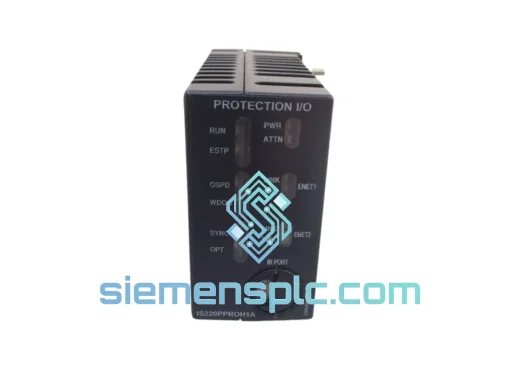
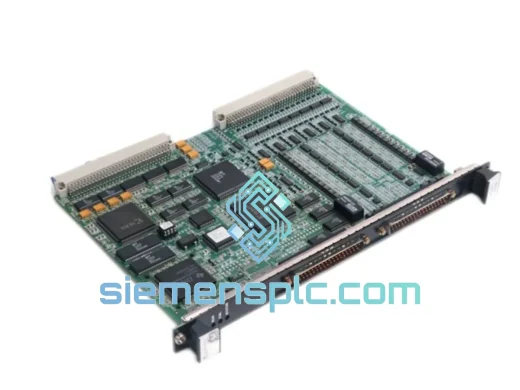
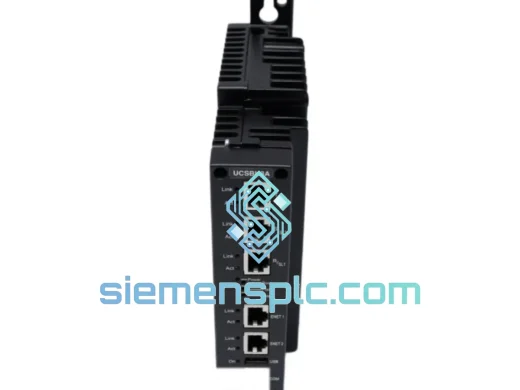
GE IS420UCSBH3A DCS Controller Module – Mark VIe
Mark VI
Origin US
DCS Controller Module
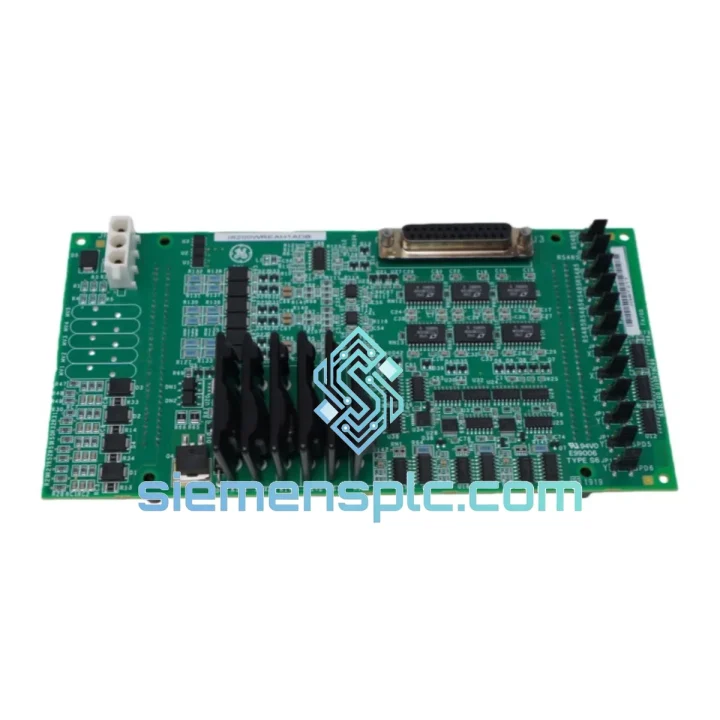
Request verified availability, condition, replacement risk review, packing options and courier lead time for IS200WREAH1ABB.
Click Request Quote and the part number is inserted into the inquiry form automatically.
Core fields for model confirmation and RFQ routing. Detailed product narrative remains below.
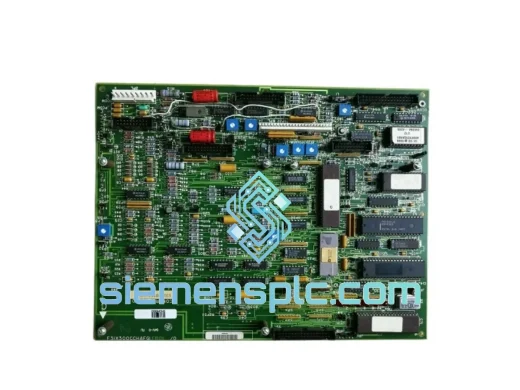
The IS200WREAH1ABB is a trip relay terminal board engineered for GE’s Mark VI Turbine Control System — a platform that governs protective shutdown logic in gas turbines, steam turbines, and combined-cycle power generation units worldwide. Within the Mark VI architecture, the trip terminal board occupies the final hardwired layer between the control processor’s protective output signals and the physical relay coils that actuate emergency shutdown sequences. Its function is not advisory; it is deterministic. When the Mark VI processor issues a trip command — whether from overspeed detection, flame-out, exhaust over-temperature, or vibration threshold breach — the IS200WREAH1ABB is the board that translates that digital decision into a physical relay state change within milliseconds.
The board interfaces directly with the Mark VI I/O modules, receiving discrete trip output signals and distributing them to field-side relay terminal blocks. Each terminal position is assigned to a specific protective function, and the board’s layout enforces physical separation between trip channels to prevent cross-coupling under fault conditions. This deterministic channel-to-terminal mapping is a deliberate design choice: it eliminates ambiguity during fault tracing and allows maintenance engineers to verify relay actuation states with a standard multimeter without requiring access to the HMI or engineering workstation.
The IS200WREAH1ABB is rated for continuous operation in the thermal and electromagnetic environment of a turbine control enclosure. Turbine control panels are exposed to conducted and radiated EMI from adjacent variable-frequency drives, excitation systems, and high-current bus bars. The board’s PCB layout incorporates ground plane segmentation and trace routing practices consistent with IEC 61000-4 immunity requirements, ensuring that transient voltages induced on field wiring do not propagate into the control logic side of the terminal interface. Signal isolation between the control-side and field-side terminals is maintained through the relay coil gap, providing galvanic separation that protects the Mark VI processor backplane from field-side fault currents.
In redundant Mark VI configurations — where the system operates in TMR (Triple Modular Redundancy) mode — the trip terminal board participates in the voted output architecture. Each of the three control paths (R, S, T) drives its own set of relay outputs, and the physical wiring from the IS200WREAH1ABB terminal positions is arranged to support 2-out-of-3 voting logic at the relay level. This means a single board failure or a single relay coil failure does not result in a spurious trip or a failure to trip; the remaining two channels maintain protective coverage. This architecture is a fundamental requirement for turbine protection systems operating under IEC 61511 SIL 2 or SIL 3 classifications.
Field replacement of the IS200WREAH1ABB follows a structured procedure: the terminal board is mounted on a DIN rail or panel-mount bracket within the Mark VI cabinet, and field wiring connects to the screw-terminal or spring-clamp terminal blocks on the board’s field side. The control-side connection to the Mark VI I/O module is made via a dedicated ribbon or discrete wiring harness. Because the board carries no firmware or programmable logic, replacement does not require any software reconfiguration of the Mark VI controller — the new board assumes the same physical function as the original upon reconnection, provided the field wiring is correctly re-terminated.
Units available through siemensplc.com are sourced from documented supply chains including OEM-authorized distributors and decommissioned plant inventories with full traceability. Each board undergoes visual inspection for PCB integrity, connector condition, relay coil continuity, and label authenticity before dispatch. Functional bench testing is performed where test fixtures are available. All units ship in ESD-protective packaging with moisture barrier materials suitable for international air freight.
Real-time Stock & RFQ: [email protected] | WhatsApp: +86 18359268345
| Parameter | Specification |
|---|---|
| Part Number | IS200WREAH1ABB |
| Manufacturer | GE (General Electric) |
| Platform | Mark VI Turbine Control System |
| Board Function | Trip Relay Terminal Board — protective shutdown signal routing |
| Form Factor | DIN-rail / panel-mount terminal board |
| Field-Side Interface | Screw-terminal or spring-clamp terminal blocks |
| Control-Side Interface | Dedicated wiring harness to Mark VI I/O module |
| Isolation Method | Relay coil galvanic separation (field-side vs. control-side) |
| Redundancy Support | TMR (Triple Modular Redundancy) — R/S/T channel architecture |
| Operating Temperature | 0°C to +60°C (turbine enclosure ambient) |
| EMC Compliance | IEC 61000-4 series transient immunity |
| Firmware | None — passive terminal board, no programmable logic |
| Weight | Approx. 1,100 g |
| Condition Available | New surplus / refurbished / tested-used |
| Warranty | 12 months against functional defects |
| Origin | United States (OEM) |
The IS200WREAH1ABB’s hardware design reflects the engineering constraints of a safety-rated protective relay interface. Several design decisions are worth examining in detail:
Channel Physical Separation: Trip relay channels are physically segregated on the PCB and at the terminal block level. This prevents a single wiring fault — such as a conductor insulation failure — from simultaneously disabling multiple trip channels. In a TMR system, this physical separation is as important as the logical voting architecture; a common-cause wiring fault that bridges two channels would defeat the redundancy benefit.
Relay Coil Galvanic Isolation: The relay coil provides a natural galvanic barrier between the 24 VDC control-side drive signal and the field-side contact circuit. This isolation prevents field-side fault currents — which can reach tens of amperes in relay contact circuits — from back-feeding into the Mark VI I/O module backplane. The isolation voltage rating of the relay is selected to exceed the maximum credible field-side fault voltage, typically 250 VAC or 125 VDC.
Ground Plane Segmentation: The PCB ground plane is segmented to prevent high-frequency noise currents on the field-side ground from coupling into the control-side signal ground. This is particularly relevant in turbine enclosures where adjacent VFDs and excitation systems generate significant conducted EMI on the cabinet ground bus.
No Firmware Dependency: The absence of programmable logic on the IS200WREAH1ABB is a deliberate reliability design choice. A passive terminal board has no firmware version dependency, no boot sequence, and no configuration state that can be corrupted. This simplifies spare parts management: any IS200WREAH1ABB of the correct revision is a direct replacement without software intervention.
Terminal Block Torque Specification: The screw-terminal blocks on the field side are rated for a specific torque range (typically 0.5–0.6 N·m for 2.5 mm² conductors). Under-torqued connections in a vibration environment will develop contact resistance over time, increasing the voltage drop across the relay coil drive circuit and potentially causing marginal relay actuation. Proper torque application during installation is a maintenance-critical parameter.
Every IS200WREAH1ABB unit dispatched from siemensplc.com passes through a structured inspection protocol before shipment. Visual inspection covers PCB surface condition, solder joint integrity, connector pin alignment, relay body condition, and OEM label authenticity including part number, revision suffix, and serial number format. Relay coil continuity is verified with a calibrated LCR meter to confirm coil resistance is within the OEM-specified tolerance band. Where bench test fixtures are available, functional testing confirms relay actuation at the rated coil drive voltage and verifies contact resistance below the OEM threshold.
Units are packed in anti-static (ESD) bags rated to ANSI/ESD S20.20, placed in foam-cushioned inner packaging, and sealed in moisture-barrier outer packaging with desiccant sachets. This packaging specification is designed to survive the humidity and pressure variations of international air freight without compromising the board’s electrical integrity.
Shipments originate from Xiamen, China, with export documentation including commercial invoice, packing list, and certificate of origin. DHL Express, FedEx International Priority, and UPS Worldwide Express are the primary carriers, with typical transit times of 3–5 business days to North America and Europe, and 2–4 business days to Southeast Asia and the Middle East. Expedited same-day dispatch is available for orders confirmed before 14:00 CST. All shipments include a tracking number issued at the time of dispatch.
Email: [email protected]
WhatsApp: +86 18359268345
Web: siemensplc.com
Location: Xiamen, China
© 2026 siemensplc.com. All rights reserved.
We check the full part number, brand, series and visible nameplate information before quotation.
Sales confirms stock path, condition option, quantity and realistic lead time for export dispatch.
DHL, FedEx, UPS or buyer courier arrangements can be reviewed with packing requirements.
Similar brand or category products for fast comparison and multi-item RFQ lists.