
GE
In Stock OK
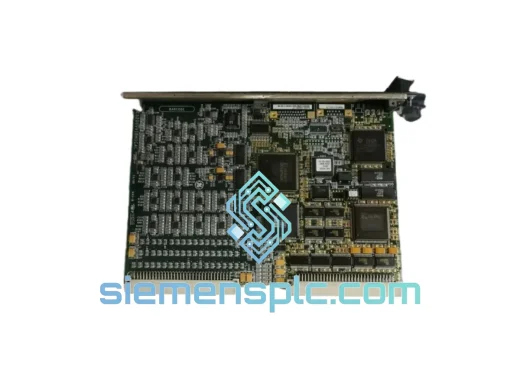
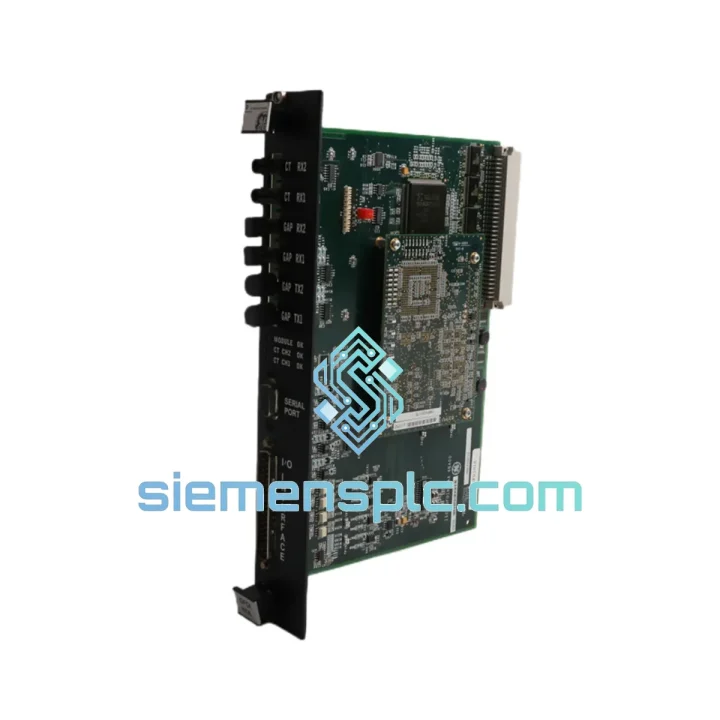
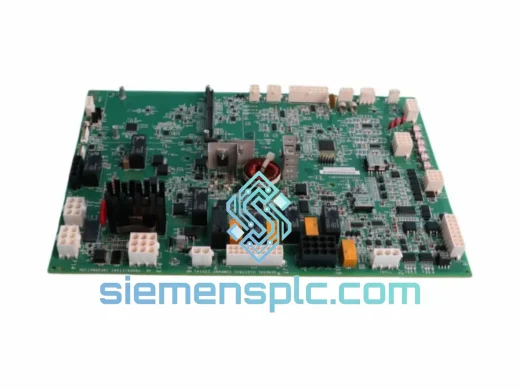
GE IS215GFOIH1A Excitation Output Interface Board
Request verified availability, condition, replacement risk review, packing options and courier lead time for IS215GFOIH1A IS215GFOIH1AB IS200GFOIH1A.
BrandGE
Part NumberIS215GFOIH1A IS215GFOIH1AB IS200GFOIH1A
ConditionAvailability Check
Lead TimeRFQ Confirmation
DocumentsDatasheet / photos by RFQ
ShippingExport packing available
Auto-filled RFQ
IS215GFOIH1A IS215GFOIH1AB IS200GFOIH1A
Click Request Quote and the part number is inserted into the inquiry form automatically.
- Reply by email: [email protected]
- WhatsApp / Tel: +86 18359268345
- Mon-Sat 9:00-18:00 GMT+8
Procurement Data
Key Product Information
Core fields for model confirmation and RFQ routing. Detailed product narrative remains below.
- Brand
- GE
- Primary Part Number
- IS215GFOIH1A IS215GFOIH1AB IS200GFOIH1A
- Product Type
- PLC / DCS Control Module
- Series / Family
- Mark VI
- Manufacturer
- General Electric (GE)
- Country of Origin
- US
- Catalog Category
- Industrial Automation Spares
- Warranty
- 12 months from shipment date
Model confirmed for inquiry
IS215GFOIH1A IS215GFOIH1AB IS200GFOIH1A
Send quantity, destination and urgency. The RFQ form keeps this part number attached.
Request Quote
Product Overview
IS215GFOIH1A / IS215GFOIH1AB / IS200GFOIH1A — Stop the Bleeding: Every Hour of Excitation Failure Costs You Real Money
Your generator is offline. The Mark VIe excitation loop has faulted. Maintenance is standing by. Every minute the turbine stays dark, your operations team is watching revenue evaporate — and the OEM’s lead time is measured in weeks, not hours. That’s exactly the gap we exist to close.
We stock the GE IS215GFOIH1A, IS215GFOIH1AB (Rev B), and IS200GFOIH1A field excitation output interface boards in Xiamen, China — verified, bench-tested, and ready to ship via DHL or FedEx International Priority within 24 hours of order confirmation. No waiting on factory allocation. No distributor queue. Direct dispatch.
URGENT REQUIREMENT? Contact: [email protected] | WhatsApp: +86 18359268345
Quick Technical Datasheet
| Parameter | Detail |
|---|---|
| Manufacturer | General Electric (GE) |
| Primary Part Number | IS215GFOIH1A |
| Alternate / Revision | IS215GFOIH1AB (Rev B), IS200GFOIH1A (predecessor) |
| Platform | GE Mark VIe Distributed Control System |
| Board Function | Generator Field Excitation Output Interface |
| Form Factor | VME-style plug-in I/O board |
| Communication Bus | Mark VIe IONet (100 Mbps Ethernet-based I/O) |
| Excitation Output Signal | Analog field current command → AVR / thyristor bridge |
| Protection Functions | Over-excitation, under-excitation, loss-of-field detection |
| Operating Temperature | 0 °C to +60 °C |
| Weight | ~340 g |
| Condition | New surplus / Refurbished (fully tested) |
| Warranty | 12 months from shipment date |
| Stock Status | ✔ Ready to Ship — Xiamen warehouse |
Troubleshooting & Replacement Tips
Common Fault Signatures That Point to IS215GFOIH1A Failure
In the field, this board tends to fail in three predictable patterns. Knowing which one you’re dealing with cuts diagnostic time in half:
1. IONet Communication Loss (Fault Code: L3DIAG / IONet Timeout)
The board drops off the IONet segment. The Mark VIe controller logs a hardware fault and the excitation loop goes to manual or trips. Before condemning the board, check the RJ-45 connector on the backplane — corrosion on pins 3 and 6 is a known failure point in humid environments. If the connector is clean and the fault persists across a cold restart, the board’s Ethernet PHY has likely failed. Replace the IS215GFOIH1A.
2. Erratic Field Current Output (Fault Code: EXCIT_REF_ERR or AVR Hunting)
The analog output channel driving the AVR reference signal drifts or oscillates. This manifests as generator terminal voltage instability — operators see reactive power swinging on the SCADA screen. Root cause is typically a failed DAC or op-amp stage on the output circuit. Swapping the board resolves it immediately. Confirm the AVR setpoint in ToolboxST after replacement to ensure the reference scaling matches your excitation system (EX2100 / EX2100e).
3. Protection Relay Lockout (Loss-of-Field Trip, No Apparent Cause)
The board’s internal loss-of-field detection logic triggers spuriously. This is often a firmware edge case in early IS215GFOIH1A revisions. The IS215GFOIH1AB (Rev B) incorporates a GE-issued fix for this specific behavior. If you’re running the original Rev A and experiencing nuisance LOF trips, upgrading to Rev B is the correct long-term resolution — not just a board swap for a board swap.
Step-by-Step Replacement Procedure
- Isolate the excitation circuit. Follow your plant’s LOTO procedure. Confirm the generator field breaker is open and the AVR is in manual mode before touching the board.
- Document the existing board’s firmware label and revision suffix (IS215GFOIH1A vs IS215GFOIH1AB). Photograph the board position in the cabinet and note the IONet port assignment.
- Power down the Mark VIe I/O cabinet section supplying the GFOI board. Do not hot-swap this board — the IONet interface does not support live insertion on this hardware generation.
- Extract the board using the ejector levers. Handle by the card edges only. Place in an ESD bag immediately.
- Inspect the backplane connector for bent pins or debris before inserting the replacement unit.
- Insert the replacement IS215GFOIH1A / IS215GFOIH1AB and seat firmly. No DIP switches or address jumpers on this board — addressing is handled automatically by the Mark VIe IONet controller via software configuration in ToolboxST.
- Power up the cabinet section and observe the IONet status LED on the board. Solid green = communication established. Flashing = still negotiating (wait 30 seconds). Red = fault, check IONet cable and controller assignment.
- Open ToolboxST and navigate to the GFOI I/O pack configuration. Verify the board is recognized and the excitation output channel is mapped correctly to your AVR reference signal.
- Perform a closed-loop excitation test at reduced field current before returning the generator to service. Confirm terminal voltage response is stable and LOF protection is armed.
- Log the replacement in your plant maintenance system with the new board’s serial number and revision.
IS200GFOIH1A Compatibility Note: The IS200GFOIH1A is the predecessor variant from the Mark VI / early Mark VIe transition era. It is not a direct plug-in replacement for IS215GFOIH1A in all cabinet configurations. Verify your cabinet’s I/O pack slot type (VCMI vs VCRC controller pairing) before ordering. Contact us — we’ll confirm compatibility based on your system details before you commit to a purchase.
Reliability in Harsh Conditions
Power generation environments are not kind to electronics. Turbine halls run hot. Coastal plants deal with salt-laden air. Older facilities have ground loops that inject noise into every signal path. The IS215GFOIH1A was designed for exactly these conditions — and the units we ship have been verified to meet that standard.
Every board in our inventory undergoes bench testing that replicates the thermal and electrical stress of real operating conditions. We power each unit at the upper end of its rated voltage range, cycle it through temperature extremes, and verify all I/O channels under load before it goes into a shipping box. Boards that show any sign of marginal performance — intermittent communication, output drift beyond spec, elevated leakage current — are quarantined. They do not ship.
The VME-style card cage design used in Mark VIe cabinets provides inherent vibration resistance through the card guide and ejector lever retention system. For plants in seismically active zones or with high-vibration machinery nearby, we recommend verifying that the backplane connector retention screws are torqued to GE’s specified value after installation — a detail that gets skipped during emergency replacements and causes intermittent faults weeks later.
Humidity is the silent killer of excitation electronics. Conformal coating on the IS215GFOIH1A PCB provides a baseline level of protection, but boards that have been stored improperly — in non-climate-controlled warehouses, in original packaging that has been opened and resealed — can show early-stage corrosion on the fine-pitch connector pins. We store all inventory in controlled-humidity conditions and inspect connector pins under magnification before dispatch. If you’re sourcing from the spot market, ask for close-up photos of the backplane connector before you commit.
Global Express Logistics
Our dispatch operation runs out of Xiamen, Fujian — one of China’s primary export hubs with direct DHL and FedEx gateway access. Here’s what the timeline looks like from the moment you confirm your order:
Day 0 — Order Confirmation: You send the PO or written confirmation. We pull the board from inventory, complete the final pre-ship inspection, and prepare the export documentation: commercial invoice, packing list, certificate of origin, and HS code declaration (HS 8537.10 for control boards). For customers in the EU, we can provide EUR.1 movement certificates where applicable.
Day 1 — Dispatch: The board ships via DHL Express Worldwide or FedEx International Priority, depending on your destination and preference. Both services offer door-to-door tracking from Xiamen to your facility. Typical transit times: Southeast Asia 1–2 days, Middle East 2–3 days, Europe 3–4 days, North America 3–5 days, Australia 3–4 days.
Day 1–2 — Tracking Provided: You receive the AWB number and a direct tracking link. Our team monitors the shipment and flags any customs holds proactively — we’ve handled enough emergency shipments to know where delays happen and how to get ahead of them.
Customs Clearance: We declare accurately. No undervaluation, no misdescription. For customers who need import support, we can provide a detailed technical description letter for customs authorities explaining the nature of the goods. Most industrial control boards clear customs without issue under EAR99 classification. If your country has specific import requirements for electronic components, let us know in advance and we’ll prepare the documentation accordingly.
Emergency Escalation: For genuine plant outage situations, contact us directly on WhatsApp. We can arrange same-day dispatch for orders confirmed before 14:00 CST, and we’ll stay in contact with you through the delivery process.
Contact Information
Email: [email protected]
WhatsApp: +86 18359268345
Web: siemensplc.com
© 2026 siemensplc.com. All rights reserved.
Ready to quote
[email protected]
Send This Part Number to Sales
RFQ workflow
Quality workflow ->
Confirmation Process
01Model confirmation
We check the full part number, brand, series and visible nameplate information before quotation.
02Availability reply
Sales confirms stock path, condition option, quantity and realistic lead time for export dispatch.
03Packing & courier
DHL, FedEx, UPS or buyer courier arrangements can be reviewed with packing requirements.
Continue sourcing
Browse full catalog ->
Related Automation Parts
Similar brand or category products for fast comparison and multi-item RFQ lists.
GE
RFQ Ready
GE IS215WETAH1CA Wind Turbine Control Module
Mark VI
Origin US
Wind Turbine Control Module