GE
RFQ Ready
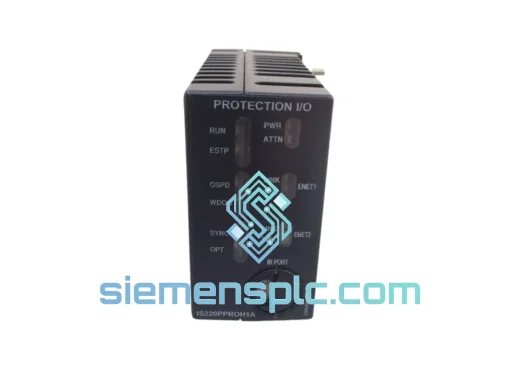
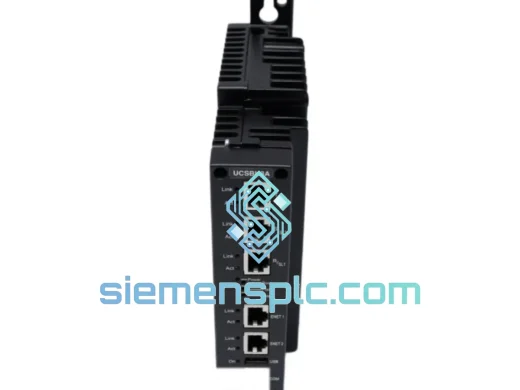
GE IS420UCSBH3A DCS Controller Module – Mark VIe
Mark VI
Origin US
DCS Controller Module
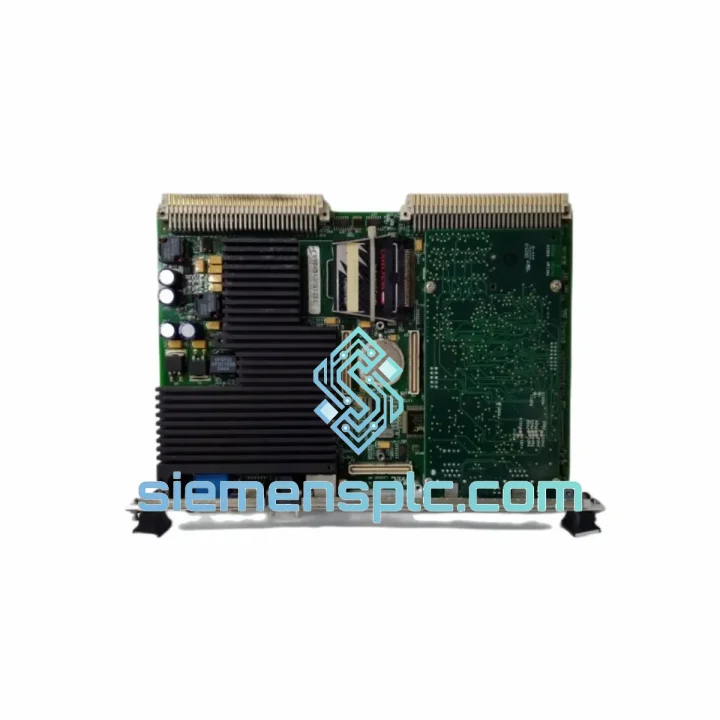
Request verified availability, condition, replacement risk review, packing options and courier lead time for IS215VPROH2B.
Click Request Quote and the part number is inserted into the inquiry form automatically.
Core fields for model confirmation and RFQ routing. Detailed product narrative remains below.
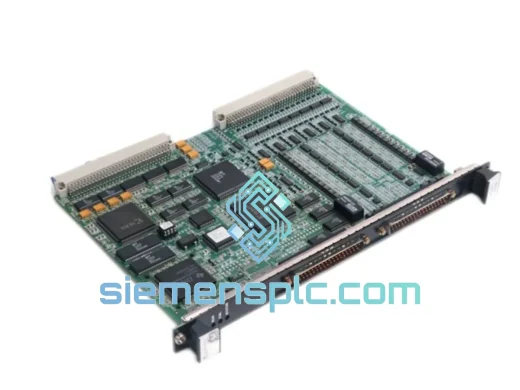
The IS215VPROH2B is a 6U VMEbus protection module produced by General Electric for the Mark VI Turbine Control System. Its functional mandate is singular and non-negotiable: execute trip commands at the hardware layer when monitored process variables breach defined safety thresholds — overspeed, loss of flame, excessive shaft vibration, or ground fault — without routing those decisions through the application software stack. The card achieves this by implementing protection logic in discrete gate arrays and ASIC-level combinational circuits rather than in a firmware loop serviced by a general-purpose processor. The practical result is a protection response path whose latency is governed by gate propagation delay, not by OS task scheduling or application scan period.
Within the Mark VI rack assembly, the IS215VPROH2B occupies the VPRO slot and sits at the intersection of three signal domains: field-side protection-class analog and discrete inputs arriving from terminal boards (TBCI, TBQC), peer-to-peer arbitration traffic exchanged with the VCMI (VME Communication Module Interface) and VCRC (VME Controller Rack Card) over the VMEbus backplane, and downstream trip relay outputs that drive hydraulic control solenoids and breaker trip coils. This position makes the VPRO card the final hardware decision point before a trip command reaches the actuator layer — a role that demands both electrical robustness and logic determinism.
The H2B hardware revision suffix carries engineering significance beyond simple version tracking. It corresponds to a defined set of GE engineering change orders that modify component tolerances on the analog input conditioning stage, update the arbitration timing registers used in TMR voting, and revise the backplane connector pin-out relative to earlier H1x-series boards. Replacement procurement must match the installed revision to the system’s Mark VI release documentation; a revision mismatch can affect IONet communication timing windows and TMR voting arbitration behavior in ways that are not immediately apparent during commissioning but may surface under fault conditions.
The card’s field-input boundary uses opto-isolators rated for the common-mode voltage differentials typical of turbine generator environments — ground potential differences between the control room and turbine deck, high-frequency switching transients from excitation systems, and conducted interference from variable-frequency drives in adjacent equipment. Galvanic isolation at this boundary prevents transient energy from propagating into the VMEbus backplane and inducing faults in adjacent controller cards. The PCB ground plane is segmented between the analog input conditioning section and the digital logic section, with the isolation barrier physically enforced by the opto-isolator package placement and PCB routing rules.
In a Triple Modular Redundant Mark VI configuration, three IS215VPROH2B cards — one per controller (R, S, T) — independently evaluate the same protection-class inputs. Each card forms its own trip decision based on locally conditioned signals. The three decisions are then arbitrated through the VCMI layer using a 2-of-3 majority voting scheme: a trip output is asserted only when at least two of the three VPRO cards independently reach the same conclusion. The H2B revision reduces the voting arbitration window compared to H1x-series boards, tightening the maximum latency between a threshold breach and a confirmed, voted trip output across all three controllers. This matters in overspeed protection scenarios where the permissible response window is defined by turbine mechanical inertia and governor response curves, typically in the range of 20–80 ms from threshold crossing to trip relay closure.
The VMEbus interface on the IS215VPROH2B conforms to IEEE 1014 with differential termination on all address and data lines, supporting bus operation at 40 MHz. This ensures reliable backplane data transfer in electrically noisy cabinet environments without requiring external signal conditioning. The card’s fault status registers are accessible to the VCMI over the VMEbus, allowing the Mark VI Toolbox diagnostic software to log VPRO card health data — input signal integrity, relay driver status, arbitration state — alongside process variable trends. This diagnostic transparency enables post-event reconstruction of the protection system’s state at the moment of a trip, which is a regulatory requirement in many jurisdictions for turbine safety system audits.
Real-time Stock & RFQ: [email protected] | WhatsApp: +86 18359268345
| Part Number | IS215VPROH2B |
| Manufacturer | General Electric (GE Energy / GE Vernova) |
| Platform | Mark VI Turbine Control System |
| Module Designation | VPRO — VME Protection Card |
| Hardware Revision | H2B |
| Form Factor | VMEbus IEEE 1014, 6U single-slot |
| Backplane Supply Voltages | +5 VDC, ±12 VDC (VME standard rail) |
| Typical Card Power Draw | ≤ 8 W at +5 VDC rail under full load |
| Operating Temperature Range | 0 °C to +60 °C (ambient, forced-air cooled rack) |
| Storage Temperature Range | −40 °C to +85 °C |
| Relative Humidity | 5 % to 95 % RH, non-condensing |
| Field Input Isolation | Opto-isolated; galvanic barrier at all field-signal boundaries |
| Bus Interface | VMEbus IEEE 1014; IONet Ethernet via VCMI |
| Protection Functions | Overspeed trip, ground fault isolation, flame-out detection, vibration trip, signal integrity monitoring |
| Redundancy Architecture | TMR (Triple Modular Redundancy) 2-of-3 voting; dual-redundant Mark VI configurations |
| Diagnostic Interface | Fault status registers readable by VCMI; Mark VI Toolbox compatible |
| Applicable Turbine Platforms | GE Frame 5, 6B, 7E, 7F, 9E, 9F series; steam turbine and combined-cycle applications |
| Compliance | CE, UL (system-level Mark VI certification) |
| Country of Origin | United States |
| Net Weight | 630 g |
| Warranty | 12 months from shipment date — manufacturing defects and functional failure under rated conditions |
Gate-Level Protection Execution: The IS215VPROH2B does not rely on a microprocessor fetch-decode-execute cycle to evaluate protection conditions. Trip logic is implemented in combinational gate arrays whose output state changes within nanoseconds of an input threshold crossing. This eliminates the variable latency introduced by interrupt service routines, OS context switches, and application scan cycle alignment — sources of timing uncertainty that are acceptable in regulatory control loops but are architecturally incompatible with turbine protection requirements.
Independent Power Domain for Trip Outputs: The relay driver circuits that assert trip commands are powered from a dedicated supply rail isolated from the VMEbus +5 VDC logic rail. This means that a logic-rail brownout or a VCRC controller fault does not de-energize the trip relay drivers. The protection output state is latched at the hardware level and can only be reset by an explicit, authenticated reset command — preventing spurious trip-clear events during power transients.
EMC Architecture: PCB layer stackup places a continuous ground plane between the analog input conditioning layers and the digital logic layers. All field-signal traces are routed in the analog domain and terminated at the opto-isolator package before crossing into the digital domain. This physical separation, combined with ferrite bead filtering on the +5 VDC supply entry point, attenuates conducted EMI from the VMEbus backplane and prevents digital switching noise from coupling into the analog protection-signal conditioning circuits. The result is a card that maintains specified input threshold accuracy in the presence of the high-frequency switching noise characteristic of turbine generator excitation systems.
Arbitration Timing in H2B vs. H1x: The H2B revision updates the arbitration timing registers that govern the voting window in TMR configurations. The earlier H1x-series default voting window was sized conservatively to accommodate the slower IONet communication latency of earlier Mark VI releases. The H2B revision tightens this window to match the latency profile of current IONet implementations, reducing the maximum time between a threshold breach on any single VPRO card and the assertion of a voted trip output across all three controllers. This improvement is measurable in system-level protection response time testing and is documented in GE Mark VI release notes for the applicable software version.
Backplane Signal Integrity: IEEE 1014 VMEbus at 40 MHz requires controlled impedance on all address and data lines. The IS215VPROH2B uses differential termination resistor networks on all bus lines, matched to the backplane characteristic impedance. This prevents reflections that could cause data corruption during high-speed backplane transactions, particularly relevant in TMR configurations where three controllers are simultaneously accessing the backplane during arbitration cycles.
Each IS215VPROH2B unit dispatched from our Xiamen facility passes a structured pre-shipment verification sequence. Physical inspection covers PCB surface condition, component marking legibility, front-panel label revision code, and connector pin integrity against GE engineering reference drawings for the H2B revision. Backplane connector contacts are inspected under magnification for fretting corrosion, a common failure mode in cards removed from long-term installed service. Board-level continuity checks verify all VMEbus interface lines, protection-output relay driver circuits, and field-input opto-isolator paths.
Revision authenticity is confirmed by cross-referencing the PCB silkscreen revision code, component date codes, and internal layer count against known-good H2B reference units. Cards that present revision code discrepancies, non-original component markings, or connector geometry deviations from GE engineering drawings are quarantined and excluded from the saleable inventory. This process is applied to every unit regardless of source or apparent condition.
Outbound logistics from Xiamen, China use DHL Express, FedEx International Priority, or UPS Worldwide Expedited based on destination and customer urgency requirements. Indicative transit times: Western Europe 3–5 business days, North America 4–6 business days, Middle East 3–4 business days, Southeast Asia 1–3 business days. Each shipment includes a commercial invoice, packing list, certificate of origin, ESD-safe inner packaging with humidity indicator card, and outer carton with shock-indicator label. HS code classification is provided for each shipment to support import customs clearance. A 12-month warranty from shipment date covers manufacturing defects and functional failure under rated operating conditions, with technical support available throughout the warranty period for installation, revision compatibility, and Mark VI system integration queries.
Email: [email protected]
WhatsApp: +86 18359268345
Web: siemensplc.com
Location: Xiamen, China
© 2026 siemensplc.com. All rights reserved.
We check the full part number, brand, series and visible nameplate information before quotation.
Sales confirms stock path, condition option, quantity and realistic lead time for export dispatch.
DHL, FedEx, UPS or buyer courier arrangements can be reviewed with packing requirements.
Similar brand or category products for fast comparison and multi-item RFQ lists.