GE
RFQ Ready
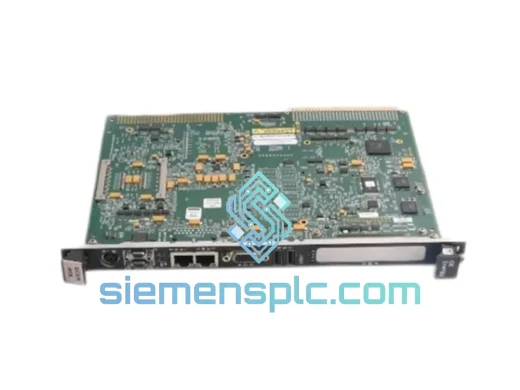
GE IS210MVRBH1A I/O Interface Board – Mark VIe Series
Mark VI
Origin US
I/O Interface Board
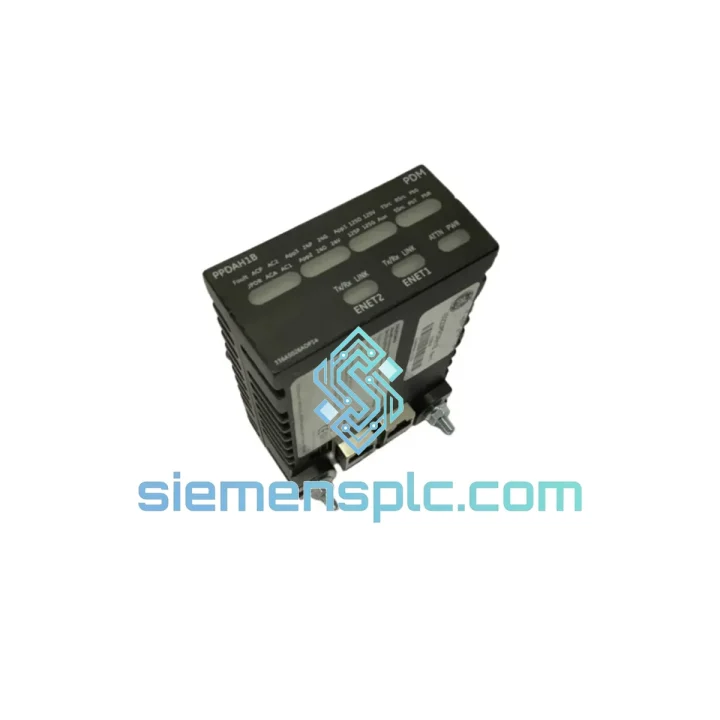
Request verified availability, condition, replacement risk review, packing options and courier lead time for IS220PPDAH1B.
Click Request Quote and the part number is inserted into the inquiry form automatically.
Core fields for model confirmation and RFQ routing. Detailed product narrative remains below.
The GE IS220PPDAH1B is a dual-function I/O module within General Electric’s Mark VI Turbine Control System, designated as a PPDA (Proportional, Protective & Discrete Analog) board. Its primary role in the control loop is to bridge the gap between the turbine’s physical process signals and the deterministic control logic executed by the Mark VI controller. It simultaneously handles proportional servo-valve drive signals, discrete protective relay outputs, and analog feedback acquisition — three signal classes that in legacy architectures required separate hardware. Consolidating these functions onto a single VME-form-factor board reduces backplane slot consumption, minimizes inter-board propagation delay, and simplifies cabinet wiring topology.
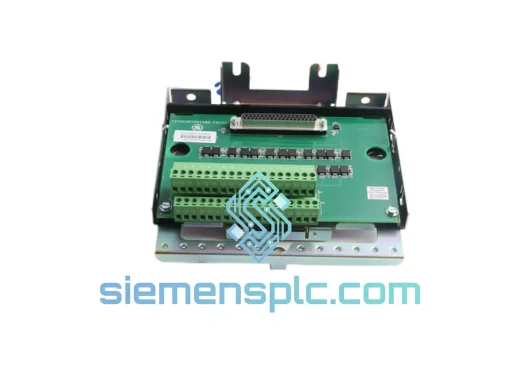
Within a Mark VI cabinet, the IS220PPDAH1B interfaces directly with terminal boards such as the IS200TREGH1B (TREG) or IS200TSVOH1C (TSVO) via ribbon cable, offloading signal conditioning to the terminal board layer while retaining all digital processing on the module itself. The module communicates upstream to the VCMI (VME Communication Module Interface) via the VME backplane at a deterministic 10 ms scan cycle, ensuring that protective trip logic receives fresh process data within the latency budget mandated by NFPA 85 and API 670 turbine protection standards.
Real-time Stock & RFQ: [email protected] | WhatsApp: +86 18359268345
| Parameter | Specification |
|---|---|
| Part Number | IS220PPDAH1B |
| Manufacturer | General Electric (GE) |
| Series | Mark VI Turbine Control System |
| Module Designation | PPDA — Proportional, Protective & Discrete Analog I/O |
| Form Factor | VME 6U plug-in module |
| Supply Voltage | 24 VDC ±10% (backplane supplied) |
| Power Consumption | ≤ 8 W typical |
| Analog Output Channels | 4 × ±10 V / 4–20 mA proportional servo drive |
| Discrete Output Channels | 16 × 24 VDC solid-state protective relay outputs |
| Analog Input Channels | 8 × differential, 12-bit ADC, ±10 V range |
| Isolation Voltage | 1,500 VAC optical isolation, field-to-logic side |
| Backplane Interface | VME32 (32-bit data, 24-bit address) |
| Communication Protocol | IONet (GE proprietary 100 Mbps industrial Ethernet) |
| Scan Cycle | 10 ms deterministic |
| Operating Temperature | 0°C to +60°C |
| Storage Temperature | -40°C to +85°C |
| Relative Humidity | 5% to 95% non-condensing |
| EMC Compliance | IEC 61000-4-2/3/4/5/6 (ESD, RS, EFT, Surge, CS) |
| Certifications | CE, UL Listed, RoHS Directive |
| MTBF | > 200,000 hours (MIL-HDBK-217F, ground benign) |
| Warranty | 12 months from date of shipment |
The IS220PPDAH1B’s hardware architecture reflects the engineering constraints of turbine control: determinism, fault tolerance, and signal integrity under high-EMI environments.
Opto-Isolation Architecture: Each field-side I/O channel is galvanically isolated from the module’s logic domain via high-speed optocouplers rated at 1,500 VAC. This two-barrier design — optocoupler plus DC/DC converter on the power rail — prevents ground loop currents induced by large motor starts or lightning transients from propagating into the VME backplane. The isolation capacitance is kept below 10 pF per channel to maintain signal bandwidth for 4–20 mA servo loops operating at up to 200 Hz.
Proportional Output Stage: The four analog output channels use a 16-bit DAC followed by a voltage-to-current converter with a ±0.05% full-scale linearity specification. The output stage includes short-circuit protection with auto-recovery and an open-wire detection circuit that asserts a diagnostic flag to the VCMI within one scan cycle if servo valve coil continuity is lost — a critical feature for fuel control valve monitoring.
Protective Relay Logic: The 16 discrete outputs are implemented as solid-state switches (MOSFET-based) rather than electromechanical relays, eliminating contact bounce and achieving a switching latency of < 1 ms from logic assertion to field-side conduction. Each output channel has an independent current-sense resistor feeding a comparator that detects load faults (open circuit or overcurrent) and reports them via the module’s status register without requiring a separate diagnostic scan.
EMC Design: The PCB uses a 6-layer stackup with dedicated ground planes on layers 2 and 5, sandwiching the signal routing layers. Differential pair routing is used for all analog input traces, with matched-length constraints to within ±0.5 mm to minimize common-mode noise pickup. Ferrite beads are placed at the VME backplane connector pins to suppress high-frequency conducted emissions from the backplane bus.
Redundancy Arbitration: In TMR (Triple Modular Redundancy) Mark VI configurations, three IS220PPDAH1B modules operate in parallel. The VCMI performs 2-out-of-3 voting on discrete output states before asserting a trip signal, and median-select voting on analog feedback values. Each module independently drives its own set of field terminals; the voting logic resides in the VCMI firmware, not on the PPDA board itself, which keeps the module’s firmware deterministic and auditable.
Every IS220PPDAH1B unit supplied by siemensplc.com is sourced as genuine GE OEM hardware. Units are procured through verified industrial supply channels with full lot traceability. Prior to dispatch, each module undergoes a structured inspection protocol: visual PCB examination for component integrity and label authenticity, connector pin inspection under magnification, and power-on functional verification using a Mark VI-compatible VME test chassis. A unique inspection record is generated for each unit and archived for 5 years.
Logistics are managed from our warehouse in Xiamen, China — a major export hub with direct access to DHL Express, FedEx International Priority, and UPS Worldwide services. In-stock units are dispatched within 1–2 business days of order confirmation. Export documentation — commercial invoice, packing list, HS Code 8537.10 classification, and certificate of origin — is prepared as standard for all international shipments. Customs pre-clearance support is available for regulated markets including the EU, USA, and GCC countries. Bulk orders qualify for sea freight consolidation with full cargo insurance.
All units are shipped in anti-static packaging with foam-lined outer cartons. Temperature and humidity indicators are included for shipments to tropical or high-altitude destinations upon request.
📧 Email: [email protected]
📱 WhatsApp: +86 18359268345
🌐 Web: siemensplc.com
📍 Location: Xiamen, China
© 2026 siemensplc.com. All rights reserved.
We check the full part number, brand, series and visible nameplate information before quotation.
Sales confirms stock path, condition option, quantity and realistic lead time for export dispatch.
DHL, FedEx, UPS or buyer courier arrangements can be reviewed with packing requirements.
Similar brand or category products for fast comparison and multi-item RFQ lists.