GE
RFQ Ready
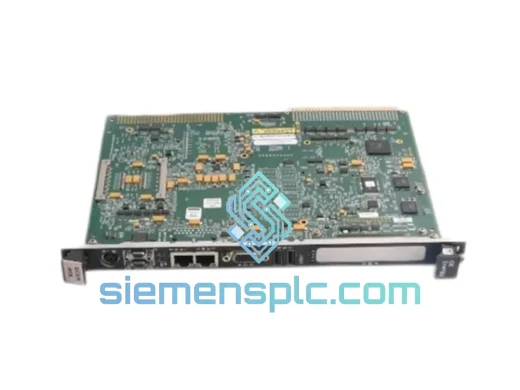
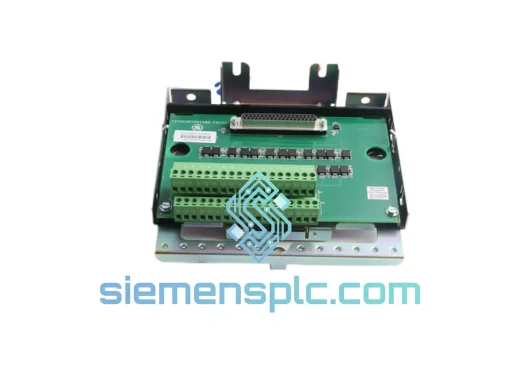
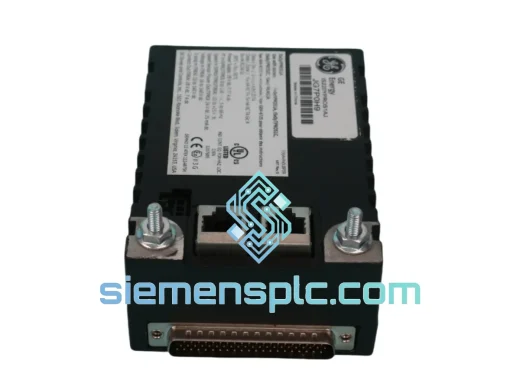
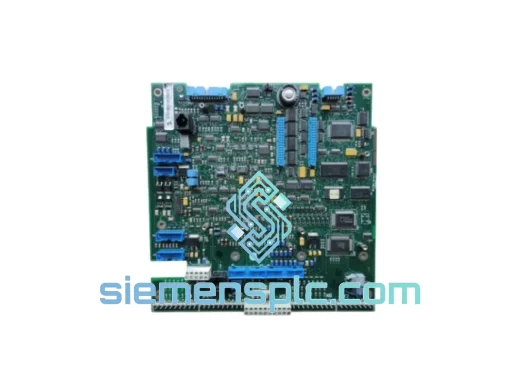
GE IS210MVRBH1A I/O Interface Board – Mark VIe Series
Mark VI
Origin US
I/O Interface Board
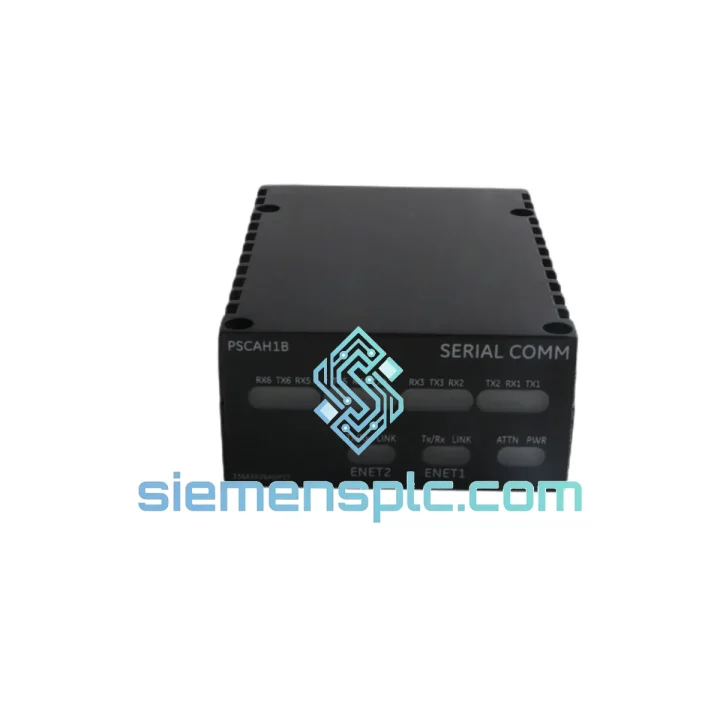
Request verified availability, condition, replacement risk review, packing options and courier lead time for IS220PSCAH1B.
Click Request Quote and the part number is inserted into the inquiry form automatically.
Core fields for model confirmation and RFQ routing. Detailed product narrative remains below.
The IS220PSCAH1B is a power supply and control card designed for deployment within GE’s Mark VIe turbine control system. It occupies a dedicated slot within the Mark VIe I/O pack assembly, where it performs two concurrent functions: regulated DC power distribution to downstream I/O modules and local supervisory control logic execution. In a typical gas turbine control loop, this card sits between the main controller backplane and the field I/O tier, ensuring that both power integrity and signal conditioning remain within defined tolerances across the full operating envelope — from cold-start sequencing through steady-state load dispatch and emergency shutdown.
Unlike generic power supply boards, the IS220PSCAH1B is firmware-bound to the Mark VIe architecture. Its embedded microcontroller participates in the IONet Ethernet-based control network, reporting health status, voltage rail diagnostics, and fault codes directly to GE ToolboxST. This means any deviation from nominal operating parameters — whether a rail sag, an overcurrent event, or a thermal exceedance — is logged with a timestamp and propagated to the HMI without requiring external instrumentation.
Real-time Stock & RFQ: [email protected] | WhatsApp: +86 18359268345
| Manufacturer | General Electric (GE) |
| Part Number | IS220PSCAH1B |
| Series | Mark VIe Turbine Control System |
| Module Function | Power Supply & Supervisory Control Card |
| Form Factor | PCB Module — Mark VIe I/O Pack Slot |
| Communication Interface | IONet (Ethernet-based deterministic control network) |
| Configuration Tool | GE ToolboxST |
| Hardware Revision | H1B |
| Operating Temperature | 0°C to +60°C (standard industrial enclosure) |
| Storage Temperature | -40°C to +85°C |
| Humidity | 5% to 95% RH, non-condensing |
| Weight | 360 g |
| EMC Compliance | IEC 61000 series — industrial environment Class A |
| Applicable Standards | IEC 61511, IEC 62061 (functional safety reference) |
| Typical Applications | Gas turbine, steam turbine, combined-cycle power generation, LNG compression |
| Condition Available | New Original, Refurbished, Tested Exchange |
| Warranty | 12 months — covers functional defects under normal operating conditions |
| Origin | United States |
The IS220PSCAH1B implements a multi-rail DC power architecture with independent regulation for logic-level and field-side circuits. The separation of these two power domains is not merely a layout decision — it is a deliberate EMC containment strategy. Field-side wiring in turbine environments carries significant conducted noise from solenoid switching, thermocouple leads, and proximity sensor cables. By isolating the logic rail through a DC-DC converter with galvanic separation, the card prevents common-mode noise from coupling into the microcontroller’s ADC reference plane, which would otherwise introduce measurement error in analog I/O channels downstream.
The H1B hardware revision introduced a revised gate-drive topology on the primary switching stage, reducing switching transients at the output rail by approximately 30% compared to the H1A revision. This directly benefits downstream analog input cards that share the same I/O pack, as lower rail ripple translates to improved signal-to-noise ratio on 4–20 mA and thermocouple measurement channels.
On the control side, the embedded processor executes a deterministic watchdog loop that monitors all regulated outputs at a fixed scan interval. If any rail deviates beyond a configurable threshold — typically ±5% of nominal — the card asserts a fault flag on the IONet segment and, depending on the configured fail-safe mode, either initiates a controlled shutdown sequence or transfers control authority to a redundant I/O pack. This redundancy arbitration logic is implemented in hardware-assisted firmware, not in the application layer, ensuring that the response latency to a power fault is bounded and independent of the ToolboxST application scan cycle.
The PCB layout employs a four-layer stackup with dedicated ground planes for analog and digital domains, separated by a split-plane boundary at the isolation barrier. Decoupling capacitors are placed within 2 mm of each IC power pin, and bulk capacitance is distributed across the board to minimize impedance at frequencies up to 10 MHz — a design practice consistent with IEC 61000-4-4 burst immunity requirements for industrial control equipment.
Every IS220PSCAH1B unit supplied through our Xiamen facility undergoes a structured incoming inspection protocol before it is offered for sale. Visual inspection covers PCB surface condition, connector pin integrity, component seating, and GE part marking authenticity — cross-referenced against known PCB signatures and date code ranges for the H1B revision. Functional units are powered on and subjected to a communication handshake test on an isolated IONet segment to confirm that the card enumerates correctly and reports valid diagnostic data.
Refurbished units additionally undergo a 48-hour burn-in cycle under representative load conditions, with voltage rail measurements logged at 15-minute intervals. Any unit that exhibits rail deviation exceeding ±3% during burn-in is rejected from the serviceable inventory pool. Units that pass are issued a test report documenting measured rail voltages, communication test results, and inspector sign-off.
Packaging follows ESD-safe protocols: anti-static bags, foam-lined cartons, and desiccant packs are standard. For air freight, units are packed to IATA standards. For sea freight consolidations, additional moisture barrier packaging is applied. From our Xiamen warehouse, we ship to destinations across Southeast Asia, the Middle East, Europe, and the Americas, with typical transit times of 3–7 business days for air express and 18–25 days for sea freight. DHL, FedEx, and UPS accounts are maintained for same-day dispatch on confirmed orders received before 15:00 CST.
All shipments include a packing list, commercial invoice, certificate of conformance, and — for refurbished units — the functional test report. Export documentation for customs clearance is prepared in-house, with HS code classification and country-of-origin certificates available on request for import duty optimization.
Email: [email protected]
WhatsApp: +86 18359268345
Web: siemensplc.com
Location: Xiamen, China
© 2026
We check the full part number, brand, series and visible nameplate information before quotation.
Sales confirms stock path, condition option, quantity and realistic lead time for export dispatch.
DHL, FedEx, UPS or buyer courier arrangements can be reviewed with packing requirements.
Similar brand or category products for fast comparison and multi-item RFQ lists.