GE
RFQ Ready
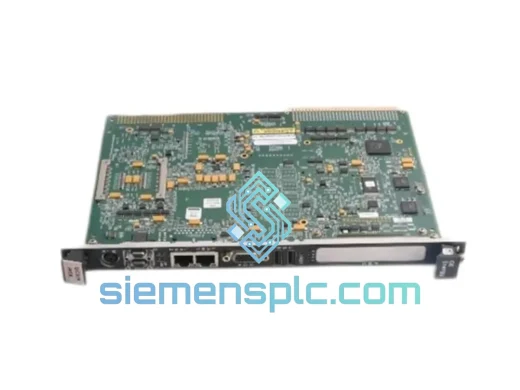
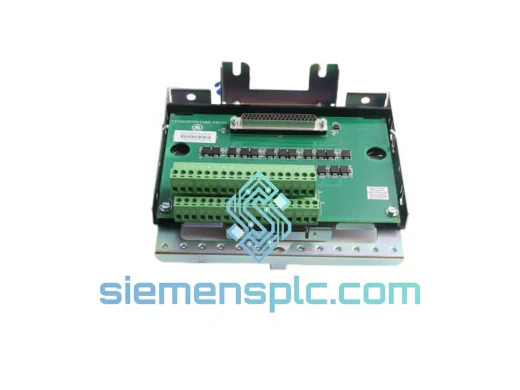
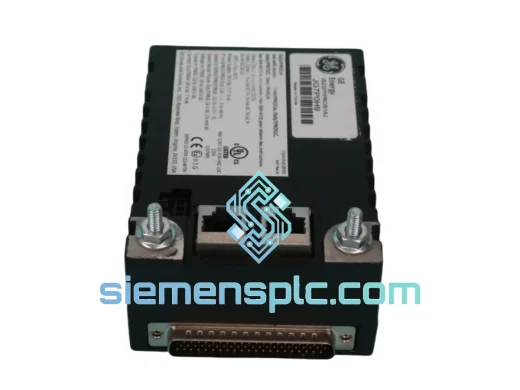
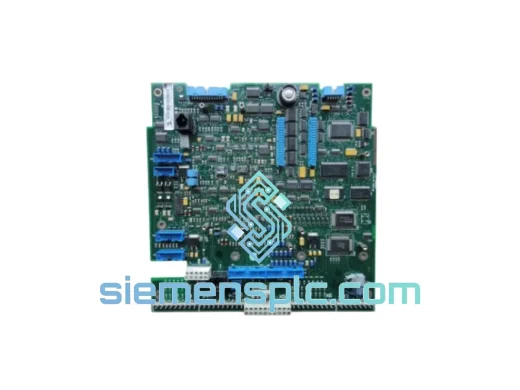
GE IS210MVRBH1A I/O Interface Board – Mark VIe Series
Mark VI
Origin US
I/O Interface Board
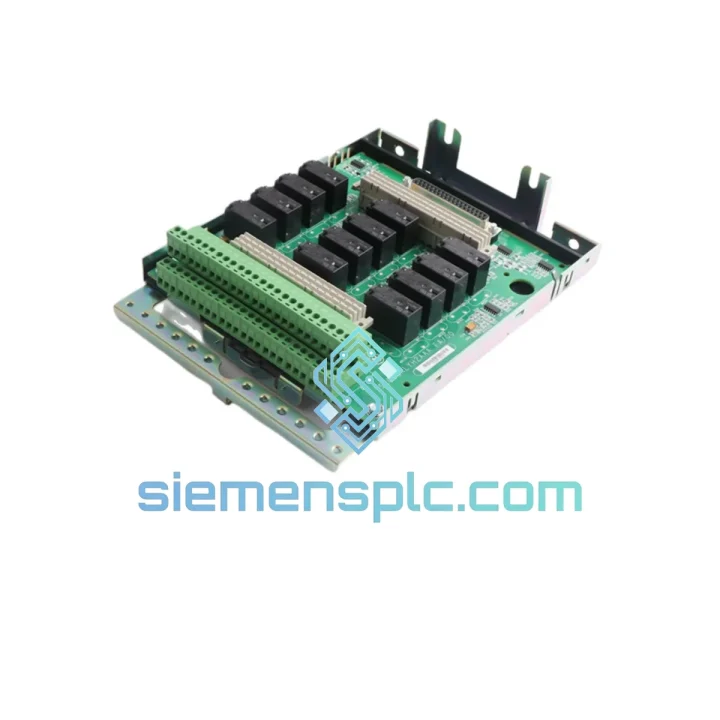
Request verified availability, condition, replacement risk review, packing options and courier lead time for IS230SNRLH2A IS200SRLYH2AAA.
Click Request Quote and the part number is inserted into the inquiry form automatically.
Core fields for model confirmation and RFQ routing. Detailed product narrative remains below.
The IS230SNRLH2A and IS200SRLYH2AAA are relay-output discrete output (DO) modules designed for deployment within General Electric’s Mark VI Speedtronic turbine control platform. Within a Mark VI control cabinet — whether configured as Simplex, Dual, or Triple Modular Redundant (TMR) — these modules occupy the I/O tier of the backplane hierarchy, receiving actuator commands from the VCMI or VCRC controller boards via the high-speed JR1/JR2 serial backplane bus. Each relay channel provides a hard-contact closure output, physically isolating the control-side logic from field-side voltages, which is a non-negotiable requirement in turbine protection and sequencing circuits where a single spurious output can trigger an unplanned trip or, worse, mask a genuine fault condition.
The IS230 and IS200 form-factor families share a common VME-compatible mechanical envelope, allowing mixed-rack population in existing Mark VI I/O enclosures without mechanical modification. The SNRLH2A suffix designates the relay output variant with a specific channel count and contact rating suited to solenoid valve drivers, motor starter coils, and annunciator panel inputs — the three most common field loads in gas turbine balance-of-plant wiring. The IS200SRLYH2AAA is the IS200-series functional equivalent, sharing the same firmware interface and backplane connector pinout, making cross-substitution straightforward when one part number is on back-order.
Real-time Stock & RFQ: [email protected] | WhatsApp: +86 18359268345
| Parameter | Specification |
|---|---|
| Part Numbers | IS230SNRLH2A / IS200SRLYH2AAA |
| Manufacturer | General Electric (GE) |
| Platform | Mark VI Speedtronic Turbine Control System |
| Module Class | Discrete Output (DO) — Relay Contact |
| Output Type | Dry relay contact (Form A / Form C per channel) |
| Rated Contact Voltage | Up to 125 V DC / 250 V AC (resistive load) |
| Rated Contact Current | 2 A continuous per channel |
| Backplane Interface | VME-compatible; JR1/JR2 serial I/O bus |
| Operating Temperature | 0 °C to +60 °C (ambient, forced-air cooled enclosure) |
| Storage Temperature | -40 °C to +85 °C |
| Relative Humidity | 5 % to 95 % non-condensing |
| Power Consumption | Per Mark VI rack power budget; typically <15 W per module |
| Mechanical Form Factor | IS230 / IS200 VME card, single-slot |
| Weight | Approx. 1,140 g |
| Approvals | Designed to GE Speedtronic Mark VI system standards |
| Warranty | 12 months from date of shipment |
The relay output architecture of the IS230SNRLH2A / IS200SRLYH2AAA addresses a fundamental challenge in turbine I/O design: the need to drive inductive field loads — solenoid valves, motor contactors, and trip coils — without exposing the control-side logic to voltage transients that can reach several hundred volts during coil de-energization. The relay contact provides galvanic isolation between the 28 V DC logic rail and the field wiring, which may operate at 110 V DC or 125 V DC in many power-generation protection schemes.
Each relay coil is driven by a dedicated solid-state driver on the module’s logic board. The driver incorporates a flyback suppression diode across the coil to clamp the inductive kick at de-energization, protecting the driver FET and extending relay service life. The contact side of each relay is wired to a field terminal block through a dedicated fuse or current-limiting element, providing per-channel overcurrent protection without requiring external fusing in the marshalling cabinet — a design choice that reduces wiring density and simplifies maintenance.
From an EMC perspective, the module’s PCB layout routes the relay coil drive signals on an inner copper layer, shielded by ground planes on the outer layers. This reduces radiated emissions from the switching transients and improves immunity to the high-frequency noise environment typical of a turbine control room, where variable-frequency drives, excitation systems, and high-current bus bars generate broadband interference. The backplane connector uses a differential serial protocol for command and status data, further rejecting common-mode noise that would corrupt single-ended parallel bus architectures.
In TMR configurations, the VCMI controller arbitrates output commands across three independent I/O racks. Each IS230SNRLH2A / IS200SRLYH2AAA in the three racks receives the same command simultaneously. The relay contacts from all three modules are wired in a two-out-of-three (2oo3) voting circuit at the field terminal, meaning the solenoid valve or trip coil only actuates when at least two of the three relay contacts agree. This architecture eliminates single-point-of-failure risk in the output path — a requirement for SIL 2 and SIL 3 safety instrumented functions under IEC 61511.
Every IS230SNRLH2A and IS200SRLYH2AAA unit dispatched from our Xiamen facility undergoes a structured pre-shipment verification sequence. Visual inspection confirms board-level integrity: no lifted components, no corrosion on the VME connector pins, no evidence of counterfeit labeling. Serial number and date code are cross-referenced against GE documentation to confirm manufacturing provenance. Functional bench testing applies power to the module and exercises each relay channel through its full energize/de-energize cycle, verifying coil resistance, contact continuity, and backplane communication response. Units that pass all stages are packaged in anti-static bags, placed in foam-lined cartons, and shipped with a test record retained on file for traceability.
From Xiamen, we ship via DHL Express, FedEx International Priority, and UPS Worldwide Expedited to destinations across Southeast Asia, the Middle East, Europe, and the Americas. Standard in-stock orders are dispatched within 1–3 business days of payment confirmation. For project-scale procurement — plant overhauls, spare parts kits, or BOM-based sourcing — we provide consolidated quotations with lead-time commitments and can arrange sea freight for bulk shipments where air freight cost is prohibitive. All export documentation, including commercial invoice, packing list, and certificate of origin, is prepared in compliance with applicable customs regulations. A 12-month warranty covers all units against manufacturing defects and functional failure under normal operating conditions.
Email: [email protected]
WhatsApp: +86 18359268345
Web: siemensplc.com
Location: Xiamen, China
© 2026. All rights reserved.
We check the full part number, brand, series and visible nameplate information before quotation.
Sales confirms stock path, condition option, quantity and realistic lead time for export dispatch.
DHL, FedEx, UPS or buyer courier arrangements can be reviewed with packing requirements.
Similar brand or category products for fast comparison and multi-item RFQ lists.