GE
RFQ Ready
GE IS420UCSBH3A DCS Controller Module – Mark VIe
Mark VI
Origin US
DCS Controller Module
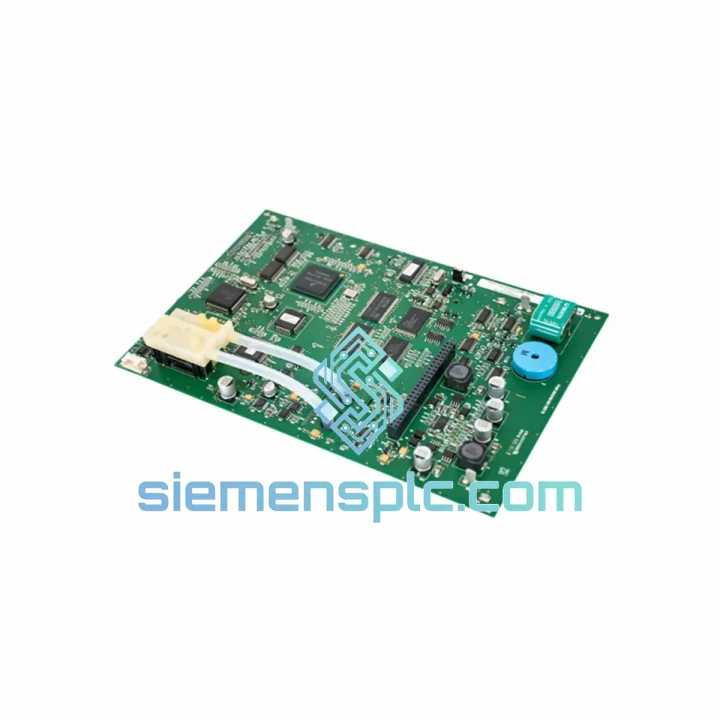
Request verified availability, condition, replacement risk review, packing options and courier lead time for IS400AEBMH3A.
Click Request Quote and the part number is inserted into the inquiry form automatically.
Core fields for model confirmation and RFQ routing. Detailed product narrative remains below.
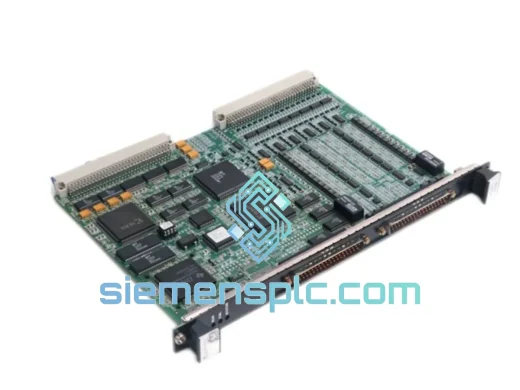
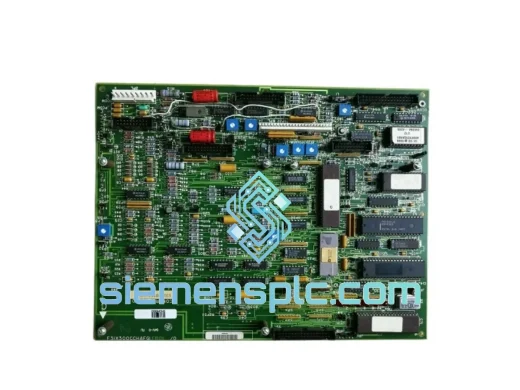
The IS400AEBMH3A is a high-density electronics board deployed within GE’s Mark VI Turbine Control System, a triple-redundant distributed control platform engineered for gas turbines, steam turbines, and combined-cycle power generation units. Within the Mark VI cabinet architecture, this board functions as the primary signal conditioning and I/O arbitration layer between field instrumentation and the VCMI/VCRC processor modules. Its role is not supplementary — it is the deterministic interface that translates analog and discrete field signals into the structured data frames consumed by the Mark VI’s real-time control loops.
The IS400 series boards operate on GE’s proprietary IONet backplane, a 100 Mbps deterministic Ethernet derivative that enforces fixed-latency token-passing between I/O boards and the controller triplex. The IS400AEBMH3A participates in this arbitration cycle with a scan rate aligned to the Mark VI’s 10 ms control frame, ensuring that no field signal update is delayed beyond one control cycle. This determinism is non-negotiable in turbine protection logic, where a 20 ms delay in an overspeed signal can mean the difference between a controlled trip and a mechanical failure event.
Real-time Stock & RFQ: [email protected] | WhatsApp: +86 18359268345
| Parameter | Specification |
|---|---|
| Part Number | IS400AEBMH3A |
| Manufacturer | GE (General Electric) |
| Series | Mark VI Turbine Control System |
| Board Classification | Advanced Electronics Board (AEB) |
| Form Factor | VME-compatible rack-mount module |
| Backplane Interface | GE IONet (100 Mbps deterministic Ethernet derivative) |
| Control Frame Alignment | 10 ms (synchronized to Mark VI VCMI scan cycle) |
| Operating Voltage | +5 VDC / ±15 VDC (supplied via Mark VI backplane) |
| Operating Temperature | 0°C to +60°C (ambient, forced-air cooled cabinet) |
| Storage Temperature | -40°C to +85°C |
| Humidity | 5% to 95% RH, non-condensing |
| EMC Compliance | IEC 61000-4-2 (ESD), IEC 61000-4-4 (EFT), IEC 61000-4-5 (Surge) |
| Weight | Approx. 600 g |
| Compatibility | GE Mark VI VCMI, VCRC, VTUR controller modules; IS200 series terminal boards |
| Warranty | 12 months from date of shipment |
The IS400AEBMH3A implements a multi-stage signal conditioning pipeline before any field data reaches the IONet backplane. Analog inputs pass through a 16-bit successive-approximation ADC stage with a sample rate of 1 kHz per channel, followed by a digital low-pass filter with a configurable cutoff frequency — typically set between 10 Hz and 50 Hz depending on the turbine’s vibration signature profile. This filtering stage is implemented in an onboard FPGA, not in firmware, which means the filter coefficients are applied in hardware with deterministic latency independent of processor load.
The board’s EMC architecture is built around a three-layer isolation strategy. First, all field-side analog inputs are galvanically isolated via transformer-coupled isolation amplifiers rated at 1,500 VAC working isolation. Second, the digital logic domain is separated from the analog domain by a dedicated ground plane split, with ferrite bead arrays on all cross-domain signal traces. Third, the board’s metal faceplate is bonded directly to the VME chassis ground, providing a low-impedance return path for high-frequency common-mode noise induced by the turbine’s generator field excitation system — a known EMI source in the 2 kHz to 50 kHz range.
The IS400AEBMH3A also incorporates a local watchdog timer circuit that operates independently of the main FPGA. If the FPGA fails to toggle the watchdog within a 50 ms window — indicating a processing hang or configuration corruption — the watchdog asserts a hardware fault signal on the backplane, triggering the Mark VI’s redundancy arbitration logic to switch control authority to the redundant board set. This self-monitoring mechanism ensures that a single board failure does not propagate into a control system outage.
Every IS400AEBMH3A unit supplied through siemensplc.com undergoes a structured incoming inspection protocol before it is offered for sale. Visual inspection covers component-level integrity — solder joint condition, capacitor health, connector pin alignment, and conformal coating continuity. Functional verification is performed using a Mark VI-compatible backplane test fixture that replicates the IONet boot sequence and exercises all I/O channels under load. Units that fail any stage of this protocol are quarantined and not offered for sale.
Packaging follows IEC 61340-5-1 ESD protection standards: each board is sealed in a conductive anti-static bag, placed in a foam-lined inner carton, and packed in a double-wall corrugated outer carton rated for international air freight handling. All shipments originate from our warehouse in Xiamen, China — a major logistics hub with direct air freight connections to Frankfurt, Dubai, Singapore, Los Angeles, and Chicago. Standard international delivery time is 3–7 business days via DHL Express or FedEx International Priority. Emergency same-day dispatch is available for in-stock units when orders are confirmed before 14:00 CST.
Export documentation — including commercial invoice, packing list, and certificate of origin — is prepared in compliance with Chinese customs regulations and the import requirements of the destination country. HS Code 8537.10 is applied for customs classification. A 12-month warranty covers all units against manufacturing defects and functional failure under normal operating conditions.
Email: [email protected]
WhatsApp: +86 18359268345
Web: siemensplc.com
Location: Xiamen, China
© 2026 siemensplc.com. All rights reserved.
We check the full part number, brand, series and visible nameplate information before quotation.
Sales confirms stock path, condition option, quantity and realistic lead time for export dispatch.
DHL, FedEx, UPS or buyer courier arrangements can be reviewed with packing requirements.
Similar brand or category products for fast comparison and multi-item RFQ lists.