GE
RFQ Ready
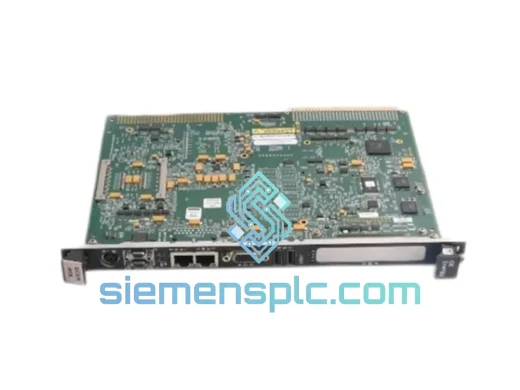
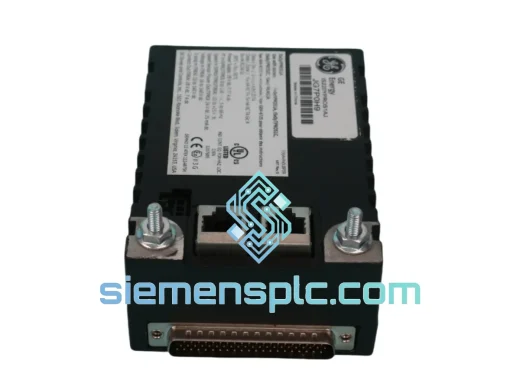
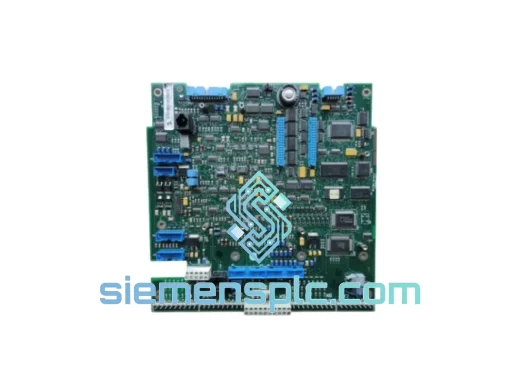
GE IS210MVRBH1A I/O Interface Board – Mark VIe Series
Mark VI
Origin US
I/O Interface Board
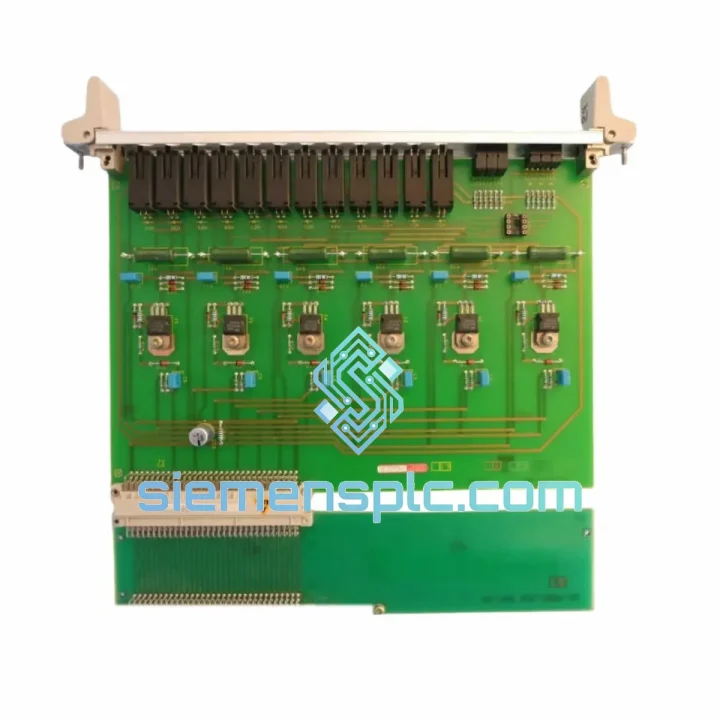
Request verified availability, condition, replacement risk review, packing options and courier lead time for IS430SNUAH1A.
Click Request Quote and the part number is inserted into the inquiry form automatically.
Core fields for model confirmation and RFQ routing. Detailed product narrative remains below.
The IS430SNUAH1A is a universal analogue input/output module engineered by GE for deployment within the Mark VI Turbine Control System — a distributed control platform widely installed across gas turbine, steam turbine, and combined-cycle power generation facilities. This module occupies a single card slot in the Mark VI I/O rack and provides simultaneous multi-channel analogue acquisition and output drive capability, consolidating signal conditioning functions that would otherwise require multiple discrete cards. Its architecture is optimised for deterministic scan-cycle performance within the Mark VI backplane communication framework.
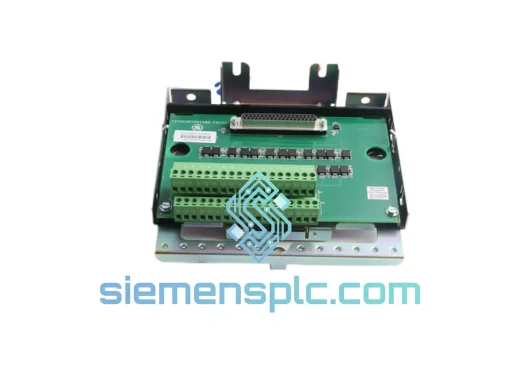
The IS430SNUAH1A interfaces directly with GE terminal boards (TBAI, TBAO series) via ribbon or direct-mate connectors, accepting field wiring from transmitters, RTDs, thermocouples, and analogue actuators. On-board signal conditioning — including cold junction compensation, RTD linearisation, and current-to-voltage conversion — is executed at the module level before data is transferred to the TCEA, TCEB, or TCEC controller over the proprietary GE backplane bus. This architecture offloads signal processing from the main CPU, preserving controller cycle time for closed-loop execution.
Real-time Stock & RFQ: [email protected] | WhatsApp: +86 18359268345
| Part Number | IS430SNUAH1A |
| Manufacturer | GE (General Electric) |
| Product Series | Mark VI Turbine Control System |
| Module Classification | Universal Analogue Input / Output (I/O) |
| Form Factor | Single-width Mark VI backplane card |
| Analogue Input Channels | Up to 16 configurable universal analogue input channels |
| Analogue Output Channels | Up to 4 isolated analogue output channels |
| Supported Input Signal Types | 4–20 mA current loop; 0–10 V DC; RTD Pt100 / Pt1000; Thermocouple types J, K, T, E |
| ADC Resolution (Input) | 16-bit |
| DAC Resolution (Output) | 12-bit |
| Channel Isolation | Galvanic isolation, channel-to-channel and channel-to-backplane |
| Supply Voltage | +5 VDC / +24 VDC via backplane |
| Operating Temperature | 0 °C to +60 °C |
| Storage Temperature | −40 °C to +85 °C |
| Relative Humidity | 5 % to 95 % RH, non-condensing |
| Backplane Interface | GE Mark VI proprietary backplane bus |
| Diagnostics | Power-on self-test (POST); on-board LED fault indicators; fault reporting via Mark VI HMI / Toolbox |
| Regulatory Compliance | CE; UL (per original OEM certification) |
| Module Weight | Approx. 80 g |
| Country of Origin | United States |
| Warranty | 12 months against defects in materials and workmanship |
The IS430SNUAH1A implements a front-end multiplexed ADC topology in which all 16 analogue input channels share a single high-resolution 16-bit successive-approximation ADC via an analogue multiplexer. Channel scan sequencing is controlled by an on-board FPGA or ASIC that manages multiplexer switching, settling time enforcement, and sample-and-hold timing — ensuring each channel receives a stable acquisition window before conversion. This design trades simultaneous sampling for high channel density, a deliberate trade-off appropriate for process-variable monitoring where inter-channel phase alignment is not a hard constraint.
For thermocouple inputs, the module integrates a dedicated cold junction compensation (CJC) sensor mounted at the terminal board interface. The CJC reading is sampled at a lower rate and applied digitally to each thermocouple channel’s raw ADC value before the corrected temperature is passed to the backplane. RTD linearisation uses a polynomial approximation stored in module firmware, covering the Callendar–Van Dusen equation for Pt100 and Pt1000 elements across the full operating range.
EMC performance is addressed through multi-layer PCB construction with dedicated ground planes separating analogue and digital domains. Differential input receivers on current and voltage channels provide common-mode rejection ratios (CMRR) exceeding 80 dB at 50/60 Hz, attenuating power-line interference present in industrial field wiring. Transient protection on each input channel — typically implemented via TVS diode arrays — clamps surge voltages to safe levels before they reach the ADC front-end, protecting against inductive load switching and ground fault transients common in turbine plant environments.
The four analogue output channels are driven by independent 12-bit DAC stages, each followed by a voltage-to-current converter for 4–20 mA loop drive. Output isolation is achieved through DC-DC converter-based galvanic barriers, preventing backplane ground from coupling into field actuator loops. This architecture eliminates ground loop currents that would otherwise introduce offset errors in valve positioner or speed reference signals.
Each IS430SNUAH1A unit offered by siemensplc.com is sourced from decommissioned OEM installations and verified industrial surplus channels. Prior to dispatch, every module undergoes a structured inspection and functional verification process:
Logistics are managed from Xiamen, China, with access to DHL Express, FedEx International Priority, and UPS Worldwide Expedited services. Standard export documentation — commercial invoice, packing list, and certificate of origin — is prepared for all international shipments. Typical dispatch lead time for in-stock units is 1–3 business days. Customs HS code classification and export licensing compliance are handled by our logistics team.
Email: [email protected]
WhatsApp: +86 18359268345
Web: siemensplc.com
Location: Xiamen, China
© 2026 siemensplc.com. All rights reserved.
We check the full part number, brand, series and visible nameplate information before quotation.
Sales confirms stock path, condition option, quantity and realistic lead time for export dispatch.
DHL, FedEx, UPS or buyer courier arrangements can be reviewed with packing requirements.
Similar brand or category products for fast comparison and multi-item RFQ lists.