GE Grid Solutions
RFQ Ready
GE UR8LV Analog Input Module – UR Series
Universal Relay UR Series
Origin US
Analog Input Module
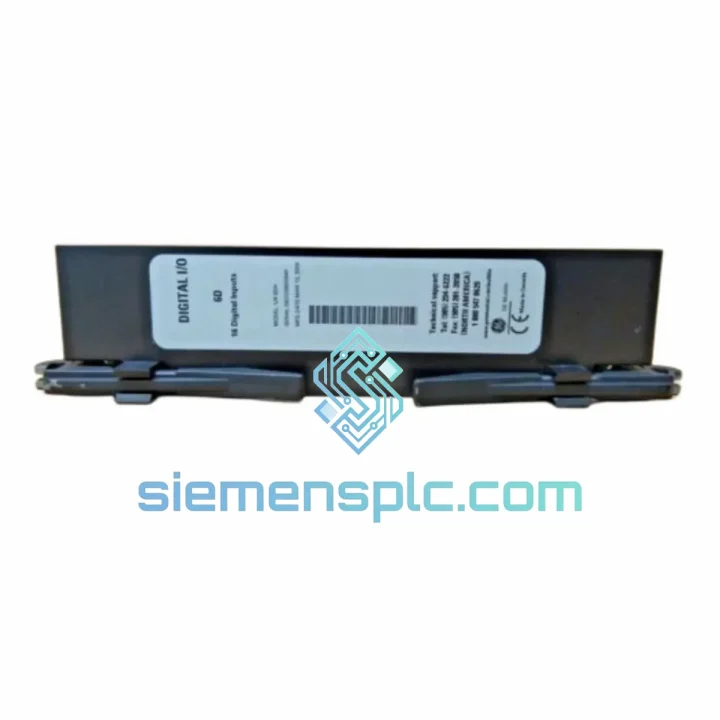
Request verified availability, condition, replacement risk review, packing options and courier lead time for UR 6DH.
Click Request Quote and the part number is inserted into the inquiry form automatically.
Core fields for model confirmation and RFQ routing. Detailed product narrative remains below.
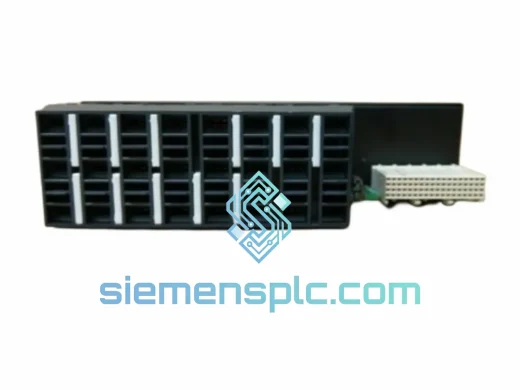
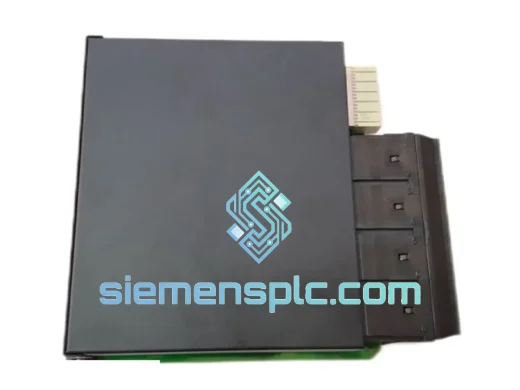
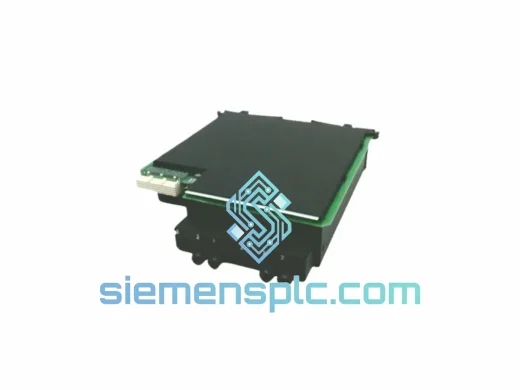
The GE UR 6DH is a 24-channel digital (binary) input module engineered for the GE UR Series Universal Relay platform. Within a protection and control loop, the 6DH serves as the primary field-contact acquisition layer: it converts external voltage-level or dry-contact signals — breaker auxiliary contacts, lockout relay outputs, interlock permissives, supervisory trip commands — into logic-level operands that the UR CPU processes in real time. Without deterministic, high-density binary input acquisition, protection schemes relying on breaker failure initiation, bus differential blocking, or inter-trip signaling cannot achieve the sub-cycle response times mandated by IEEE C37.113 and IEC 60255 standards.
The 6DH occupies a standard I/O slot in the UR Series chassis backplane. Its local FPGA scans all 24 channels at intervals below 1 ms, transfers the scanned states across the chassis backplane to the UR CPU module, and simultaneously publishes them as IEC 61850 GOOSE datasets to peer IEDs on the station LAN. This architecture eliminates marshalling panels and copper inter-relay wiring, reducing both installation labor and long-term maintenance exposure.
Real-time Stock & RFQ: [email protected] | WhatsApp: +86 18359268345
| Parameter | Specification |
|---|---|
| Part Number | UR 6DH |
| Module Classification | Digital (Binary) Input Module |
| Platform Compatibility | GE UR Series (Universal Relay) — all chassis generations |
| Number of Input Channels | 24 independent binary input channels |
| Wet Contact Input Voltage | 17–300 V DC / 20–265 V AC (auto-ranging, no jumper change required) |
| Dry Contact Support | Yes — chassis-supplied wetting voltage, configurable per slot |
| Input Recognition Threshold | Programmable per channel; typical assertion threshold: 10 V DC |
| Channel Scan Rate | < 1 ms per channel (FPGA-driven, deterministic) |
| SOE Time-Stamp Resolution | 1 ms (IRIG-B or IEEE 1588 PTP synchronized) |
| Galvanic Isolation | Optical isolation, 2 kV channel-to-backplane withstand |
| Communication Protocols | IEC 61850 GOOSE, DNP3 Level 2, Modbus RTU/TCP |
| Form Factor | UR Series standard plug-in I/O slot module |
| Operating Temperature | −40 °C to +85 °C |
| Storage Temperature | −40 °C to +85 °C |
| Relative Humidity | 5–95% RH, non-condensing |
| EMC Compliance | IEC 61000-4-2 (ESD), IEC 61000-4-4 (EFT), IEC 61000-4-5 (Surge) |
| Standards | IEC 61850, IEEE C37.90, UL 508, CE Mark |
| Country of Origin | USA (GE Grid Solutions) |
| Warranty | 12 months — covers manufacturing defects and DOA units |
Optical Isolation Architecture
Each of the 24 input channels passes through a dedicated optocoupler stage rated at 2 kV isolation voltage between the field terminal and the module’s internal logic rail. This channel-level isolation topology — as opposed to group isolation used in lower-cost I/O cards — prevents a single field-side fault from propagating common-mode noise or transient energy to adjacent channels or the backplane bus. In substation environments where DC battery systems carry high-frequency switching transients from adjacent protection operations, this per-channel isolation is not a convenience feature; it is a functional requirement for maintaining SOE data integrity during fault events.
FPGA-Based Deterministic Scanning
The 6DH’s input scanning is handled by a dedicated FPGA rather than a shared microcontroller polling loop. This design choice eliminates scan-time jitter caused by interrupt latency or firmware task scheduling. The FPGA executes a fixed-cycle scan of all 24 channels with a worst-case latency below 1 ms, regardless of chassis CPU load or communication traffic. The scanned state vector is transferred to the UR CPU module over the chassis backplane using a time-stamped frame, preserving the acquisition timestamp for SOE logging with 1 ms resolution when the chassis is synchronized to IRIG-B or IEEE 1588 PTP.
Wide-Range Voltage Input Without Hardware Reconfiguration
The 6DH accepts wet contact inputs across 17–300 V DC and 20–265 V AC without any jumper, DIP switch, or hardware modification. This is achieved through a front-end voltage conditioning circuit that normalizes the input signal to the optocoupler’s operating range across the full voltage span. In practice, this means a single 6DH module can serve a 24 V DC control circuit in a motor control center and a 220 V DC battery-backed substation circuit interchangeably — a significant advantage in retrofit projects where multiple battery system voltages coexist.
EMC Design and Surge Withstand
The module’s PCB layout follows IEC 61000-4-5 surge withstand requirements, with transient voltage suppression (TVS) devices on each input terminal and a ground plane architecture that provides a low-impedance return path for common-mode currents. The module meets IEEE C37.90.1 surge withstand capability (SWC) and IEEE C37.90.2 radiated electromagnetic interference requirements — both mandatory for equipment installed in high-voltage switchgear environments where capacitive and inductive coupling from bus bars and current transformers is unavoidable.
Hot-Swap and Backplane Arbitration
The 6DH supports hot-swap replacement in UR chassis equipped with redundant power supplies. The backplane arbitration logic detects module insertion and removal without asserting a reset on the CPU module or disrupting GOOSE publishing from other I/O slots. Upon reinsertion, the module completes its self-test sequence (typically < 2 seconds) and resumes scanning. The CPU module logs the insertion event with a timestamp and generates a self-test alarm that clears automatically upon successful initialization — providing a complete audit trail without manual intervention.
Every GE UR 6DH unit supplied by siemensplc.com is sourced through verified channels with full part traceability. Prior to dispatch, each module undergoes a structured pre-shipment inspection protocol: visual examination of the PCB, terminal block, and module housing for mechanical damage; label verification against GE Grid Solutions part number and date code records; and a functional power-on self-test confirming that the module’s internal diagnostics report no faults. Units that do not pass all inspection stages are quarantined and not offered for sale.
Packaging follows ESD-safe handling procedures throughout: modules are placed in anti-static bags, cushioned with foam inserts, and packed in double-wall corrugated cartons rated for international air freight handling. Original GE Grid Solutions packaging is preserved where available. Each shipment includes a commercial invoice, packing list, and HS code 8537.10 export documentation suitable for customs clearance in all major import markets.
Logistics operations are based in Xiamen, China — a major international port city with direct air freight connections to Hong Kong, Singapore, Frankfurt, Los Angeles, and Dubai. In-stock units are dispatched within 1–3 business days of order confirmation. Express air freight via DHL, FedEx, or UPS is the standard shipping method, with typical transit times of 3–7 business days to Europe, North America, Southeast Asia, and the Middle East. Tracking numbers are provided by email upon dispatch. For time-critical procurement, same-day dispatch is available for orders confirmed before 14:00 CST.
All units carry a 12-month warranty covering manufacturing defects and dead-on-arrival (DOA) conditions. Warranty claims are processed with a target response time of 24 hours. Replacement units are dispatched before the defective unit is returned, minimizing downtime for critical infrastructure applications.
Email: [email protected]
WhatsApp: +86 18359268345
Web: siemensplc.com
Location: Xiamen, China
© 2026 siemensplc.com. All rights reserved.
We check the full part number, brand, series and visible nameplate information before quotation.
Sales confirms stock path, condition option, quantity and realistic lead time for export dispatch.
DHL, FedEx, UPS or buyer courier arrangements can be reviewed with packing requirements.
Similar brand or category products for fast comparison and multi-item RFQ lists.