Siemens
RFQ Ready
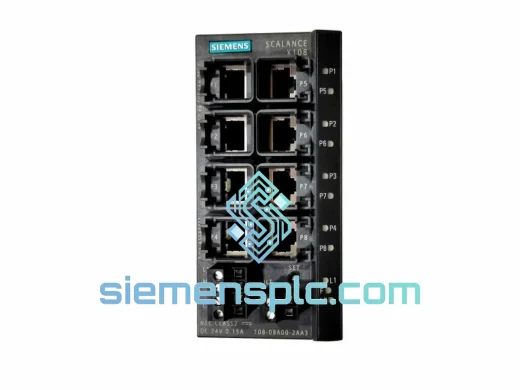
SIEMENS 6GK5108-0BA00-2AA3 Industrial Ethernet Switch
SIMATIC
Origin DE
Industrial Ethernet Switch
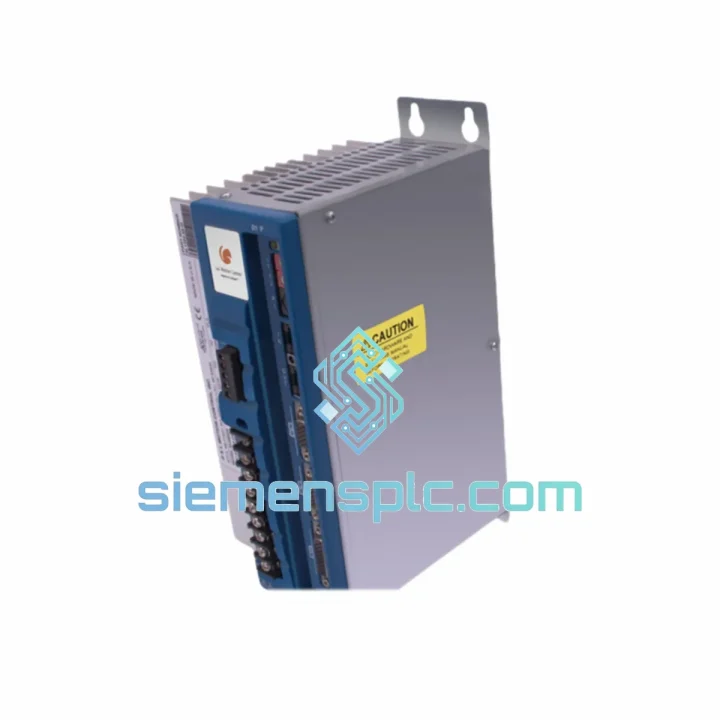
Request verified availability, condition, replacement risk review, packing options and courier lead time for MMC-SD-1.
Click Request Quote and the part number is inserted into the inquiry form automatically.
Core fields for model confirmation and RFQ routing. Detailed product narrative remains below.
The G&L Motion Control MMC-SD-1.0-230-DN is a plug-in motion control card within the MMC (Modular Motion Controller) Series, designed to serve as the command-and-coordination layer between a host PLC or CNC kernel and the physical servo drive layer. Its defining architectural characteristic is the simultaneous support of two drive interfacing paradigms: a Smart Analog output channel (±10 V DC velocity or torque reference) and a Drive Digital channel for serial command communication with compatible digital drives. This dual-mode capability allows a single module to manage mixed-drive environments without requiring separate hardware for each drive type — a practical advantage in retrofit projects and multi-vendor machine architectures.
Operating at 230 V AC input, the module is rated for standard single-phase industrial supply voltages common across North American and European manufacturing facilities. The DeviceNet (DN) suffix identifies the fieldbus variant: this unit carries a native DeviceNet ASIC-based interface, enabling it to participate as a node on a DeviceNet network at data rates up to 500 kbps. DeviceNet’s producer-consumer messaging model allows the MMC-SD-1.0-230-DN to exchange I/O data and explicit messages with a DeviceNet master scanner — typically an Allen-Bradley ControlLogix or CompactLogix PLC — with deterministic cycle times suitable for coordinated motion sequencing.
Within the MMC Series backplane, the module communicates with the host controller over a proprietary high-speed parallel bus. This backplane bus architecture separates motion trajectory data from I/O fieldbus traffic, preserving motion loop determinism even under heavy DeviceNet network load. The trajectory generator embedded in the MMC-SD-1.0-230-DN executes S-curve and trapezoidal motion profiles locally, offloading interpolation computation from the host CPU and reducing jitter in the position command stream delivered to the drive.
The analog output stage uses a 16-bit DAC with differential output buffering, achieving a command resolution of approximately 0.3 mV per LSB at ±10 V full scale. This resolution is sufficient to command servo drives with velocity loop bandwidths up to several hundred Hz without introducing quantization-induced limit cycling. The digital drive channel uses a serial protocol — compatible with G&L / Danaher Motion digital drive families — that transmits position or velocity setpoints at update rates synchronized to the motion kernel’s servo cycle, typically 1 ms or 2 ms depending on axis count configuration.
Encoder feedback processing is handled through dedicated quadrature decoder hardware within the module, supporting incremental encoders with line counts up to the platform’s specified maximum. The hardware decoder eliminates software polling latency from the position feedback path, ensuring that the position error signal used in the PID servo loop reflects actual mechanical position with minimal phase lag. This is particularly relevant in high-speed contouring applications where position loop bandwidth directly determines achievable surface finish and dimensional accuracy.
The MMC-SD-1.0-230-DN is sourced, inspected, and dispatched from Xiamen, China, with 12 months warranty coverage. All units undergo electrical continuity verification, connector integrity inspection, and where test fixtures are available, functional power-on validation prior to shipment.
Real-time Stock & RFQ: [email protected] | WhatsApp: +86 18359268345
| Parameter | Value / Specification |
|---|---|
| Part Number / SKU | MMC-SD-1.0-230-DN |
| Brand | G&L Motion Control (Danaher Motion / Kollmorgen lineage) |
| Series | MMC — Modular Motion Controller Series |
| Module Type | Smart Analog + Drive Digital Dual-Mode Motion Control Card |
| Input Supply Voltage | 230 V AC, single-phase |
| Fieldbus Interface | DeviceNet (ISO 11898 physical layer), up to 500 kbps |
| Analog Output Resolution | 16-bit DAC, ±10 V DC differential |
| Servo Loop Update Rate | 1 ms / 2 ms (axis-count dependent) |
| Encoder Interface | Incremental quadrature, hardware decoder |
| Motion Profile Types | Trapezoidal, S-curve (jerk-limited) |
| Form Factor | Modular plug-in card, MMC Series backplane |
| Unit Weight | Approx. 1,470 g |
| Operating Temperature | 0 °C to +55 °C (per MMC Series platform rating) |
| Storage Temperature | −25 °C to +70 °C |
| Humidity | 5 % to 95 % RH, non-condensing |
| Warranty | 12 months from date of shipment |
| Condition Available | New (NOS), Refurbished-Tested, Used-Tested |
| Origin | United States (G&L Motion Control) |
| Dispatch Location | Xiamen, China |
The MMC-SD-1.0-230-DN’s internal architecture reflects a design philosophy centered on separating time-critical servo computation from fieldbus communication overhead — a separation that is architecturally enforced rather than software-managed.
The DeviceNet interface is implemented via a dedicated communication co-processor with its own message buffer and CAN controller. This co-processor handles all DeviceNet MAC-layer arbitration, message fragmentation, and acknowledgment independently of the motion kernel’s execution thread. As a result, DeviceNet bus contention or network retransmission events do not introduce jitter into the servo position command stream. The motion kernel continues executing its trajectory and PID calculations at the configured servo cycle rate regardless of fieldbus activity — a property that distinguishes hardware-partitioned architectures from software-polled fieldbus implementations.
The analog output stage incorporates differential line driving with common-mode rejection, which attenuates ground-loop-induced noise between the controller and the servo drive’s command input. In industrial cabinets where multiple drives share a common ground rail, common-mode voltages of several hundred millivolts are not uncommon; the differential output architecture maintains command signal integrity under these conditions without requiring additional signal conditioning hardware.
The backplane bus interface uses a parallel data path with hardware handshaking, allowing the host MMC controller to write trajectory setpoints to the module’s input registers with deterministic latency. This is distinct from serial backplane architectures (such as those used in some later-generation motion platforms) where serialization overhead can introduce variable latency under high axis-count configurations. The parallel backplane approach of the MMC Series is particularly well-suited to applications requiring tight inter-axis synchronization, such as electronic gearing and cam profiling.
EMC design measures include localized decoupling capacitors at the DAC output stage, ground plane partitioning between the digital logic section and the analog output section, and shielded connector pinouts for encoder and drive signal cables. These measures reduce susceptibility to radiated emissions from adjacent variable-frequency drives — a common interference source in servo-intensive machine cabinets.
Every MMC-SD-1.0-230-DN unit processed through our Xiamen facility undergoes a structured inspection protocol before dispatch. Physical inspection covers connector pin condition, PCB surface integrity, component seating, and label legibility. Electrical checks include supply rail continuity and, where test fixtures support it, functional power-on validation with status LED verification and communication port response testing.
Units are classified by condition — New Old Stock (NOS), Refurbished-Tested, or Used-Tested — and each classification carries a defined 12-month warranty from the date of shipment. Warranty coverage addresses functional failure under normal operating conditions and excludes damage resulting from incorrect installation, overvoltage, or mechanical impact.
Packaging uses anti-static foam-lined cartons with ESD shielding bags for all PCB-level components. Outer cartons are rated for international air and sea freight handling. Export documentation — including commercial invoice, packing list, and certificate of origin — is prepared in compliance with destination country import requirements. We have established logistics routes to North America, Europe, Southeast Asia, the Middle East, and South America, with typical air freight transit times of 3–7 business days from Xiamen to major international hubs.
For time-critical procurement, DHL Express and FedEx International Priority options are available with door-to-door tracking. Sea freight consolidation is available for bulk orders where lead time permits. All shipments are insured against transit loss and damage.
Email: [email protected]
WhatsApp: +86 18359268345
Web: siemensplc.com
Location: Xiamen, China
© 2026 siemensplc.com. All rights reserved.
We check the full part number, brand, series and visible nameplate information before quotation.
Sales confirms stock path, condition option, quantity and realistic lead time for export dispatch.
DHL, FedEx, UPS or buyer courier arrangements can be reviewed with packing requirements.
Similar brand or category products for fast comparison and multi-item RFQ lists.