HIMA
In Stock OK
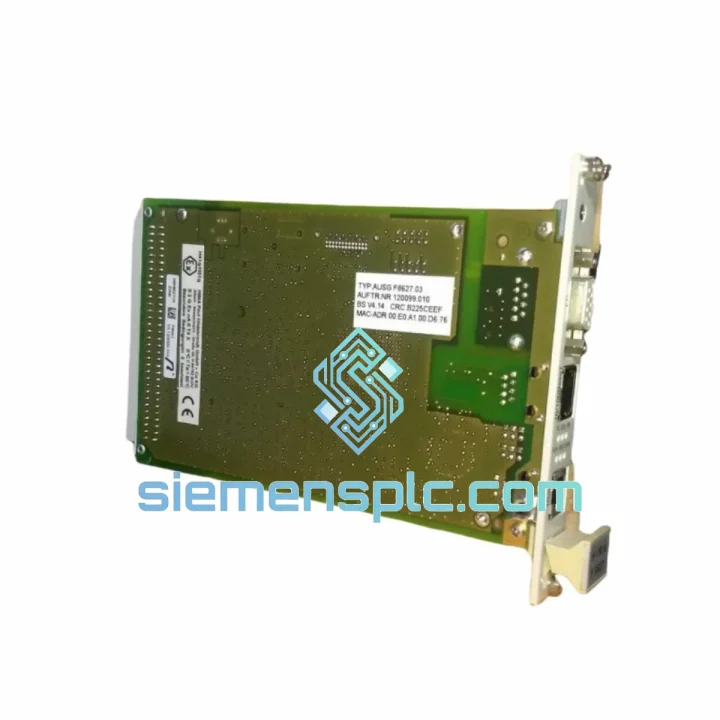
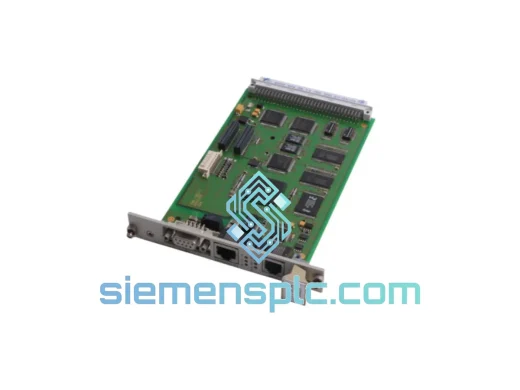
HIMA F8627 AUSG F8627.03 Safety Communication Module – HIMax
Request verified availability, condition, replacement risk review, packing options and courier lead time for F8627 AUSG F8627.03.
BrandHIMA
Part NumberF8627 AUSG F8627.03
ConditionAvailability Check
Lead TimeRFQ Confirmation
DocumentsDatasheet / photos by RFQ
ShippingExport packing available
Auto-filled RFQ
F8627 AUSG F8627.03
Click Request Quote and the part number is inserted into the inquiry form automatically.
- Reply by email: [email protected]
- WhatsApp / Tel: +86 18359268345
- Mon-Sat 9:00-18:00 GMT+8
Procurement Data
Key Product Information
Core fields for model confirmation and RFQ routing. Detailed product narrative remains below.
- Brand
- HIMA
- Primary Part Number
- F8627 AUSG F8627.03
- Product Type
- Safety Communication Module
- Product Family
- Other series
- Manufacturer
- HIMA Paul Hildebrandt GmbH, Brühl, Germany
- Country of Origin
- DE
- Catalog Category
- Communication
Model confirmed for inquiry
F8627 AUSG F8627.03
Send quantity, destination and urgency. The RFQ form keeps this part number attached.
Request Quote
Product Overview
HIMA F8627 AUSG F8627.03 — Rack-Integrated SafeEthernet Gateway for HIMax SIL 3 Safety Systems
The HIMA F8627 AUSG F8627.03 is a backplane-resident communication module engineered exclusively for the HIMax safety programmable controller platform. Its primary function is to serve as the protocol boundary between the HIMax internal high-speed backplane bus and external IEEE 802.3 Ethernet plant networks, executing HIMA’s proprietary SafeEthernet™ protocol stack to maintain IEC 61784-3 functional safety communication integrity across every data exchange cycle. Unlike conventional industrial Ethernet adapters that treat data delivery as a best-effort service, the F8627.03 enforces a deterministic, error-detected, and sequence-verified communication contract — a prerequisite for safety instrumented systems (SIS) operating at Safety Integrity Level 3 per IEC 61508 and IEC 61511.
In process plant architectures — including hydrocarbon processing, LNG terminals, offshore production platforms, and power generation facilities — the HIMax platform executes emergency shutdown (ESD), fire and gas detection (F&G), and high-integrity pressure protection (HIPPS) logic. Each of these applications demands that process variable data arrive at the safety CPU with bounded latency, verified integrity, and unambiguous source identification. The F8627.03 satisfies all three requirements by maintaining an independent communication processor that handles SafeEthernet™ framing, CRC validation, sequence number tracking, and timestamp verification without consuming HIMax CPU scan-cycle budget. The CPU receives pre-validated data at the start of each execution cycle, maintaining temporal consistency across all networked I/O channels regardless of upstream network load conditions.
The module occupies a dedicated communication slot on the HIMax backplane and draws operating power directly from the backplane power rail, eliminating the need for an external power supply. Its physical Ethernet ports connect to standard managed switches or direct peer-to-peer links using Cat5e or Cat6 copper cabling, making it compatible with existing plant Ethernet infrastructure without requiring proprietary media or topology constraints.
📩 Real-time Stock & RFQ: [email protected] | WhatsApp: +86 18359268345
Technical Parameters
| Parameter | Specification |
|---|---|
| Part Number | F8627 / AUSG F8627.03 |
| Manufacturer | HIMA Paul Hildebrandt GmbH, Brühl, Germany |
| Target Platform | HIMax Safety PLC (rack-mount, dedicated slot) |
| Module Class | SafeEthernet™ Communication Gateway |
| Physical Network Interface | IEEE 802.3, 10/100 Mbit/s, RJ-45 copper |
| Safety Communication Protocol | HIMA SafeEthernet™ (IEC 61784-3 FSoE profile) |
| Achieved Safety Integrity Level | SIL 3 per IEC 61508 Ed.2 / IEC 61511 |
| Backplane Interface | HIMax proprietary high-speed parallel bus |
| Module Power Source | HIMax backplane rail (no external PSU) |
| Typical Supply Current | ≤ 1.5 A at 5 V DC backplane rail |
| Operating Temperature Range | 0 °C to +60 °C (IEC 60068-2-14) |
| Storage Temperature Range | −25 °C to +85 °C |
| Relative Humidity | 5 % to 95 %, non-condensing (IEC 60068-2-78) |
| EMC Immunity Standard | EN 61000-6-2 (industrial environment) |
| EMC Emission Standard | EN 61000-6-4 |
| Vibration Resistance | IEC 60068-2-6 (sinusoidal, 10–150 Hz) |
| Shock Resistance | IEC 60068-2-27 (half-sine, 15 g / 11 ms) |
| Redundancy Modes | Active/standby; parallel redundant dual-path |
| Hot-Swap Capability | Supported — online replacement without rack shutdown |
| Safety Certification Body | TÜV Rheinland |
| Applicable Standards | IEC 61508, IEC 61511, IEC 61784-3, EN 61000 |
| Country of Origin | Germany |
| Approximate Module Mass | 1,250 g |
| Warranty Period | 12 months against manufacturing defects |
Hardware Logical Analysis
The F8627.03 implements a strict two-domain architecture that physically and logically separates the standard Ethernet transport domain from the safety application domain. At the transport layer, the module’s Ethernet PHY and MAC circuitry handle IEEE 802.3 frame reception and transmission using standard TCP/IP or UDP/IP encapsulation. This layer is intentionally agnostic to safety semantics — it treats all frames as data payloads and makes no assumptions about delivery order or timing. Above this, an FPGA-based framing engine implements the SafeEthernet™ protocol, wrapping each outbound safety telegram with a 32-bit sequence counter, a 64-bit timestamp derived from the HIMax system clock, a source/destination node address pair, and a CRC-32 polynomial computed over the complete safety payload including all header fields. The receiving module validates all four integrity attributes on every incoming telegram before forwarding data to the CPU input image. A single validation failure — sequence gap, timestamp deviation beyond the configured watchdog window, address mismatch, or CRC error — triggers an immediate safe-state assertion rather than a silent data substitution.
The FPGA implementation of the framing engine is architecturally significant from a functional safety standpoint. Because the safety protocol logic resides in programmable hardware rather than firmware executing on a general-purpose processor, its behavior is deterministic and not subject to operating system scheduling jitter, interrupt latency variation, or stack overflow conditions. The FPGA’s combinational and registered logic paths are fixed at synthesis time, and their timing is verified through static timing analysis during the module qualification process. This design approach directly supports the hardware fault tolerance (HFT) and diagnostic coverage (DC) requirements of IEC 61508 SIL 3.
EMC hardening on the F8627.03 addresses both conducted and radiated interference paths. The PCB layout employs a segmented ground plane strategy: the Ethernet PHY and RJ-45 interface circuitry occupy a dedicated ground island connected to the chassis ground through a low-impedance bond, while the backplane interface logic and FPGA core operate on a separate digital ground plane. This segmentation prevents high-frequency switching transients from the Ethernet PHY from coupling into the safety logic domain. Transient voltage suppression (TVS) diode arrays are placed at each RJ-45 port entry point, clamping ESD events to within the signal trace’s absolute maximum ratings before they propagate to the PHY. Integrated magnetic isolation transformers in the Ethernet port provide galvanic isolation between the plant network and the module’s internal logic, rated to withstand the ground potential differences typical of large industrial installations where cabinet-to-cabinet ground offsets can reach several volts.
The hot-swap insertion sequence is managed by a dedicated power sequencing controller on the backplane connector assembly. During module insertion into a live HIMax rack, the backplane bus lines are held in a defined high-impedance state by the sequencing controller until the module’s internal 5 V and 3.3 V rails have stabilized within their specified tolerance bands — typically within 20 ms of connector engagement. Only after rail stabilization does the sequencing controller release the bus lines to their active state, preventing bus contention or glitch injection into adjacent modules. The HIMax operating system detects module presence via a slot-occupancy signal on the backplane and initiates a configuration download and synchronization sequence, restoring the module to its operational communication state without interrupting the safety execution cycle of the CPU or other installed modules.
System Integration Benefits
- CPU scan-cycle isolation from network jitter: The F8627.03’s onboard FPGA framing engine absorbs all SafeEthernet™ protocol processing — framing, CRC computation, sequence tracking, and timestamp validation — without consuming HIMax CPU execution time. Network-layer events such as switch latency spikes, retransmission bursts, or brief link interruptions do not extend the CPU scan cycle beyond its configured watchdog period, preserving the deterministic response time of the safety application.
- Structured diagnostic transparency: The module exposes a standardized diagnostic data block to the HIMax CPU input image, reporting per-port link state, cumulative telegram error counts, sequence number gap events, CRC failure tallies, and communication watchdog timeout counts. All diagnostic data is accessible through the SILworX engineering environment without requiring a separate network protocol analyzer or external diagnostic tool.
- Dual-path redundancy with bounded switchover: When deployed in pairs within a HIMax rack, two F8627 modules operate in active/standby or parallel redundant mode under HIMax OS arbitration. Switchover from the active to the standby communication path is bumpless and completes within a bounded time window defined by the HIMax system configuration, supporting the availability requirements of continuous-process SIS applications where communication interruption cannot be tolerated.
- Standard Ethernet infrastructure compatibility: The module’s physical layer uses IEEE 802.3 copper Ethernet, compatible with commercially available managed switches, fiber media converters, and standard Cat5e/Cat6 cabling. No proprietary fieldbus media, specialized connectors, or HIMA-specific network hardware is required in the plant Ethernet infrastructure, reducing both capital expenditure and the scope of specialized maintenance skills required on site.
- Non-safety supervisory system interoperability: In addition to SafeEthernet™ safety traffic, the F8627.03 supports standard TCP/IP communication for non-safety supervisory data exchange, allowing DCS historian servers, SCADA workstations, and asset management systems to read process data from the HIMax platform without requiring HIMA-specific client software or protocol converters on the host side.
- Backward-compatible slot replacement: The F8627.03 hardware revision maintains mechanical and electrical compatibility with earlier F8627 revisions within the same HIMax generation. Direct slot-for-slot replacement in existing rack assemblies is supported without structural modification to the rack, backplane wiring, or HIMax configuration database, reducing the engineering effort required for spare-parts-driven maintenance replacements.
- Scalable multi-segment network architecture: Multiple F8627 modules can be installed across a single HIMax rack to support parallel, isolated communication paths to different plant network segments — for example, one module dedicated to remote I/O rack communication, a second dedicated to the DCS integration network, and a third dedicated to a peer HIMax system in a redundant SIS architecture — without cross-segment traffic interference or shared bandwidth contention.
- Firmware-decoupled communication logic: Because the SafeEthernet™ framing and validation logic is implemented in the FPGA fabric rather than in CPU firmware, the module’s communication behavior is independent of HIMax CPU firmware version within the supported compatibility matrix. This characteristic reduces the risk of communication regression during planned CPU firmware upgrade cycles, simplifying the change management process for safety-critical system modifications.
Quality Assurance & Global Logistics
Every HIMA F8627 AUSG F8627.03 unit dispatched by siemensplc.com is factory-original hardware sourced through verified industrial supply channels with full part-number, hardware revision, and serial-number traceability to the manufacturer’s production records. Prior to shipment from our Xiamen, China operations facility, each module undergoes a structured pre-dispatch inspection protocol covering four verification stages: physical integrity assessment of the PCB assembly, module housing, and backplane connector pins; label and marking verification confirming part number F8627 and revision designation .03 against the purchase documentation; Ethernet port contact inspection confirming all RJ-45 socket contacts are free of oxidation, deformation, or contamination; and ESD handling compliance verification confirming the module has remained within an ESD-controlled environment throughout the receiving and inspection process.
Supporting documentation available upon request includes the original HIMA factory datasheet, CE declaration of conformity, and TÜV Rheinland certification reference numbers — documentation sets suitable for inclusion in site acceptance test (SAT) packages, engineering review submissions, and functional safety assessment (FSA) dossiers. Optional pre-shipment functional verification — comprising power-on initialization confirmation and Ethernet port link activity verification — is available as an add-on service, with a written test record provided upon completion.
Packaging follows IEC 61340-5-1 ESD-safe handling requirements: each module is individually sealed in a conductive anti-static bag, nested in conductive foam inserts sized to the module’s mechanical envelope, and enclosed in a double-wall corrugated outer carton rated for international air freight handling. Export documentation — commercial invoice, packing list, HS code declaration (853180), and certificate of origin — is prepared for all international consignments. Primary carriers are DHL Express, FedEx International Priority, and UPS Worldwide Express, with shipment tracking provided from dispatch confirmation through final delivery. From Xiamen, indicative transit times are 3–5 business days to European destinations, 2–4 business days to Southeast Asian destinations, and 4–7 business days to North and South American destinations. For units confirmed in stock, order-to-dispatch lead time is 1–3 business days inclusive of pre-shipment inspection. A 12-month warranty against manufacturing defects applies to all units, with an RMA process available for DOA claims and priority replacement dispatch to minimize plant downtime exposure.
Contact Information
📧 Email: [email protected]
📱 WhatsApp: +86 18359268345
🌐 Web: siemensplc.com
📍 Location: Xiamen, China
© 2026 siemensplc.com. All rights reserved.
Ready to quote
[email protected]
Send This Part Number to Sales
RFQ workflow
Quality workflow ->
Confirmation Process
01Model confirmation
We check the full part number, brand, series and visible nameplate information before quotation.
02Availability reply
Sales confirms stock path, condition option, quantity and realistic lead time for export dispatch.
03Packing & courier
DHL, FedEx, UPS or buyer courier arrangements can be reviewed with packing requirements.
Continue sourcing
Browse full catalog ->
Related Automation Parts
Similar brand or category products for fast comparison and multi-item RFQ lists.
HIMA
RFQ Ready
HIMA F8627 Safety Communication Module
HIMax Safety PLC
Origin DE
Safety Communication Module