Honeywell
RFQ Ready
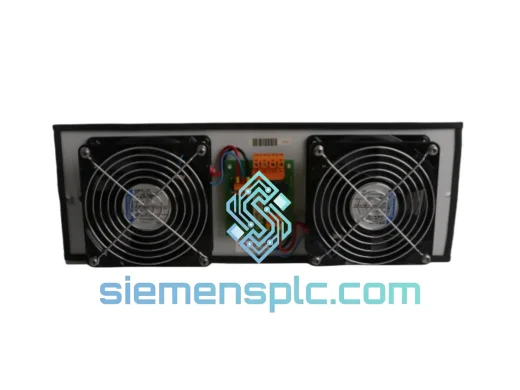
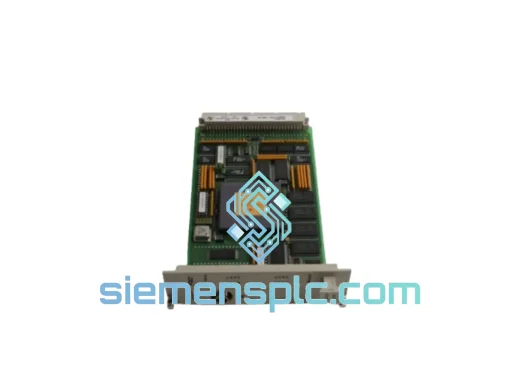
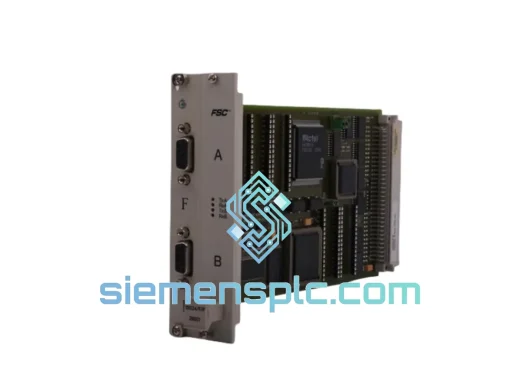
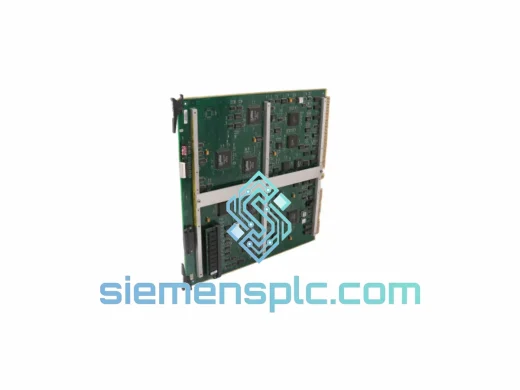
Honeywell K2LCN-4 51402615-400 LCN Interface Board
TDC 3000
Origin US
LCN Interface Board
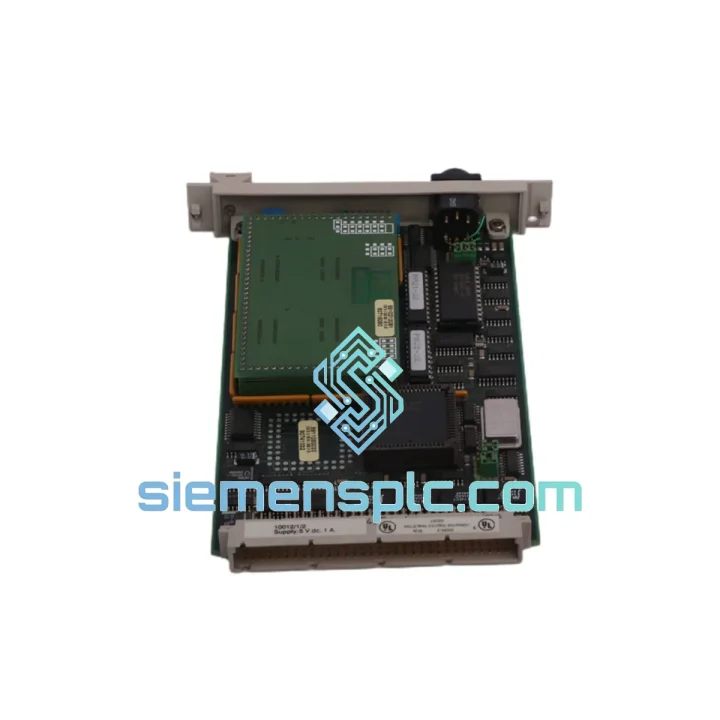
Request verified availability, condition, replacement risk review, packing options and courier lead time for 10012/1/2.
Click Request Quote and the part number is inserted into the inquiry form automatically.
Core fields for model confirmation and RFQ routing. Detailed product narrative remains below.
The HONEYWELL 10012/1/2 is the central processing unit with integrated Flash memory designed for the TDC 3000 Local Control Network (LCN). In distributed control architectures governing continuous-process industries — refining, petrochemical, power generation — the LCN CPU is not a peripheral component. It is the arbitration core that schedules all control algorithm execution, manages inter-node communication across the LCN coaxial highway, and maintains the deterministic scan cycle that process loops depend on. A failure at this layer does not degrade performance incrementally; it collapses the entire control node.
The 10012/1/2 addresses the most persistent reliability liability of its predecessor generation: battery-backed SRAM. Earlier TDC 3000 CPU modules stored program data in volatile RAM sustained by lithium cells with a finite service life. When those cells depleted — often silently, between maintenance intervals — the module lost its configuration on the next power cycle, requiring a full reload from the History Module and an extended recovery sequence. The 10012/1/2 replaces that architecture with Flash non-volatile memory. Program data, configuration tables, and control algorithm parameters persist through complete power loss without any battery maintenance dependency. In plants operating on 5-year turnaround cycles, this distinction directly reduces unplanned outage risk.
Across the installed base of TDC 3000 systems — which spans thousands of continuous-process facilities commissioned between the 1980s and early 2000s — the 10012/1/2 remains one of the highest-demand spare modules. Its form factor, backplane pinout, and LCN protocol implementation are fully compatible with the original LCN chassis, making it a direct replacement without chassis modification or adjacent-module reconfiguration.
📦 Real-time Stock & RFQ: [email protected] | WhatsApp: +86 18359268345
| Parameter | Specification |
|---|---|
| Part Number | 10012/1/2 |
| Manufacturer | HONEYWELL |
| Series | TDC 3000 LCN (Local Control Network) |
| Module Function | Central Processing Unit with Flash Memory |
| Memory Type | Flash (non-volatile, battery-free) |
| Bus Interface | HONEYWELL LCN proprietary backplane |
| Supply Voltage | 5 VDC (backplane-supplied) |
| Form Factor | Single-slot LCN card module |
| Connector Type | Edge-card, LCN backplane standard |
| Operating Temperature | 0 °C to 60 °C |
| Storage Temperature | –40 °C to 85 °C |
| Relative Humidity | 5% to 95% non-condensing |
| Vibration / Shock | Per IEC 60068-2 process plant class |
| Compliance | IEC 61131-2 hardware requirements |
| Weight | ~200 g |
| Warranty | 12 months from shipment date |
The 10012/1/2 operates within the LCN as a token-passing network node. The LCN uses a deterministic token-ring protocol over a dual-redundant coaxial highway, where each node — including the CPU module — must respond within a fixed time window or yield the token. The CPU’s internal scheduler must therefore maintain hard real-time discipline: control algorithm scan cycles, inter-node message handling, and memory read/write operations are all time-sliced against the LCN token interval. Any CPU that cannot sustain this timing contract causes the node to drop off the network, triggering a failover to the redundant LCN path.
The Flash memory subsystem in the 10012/1/2 is mapped into the CPU’s address space as a non-volatile program store. Unlike EEPROM, which has limited write endurance and slow byte-level write cycles, the Flash architecture used here supports block-erase and page-write operations that align with the module’s configuration download procedure. During a configuration load from the History Module, the CPU writes new control algorithm blocks to Flash in sequential page operations, then verifies the written data against a checksum before committing the new configuration as active. This write-verify cycle is a hardware-enforced integrity check, not a software-layer abstraction.
EMC performance is addressed through the LCN chassis backplane design: the card edge connector carries both signal and ground planes in a defined impedance-controlled layout, and the module’s PCB uses a multi-layer stackup with dedicated power and ground planes to minimize conducted emissions and susceptibility to radiated fields from adjacent high-current I/O modules. In environments with significant variable-frequency drive (VFD) installations — common in refinery pump and compressor applications — this ground plane architecture is the primary defense against common-mode noise injection into the CPU’s data bus.
Every HONEYWELL 10012/1/2 unit supplied by our team undergoes a structured inspection and functional verification sequence before shipment. Visual inspection covers PCB surface condition, edge connector pin integrity, component seating, and evidence of prior repair or rework. Functional testing is performed in a live TDC 3000 LCN chassis: the module is powered up, LCN communication is verified, Flash memory read/write integrity is confirmed, and the CPU initialization sequence is observed to completion. Units that do not pass all stages are quarantined and not offered for sale.
Shipping is coordinated from Xiamen, China, with access to major international air freight carriers and express courier services including DHL, FedEx, and UPS. Standard air express transit times to Europe, the Middle East, Southeast Asia, and North America range from 3 to 7 business days depending on destination customs clearance. Full export documentation — commercial invoice, packing list, certificate of conformance, and test report — is prepared for every shipment. ESD-safe anti-static packaging and foam-lined outer cartons are used for all CPU module shipments. Emergency plant shutdown orders are handled with priority processing and same-day dispatch where stock is confirmed available.
📧 Email: [email protected]
📱 WhatsApp: +86 18359268345
🌐 Web: siemensplc.com
📍 Location: Xiamen, China
© 2026. All rights reserved.
We check the full part number, brand, series and visible nameplate information before quotation.
Sales confirms stock path, condition option, quantity and realistic lead time for export dispatch.
DHL, FedEx, UPS or buyer courier arrangements can be reviewed with packing requirements.
Similar brand or category products for fast comparison and multi-item RFQ lists.