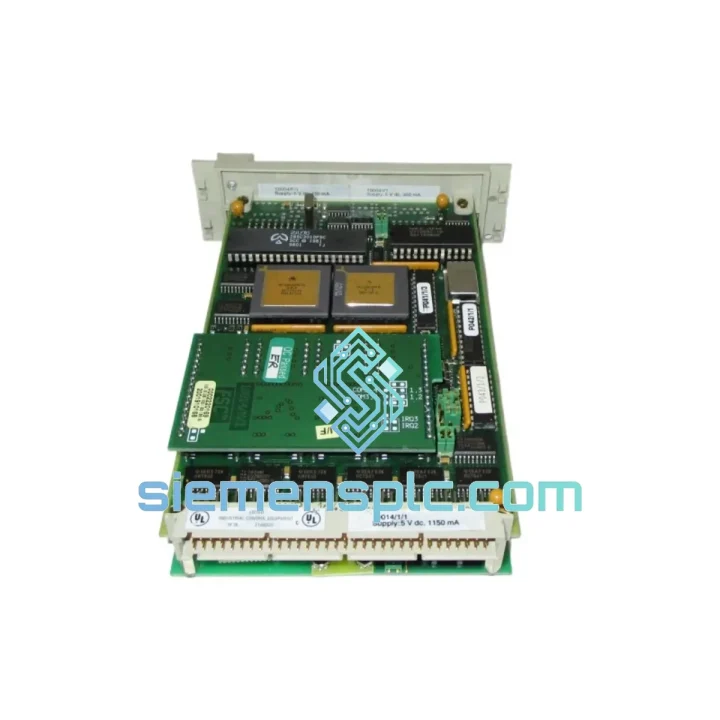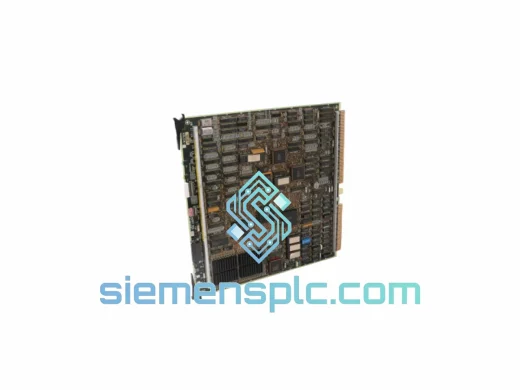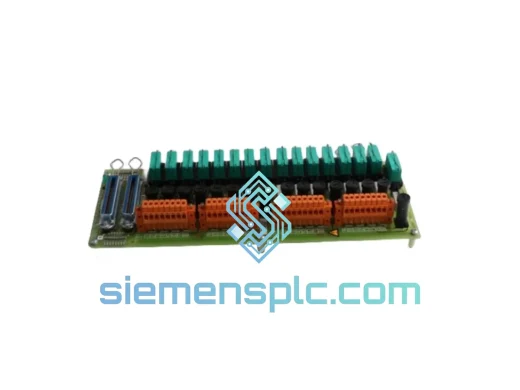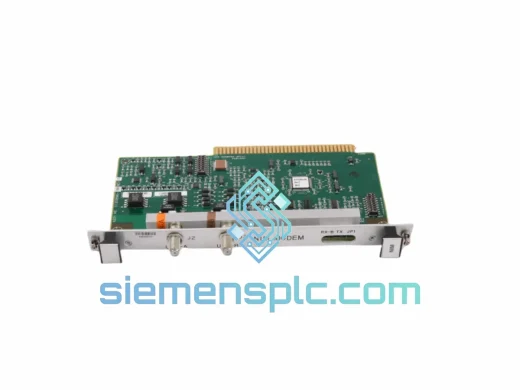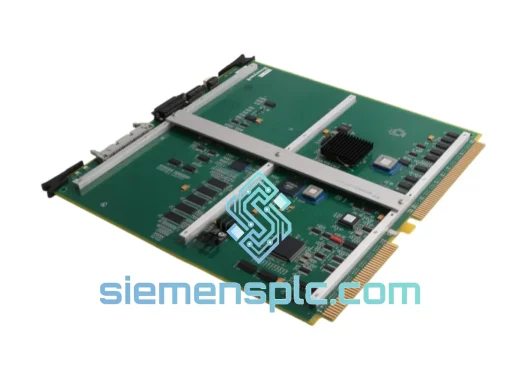
Honeywell 10014/1/1 Dual Port Module
Request verified availability, condition, replacement risk review, packing options and courier lead time for 10014/1/1.
Click Request Quote and the part number is inserted into the inquiry form automatically.
- Reply by email: [email protected]
- WhatsApp / Tel: +86 18359268345
- Mon-Sat 9:00-18:00 GMT+8
Key Product Information
Core fields for model confirmation and RFQ routing. Detailed product narrative remains below.
- Brand
- Honeywell
- Primary Part Number
- 10014/1/1
- Product Type
- DCS Communication Module
- Series / Family
- TDC 3000
- Manufacturer
- Honeywell
- Country of Origin
- US
- Catalog Category
- Communication
- Operating Temp.
- 0 °C to 60 °C
HONEYWELL 10014/1/1 Dual Port Module – Stop the Clock on Your Downtime
Every minute your TDC 3000 system sits offline, the losses compound. A failed 10014/1/1 Dual Port Module doesn’t just interrupt data flow — it can cascade into a full process shutdown across your UCN backbone, leaving operators blind and production at a standstill. We stock this module. It ships today from Xiamen. That’s the only thing that matters right now.
The HONEYWELL 10014/1/1 is the dual-redundant communication bridge at the heart of the TDC 3000 / TotalPlant Solution (TPS) architecture. It handles the handshake between the Local Control Network (LCN) and the Data Highway Plus (DH+), and when it fails, there is no workaround — you need a verified replacement in hand, fast. We have sourced, bench-tested, and pre-staged units ready for immediate dispatch via DHL Express or FedEx International Priority.
URGENT REQUIREMENT? Contact: [email protected] | WhatsApp: +86 18359268345
Quick Technical Datasheet
| Parameter | Specification |
|---|---|
| Part Number | 10014/1/1 |
| Manufacturer | Honeywell |
| Platform | TDC 3000 / TotalPlant Solution (TPS) |
| Module Function | Dual Port LCN–DH+ Communication Interface |
| Port Configuration | 2 × Redundant Data Highway Ports |
| Form Factor | Rack-mount card, standard TDC 3000 chassis slot |
| Operating Temperature | 0 °C to 60 °C |
| Storage Temperature | −40 °C to 85 °C |
| Power Source | Backplane-supplied (system rack) |
| Weight | ~140 g |
| Condition | New surplus / Tested & verified (disclosed per order) |
| Availability | ✅ Ready to Ship – Xiamen Stock |
Troubleshooting & Replacement Tips
Before you pull the card, confirm the fault is actually in the 10014/1/1 and not upstream. Here’s the field-tested sequence:
Common Fault Indicators:
- DH+ Communication Loss Alarm on the HM or AM console — the most direct indicator. If both ports show fault simultaneously, the module itself is the prime suspect, not the cable.
- LCN Node Offline with no corresponding power fault — the 10014/1/1 is the first card to check before pulling the entire node.
- Intermittent Data Highway Timeouts under thermal load — a classic sign of failing capacitors on the dual-port interface circuitry. Swap the card during the next maintenance window; don’t wait for a hard failure.
- Fault Code 47 / 48 on TDC 3000 Diagnostic Display — these map directly to dual-port communication errors. Document the fault code sequence before powering down for your post-incident report.
Replacement Procedure (Field Notes):
- Step 1 – Verify Redundancy State: If your system is configured with a redundant 10014/1/1 pair, confirm the standby module has assumed control before removing the faulted card. Do not pull both simultaneously.
- Step 2 – ESD Protocol: Ground yourself to the rack chassis before touching the card. The dual-port interface ICs are sensitive. One static discharge can kill a new module before it’s seated.
- Step 3 – Revision Level Check: Confirm the replacement unit’s hardware revision matches or is forward-compatible with your system’s firmware version. Mismatched revisions are the #1 cause of “new card, same fault” callbacks. Check the label on the card edge — revision is printed in the lower-right corner.
- Step 4 – Slot Addressing: The 10014/1/1 does not require manual DIP switch addressing in most TDC 3000 configurations — the system performs auto-addressing on power-up. However, if your installation uses a customized node address scheme, verify the slot assignment in the system configuration database before inserting the replacement.
- Step 5 – Power-Up Sequence: Insert the card with the rack powered. The TDC 3000 supports hot-insertion on most chassis variants. Monitor the diagnostic display for the initialization sequence — you should see the port status LEDs cycle green within 30–45 seconds. If they remain amber or red, check the DH+ cable termination at both ends of the segment.
- Step 6 – Post-Swap Verification: Run a full LCN communication check from the engineer’s console. Confirm both ports are active and that the redundant path is re-established. Log the swap in your maintenance management system with the replaced unit’s serial number.
Reliability in Harsh Conditions
The 10014/1/1 was engineered for continuous operation in process plant environments — not office-grade conditions. Honeywell’s TDC 3000 hardware platform was designed to IEC 61131-2 environmental standards, and the dual-port module reflects that lineage.
In refinery control rooms operating at sustained ambient temperatures above 45 °C, the card’s thermal design maintains stable communication throughput without throttling. The PCB substrate and conformal coating provide resistance to humidity levels up to 95% RH (non-condensing), which matters in coastal petrochemical facilities and tropical plant environments where moisture ingress is a constant threat to unprotected electronics.
Vibration tolerance is a non-negotiable requirement in compressor halls and turbine buildings. The card’s edge connector and backplane interface are rated for continuous vibration exposure consistent with IEC 60068-2-6 test profiles — the same standard applied to avionics-grade hardware. Units that have been refurbished and re-tested in our facility are verified to meet these mechanical specifications before shipment.
Every unit we dispatch has been stored in climate-controlled conditions with ESD protection from the moment it entered our inventory. We do not pull cards from scrapped racks and ship them without inspection. That practice is common in the gray market — it is not ours.
Global Express Logistics
Our dispatch hub is in Xiamen, China — a major international freight gateway with direct DHL and FedEx hub connections. Here’s what the logistics chain looks like from the moment you confirm your order:
- Order Confirmation → Same-Day Dispatch: Orders confirmed before 14:00 CST ship the same business day. Orders confirmed after 14:00 ship the following morning. No exceptions, no excuses.
- Packaging: Anti-static ESD bag → foam-cushioned inner box → double-wall corrugated outer carton. Fragile and ESD-sensitive labels applied. The module arrives in the same condition it left our warehouse.
- DHL Express Worldwide: Transit time 1–3 business days to most destinations in Europe, Middle East, and Southeast Asia. 2–4 business days to North America and South America.
- FedEx International Priority: Available as an alternative carrier for destinations where FedEx has a service advantage. We select the faster option by default unless you specify otherwise.
- Export Documentation: Commercial invoice, packing list, and Country of Origin (COO) declaration included with every shipment. HS code classification provided for customs pre-clearance. We have zero tolerance for documentation errors that delay your shipment at customs.
- Tracking: Tracking number provided within 2 hours of dispatch. We monitor the shipment and proactively notify you of any carrier delays.
- Urgent Plant Shutdown Orders: Contact us directly on WhatsApp for same-day quotation and priority processing. We understand that a plant shutdown is not a procurement exercise — it’s a crisis. We respond accordingly.
Contact Information
📧 Email: [email protected]
💬 WhatsApp: +86 18359268345
🌐 Web: siemensplc.com
© 2026 siemensplc.com. All rights reserved.
Send This Part Number to Sales
Confirmation Process
We check the full part number, brand, series and visible nameplate information before quotation.
Sales confirms stock path, condition option, quantity and realistic lead time for export dispatch.
DHL, FedEx, UPS or buyer courier arrangements can be reviewed with packing requirements.