
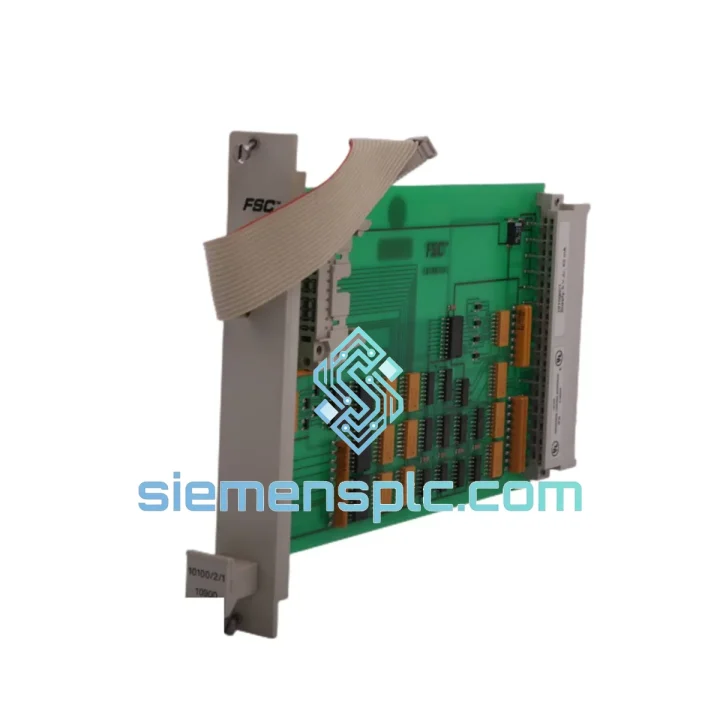
Honeywell
In Stock OK
HONEYWELL 10100/2/1 DCS Module – TDC 3000 Series
Request verified availability, condition, replacement risk review, packing options and courier lead time for 10100/2/1.
BrandHoneywell
Part Number10100/2/1
ConditionAvailability Check
Lead TimeRFQ Confirmation
DocumentsDatasheet / photos by RFQ
ShippingExport packing available
Auto-filled RFQ
10100/2/1
Click Request Quote and the part number is inserted into the inquiry form automatically.
- Reply by email: [email protected]
- WhatsApp / Tel: +86 18359268345
- Mon-Sat 9:00-18:00 GMT+8
Procurement Data
Key Product Information
Core fields for model confirmation and RFQ routing. Detailed product narrative remains below.
- Brand
- Honeywell
- Primary Part Number
- 10100/2/1
- Product Type
- DCS Module
- Series / Family
- TDC 3000
- Manufacturer
- HONEYWELL Process Solutions
- Country of Origin
- US
- Catalog Category
- Motor Drives
- Operating Temp.
- 0 °C to +60 °C
- Warranty
- 12 months from date of shipment (covers electrical and functional defects)
- Compliance
- CE (EMC Directive 2014/30/EU), UL 508, IEC 61131-2, RoHS
Model confirmed for inquiry
10100/2/1
Send quantity, destination and urgency. The RFQ form keeps this part number attached.
Request Quote
Product Overview
HONEYWELL 10100/2/1 — LCN Bus Driver Module for TDC 3000 Distributed Control Architecture
Within a TDC 3000 or TotalPlant Solution (TPS) distributed control system, the Local Control Network (LCN) is the deterministic communication backbone that synchronizes data exchange between Highway Gateway Modules (HGM), Network Interface Modules (NIM), and field-level controllers. Signal degradation on this bus — caused by cable aging, connector oxidation, or a failing driver stage — directly translates into cyclic redundancy check (CRC) errors, increased retry cycles, and ultimately, loss of real-time process visibility. The HONEYWELL 10100/2/1 Bus Driver Module is the hardware element that prevents this failure mode. It regenerates bus signal amplitude, enforces timing determinism, and provides galvanic isolation between bus segments, maintaining LCN and UCN integrity across cable runs that routinely span 300–600 m in large process facilities.
This module occupies a single slot in the standard TDC 3000 card cage, draws power directly from the backplane, and requires no external power supply or configuration software. Its role is passive-active: it does not execute control logic, but without it, the control logic executed by every other module on the network cannot be reliably delivered. In refinery crude distillation units, ethylene crackers, boiler management systems, and pharmaceutical batch reactors, the 10100/2/1 is the component that keeps the network alive when cable plant conditions deteriorate.
Real-time Stock & RFQ: [email protected] | WhatsApp: +86 18359268345
Technical Parameters
| Part Number | 10100/2/1 |
| Manufacturer | HONEYWELL Process Solutions |
| Platform / Series | TDC 3000 / TotalPlant Solution (TPS) |
| Module Function | LCN / UCN Bus Driver — signal regeneration and galvanic isolation |
| Bus Compatibility | Local Control Network (LCN), Universal Control Network (UCN) |
| Signal Isolation Type | Galvanic isolation; common-mode transient rejection up to 1,500 V |
| Signal Amplitude Regulation | Maintains output within ±5% of nominal across rated cable lengths |
| Bus Timing Jitter | <1 ms cycle jitter under full network load |
| EMI Attenuation | >60 dB common-mode noise rejection (VFD and switchgear environments) |
| Maximum Cable Run Supported | Up to 600 m (buffered output stage compensates for cable capacitance) |
| Operating Temperature | 0 °C to +60 °C |
| Storage Temperature | −40 °C to +85 °C |
| Relative Humidity | 5% to 95% RH, non-condensing |
| Power Source | TDC 3000 backplane (no external PSU required) |
| Form Factor | Single-slot plug-in card, TDC 3000 standard card cage |
| PCB Protection | Conformal coating (standard); suitable for H₂S and Cl₂ ambient environments |
| Approx. Weight | 100 g |
| Compliance | CE (EMC Directive 2014/30/EU), UL 508, IEC 61131-2, RoHS |
| SIL Compatibility | Supports SIL 2 loop integrity when integrated with HONEYWELL Safety Manager |
| Warranty | 12 months from date of shipment (covers electrical and functional defects) |
| Available Conditions | New surplus / Refurbished (tested) / Exchange |
| Origin | Germany (HONEYWELL Process Solutions manufacturing) |
Hardware Logical Analysis
The 10100/2/1 operates at the physical layer of the LCN/UCN stack, a position that makes its internal architecture directly responsible for the signal quality that all higher-layer protocols depend on. Three hardware design elements define its performance envelope.
Buffered Output Driver Stage: The module’s output stage uses a buffered line driver topology that actively compensates for the distributed capacitance of long coaxial cable runs. On a 600 m RG-6/U segment, cable capacitance can reach 60–70 nF — sufficient to round signal edges and cause setup-time violations at receiving nodes. The 10100/2/1’s driver maintains edge rates within the LCN physical layer specification regardless of cable length within its rated range, eliminating the need for intermediate repeaters in most single-building plant layouts.
Galvanic Isolation Architecture: The isolation barrier between the bus-side and backplane-side circuits is implemented using transformer-coupled isolation, not optocoupler-based isolation. This distinction matters in high-EMI environments: transformer coupling provides a lower inter-winding capacitance path, which reduces the coupling of high-frequency common-mode noise from the cable plant into the backplane. In installations adjacent to large variable-frequency drives (VFDs) or medium-voltage switchgear, this architecture sustains >60 dB common-mode rejection where optocoupler-based designs typically achieve 40–50 dB.
EMC Shielding and PCB Layout: The module’s PCB uses a multi-layer stackup with dedicated ground planes that confine high-frequency switching currents to inner layers. The bus-side connector area is routed with controlled impedance traces matched to the 75 Ω LCN coaxial characteristic impedance, minimizing reflections at the card-to-cable interface. Conformal coating on the PCB surface provides protection against condensation and corrosive gas ingress (H₂S, Cl₂) in chemical plant environments, extending mean time between failures (MTBF) in aggressive atmospheres compared to uncoated alternatives.
Hot-Swap Mechanical Design: The card edge connector and backplane slot are designed to allow module extraction and insertion while the adjacent bus segment remains powered. The insertion sequence — ground pin first, then signal pins — prevents transient voltage spikes on the bus during swap operations. This design characteristic is critical for plants operating under continuous-run mandates where bus segment shutdown requires a formal management of change (MOC) process and production approval.
System Integration Benefits
1. Deterministic Bus Timing Preservation: The 10100/2/1 maintains LCN cycle jitter below 1 ms under full network load, ensuring that time-critical process variable updates from field controllers arrive within the scan cycle window expected by the HGM. This is the foundational requirement for closed-loop control stability in fast-response processes such as compressor surge control and reactor temperature regulation.
2. Extended Physical Reach Without Repeater Complexity: By compensating for cable capacitance on runs up to 600 m, the module eliminates the need for intermediate repeater nodes in most single-facility layouts. Fewer active network components means fewer potential failure points, simpler spare parts inventory, and reduced maintenance overhead for the instrument engineering team.
3. Galvanic Isolation Protects Upstream Processors: The 1,500 V transient rejection capability of the isolation barrier prevents field-side voltage events — ground faults, lightning-induced surges, or VFD switching transients — from propagating to the HGM and NIM modules. Protecting these higher-cost, longer-lead-time components from field-side damage is a direct cost-avoidance benefit that justifies the bus driver’s position in the BOM.
4. Hot-Swap Capability Supports Zero-Downtime Maintenance: Module replacement without bus segment shutdown allows maintenance teams to address degrading bus driver performance during normal operations rather than scheduling a planned outage. In continuous-process plants where planned shutdowns occur once every 2–4 years, this capability can defer a bus-related outage by years.
5. Drop-In Compatibility with Existing TDC 3000 Infrastructure: The 10100/2/1 retains the original backplane pinout and firmware handshake protocol of the TDC 3000 platform. No configuration changes, no software updates, and no re-engineering of the control system are required for replacement. This directly satisfies plant MOC requirements that mandate minimal scope changes for like-for-like hardware replacements.
6. Diagnostic Transparency via CRC Error Monitoring: When the bus driver is functioning correctly, CRC error counters on the HGM remain at zero or near-zero. A rising CRC error trend is the primary diagnostic indicator of bus driver degradation, giving instrument engineers a quantitative, early-warning signal before communication failures affect process control. This error-rate monitoring approach is compatible with HONEYWELL’s standard LCN diagnostic tools without additional software.
7. SIL 2 Loop Integrity Support: When the 10100/2/1 is deployed within a HONEYWELL Safety Manager architecture, the bus communication infrastructure it supports is compatible with SIL 2 loop integrity assessments per IEC 61511. This allows safety instrumented system (SIS) designers to include the LCN bus segment in their functional safety analysis without requiring a separate, dedicated safety bus for low-demand safety functions.
8. Compatibility with Phased DCS Migration Projects: During migrations from TDC 3000 to Experion PKS, the LCN backbone typically remains active until all nodes are cut over. The 10100/2/1 continues to serve its bus driver function throughout the migration period, allowing project teams to phase the cutover without compromising bus integrity on legacy segments that remain in service.
9. Conformal Coating for Corrosive Atmosphere Installations: The PCB conformal coating provides protection against H₂S and Cl₂ exposure in chemical and petrochemical plant environments, extending service life in atmospheres that would degrade uncoated PCBs within 12–18 months. This reduces the frequency of condition-based replacements in aggressive process areas.
10. Reduced Spare Parts Complexity: A single 10100/2/1 module serves both LCN and UCN bus driver functions, allowing maintenance planners to stock one part number that covers multiple bus segment types. This simplifies MRO inventory management and reduces the capital tied up in critical spare parts programs.
Quality Assurance & Global Logistics
Every HONEYWELL 10100/2/1 unit shipped from our Xiamen, China facility passes a four-stage inspection protocol before dispatch.
Stage 1 — Visual and Physical Inspection: PCB surfaces examined under magnification for corrosion, burn marks, cracked solder joints, lifted pads, and component damage. Backplane connector pins checked for deformation, oxidation, and pin-to-pin continuity. Part number label verified against HONEYWELL original documentation and cross-referenced with the module’s physical markings.
Stage 2 — Electrical Bench Test: Module powered on a TDC 3000-compatible test bench. Bus signal output amplitude, rise/fall edge timing, and isolation resistance measured against HONEYWELL factory specifications. Units with any parameter deviation exceeding 5% of nominal are rejected and quarantined.
Stage 3 — Functional Communication Test: Module installed in a live TDC 3000 test rack with active HGM and NIM nodes. LCN/UCN bus communication verified under simulated network load. CRC error counters monitored over a minimum 30-minute burn-in period. Zero CRC errors required for pass status.
Stage 4 — Documentation and Packaging: Test report generated with measured parameter values. Module packed in anti-static bag with desiccant, placed in foam-lined export carton. Shipment documentation includes inspection report, photographs, available OEM datasheet, and export compliance records.
Global Logistics from Xiamen, China: Orders are dispatched via DHL Express, FedEx International Priority, or merchant-nominated freight forwarder. Standard transit time to major industrial hubs: 3–5 business days (Asia-Pacific), 5–7 business days (Europe, Middle East, Americas). Full export documentation provided: commercial invoice, packing list, certificate of conformance, and HS code classification for customs clearance. Tracking number issued within 24 hours of dispatch. Urgent plant-down orders flagged for same-day processing.
Contact Information
Email: [email protected]
WhatsApp: +86 18359268345
Web: siemensplc.com
Location: Xiamen, China
© 2026 siemensplc.com. All rights reserved.
Ready to quote
[email protected]
Send This Part Number to Sales
RFQ workflow
Quality workflow ->
Confirmation Process
01Model confirmation
We check the full part number, brand, series and visible nameplate information before quotation.
02Availability reply
Sales confirms stock path, condition option, quantity and realistic lead time for export dispatch.
03Packing & courier
DHL, FedEx, UPS or buyer courier arrangements can be reviewed with packing requirements.
Continue sourcing
Browse full catalog ->
Related Automation Parts
Similar brand or category products for fast comparison and multi-item RFQ lists.
Honeywell
RFQ Ready
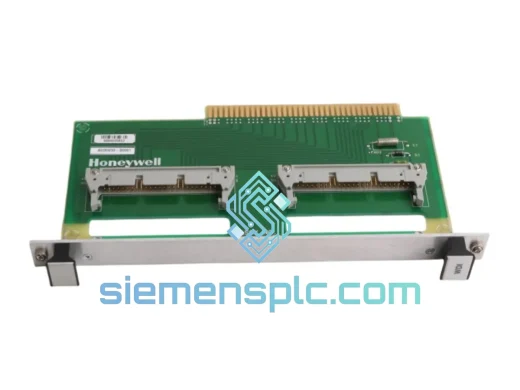
Honeywell 51304903-200 DCS Storage Module – TDC 3000
TDC 3000
Origin US
DCS Storage Module
Honeywell
RFQ Ready
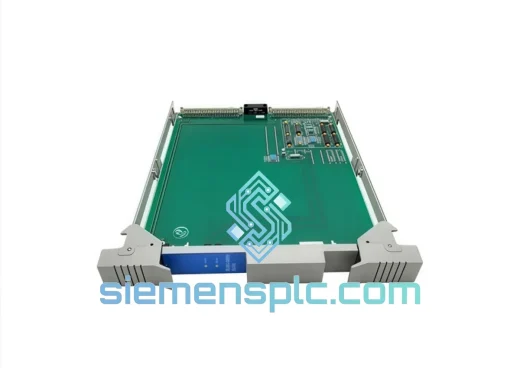
Honeywell 51304501-100 Redundancy Driver Module – TDC 3000
TDC 3000
Origin US
Redundancy Driver Module
Honeywell
RFQ Ready
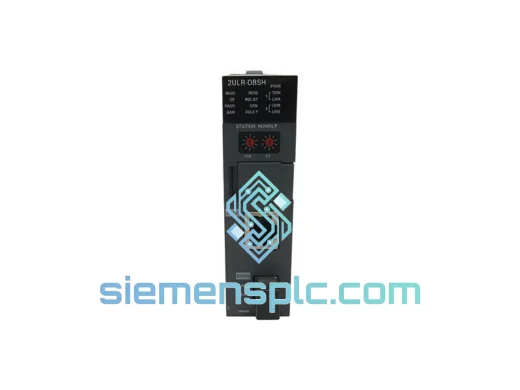
Honeywell 2MLR-DBSH DCS Expansion Driver Module
TDC 3000
Origin US
DCS Expansion Module