Honeywell
RFQ Ready
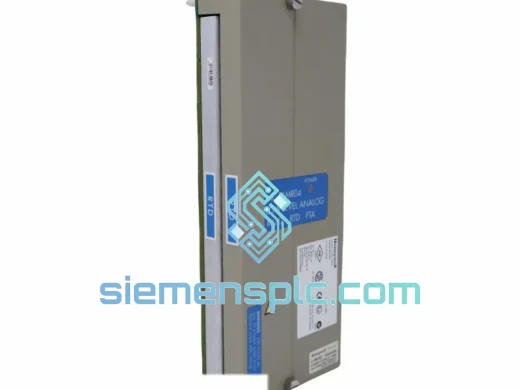
Honeywell DC-TAIX01 Analog Input Module
TDC 3000
Origin US
DCS Analog Input Module
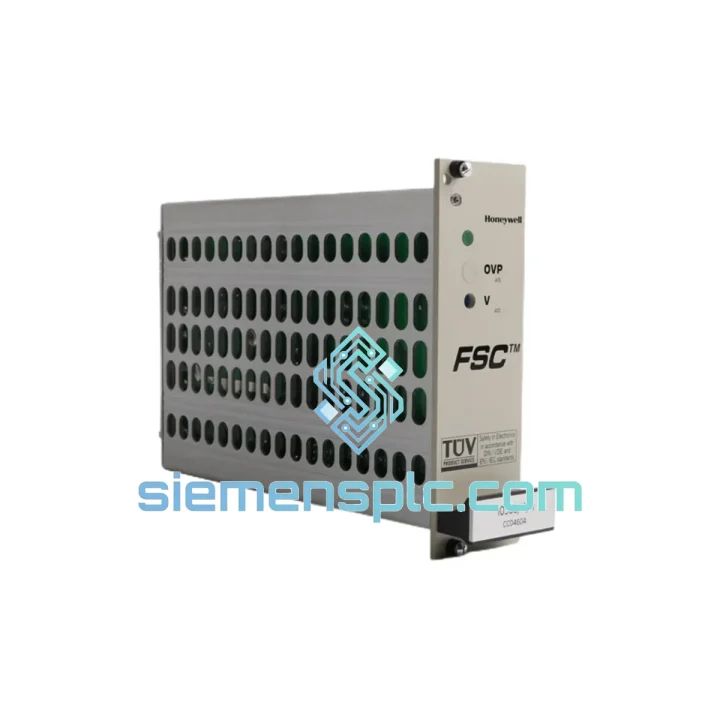
Request verified availability, condition, replacement risk review, packing options and courier lead time for 10300/1/1.
Click Request Quote and the part number is inserted into the inquiry form automatically.
Core fields for model confirmation and RFQ routing. Detailed product narrative remains below.
The Honeywell 10300/1/1 136-010875B is a plug-in signal converter module designed for deployment within the TDC 3000 distributed control architecture. Its primary function is to condition, isolate, and convert analog field signals — typically 4–20 mA current loops or millivolt-range thermocouple inputs — into a format compatible with the High-Level Manager (HLM) or Local Control Network (LCN) data highway. In a control loop, this module occupies the critical boundary between the physical process and the digital control domain: any degradation in its conversion accuracy or isolation integrity propagates directly into loop stability, PID tuning margin, and alarm fidelity.
Unlike generic signal conditioners, the 10300/1/1 is engineered to Honeywell’s internal tolerance stack for the TDC 3000 I/O subsystem. Its conversion linearity, temperature coefficient, and common-mode rejection ratio are matched to the resolution of the upstream AM (Application Module) or HPM (High-Performance Process Manager), ensuring that the 12-bit or 13-bit ADC in the process manager is not the limiting factor in measurement chain accuracy.
Real-time Stock & RFQ: [email protected] | WhatsApp: +86 18359268345
| Parameter | Specification |
|---|---|
| Manufacturer | Honeywell Process Solutions |
| Full Part Number | 10300/1/1 136-010875B |
| Module Classification | Analog Signal Converter / Conditioner |
| Compatible Platform | Honeywell TDC 3000 (HLM / LCN architecture) |
| Form Factor | Card-edge plug-in module (TDC 3000 card cage) |
| Signal Input Type | 4–20 mA analog current loop (field-side) |
| Output Interface | TDC 3000 backplane bus (LCN-compatible) |
| Isolation Type | Galvanic isolation, field-side vs. backplane |
| Common-Mode Rejection | ≥ 120 dB at 50/60 Hz (typical) |
| Operating Temperature | 0 °C to +60 °C (ambient, forced-air cabinet) |
| Storage Temperature | −40 °C to +85 °C |
| Power Consumption | Per TDC 3000 card cage power budget (consult HPM/AM documentation) |
| Revision Suffix | 136-010875B (hardware and firmware revision identifier) |
| Weight (as shipped) | 680 g |
| Country of Origin | United States |
| Warranty | 12 months from date of dispatch |
| Condition Available | New surplus / Refurbished / Exchange |
The 10300/1/1’s internal architecture reflects Honeywell’s design philosophy for the TDC 3000 era: deterministic signal handling with hardware-enforced isolation rather than software-compensated correction.
Galvanic Isolation Architecture: The field-side input circuit is separated from the backplane logic by a transformer-coupled isolation barrier. This is not a simple optocoupler stage — the transformer coupling preserves DC accuracy across the isolation boundary without the forward-voltage nonlinearity inherent in LED-photodiode pairs. The result is a common-mode rejection ratio that remains stable across the full operating temperature range, a property that optocoupler-based designs cannot guarantee without active compensation.
EMC Design: The module’s PCB layout follows Honeywell’s internal EMC partitioning rules for the TDC 3000 card cage. Analog signal traces are routed on inner layers with ground-plane shielding above and below, minimizing capacitive coupling from adjacent digital logic. Ferrite bead filtering on the field-side input pins attenuates high-frequency conducted interference from cable runs that may pass through electrically noisy plant environments — a common failure mode in older installations where cable trays mix power and signal conductors.
Revision B Hardware Changes (136-010875B): The “B” revision suffix in the reference number 136-010875B indicates a documented engineering change order (ECO) applied to the base 136-010875 design. In Honeywell’s TDC 3000 documentation practice, revision letters typically address one or more of: component obsolescence substitution with equivalent-or-better parts, PCB trace corrections identified in field failure analysis, or firmware EPROM updates for edge-case handling. Users replacing a Revision A unit with a Revision B unit should verify compatibility with their specific HPM or AM firmware version — in most cases, the revision is backward-compatible, but Honeywell’s release notes for the relevant process manager firmware should be consulted.
Backplane Bus Interface: The module communicates with the TDC 3000 card cage backplane via Honeywell’s proprietary parallel bus. Signal conversion results are latched into a local register and transferred to the process manager on a deterministic scan cycle. This hardware-latching mechanism ensures that the process manager always reads a complete, stable conversion result — there is no risk of reading a mid-conversion value, which is a known failure mode in systems that use direct ADC register reads without hardware handshaking.
Every unit of the Honeywell 10300/1/1 136-010875B dispatched from our Xiamen, China facility undergoes a structured pre-shipment protocol:
Logistics from Xiamen are handled via DHL Express, FedEx International Priority, and UPS Worldwide Expedited for time-critical shipments. Sea freight consolidation is available for bulk orders. Export documentation — including commercial invoice, packing list, and certificate of origin — is prepared to the destination country’s import requirements. Typical air freight transit times: 2–4 business days to Europe, 3–5 business days to North America, 1–3 business days to Southeast Asia.
Email: [email protected]
WhatsApp: +86 18359268345
Web: siemensplc.com
Location: Xiamen, China
© 2026. All rights reserved.
We check the full part number, brand, series and visible nameplate information before quotation.
Sales confirms stock path, condition option, quantity and realistic lead time for export dispatch.
DHL, FedEx, UPS or buyer courier arrangements can be reviewed with packing requirements.
Similar brand or category products for fast comparison and multi-item RFQ lists.