Honeywell
RFQ Ready
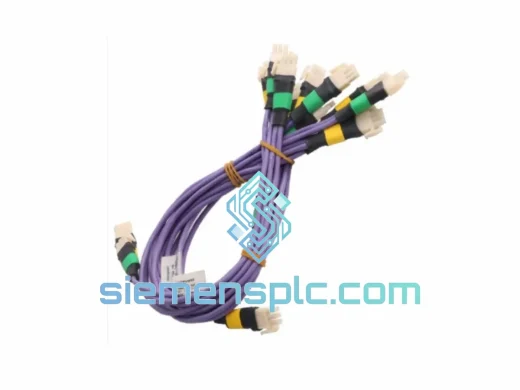
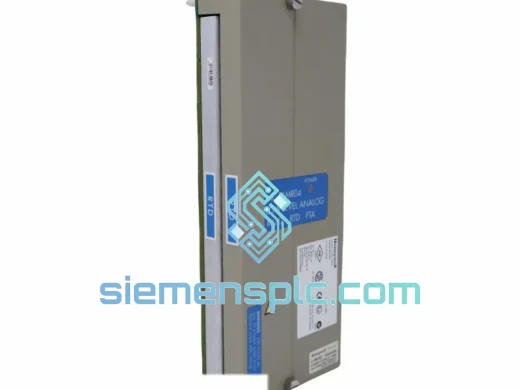
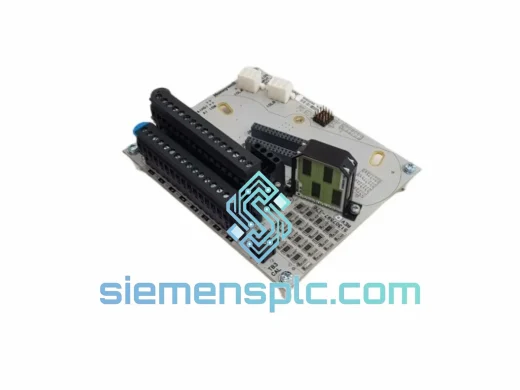
Honeywell DC-TAIX01 Analog Input Module
TDC 3000
Origin US
DCS Analog Input Module
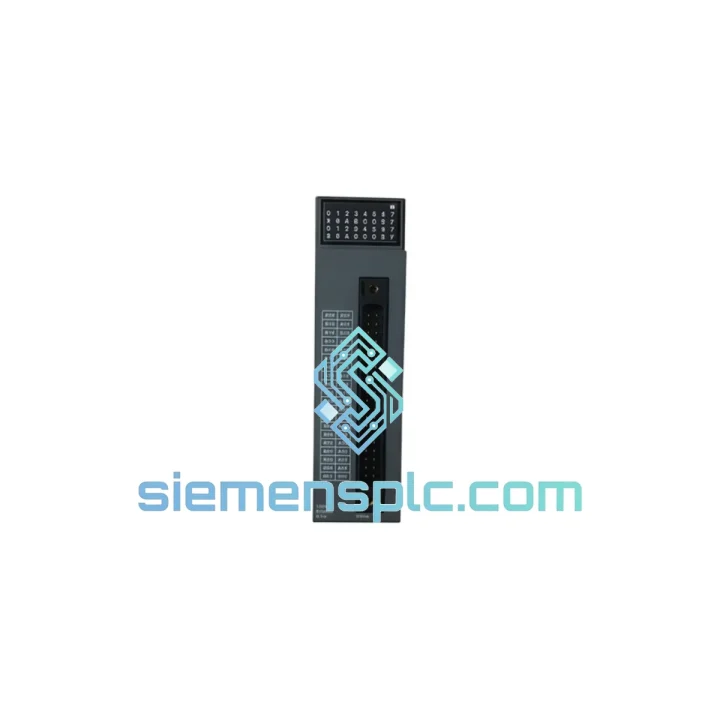
Request verified availability, condition, replacement risk review, packing options and courier lead time for 2MLQ-TR4A.
Click Request Quote and the part number is inserted into the inquiry form automatically.
Core fields for model confirmation and RFQ routing. Detailed product narrative remains below.
Your TDC 3000 line is down. Every hour of unplanned downtime in a refinery, chemical plant, or power station costs anywhere from $10,000 to $250,000 depending on throughput. The Honeywell 2MLQ-TR4A Digital Output Module is the exact card that controls discrete field outputs — solenoid valves, motor starters, ESD relay coils — and when it fails, the entire I/O subsystem loses command authority over those devices. We stock it. We ship it today from Xiamen. That’s the only thing that matters right now.
The 2MLQ-TR4A sits inside the Honeywell TDC 3000 distributed control system, one of the most entrenched DCS platforms in global process industries. Installed base spans refineries across the Middle East, petrochemical complexes in Southeast Asia, and power generation facilities across Europe. These systems run for 20–30 years, and Honeywell’s own lifecycle support has wound down on many TDC 3000 components. That means when a card fails, you’re on the open market — and lead times from traditional distributors can stretch 4–12 weeks. We cut that to 3–7 business days, door to door.
URGENT REQUIREMENT? Contact: [email protected] | WhatsApp: +86 18359268345
| Parameter | Value |
|---|---|
| Part Number / SKU | 2MLQ-TR4A |
| Manufacturer | Honeywell Process Solutions |
| Product Series | TDC 3000 / 2MLQ I/O Series |
| Module Function | Digital (Discrete) Output |
| Output Channels | 4 relay output channels (TR4 = 4-channel relay) |
| Output Type | Relay contact (dry contact), isolated per channel |
| Contact Rating | Typically 2A @ 120VAC / 24VDC (verify with plant drawings) |
| Backplane Interface | TDC 3000 I/O Link bus |
| Form Factor | Rack-mounted card module |
| Compatible Controllers | HPM, PM, APM (TDC 3000 family) |
| Condition | New / Tested Surplus / Refurbished |
| Stock Status | ✔ Ready to Ship — Xiamen Warehouse |
| Origin | USA (Honeywell OEM) |
| Shipping | DHL / FedEx Express, 3–7 business days worldwide |
Common failure signatures for the 2MLQ-TR4A:
Replacement procedure — field-verified steps:
The 2MLQ-TR4A was designed for continuous operation in process plant environments — not office-grade conditions. Honeywell’s TDC 3000 I/O cards are rated for ambient temperatures up to 60°C and humidity up to 95% non-condensing, which covers the vast majority of control room and marshalling cabinet installations in tropical and desert climates.
The relay output design provides inherent galvanic isolation between the control-side logic and the field-side load circuit. This isolation is critical in environments where ground potential differences between the DCS cabinet and field junction boxes can reach several volts — a common condition in large petrochemical complexes with extensive cable runs. The isolated relay contacts prevent these ground differentials from corrupting the I/O Link bus or damaging the card’s logic circuitry.
Vibration tolerance is a practical concern in compressor stations and turbine halls where the control cabinet is located near rotating machinery. The 2MLQ-TR4A’s card-edge connector and backplane interface are designed to maintain electrical continuity under the vibration profiles typical of these installations. Units sourced from our inventory are inspected for connector pin wear and contact oxidation before dispatch — two failure modes that surface specifically in high-vibration environments.
For installations in coastal or high-humidity environments, conformal coating on the PCB provides a baseline level of protection against condensation and salt-laden air. If your installation is in an uncontrolled environment (non-air-conditioned marshalling room, outdoor enclosure), specify this when requesting a quote — we can advise on additional protective measures or source units with enhanced coating.
Our warehouse is located in Xiamen, Fujian Province, China — one of the primary export hubs for industrial components in Asia. Xiamen Gaoqi International Airport (XMN) has direct cargo connections to DHL and FedEx hub networks, enabling next-flight-out shipments to most major industrial regions within 24 hours of order confirmation.
Standard express delivery timeline:
All shipments include full tracking from pickup to delivery. Export documentation — commercial invoice, packing list, and certificate of origin — is prepared same-day for orders confirmed before 14:00 CST. For orders requiring an ATA Carnet, CITES documentation, or specific customs declarations for regulated industrial equipment, contact us in advance and we will coordinate with our freight forwarder.
Emergency same-day dispatch is available for orders confirmed before 11:00 CST with payment cleared. Contact us directly via WhatsApp for time-critical shipments — we will confirm stock, generate the shipping label, and provide a tracking number within 2 hours of payment confirmation.
Email: [email protected]
WhatsApp: +86 18359268345
Web: siemensplc.com
© 2026 siemensplc.com. All rights reserved.
We check the full part number, brand, series and visible nameplate information before quotation.
Sales confirms stock path, condition option, quantity and realistic lead time for export dispatch.
DHL, FedEx, UPS or buyer courier arrangements can be reviewed with packing requirements.
Similar brand or category products for fast comparison and multi-item RFQ lists.