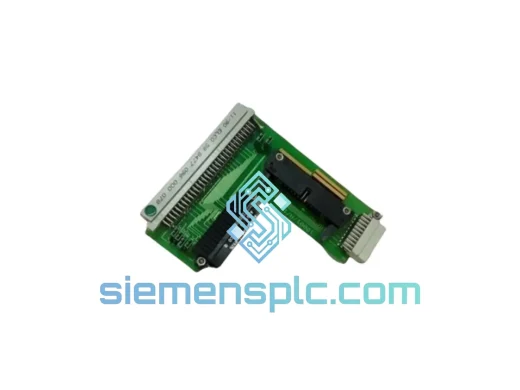
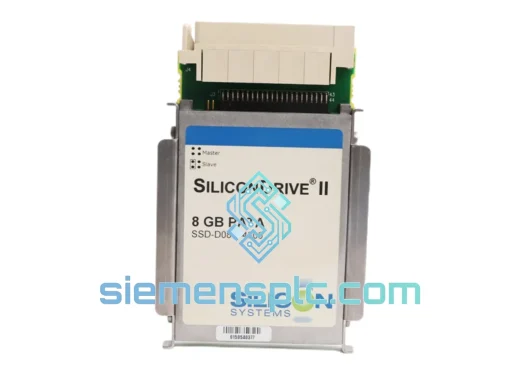
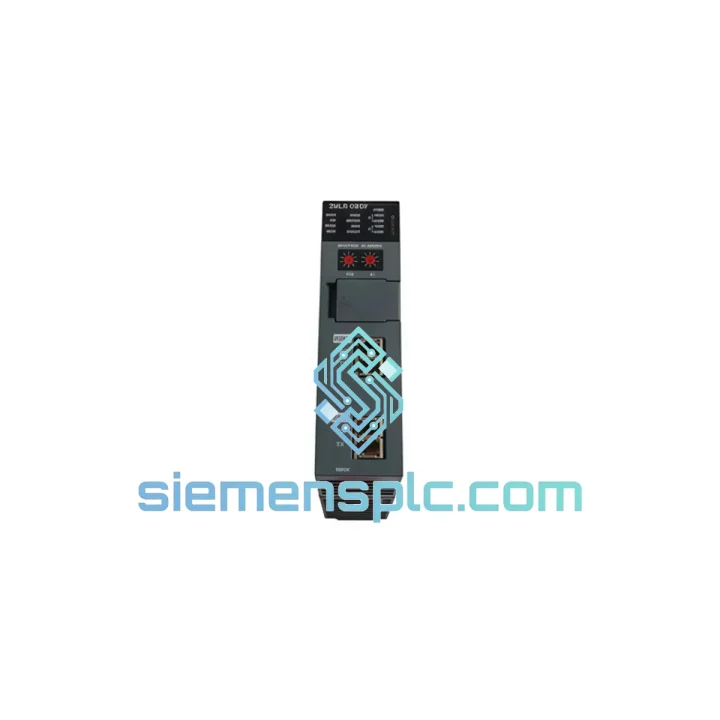
Honeywell
In Stock OK
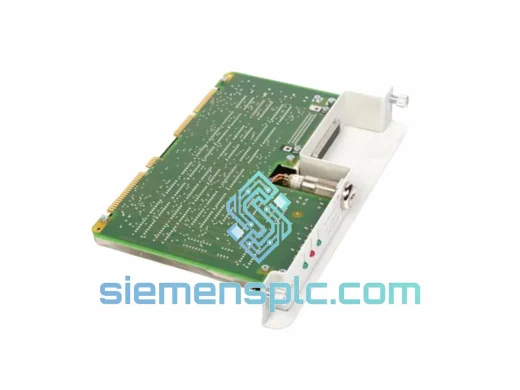
Honeywell 2MLR-DBDHS DCS Expansion Driver – Experion PKS
Request verified availability, condition, replacement risk review, packing options and courier lead time for 2MLR-DBDHS.
BrandHoneywell
Part Number2MLR-DBDHS
ConditionAvailability Check
Lead TimeRFQ Confirmation
DocumentsDatasheet / photos by RFQ
ShippingExport packing available
Auto-filled RFQ
2MLR-DBDHS
Click Request Quote and the part number is inserted into the inquiry form automatically.
- Reply by email: [email protected]
- WhatsApp / Tel: +86 18359268345
- Mon-Sat 9:00-18:00 GMT+8
Procurement Data
Key Product Information
Core fields for model confirmation and RFQ routing. Detailed product narrative remains below.
- Brand
- Honeywell
- Primary Part Number
- 2MLR-DBDHS
- Product Type
- DCS Expansion Driver
- Product Family
- Other series
- Manufacturer
- Honeywell Process Solutions
- Country of Origin
- US
- Catalog Category
- Motor Drives
- Operating Temp.
- 0 °C to +60 °C
- Warranty
- 12 months from shipment date (siemensplc.com)
Model confirmed for inquiry
2MLR-DBDHS
Send quantity, destination and urgency. The RFQ form keeps this part number attached.
Request Quote
Product Overview
Honeywell 2MLR-DBDHS — Dual-Path High-Speed Expansion Bus Driver for Process-Critical DCS Architectures
The Honeywell 2MLR-DBDHS is a rack-mounted, high-speed redundant expansion bus driver module designed for deployment within Honeywell’s Distributed Control System platforms — specifically Experion PKS, TDC 3000, and Plantscape. Its architectural role is precise: it arbitrates bidirectional data traffic between the main controller backplane and remote I/O expansion racks, sustaining deterministic scan cycles across both a primary and a continuously synchronized standby communication path. When the primary path degrades — whether from connector wear, EMI-induced frame corruption, or hardware fault — the standby path assumes full bus ownership within a single arbitration cycle, without software intervention and without interrupting the controller’s I/O update loop.
The “HS” suffix in the part number is a functional classifier, not a marketing designation. The HS variant operates on an elevated serial expansion bus clock rate relative to the standard 2MLR-DBDH. This higher clock rate compresses per-frame transmission time, allowing the driver to complete a full I/O scan of a densely populated expansion rack within the controller’s base execution period. In fast-loop control applications — compressor anti-surge, turbine speed governing, fired heater fuel-air ratio — scan latency directly affects the quality of closed-loop response. A driver that cannot complete its I/O refresh within the PID execution window forces the algorithm to operate on stale process values, degrading control accuracy and widening the safety margin that must be built into setpoint limits. The 2MLR-DBDHS eliminates this constraint by guaranteeing worst-case scan completion within the HS bus protocol’s defined frame budget, regardless of I/O population density in the expansion rack.
Procurement engineers specifying this module for brownfield DCS upgrades must verify that the target expansion rack’s backplane firmware revision supports the HS bus protocol. Pairing an HS driver with a standard-speed rack backplane generates bus arbitration faults at initialization and prevents the module from entering service. Honeywell’s compatibility matrix, available through the Experion PKS engineering documentation portal, lists supported firmware revisions by rack model and hardware revision code.
siemensplc.com maintains verified stock of the Honeywell 2MLR-DBDHS sourced through traceable supply channels. Each unit undergoes functional bench verification prior to dispatch. Shipments originate from Xiamen, China, with DHL Express, FedEx International Priority, and consolidated sea freight options serving customers across Southeast Asia, the Middle East, Europe, and the Americas.
Real-time Stock & RFQ: [email protected] | WhatsApp: +86 18359268345
Technical Parameters
| Parameter | Specification |
|---|---|
| Part Number | 2MLR-DBDHS |
| Manufacturer | Honeywell Process Solutions |
| Compatible Platforms | Experion PKS, TDC 3000, Plantscape DCS |
| Module Function | High-Speed Redundant Expansion Bus Driver |
| Redundancy Mode | Active/Standby dual-path; bumpless, hardware-arbitrated switchover |
| Bus Variant | HS (High-Speed) serial expansion backplane bus |
| Switchover Latency | < 10 ms (typical under nominal I/O load) |
| Form Factor | Single-slot rack-mount module |
| Operating Temperature | 0 °C to +60 °C |
| Storage Temperature | −40 °C to +85 °C |
| Relative Humidity | 5% to 95% RH, non-condensing |
| Power Source | Backplane-sourced DC (rack-supplied) |
| EMC Compliance | CE marked; IEC 61000-4-2 (ESD), IEC 61000-4-4 (EFT), IEC 61000-4-5 (Surge), IEC 61000-4-6 (Conducted RF) |
| Safety Listing | UL listed (confirm against current datasheet revision) |
| Diagnostic Indicators | LED array: Active/Standby status, bus fault, communication health |
| Approximate Weight | 0.3 kg (module only, excluding rack) |
| Warranty | 12 months from shipment date (siemensplc.com) |
Hardware Logical Analysis
At the physical layer, the 2MLR-DBDHS implements a dual-ASIC arbitration architecture. Two independent driver ASICs share a common backplane connector but operate on electrically isolated signal paths — one designated primary, one standby. A dedicated watchdog circuit monitors the primary ASIC’s bus transaction completion rate and frame-level CRC integrity in real time. Upon detecting three consecutive failed transactions or a CRC error rate exceeding the configured fault threshold, the watchdog asserts a switchover signal to the standby ASIC within a single bus clock cycle. This arbitration is executed entirely in hardware, bypassing the controller CPU and the operating system scheduler. The practical consequence is that switchover latency is deterministic and independent of controller load — a property that software-mediated redundancy schemes cannot guarantee.
EMC hardening is implemented at both the PCB and chassis levels. The board uses a six-layer stackup with dedicated ground planes flanking the high-speed signal routing layers, suppressing differential-mode emissions on expansion bus traces. Ferrite beads at the backplane connector interface attenuate common-mode noise conducted from adjacent modules sharing the rack’s DC power rail. The module’s front panel bonds to the rack chassis ground through a low-impedance spring contact, forming a continuous Faraday shield path. This construction meets IEC 61000-4-3 radiated immunity at 10 V/m field strength — a specification directly relevant in cabinet environments co-located with variable-frequency drives, high-current motor starters, or SCR-based power controllers that generate broadband conducted and radiated interference.
The HS bus clock’s elevated frequency reduces per-frame transmission time relative to the standard DBDH variant. In a fully populated expansion rack, this translates to a measurable reduction in total scan cycle time, allowing the controller to execute PID algorithms on fresher process values. For anti-surge control loops — where the surge avoidance algorithm must respond to compressor operating point deviations within 20–50 ms to prevent surge — the difference between a standard-speed and high-speed expansion driver can determine whether the control response arrives within the surge avoidance window or after the compressor has already entered the surge cycle.
System Integration Benefits
- Hardware-arbitrated bumpless switchover: Redundancy transition is executed at the ASIC level without generating a process value gap or forcing controller re-initialization of the I/O address map. PID integral state is preserved; control valve outputs do not bump during the transition.
- Auto-negotiated primary/standby role assignment: Module pairs negotiate active and standby roles via a hardware priority pin at rack power-up, eliminating manual DIP switch configuration and the associated commissioning errors in multi-rack installations.
- Structured fault event logging: All bus fault events are written to the Experion PKS system event journal with ISO 8601 timestamp, fault code, and affected I/O channel range. Maintenance teams can identify root cause from the historian without physical rack inspection.
- Hot-swap standby replacement: The standby driver module can be extracted and replaced while the primary remains in active service. No process shutdown is required — a mandatory capability in continuous-process facilities targeting 8,760-hour annual uptime.
- Guaranteed worst-case scan latency: The HS bus protocol defines a fixed maximum frame completion time regardless of I/O population density. Control engineers can set PID execution periods against a known upper bound rather than empirically derived safety margins.
- Mechanical backward compatibility: The 2MLR-DBDHS occupies the same single-slot rack position as the standard 2MLR-DBDH. No cabinet modification, cable rerouting, or rack replacement is required in brownfield upgrade projects, reducing installation cost and schedule risk.
- Predictive bus health monitoring: The module continuously measures expansion bus signal integrity parameters — including eye diagram margin and frame error rate trends — and reports degradation to the DCS historian before hard faults occur. This enables condition-based maintenance scheduling rather than reactive replacement.
- SIL 2-compatible redundancy architecture: The dual-path design satisfies the hardware redundancy requirements of SIL 2 Safety Instrumented System architectures when deployed with Honeywell Safety Manager, without requiring a separate safety-rated expansion driver or additional rack slots.
- Reduced commissioning time: Auto-role negotiation, plug-and-play backplane interface, and self-diagnostic LED indicators reduce the time from module installation to verified bus operation, shortening overall DCS commissioning schedules on greenfield projects.
Quality Assurance & Global Logistics
Every Honeywell 2MLR-DBDHS unit dispatched by siemensplc.com passes a structured pre-shipment verification protocol. Functional testing confirms bus arbitration logic, switchover response time under simulated load, and LED diagnostic output across all defined fault states. Physical inspection covers connector pin alignment, PCB surface condition, firmware label legibility, and anti-static packaging integrity. Units are packed in anti-static bags within foam-lined cartons rated for IATA air freight handling standards.
All shipments originate from our Xiamen, China warehouse. DHL Express and FedEx International Priority deliver to most Southeast Asian destinations within 3–5 business days, to the Middle East and Europe within 5–7 business days, and to North America within 5–8 business days. Sea freight consolidation is available for bulk orders exceeding 10 units. Complete export documentation — commercial invoice, packing list, certificate of origin, and ECCN classification — is prepared for every international shipment. A 12-month warranty covers manufacturing defects and functional failures under normal operating conditions, with a target replacement dispatch of 5 business days from confirmed fault verification.
Contact Information
Email: [email protected]
WhatsApp: +86 18359268345
Web: siemensplc.com
Location: Xiamen, China
© 2026 siemensplc.com. All rights reserved.
Ready to quote
[email protected]
Send This Part Number to Sales
RFQ workflow
Quality workflow ->
Confirmation Process
01Model confirmation
We check the full part number, brand, series and visible nameplate information before quotation.
02Availability reply
Sales confirms stock path, condition option, quantity and realistic lead time for export dispatch.
03Packing & courier
DHL, FedEx, UPS or buyer courier arrangements can be reviewed with packing requirements.
Continue sourcing
Browse full catalog ->
Related Automation Parts
Similar brand or category products for fast comparison and multi-item RFQ lists.
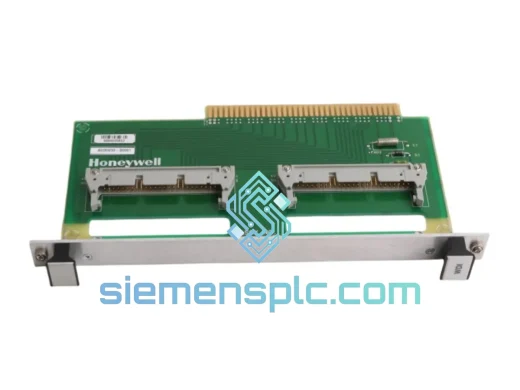
Honeywell
RFQ Ready
Honeywell 51304903-200 DCS Storage Module – TDC 3000
TDC 3000
Origin US
DCS Storage Module
Honeywell
RFQ Ready
Honeywell 620-0088 PLC Communication Module – 620 Series
620 Series
Origin US
PLC Communication Module