Siemens PLC sourcing desk · Multi-brand automation spares [email protected] +86 18359268345
KUKA In Stock OK

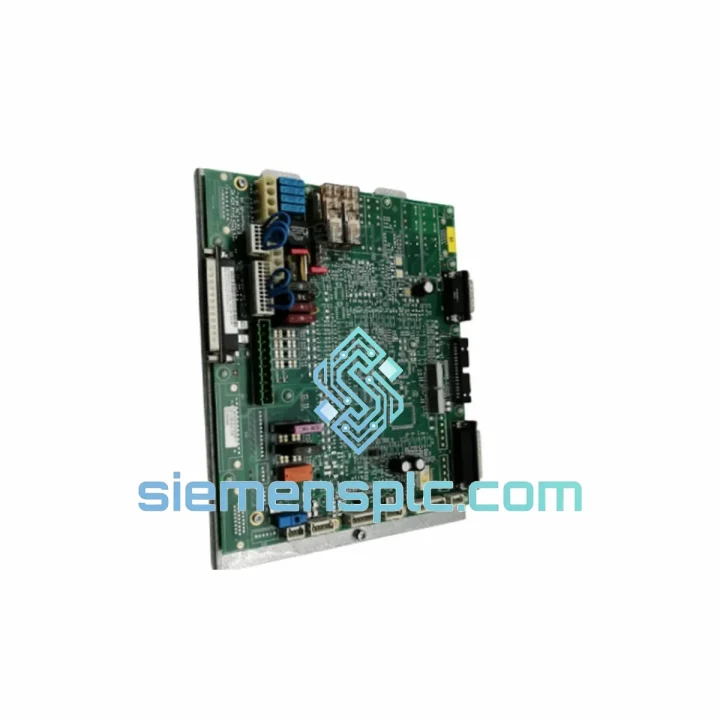
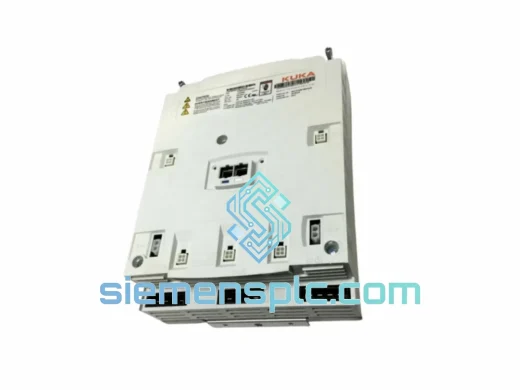
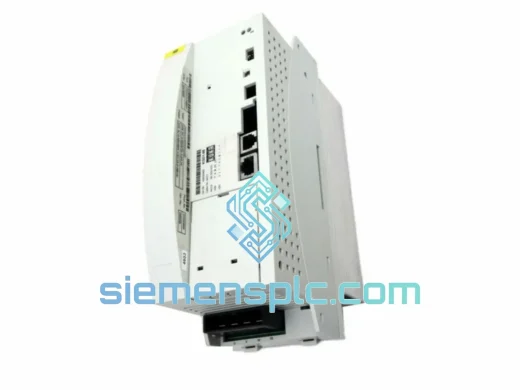
KUKA MFC+DSE 00-117-336 Safety Drive Module

Request verified availability, condition, replacement risk review, packing options and courier lead time for 00-117-336.

Exact part00-117-336 RFQ auto-fillPart number attached Export packingDHL / FedEx / UPS Sales replyEmail or WhatsApp
BrandKUKA Part Number00-117-336 ConditionAvailability Check Lead TimeRFQ Confirmation DocumentsDatasheet / photos by RFQ ShippingExport packing available
Auto-filled RFQ 00-117-336

Click Request Quote and the part number is inserted into the inquiry form automatically.

Procurement Data

Key Product Information

Core fields for model confirmation and RFQ routing. Detailed product narrative remains below.

Brand
KUKA
Primary Part Number
00-117-336
Product Type
Safety Drive Module
Product Family
Other series
Country of Origin
DE
Model Function
Motion CPU (MFC) + Drive Safety Electronics (DSE)
Catalog Category
Motor Drives
Model confirmed for inquiry 00-117-336 Send quantity, destination and urgency. The RFQ form keeps this part number attached.
Request Quote
Product Overview

KUKA MFC+DSE 00-117-336 / 00-128-358 / 033.59.20.99G PClF — Your KR C4 Line Is Down. Every Minute Costs Money. Ship Today.

Production stopped. The teach pendant is frozen. KSS throws a drive safety fault and the entire robot cell is locked out. You’ve isolated the fault to the MFC+DSE board — the single card that combines real-time motion execution and SIL 2 drive safety in one assembly. You don’t have time for a 6-week OEM lead time. You need the exact board, verified firmware, on a plane today.

We stock the KUKA MFC+DSE 00-117-336 / 00-128-358 / 033.59.20.99G PClF in Xiamen, China. DHL Express to Europe: 2–3 days. North America: 3–4 days. Southeast Asia: next day. The moment you confirm, we pull, test, pack, and hand to the courier. Your line gets back up. That’s the only metric that matters.

URGENT REQUIREMENT? Contact: [email protected] | WhatsApp: +86 18359268345

Quick Technical Datasheet

Parameter Value Notes
Part Number (Rev A) 00-117-336 Original hardware revision
Part Number (Rev B) 00-128-358 Successor revision, drop-in compatible
Firmware Baseline 033.59.20.99G Factory-loaded, verified pre-ship
PCB Variant PClF Qualified for full KR C4 family
Compatible Controller KUKA KR C4 / KR C4 compact / KR C4 smallsize All variants
KSS Compatibility KSS 8.2 and above Confirm KSS version before swap
Function Motion CPU (MFC) + Drive Safety Electronics (DSE) Dual-function single board
Safety Rating SIL 2 / PLd EN ISO 13849-1, IEC 62061
Safety Functions SS1, SS2, SOS, SLS, SBC, SLP Full functional safety suite
Servo Bus EtherCAT Sub-1ms cycle time
Field Bus PROFINET / EtherNet/IP Configurable
Max Axes 9 (6 robot + 3 external)
Weight ~600 g
Stock Status ✔ Ready to Ship — Xiamen Warehouse Same-day dispatch on confirmed orders

Troubleshooting & Replacement Tips

Common fault signatures that point to MFC+DSE failure:

  • KSS Error 1354 / 1355 (Drive Safety Communication Lost): The DSE layer has lost its heartbeat with the KSD servo drives over EtherCAT. Before condemning the board, check the EtherCAT cable from X21 and the KSD drive status LEDs. If drives show green and cable is intact, the DSE ASIC on the MFC+DSE board is the likely culprit.
  • KSS Error 2001 (Motion CPU Timeout): The MFC real-time kernel has missed its cycle deadline. This can be triggered by a corrupted firmware partition or a failing FPGA on the board. A firmware re-flash via KUKA.Recovery USB rarely fixes hardware-level FPGA faults — board replacement is the correct path.
  • Axis group not activating after E-Stop reset: If SS1 or SOS does not release after a clean E-Stop reset and the X11 safety connector checks out, the DSE is not issuing the drive enable signal. Swap the MFC+DSE board.
  • Intermittent SLS violations at low speed: Encoder feedback processing runs through the MFC. A degraded ADC on the board can cause sporadic speed miscalculations, triggering SLS faults even when the robot is moving correctly. Log the fault timestamps — if they correlate with thermal cycles (morning startup, post-lunch), the board is thermally stressed.

Step-by-step replacement procedure (KR C4):

  1. Archive the current project: From WorkVisual, export the current cell configuration and save the KSS project to USB. The MFC+DSE does not store the robot program, but the safety configuration is board-resident — you will need to re-commission safety parameters after swap.
  2. Power down correctly: Initiate a controlled shutdown from the smartPAD. Wait for the KPS power supply to discharge (green LED off on KPS). Then kill the main breaker. Do not hot-swap this board.
  3. ESD precautions: Ground yourself to the cabinet chassis before touching the board. The MFC+DSE contains EtherCAT PHY ICs and FPGA components that are sensitive to electrostatic discharge.
  4. Connector sequence: Disconnect X21 (EtherCAT to drives) first, then X19 (PROFINET), then the power connector. Label each cable if your cabinet has non-standard routing.
  5. Firmware verification on new board: Before installing, confirm the firmware sticker reads 033.59.20.99G. If your KSS version is above 8.5, check the KUKA release notes for firmware compatibility — a mismatch will cause KSS to reject the board at boot.
  6. Safety re-commissioning: After first power-on with the new board, KSS will prompt for safety configuration validation. You must re-enter and confirm all safety parameters (SLS speeds, SOS tolerances, zone definitions) and have a qualified safety engineer sign off before returning the cell to production. This is not optional — it is a legal requirement under Machinery Directive 2006/42/EC.
  7. EtherCAT topology scan: Run a fresh EtherCAT scan from WorkVisual to confirm all KSD drives are detected. Compare the slave list against your archived configuration. Any missing node indicates a cabling or drive issue unrelated to the MFC+DSE swap.

Configuration notes: The MFC+DSE PClF variant does not use physical DIP switches for axis addressing — axis assignment is handled entirely in software via WorkVisual. There is no self-addressing jumper to set. The board’s MAC address is factory-programmed and will be automatically recognized by KSS during the first boot sequence.

Reliability in Harsh Conditions

The MFC+DSE is designed to operate inside a KR C4 controller cabinet that sits on a foundry floor, next to a resistance welding gun, in a building with no air conditioning in summer. KUKA’s qualification testing for this board class covers continuous operation at 45°C ambient with 95% relative humidity (non-condensing), vibration loads per IEC 60068-2-6 (sinusoidal, 10–150 Hz, 1g), and mechanical shock per IEC 60068-2-27 (15g, 11ms half-sine). The conformal coating on the PCB provides additional protection against airborne contaminants — metallic dust, coolant mist, and flux residue — that are endemic in automotive and metal fabrication environments.

The EtherCAT PHY transceivers on this board are rated for industrial temperature ranges and use magnetically isolated interfaces to reject common-mode noise from adjacent servo drive switching. In practice, this means the board maintains deterministic communication even when a 600A spot welding transformer is firing two meters away. The FPGA fabric implementing the DSE safety logic is triple-redundant in its voting architecture, which is how the board achieves SIL 2 without requiring an external safety relay module for basic stop functions.

Units we ship have been stored in climate-controlled conditions with desiccant packaging. We do not sell boards that have been sitting in uncontrolled warehouse environments for years — moisture ingress into the BGA solder joints is the leading cause of latent field failures in refurbished industrial electronics, and we treat it accordingly.

Global Express Logistics

Our dispatch warehouse is located in Xiamen, Fujian Province, China — one of the most logistics-connected cities on the southeast coast, with direct DHL and FedEx gateway access. Here is how the process works from the moment you confirm an order:

  • Same-day cutoff: 16:00 CST. Orders confirmed before 16:00 Xiamen time are packed, labeled, and handed to the courier the same business day. No exceptions, no delays for internal processing.
  • DHL Express Worldwide: Germany, France, Netherlands, Poland — 2–3 business days. United States, Canada — 3–4 business days. Australia, Japan, South Korea — 2–3 business days. Southeast Asia — 1–2 business days.
  • FedEx International Priority: Available as an alternative for destinations where FedEx has stronger last-mile coverage. Transit times are comparable to DHL.
  • Export documentation: We prepare the commercial invoice, packing list, and EEI filing. HS Code 8537.10 is used for this module class. For EU imports, we can provide a EUR.1 movement certificate upon request to support preferential duty treatment where applicable.
  • Customs value declaration: We declare actual transaction value. We do not under-declare. This protects you from customs holds and seizure risk — a customs delay on a downtime-critical shipment is worse than paying the correct duty.
  • Tracking: AWB number is sent to you within 2 hours of dispatch. You can track in real time via DHL or FedEx portals. We monitor all shipments and proactively contact you if a customs query arises.

Contact Information

Production lines don’t wait. Reach us directly:

© 2026 siemensplc.com. All rights reserved.

Ready to quote

Send This Part Number to Sales

[email protected]
RFQ workflow

Confirmation Process

Quality workflow ->
01Model confirmation

We check the full part number, brand, series and visible nameplate information before quotation.

02Availability reply

Sales confirms stock path, condition option, quantity and realistic lead time for export dispatch.

03Packing & courier

DHL, FedEx, UPS or buyer courier arrangements can be reviewed with packing requirements.