LINTEC
RFQ Ready
LINTEC CX-2415PS Power Supply Control Module
CX Series
Origin Japan
Power Supply Control Module
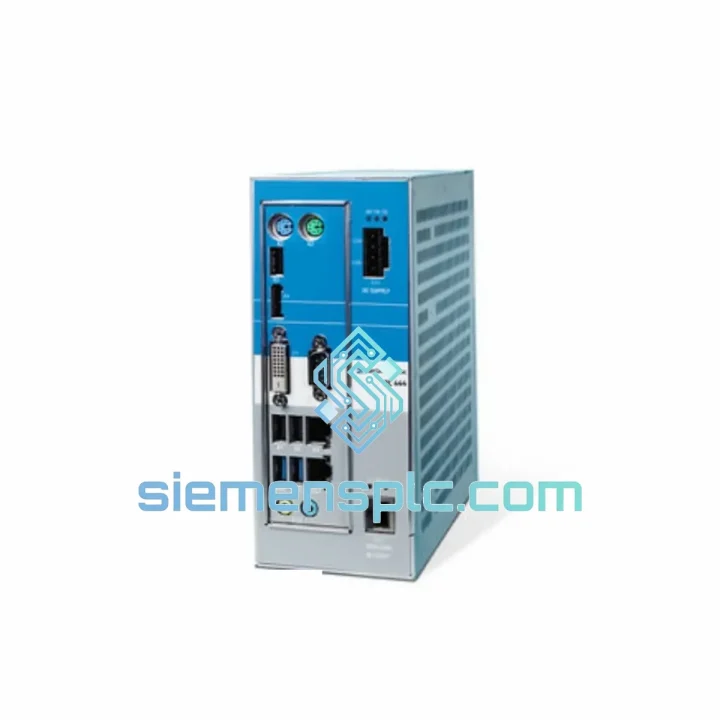
Request verified availability, condition, replacement risk review, packing options and courier lead time for PC325-K.
Click Request Quote and the part number is inserted into the inquiry form automatically.
Core fields for model confirmation and RFQ routing. Detailed product narrative remains below.
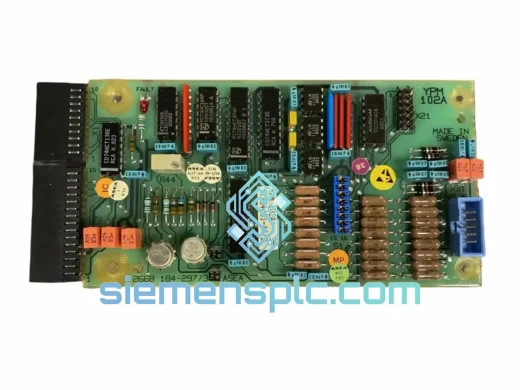
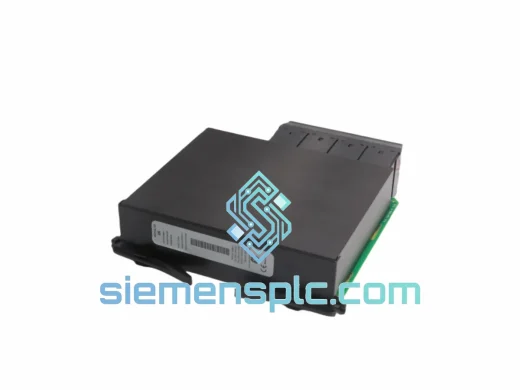
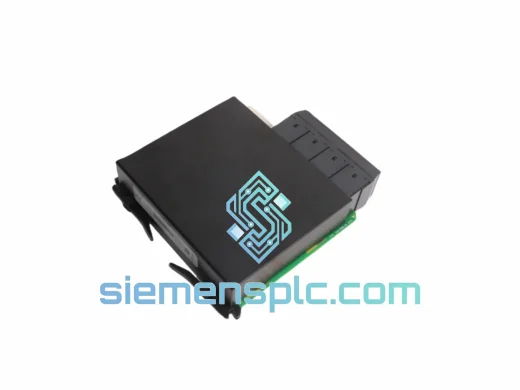
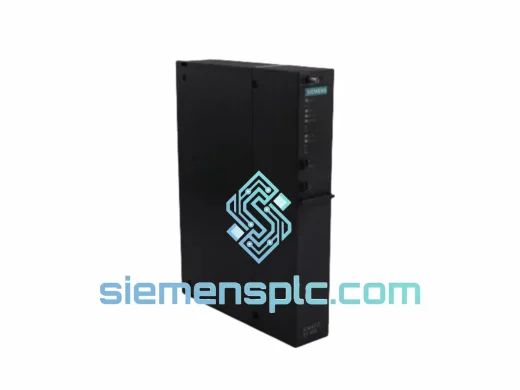
The LINTEC PC325-K, catalogued under alternate part number 01-310-325-K, is a slot-mounted I/O interface module engineered for the PC325 distributed control system chassis. Within a closed-loop control architecture, this card occupies the signal boundary layer: it receives raw field signals from transmitters, switches, and actuator feedback circuits, applies galvanic isolation and conditioning, then delivers structured digital data to the PC325 controller across the internal backplane bus at each scan cycle. The module does not introduce variable latency into this data path — its backplane interface is synchronous to the controller’s polling clock, which is a non-negotiable requirement for any I/O card operating within a PID or cascade control loop where phase margin is finite and bounded.
Process industries — refining, power generation, pulp and paper, water treatment — operate PC325 DCS platforms across multi-decade installation lifespans. During that period, I/O modules are the highest-turnover hardware category: field wiring faults, moisture ingress, and thermal cycling degrade connector integrity and opto-coupler efficiency over time. The PC325-K is available through verified secondary-market supply channels, providing maintenance engineers with a functionally equivalent replacement that slots into the existing chassis without controller re-parameterization, I/O map revision, or HMI tag reconfiguration. This characteristic directly reduces the mean time to repair (MTTR) for I/O-related faults from hours — if sourcing is required — to the time needed to physically swap the card.
The module is equally applicable to capacity-expansion projects within existing PC325 installations. Where additional field points are required and chassis slots are available, the PC325-K can be added to the backplane without modifying the controller node count or network topology, preserving the existing licensing structure and engineering documentation baseline.
Real-time Stock & RFQ: [email protected] | WhatsApp: +86 18359268345
| Parameter | Specification |
|---|---|
| Manufacturer | LINTEC |
| Primary Part Number | PC325-K |
| Alternate Part Number | 01-310-325-K |
| Module Classification | DCS I/O Interface Card |
| Compatible Platform | LINTEC PC325 DCS Series |
| Mounting | Backplane slot (PC325 chassis) |
| Backplane Interface | PC325 internal synchronous bus |
| Channel Isolation | Opto-galvanic, per channel group |
| Common-Mode Voltage Tolerance | Up to several hundred V (field side, refer to datasheet) |
| Input Protection | TVS + current-limiting resistors per input |
| Operating Temperature | 0 °C to +60 °C |
| Storage Temperature | −20 °C to +70 °C |
| Relative Humidity | 5–95% RH, non-condensing |
| Power Source | PC325 backplane rail (refer to chassis power budget) |
| Approximate Weight | 100 g |
| Country of Origin | Japan |
| Compliance | CE, RoHS |
| Warranty | 12 months from shipment date |
Three-Stage Internal Architecture: The PC325-K processes field signals through three sequential functional stages. Stage one is field-side input conditioning: incoming signals pass through transient voltage suppression (TVS) diodes and series current-limiting resistors that clamp overvoltage events and limit fault currents before they reach the measurement circuitry. This stage handles inductive kick from solenoid valves, relay coil collapse, and capacitive discharge from long cable runs without requiring external field barriers in standard industrial wiring configurations.
Opto-Isolation Barrier: Stage two is the galvanic isolation layer. Each channel group is routed through a dedicated opto-coupler, creating a complete electrical break between the field wiring domain and the logic domain. The field-side ground plane and the logic-side ground plane are physically separated on the PCB, with the opto-coupler defining the boundary. This architecture prevents ground loop currents — which can reach tens of milliamps in large process plants with distributed earthing — from introducing common-mode error into the digitized signal. More critically, it prevents field-side fault events (wiring short to mains, insulation breakdown) from propagating fault current into the DCS backplane power rail or the controller processor board.
EMC Design — Split-Ground Topology: The PCB layout enforces strict separation between field-side and logic-side copper pours. Decoupling capacitors are placed at each power entry point on both sides of the isolation barrier to suppress high-frequency conducted emissions. The card-edge connector geometry is designed to minimize impedance discontinuities that could function as antenna structures in high-EMI environments — motor control centers, switchgear rooms, and variable-frequency drive (VFD) enclosures — where radiated field strengths can exceed 10 V/m at frequencies relevant to digital logic circuits.
Backplane Bus Synchronization: Stage three is the logic-side data serialization and backplane interface. The module presents a structured data frame to the PC325 controller at each polling cycle, containing channel measurement values, range-check status bits, and hardware diagnostic flags. The polling architecture is synchronous: the controller initiates each transaction, and the module responds within a bounded time window. This eliminates the variable latency inherent in interrupt-driven or event-triggered I/O architectures, ensuring that I/O data age — the elapsed time between a field event and its representation in the controller’s process image — is deterministic and equal to one scan cycle period. For a PID loop controlling a fast process variable such as pressure or liquid level, bounded I/O latency is a prerequisite for stable control: variable latency introduces phase shift that reduces gain margin and can drive the loop into oscillation at gains that would otherwise be stable.
Thermal Design: The module is rated for continuous operation at 60 °C ambient without forced cooling. Heat dissipation relies on conduction through the card frame to the chassis rails and convective airflow within the DCS enclosure. Component selection uses extended-temperature-range parts to maintain full electrical specification at the upper operating boundary without derating output accuracy or isolation voltage.
Each PC325-K unit dispatched from our Xiamen, China facility passes a structured pre-shipment inspection sequence. Physical examination covers connector pin condition, card-edge contact integrity, label authenticity, and absence of mechanical damage or evidence of prior field installation. Where bench test infrastructure is available, power-on functional verification confirms correct module initialization and backplane communication response.
Anti-counterfeit verification is applied to every unit: OEM packaging integrity, holographic label inspection, and serial-number cross-referencing against documented reference units. Certificates of conformance and inspection reports are issued for regulated procurement programs upon written request.
Export logistics from Xiamen are structured for documentation completeness and transit speed. Standard export documentation includes commercial invoice, packing list, and certificate of origin. Air freight transit times to major industrial procurement hubs are typically 3–7 business days to Europe, 5–10 business days to the Americas, and 2–5 business days to Southeast Asia and the Middle East. Sea freight consolidation is available for volume MRO orders. All shipments carry tracking from dispatch through delivery confirmation, with proactive status updates provided for time-sensitive orders.
A 12-month warranty from the shipment date covers functional defects attributable to manufacturing or material failure under operating conditions consistent with the LINTEC PC325-K datasheet. Warranty claims are acknowledged within 2 business days of defective unit receipt, with replacement or credit resolution targeted within 5 business days.
Email: [email protected]
WhatsApp: +86 18359268345
Web: siemensplc.com
Location: Xiamen, China
© 2026 siemensplc.com. All rights reserved.
We check the full part number, brand, series and visible nameplate information before quotation.
Sales confirms stock path, condition option, quantity and realistic lead time for export dispatch.
DHL, FedEx, UPS or buyer courier arrangements can be reviewed with packing requirements.
Similar brand or category products for fast comparison and multi-item RFQ lists.