Mitsubishi Electric
RFQ Ready
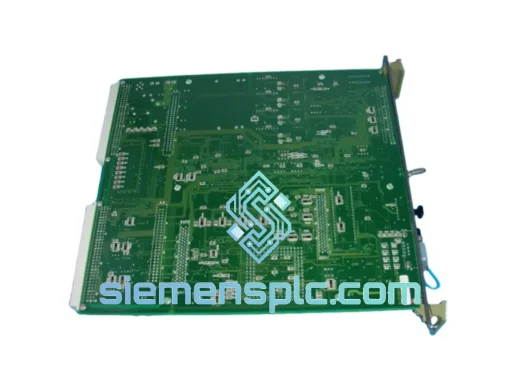
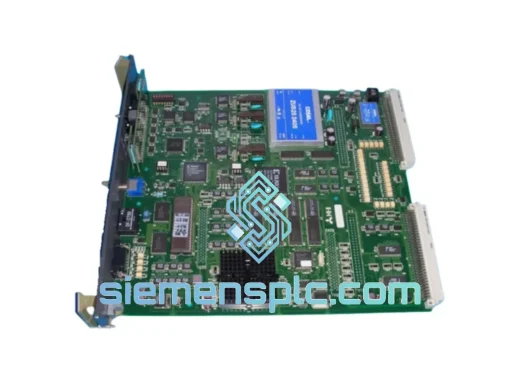
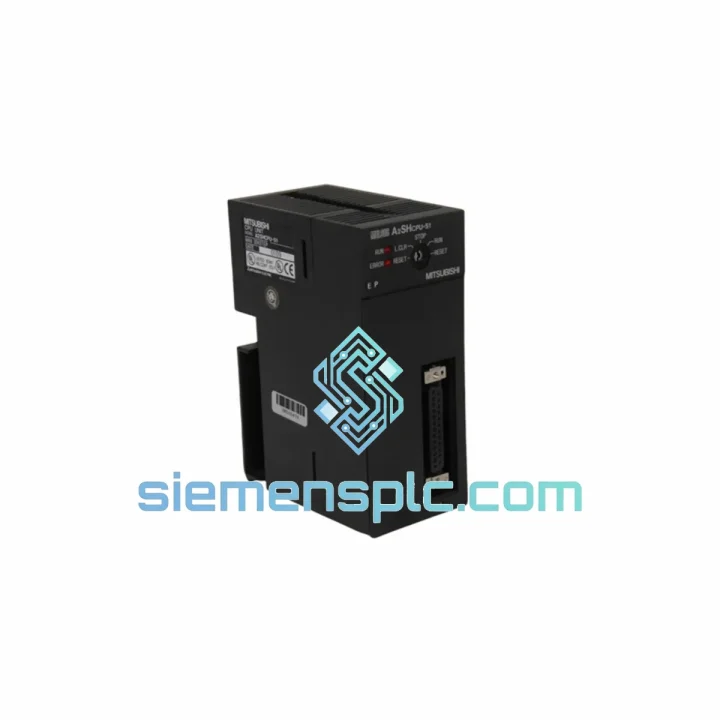
Mitsubishi Electric DOIOC11 DCS Digital Output Module
MELSEC-A
Origin JP
DCS Digital Output Module
Request verified availability, condition, replacement risk review, packing options and courier lead time for MELSEC-A.
Click Request Quote and the part number is inserted into the inquiry form automatically.
Core fields for model confirmation and RFQ routing. Detailed product narrative remains below.
The A2SHCPU is the primary execution engine within Mitsubishi Electric’s MELSEC-A Series modular PLC platform. It occupies the CPU slot of any A-Series base unit and assumes full authority over scan-cycle execution, I/O refresh, inter-module communication arbitration, and program memory management. In a control loop context, this module is not a peripheral — it is the deterministic core around which all field-level signals, analog conditioning modules, and communication adapters are synchronized. Its removal or failure renders the entire rack inoperative; its correct specification is therefore a system-level engineering decision, not a procurement afterthought.
Within the MELSEC-A architecture, the A2SHCPU represents the high-capacity variant of the A2S sub-family. The “H” designation denotes an expanded program memory ceiling of 30,720 steps — double the 14K-step capacity of the base A2SCPU — enabling engineers to implement complex multi-zone sequencing, nested subroutine structures, and interrupt-driven service routines within a single CPU without resorting to distributed processing workarounds. The module interfaces with the A-Series backplane via a parallel bus structure that supports synchronous data exchange with up to 64 I/O modules across multiple extension base units, yielding a maximum addressable I/O space of 2,048 discrete points.
The A2SHCPU’s scan architecture operates on a fixed-cycle model. The CPU executes the user program sequentially from step 0 to the END instruction, then performs a batch I/O refresh before initiating the next scan. This deterministic execution model — as opposed to event-driven or preemptive scheduling — guarantees that output states are updated at predictable intervals, a property that is non-negotiable in applications such as press brake control, injection molding cycle management, and synchronized conveyor sequencing where output timing tolerances are measured in milliseconds. The module also supports interrupt programs (I-programs) triggered by external signals or internal timers, allowing time-critical subroutines to preempt the main scan without disrupting overall cycle integrity.
From a system integration standpoint, the A2SHCPU communicates with the programming environment via an RS-232C serial port, compatible with Mitsubishi’s GX Developer software (SW8D5C-GPPW). This port supports online monitoring, forced I/O operations, and program transfer without requiring the CPU to be taken offline — a practical advantage during commissioning and fault diagnosis on live production equipment. The module’s internal data register space supports word-level data manipulation across D, W, and R register areas, enabling structured data handling for recipe management, production counting, and process parameter storage.
Real-time Stock & RFQ: [email protected] | WhatsApp: +86 18359268345
| Parameter | Specification |
|---|---|
| Model Number | A2SHCPU |
| Series | MELSEC-A Series |
| Manufacturer | Mitsubishi Electric Corporation |
| Module Type | CPU Module |
| Program Memory Capacity | 30,720 steps (30K steps) |
| Maximum I/O Points | 2,048 points (discrete) |
| Data Register (D) | 8,192 words |
| Internal Relay (M) | 8,192 points |
| Timer (T) | 256 points (100 ms / 10 ms resolution) |
| Counter (C) | 256 points |
| Programming Port | RS-232C (25-pin D-sub) |
| Compatible Software | GX Developer (SW8D5C-GPPW) |
| Operating Temperature | 0°C to +55°C |
| Storage Temperature | −25°C to +75°C |
| Relative Humidity | 5% to 95% RH, non-condensing |
| Vibration Resistance | 10–57 Hz: 0.075 mm amplitude; 57–150 Hz: 9.8 m/s² |
| Shock Resistance | 147 m/s², 3 times per axis |
| Power Consumption | Supplied via base unit backplane (5 VDC internal bus) |
| Module Weight | Approx. 1,230 g |
| Country of Origin | Japan |
| Warranty | 12 months from date of shipment |
| Compliance | CE, UL (verify against official Mitsubishi documentation for your application) |
The A2SHCPU’s internal architecture reflects design priorities that were established for high-reliability industrial deployment rather than cost reduction. Several hardware-level characteristics distinguish it from lower-tier CPU variants within the MELSEC-A family:
Backplane Bus Architecture: The A-Series backplane operates as a parallel data bus with dedicated address, data, and control lines. The A2SHCPU acts as the bus master, issuing read/write cycles to each module slot during the I/O refresh phase. This architecture provides deterministic access latency — each module’s data is refreshed within a fixed window per scan cycle, eliminating the variable latency associated with token-passing or polling-based fieldbus topologies. The bus width and clock rate are matched to the CPU’s internal processing speed, preventing bus saturation even at maximum I/O configuration.
Program Memory Structure: The 30K-step program area is implemented in battery-backed CMOS RAM, with an optional EPROM memory cassette slot for program write-protection in production environments. This dual-mode memory architecture allows engineers to develop and modify programs during commissioning (RAM mode) and then lock the validated program to EPROM for deployment — preventing accidental overwrite during maintenance operations. The battery backup circuit maintains program and data register contents during power interruptions, with a typical retention period exceeding several years under standard operating conditions.
EMC Design Considerations: The A2SHCPU’s PCB layout incorporates ground plane segmentation between the logic circuitry and the backplane interface section, reducing conducted noise coupling from high-current I/O switching events into the CPU’s clock and data paths. The module housing provides shielding continuity when seated in a grounded base unit, contributing to the system’s overall radiated emissions profile. Mitsubishi’s MELSEC-A Series was designed to meet IEC 61131-2 environmental requirements, which include immunity to electrostatic discharge (ESD), fast transient bursts (EFT), and conducted RF interference — parameters that are directly relevant to installations in proximity to variable-frequency drives, welding equipment, and high-power switching gear.
Interrupt Handling Logic: The CPU supports up to 16 interrupt pointers (I0–I15), each mappable to external input signals or internal timer events. When an interrupt condition is detected, the CPU suspends the main scan at the current instruction boundary, saves the execution context to a dedicated stack area, executes the interrupt service routine (ISR), and restores the context before resuming the main program. This mechanism allows time-critical operations — such as high-speed counter resets, emergency stop sequences, or synchronization pulses — to be handled with latencies in the sub-millisecond range, independent of the main scan cycle length.
Every Mitsubishi A2SHCPU unit dispatched from our Xiamen, China facility undergoes a structured pre-shipment verification process. Physical inspection covers PCB condition, connector pin integrity, housing completeness, and label authenticity — cross-referenced against known genuine Mitsubishi Electric part markings and date code formats. Where test equipment is available, power-on verification and RS-232C port communication checks are performed prior to packaging.
Units are packaged in anti-static shielding bags, enclosed within foam-lined cartons dimensioned to prevent movement during transit. For international shipments, export documentation — including commercial invoice, packing list, and certificate of origin — is prepared in compliance with destination country customs requirements. We ship via DHL Express, FedEx International Priority, and UPS Worldwide Expedited, with typical transit times of 3–7 business days to Europe, North America, Southeast Asia, and the Middle East. Freight forwarder arrangements are available for bulk orders or destinations with specific import requirements.
All units are covered by a 12-month warranty from the date of shipment. In the event of a confirmed defect attributable to the unit itself (excluding damage from incorrect installation, overvoltage, or environmental conditions outside the specified operating range), we will arrange replacement or credit at our discretion. Our technical team is available to assist with installation verification and fault diagnosis throughout the warranty period.
Xiamen is one of China’s primary export hubs, with direct access to major international freight carriers and established customs clearance infrastructure. This geographic position enables consistent lead times and reliable documentation processing for cross-border industrial component shipments — a practical advantage for maintenance teams operating under production downtime pressure.
Email: [email protected]
WhatsApp: +86 18359268345
Web: siemensplc.com
Location: Xiamen, China
© 2026 siemensplc.com. All rights reserved.
We check the full part number, brand, series and visible nameplate information before quotation.
Sales confirms stock path, condition option, quantity and realistic lead time for export dispatch.
DHL, FedEx, UPS or buyer courier arrangements can be reviewed with packing requirements.
Similar brand or category products for fast comparison and multi-item RFQ lists.