Mitsubishi Electric
RFQ Ready
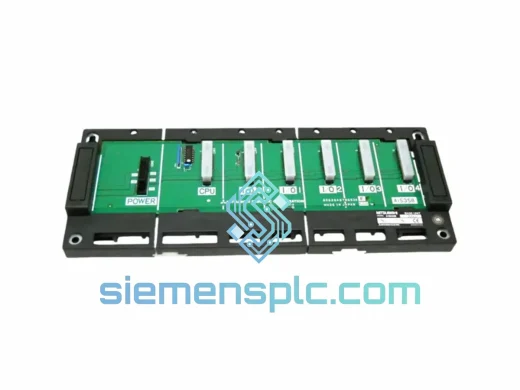
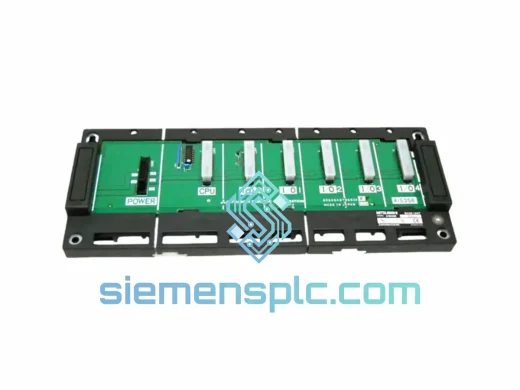
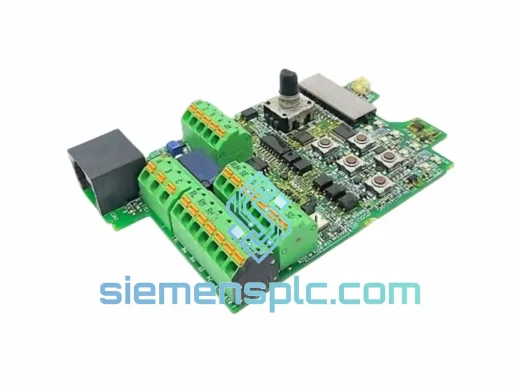
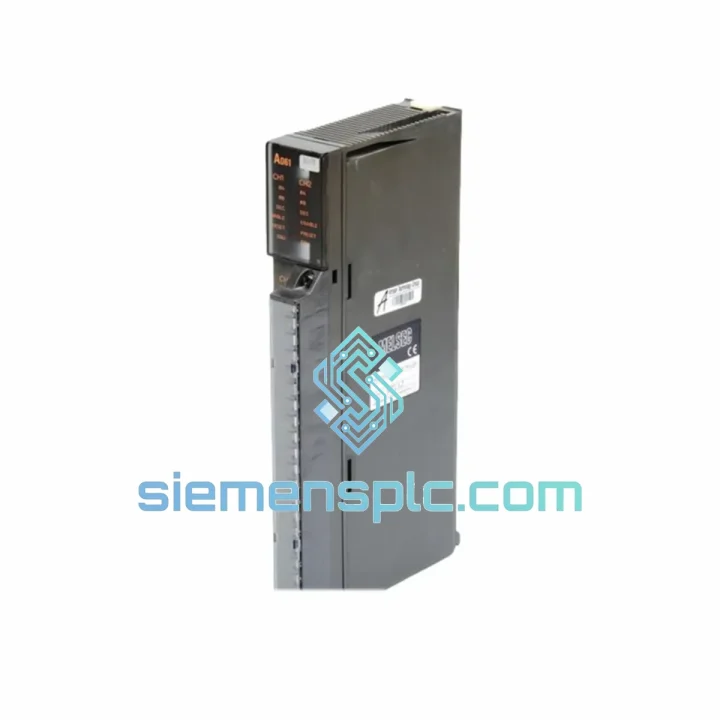
Mitsubishi MC712 PLC CPU Circuit Board – MELSEC-A Series
MELSEC-A
Origin JP
PLC CPU Circuit Board
Request verified availability, condition, replacement risk review, packing options and courier lead time for MELSEC-A1S.
Click Request Quote and the part number is inserted into the inquiry form automatically.
Core fields for model confirmation and RFQ routing. Detailed product narrative remains below.
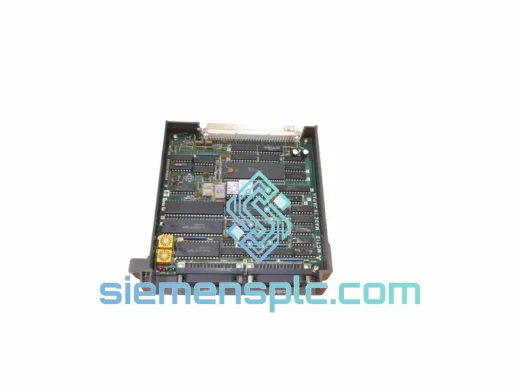
The MITSUBISHI AD61 is a single-channel high-speed counter local unit module engineered for the MELSEC-A1S series programmable logic controller platform. Its primary function within a control loop is deterministic pulse-train acquisition and real-time count register management, offloading encoder feedback processing from the CPU scan cycle entirely. By handling up/down counting, ring counting, and preset comparison autonomously at the hardware level, the AD61 eliminates the latency penalty that software-based counter routines impose on the main program scan — a critical requirement in applications where positional accuracy or throughput measurement must be maintained independent of CPU load fluctuations.
The module connects to the A1S backplane via the local unit bus, a dedicated synchronous serial interface that operates separately from the main I/O bus. This architectural separation means counter data is latched and transferred to the CPU’s data register area at a fixed, deterministic interval, not subject to the variable timing of general I/O refresh. For motion-critical applications — spindle feedback, encoder-driven indexing, flow pulse totalization — this determinism is the functional foundation of closed-loop accuracy.
Real-time Stock & RFQ: [email protected] | WhatsApp: +86 18359268345
| Parameter | Specification |
|---|---|
| Model / SKU | AD61 |
| Manufacturer | MITSUBISHI Electric Corporation |
| Series | MELSEC-A / A1S Series |
| Module Classification | High-Speed Counter Local Unit Module |
| Counter Channels | 1 channel |
| Maximum Counting Frequency | 50 kHz (single-phase); 25 kHz (two-phase / quadrature) |
| Count Range | -2,147,483,648 to +2,147,483,647 (32-bit signed) |
| Counting Modes | Up counting, Down counting, Up/Down switching, Ring counting |
| Preset Function | Supported — preset value loaded from CPU data register |
| Coincidence Output | 1 point (transistor output, 24 VDC, max 0.1 A) |
| Input Signal Type | Differential line driver (RS-422) / Open collector (NPN) |
| Input Voltage Range | 5 VDC (line driver); 12–24 VDC (open collector) |
| Input Current (open collector) | Approx. 7 mA at 24 VDC |
| Isolation Method | Photocoupler isolation between field inputs and internal logic |
| Internal Bus Interface | A1S local unit bus (synchronous serial) |
| Power Supply | 5 VDC via backplane (supplied by A1S power supply module) |
| Current Consumption (5 VDC) | Approx. 0.35 A |
| Operating Temperature | 0°C to +55°C |
| Storage Temperature | -20°C to +75°C |
| Relative Humidity | 10% to 90% RH (non-condensing) |
| Vibration Resistance | 10–57 Hz: 0.075 mm amplitude; 57–150 Hz: 9.8 m/s² |
| Shock Resistance | 147 m/s², 3 times per axis |
| Dimensions (W × H × D) | Approx. 55 × 130 × 110 mm (A1S form factor) |
| Weight | Approx. 0.35 kg (module only) |
| Compliance | CE Marking; UL Listed (refer to MITSUBISHI original documentation) |
| Warranty | 12 months from date of shipment |
Photocoupler Isolation Architecture: The AD61 implements galvanic isolation at the field input stage using high-speed photocouplers rated for signal frequencies up to 50 kHz. This is not a trivial design constraint — standard optocouplers used in digital I/O modules are typically limited to 1–5 kHz due to carrier lifetime in the photodiode junction. The AD61 uses fast-response photocouplers with propagation delays below 1 µs, which is necessary to preserve pulse-edge integrity at 50 kHz without introducing phase distortion that would corrupt quadrature decoding. The isolation barrier provides a minimum 500 V dielectric withstand between field wiring and the internal 5 VDC logic domain, protecting the CPU backplane from ground loops and transient overvoltages common in motor-drive environments.
Dedicated Counter ASIC / Hardware Counter Register: The count accumulation is performed in dedicated hardware logic — not in firmware executing on a microcontroller. This means the counting process is not subject to interrupt latency or instruction cycle overhead. The 32-bit count register is updated on every input pulse edge, and the coincidence comparator operates in parallel, asserting the output transistor within one pulse period of the preset value being reached. This hardware-parallel architecture is what enables the 50 kHz ceiling — a software-polled counter on the same platform would saturate at a fraction of that rate.
EMC Design Considerations: The module’s PCB layout follows MITSUBISHI’s standard EMC partitioning for A-series modules: the analog/field input section and the digital logic section are separated by a ground plane split, with the photocoupler barrier straddling the split. Decoupling capacitors are placed at the 5 VDC backplane connector to suppress high-frequency noise injected from adjacent modules. The coincidence output transistor circuit includes a flyback suppression diode footprint for inductive load protection, though external suppression is still recommended for relay coil loads.
Local Unit Bus Protocol: Unlike standard I/O modules that participate in the A1S I/O refresh cycle, the AD61 communicates via the local unit bus — a point-to-point synchronous serial link between the module and the CPU. The CPU reads the 32-bit count value and status flags (count direction, coincidence flag, error flag) in a single bus transaction during the END processing phase of the scan. This means the count value presented to the ladder program is always the value latched at the end of the previous scan, providing a consistent snapshot rather than a value that could change mid-scan — a subtle but important property for deterministic control logic.
Every MITSUBISHI AD61 unit supplied by siemensplc.com is sourced through verified industrial supply channels and subjected to a structured pre-shipment inspection protocol. Visual inspection covers label authenticity, housing integrity, connector pin condition, and serial number format verification against known MITSUBISHI production batches. Functional verification confirms that the module powers up correctly on a compatible A1S base unit and that the counter input, coincidence output, and local unit bus communication all respond within specification.
Units are packaged in anti-static bags and placed in foam-lined cartons dimensioned to prevent movement during air freight handling. Export documentation — commercial invoice, packing list, and certificate of origin — is prepared for every international shipment. All units carry a 12-month warranty from the date of shipment, covering functional failure under normal operating conditions.
Logistics operations are based in Xiamen, China, with access to DHL Express, FedEx International Priority, and EMS international postal services. Standard air freight transit times are 3–7 business days to most destinations in Southeast Asia, Europe, and North America. Same-day dispatch is available for orders confirmed before 14:00 CST on business days. For large-volume orders or project-based procurement requiring consolidated shipment, sea freight and air cargo options are available on request.
Email: [email protected]
WhatsApp: +86 18359268345
Web: siemensplc.com
Location: Xiamen, China
© 2026 siemensplc.com. All rights reserved.
We check the full part number, brand, series and visible nameplate information before quotation.
Sales confirms stock path, condition option, quantity and realistic lead time for export dispatch.
DHL, FedEx, UPS or buyer courier arrangements can be reviewed with packing requirements.
Similar brand or category products for fast comparison and multi-item RFQ lists.