Mitsubishi Electric
RFQ Ready
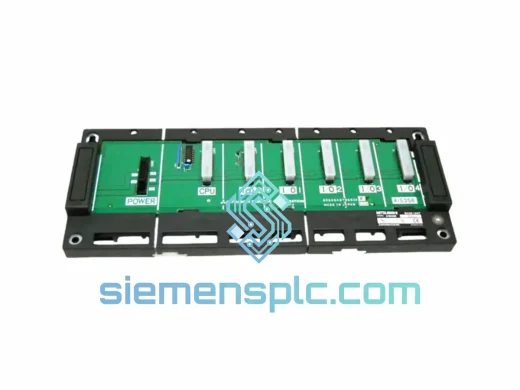
MITSUBISHI BD625A989G52-A68B Backplane Module
MELSEC-A
Origin JP
Backplane Module
Request verified availability, condition, replacement risk review, packing options and courier lead time for MELSEC-A.
Click Request Quote and the part number is inserted into the inquiry form automatically.
Core fields for model confirmation and RFQ routing. Detailed product narrative remains below.
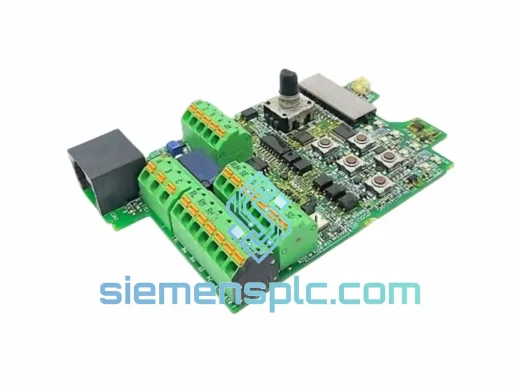
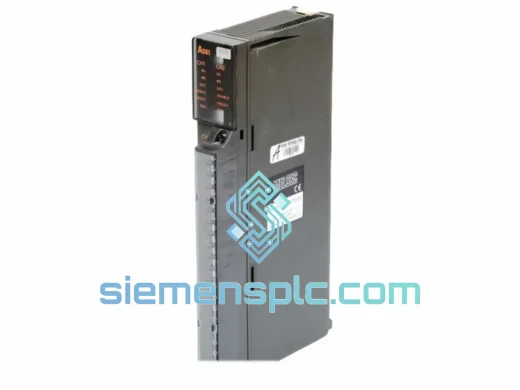
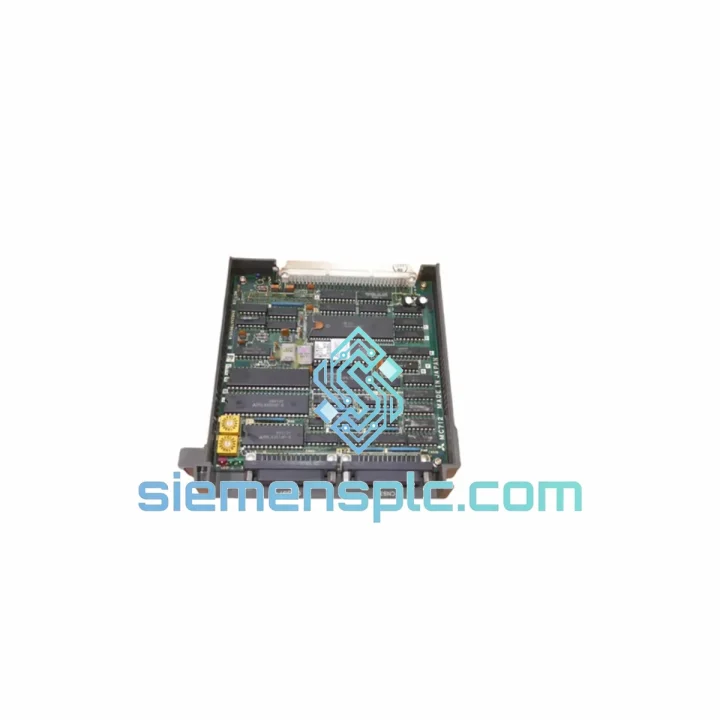
The Mitsubishi Electric MC712 is a CPU-class circuit board module designed for integration within the MELSEC-A series programmable logic controller platform. Within a closed-loop control system, the MC712 occupies the role of the primary instruction executor: it fetches ladder logic or structured text from onboard program memory, resolves I/O states via the internal backplane bus, and writes output commands within a fixed, deterministic scan cycle. This architecture makes the MC712 directly responsible for the temporal integrity of every control action in the system — from discrete relay sequencing to analog PID loop closure.
The MELSEC-A series backplane operates on a parallel bus topology. The MC712 board arbitrates bus access across all installed I/O and special-function modules through a centralized bus controller embedded on the PCB. Each scan cycle begins with a synchronous input refresh phase, during which all digital and analog input module registers are latched into the CPU’s internal data memory (D-register space). Program execution then proceeds sequentially through the user ladder program, resolving coil states and data register values. The output refresh phase follows, writing resolved coil states back to output module registers via the backplane bus. Peripheral service — including programming port communication and network module polling — is handled in the final phase of each scan. This four-phase deterministic loop is the foundation of the MC712’s real-time control capability.
Real-time Stock & RFQ: [email protected] | WhatsApp: +86 18359268345
| Part Number / SKU | MC712 |
| Manufacturer | Mitsubishi Electric Corporation |
| Series / Platform | MELSEC-A Series PLC |
| Module Classification | CPU Circuit Board (PCB-level replacement module) |
| Form Factor | Rack-mount PCB, compatible with MELSEC-A series base units |
| Bus Interface | MELSEC-A internal parallel backplane bus |
| Programming Interface | RS-232C (GX Developer / GX Works2 compatibility mode) |
| Network Compatibility | MELSECNET/B, CC-Link (via dedicated network modules) |
| Operating Temperature | 0 °C to +55 °C |
| Storage Temperature | −20 °C to +75 °C |
| Relative Humidity | 5% to 95% RH (non-condensing) |
| Vibration Resistance | 10–57 Hz: 0.075 mm amplitude; 57–150 Hz: 9.8 m/s² |
| Shock Resistance | 147 m/s², 3 times per axis |
| Power Consumption | Supplied via backplane power bus (5 VDC internal) |
| Weight | Approx. 4,460 g (packaged) |
| Country of Origin | Japan |
| Compliance | CE, RoHS (verify per production batch) |
| Condition | New / Surplus / Tested-Refurbished (specify at RFQ) |
| Warranty | 12 months from date of shipment |
The MC712’s PCB layout reflects design priorities consistent with Mitsubishi Electric’s MELSEC-A generation engineering standards. Several hardware-level characteristics are worth examining for engineers evaluating this board for MRO replacement or system extension:
Backplane Bus Arbitration Logic: The MC712 implements a centralized bus master architecture. A dedicated bus controller IC on the board manages token-passing arbitration between the CPU and all peripheral modules installed in the base unit. This prevents bus contention during simultaneous I/O refresh and peripheral service operations, maintaining scan-cycle determinism even under high I/O density configurations. The parallel bus width of the MELSEC-A platform allows simultaneous multi-byte data transfer, reducing the per-module polling overhead compared to serial-bus architectures.
EMC Design Characteristics: The board incorporates ground plane segmentation between the digital logic section and the bus interface section. Decoupling capacitors are distributed across the PCB at each logic IC power pin to suppress high-frequency switching transients. The RS-232C programming port interface includes line-level protection components to clamp electrostatic discharge events, consistent with IEC 61000-4-2 Level 2 ESD immunity requirements applicable to industrial control equipment.
Memory Architecture: Program memory on the MC712 is implemented in battery-backed SRAM, preserving the user ladder program and data register contents through power interruptions. The battery-backed retention circuit uses a low-leakage diode switching arrangement to transfer from the main 5 VDC backplane supply to the onboard lithium cell without program corruption during power transitions. This is a critical design feature for process industries where unplanned power interruptions must not result in program loss.
Watchdog Timer Circuit: An independent hardware watchdog timer monitors CPU scan-cycle completion. If the scan cycle exceeds the configured maximum scan time — typically caused by an infinite loop condition in user logic or a hardware fault — the watchdog asserts a CPU error signal, halts program execution, and activates the ERROR LED indicator. This fail-safe mechanism prevents undetected runaway execution from propagating incorrect output states to field devices.
Thermal Management: The MC712 operates within a 0–55 °C ambient range without forced air cooling, relying on natural convection through the open rack structure. Component placement on the PCB follows thermal zoning principles: high-dissipation logic ICs are positioned to maximize airflow exposure, while heat-sensitive memory components are located in lower-temperature zones of the board layout.
Every Mitsubishi MC712 unit dispatched from our Xiamen, China facility undergoes a structured pre-shipment verification process. Units are sourced from authorized distribution channels and verified surplus stock, with each board subjected to visual PCB inspection for component integrity, solder joint condition, and absence of physical damage. Functional power-on testing confirms LED status behavior and communication port continuity prior to packaging.
Anti-static packaging with humidity indicator cards and foam-lined outer cartons protects the MC712 during international transit. Traceability documentation — including incoming inspection records and serial number logs — is available upon request for quality-critical procurement processes.
From Xiamen, we ship via DHL Express, FedEx International Priority, and SF Express International to destinations across North America, Europe, Southeast Asia, the Middle East, and South America. Standard dispatch lead time for in-stock units is 2–3 business days from order confirmation. EXW, FOB Xiamen, and CIF Incoterms are supported for B2B purchase order transactions. All shipments include commercial invoice, packing list, and certificate of origin documentation for customs clearance.
The 12-month warranty covers verified manufacturing defects and functional failures under normal operating conditions. Warranty claims are processed with a replacement-first policy to minimize customer downtime.
Email: [email protected]
WhatsApp: +86 18359268345
Web: siemensplc.com
Location: Xiamen, China
© 2026 siemensplc.com. All rights reserved.
We check the full part number, brand, series and visible nameplate information before quotation.
Sales confirms stock path, condition option, quantity and realistic lead time for export dispatch.
DHL, FedEx, UPS or buyer courier arrangements can be reviewed with packing requirements.
Similar brand or category products for fast comparison and multi-item RFQ lists.