Mitsubishi Electric
RFQ Ready
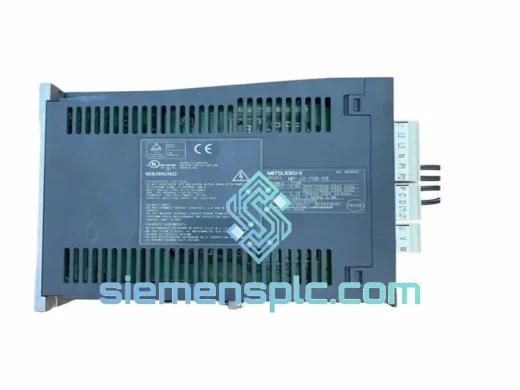
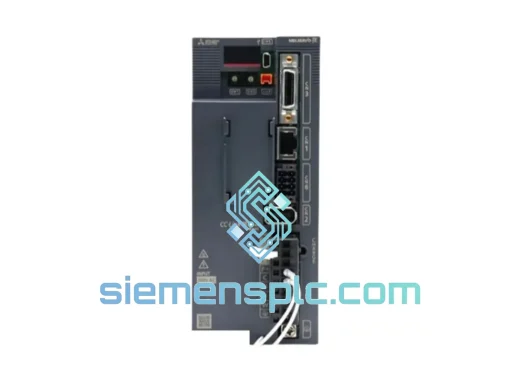
Mitsubishi MR-JE-70C AC Servo Amplifier
MELSERVO-JE CC-Link IE
Origin JP
AC Servo Amplifier
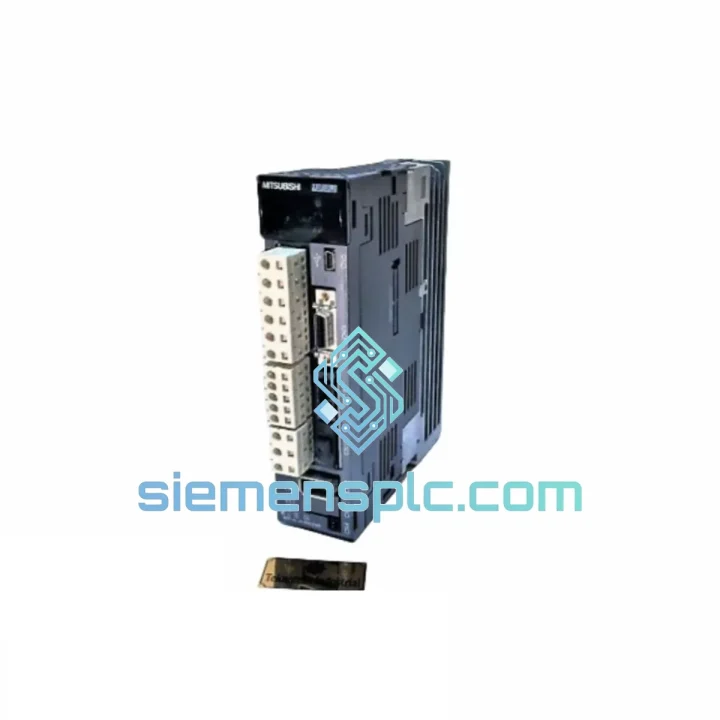
Request verified availability, condition, replacement risk review, packing options and courier lead time for MR-J3-PFU4.
Click Request Quote and the part number is inserted into the inquiry form automatically.
Core fields for model confirmation and RFQ routing. Detailed product narrative remains below.
You’ve isolated the fault. The MR-J3-PFU4 is confirmed dead. The OEM’s lead time is 8 to 14 weeks and your production scheduler is already on the phone. Every hour this line stays cold is direct revenue loss — on a high-throughput press or a semiconductor handler, that number climbs fast. We carry the Mitsubishi Electric MR-J3-PFU4 in Xiamen stock, verified original, function-tested, and ready to leave on the next DHL or FedEx international flight. This is not a gray-market gamble. This is a stocked, traceable unit with full documentation, shipped by engineers who understand what downtime actually costs.
URGENT REQUIREMENT? Contact: [email protected] | WhatsApp: +86 18359268345
| Parameter | Specification |
|---|---|
| Part Number | MR-J3-PFU4 |
| Series | MELSERVO-J3 |
| Manufacturer | Mitsubishi Electric Corporation |
| Function | Power Factor Improvement & AC Line Harmonic Suppression |
| Compatible Amplifiers | MR-J3 large-capacity servo amplifiers |
| Input Supply | Three-phase AC (per MR-J3 system specification) |
| Unit Weight | Approx. 1,600 g |
| Enclosure Rating | IP20 (panel-mount, cabinet provides primary barrier) |
| Ambient Operating Temp | 0°C to 55°C (derated above 45°C) |
| Compliance | CE-marked within MELSERVO-J3 system configuration |
| Country of Origin | Japan |
| Stock Status | ✅ Ready to Ship — Xiamen Warehouse |
Ten years of field calls on MELSERVO-J3 systems teaches you that the PFU4 fails in predictable ways — and gets misdiagnosed just as predictably. Here’s what to look for and how to execute a clean swap.
Fault Signatures That Point to PFU4 Degradation:
Replacement Procedure — Field Checklist:
Counterfeit Risk Advisory: The MR-J3-PFU4 is actively counterfeited in the spot market. Fake units typically use substandard capacitors that fail within 200–500 hours and can cause cascading damage to the host amplifier. Verify Mitsubishi Electric holographic labels, request a certificate of origin, and source only from suppliers who can provide full traceability. We supply complete documentation with every unit.
The MR-J3-PFU4 was engineered for industrial panel environments, not laboratory conditions. Mitsubishi Electric validated the MELSERVO-J3 platform against IEC 60068 environmental stress protocols — thermal cycling, vibration, humidity exposure — before it ever reached a production floor. The PFU4 specifically is rated for continuous operation up to 55°C ambient with appropriate derating, and its capacitor bank uses industrial-grade electrolytic components selected for extended service life under repeated thermal cycling rather than steady-state operation.
In practice, we’ve seen MR-J3-PFU4 units pulled from steel mill auxiliary drive panels where summer ambient temperatures inside the enclosure regularly hit 48°C, and from coastal petrochemical installations where salt-laden humid air infiltrates even well-sealed cabinets. Units that were correctly installed — adequate panel ventilation, proper terminal torque, no shared enclosure with high-dissipation components like braking resistors — routinely achieve 8 to 12 years of service before capacitor aging becomes a measurable performance concern.
Vibration is the other field reality. The PFU4 must be mounted on a flat, rigid surface — DIN rail or back-panel with proper stiffening. Flexible sheet-metal sub-panels without stiffening ribs transmit vibration directly into the unit’s terminal blocks and internal solder joints. In high-vibration environments (proximity to large reciprocating presses, compressors, or vibrating conveyors), add vibration-damping mounts between the sub-panel and the main enclosure frame. This single step extends service life significantly in those applications.
Humidity management matters too. The PFU4’s IP20 rating assumes the host cabinet provides the primary environmental barrier. If your cabinet door seals are degraded or the cabinet has open cable entry points, condensation cycles will accelerate PCB surface leakage and terminal corrosion. Inspect cabinet integrity as part of any PFU4 replacement — fixing the module without fixing the environment is a short-term solution.
Our warehouse operates from Xiamen, Fujian Province, China — a deliberate choice. Xiamen Gaoqi International Airport handles direct cargo connections to DHL and FedEx international sort hubs, and Xiamen Port provides sea freight options for non-urgent bulk orders. For emergency replacement scenarios, air freight is the only relevant option, and Xiamen’s logistics infrastructure supports same-day dispatch to international carriers for orders confirmed before 14:00 CST.
Typical Door-to-Door Transit Times:
Every shipment includes a commercial invoice, packing list, and certificate of origin formatted to destination country customs requirements. EU customers receive EORI-compliant documentation. US imports are prepared with HTS code classification — the MR-J3-PFU4 typically classifies under 8504.40 (static converters); confirm with your customs broker for your specific import scenario. Tracking numbers are issued within 2 hours of carrier pickup and sent to your registered contact. For active downtime situations, reach us directly on WhatsApp for real-time shipment coordination and carrier tracking updates.
📧 Email: [email protected]
💬 WhatsApp: +86 18359268345
🌐 Web: siemensplc.com
© 2026 siemensplc.com. All rights reserved.
We check the full part number, brand, series and visible nameplate information before quotation.
Sales confirms stock path, condition option, quantity and realistic lead time for export dispatch.
DHL, FedEx, UPS or buyer courier arrangements can be reviewed with packing requirements.
Similar brand or category products for fast comparison and multi-item RFQ lists.