Mitsubishi Electric
RFQ Ready
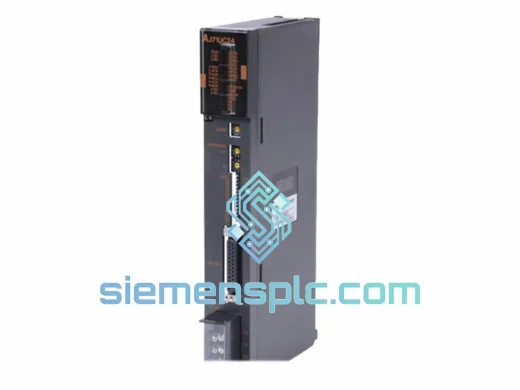
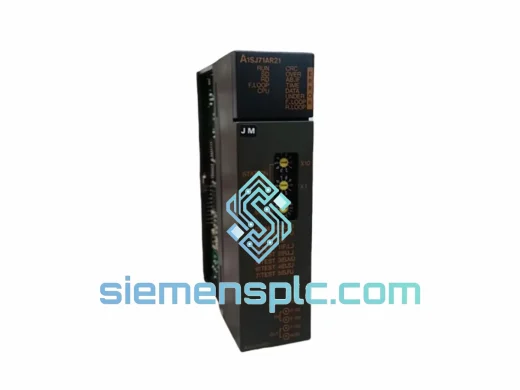
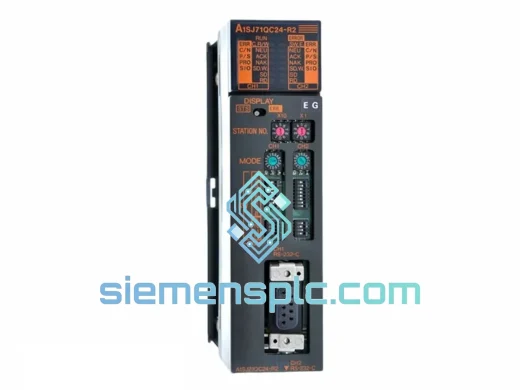
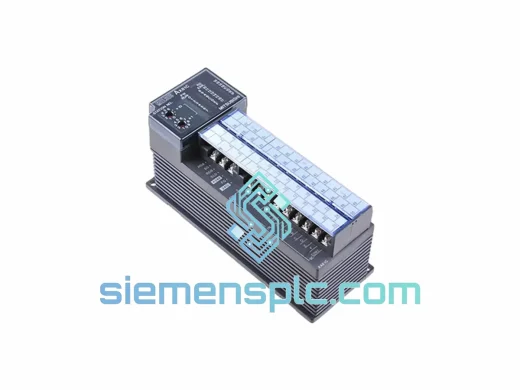
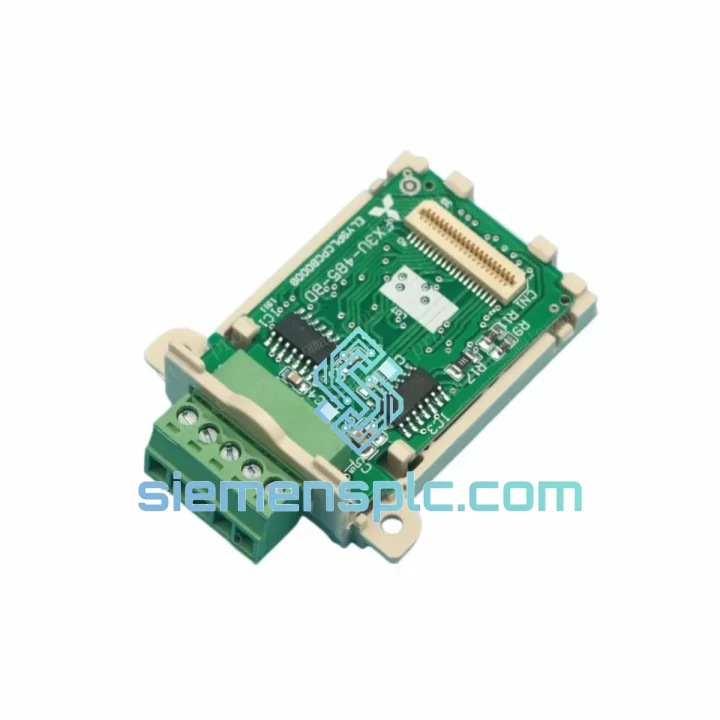
MITSUBISHI AX81 PLC Communication Module
MELSEC-A
Origin JP
PLC Communication Module
Request verified availability, condition, replacement risk review, packing options and courier lead time for MELSEC-A.
Click Request Quote and the part number is inserted into the inquiry form automatically.
Core fields for model confirmation and RFQ routing. Detailed product narrative remains below.
The MITSUBISHI MTCL12 is a dedicated interface board engineered for the MELSEC-A Series PLC platform. Its primary function is to establish a structured, low-latency communication path between the A-Series CPU backplane and external peripheral devices — including programming consoles, HMI panels, and supervisory SCADA hosts. In a control loop context, the MTCL12 occupies the data-link layer between the CPU’s internal bus and the field-facing communication interface, ensuring that instruction cycles and status feedback traverse the system boundary without introducing timing uncertainty.
Unlike generic serial adapters, the MTCL12 is designed as a native MELSEC-A module. It draws power directly from the A-Series backplane bus, occupies a standard module slot, and communicates with the CPU via the internal parallel bus architecture native to the A-Series rack. This eliminates the protocol translation overhead that would otherwise be introduced by an external gateway device, preserving the deterministic scan-cycle behavior that industrial control applications depend on.
📦 Real-time Stock & RFQ: [email protected] | WhatsApp: +86 18359268345
| Manufacturer | MITSUBISHI Electric |
| Part Number / SKU | MTCL12 |
| Compatible Series | MELSEC-A (A-Series PLC platform) |
| Module Classification | Interface Board / Peripheral Communication Module |
| Mounting | MELSEC-A backplane slot (rack-mount) |
| Power Source | Backplane bus-powered (no external PSU required) |
| Operating Temperature | 0°C to +55°C |
| Storage Temperature | -20°C to +75°C |
| Relative Humidity | 5% to 95% RH, non-condensing |
| Vibration Tolerance | Compliant with IEC 61131-2 |
| Approx. Weight | 500 g |
| Regulatory Compliance | CE, UL (verify against product label and batch documentation) |
| Country of Origin | Japan |
| Warranty | 12 months from date of dispatch |
The MTCL12 interfaces with the MELSEC-A CPU through the A-Series internal parallel bus — a synchronous, slot-addressed architecture where each module occupies a fixed address space on the backplane. The CPU polls each slot during its scan cycle, and the MTCL12 responds with buffered status data and accepts write commands within the same cycle window. This polling model means communication latency is bounded by the CPU scan time, not by asynchronous interrupt handling, which is a critical distinction in time-sensitive control applications.
From an EMC standpoint, the MTCL12 PCB layout follows MITSUBISHI’s standard A-Series design rules: signal traces are routed with controlled impedance, ground planes are continuous beneath high-frequency signal paths, and the backplane connector uses a multi-point ground scheme to suppress common-mode noise injected from adjacent power modules. In high-EMI environments — such as those adjacent to variable-frequency drives or large contactors — this grounding architecture prevents noise coupling from corrupting the communication data stream.
The module’s connector interface is mechanically keyed to prevent incorrect insertion into incompatible slot types, and the PCB is conformally coated to resist humidity ingress in environments where ambient moisture fluctuates. These are not cosmetic features; they directly reduce the probability of latent failures that manifest months after installation in demanding industrial conditions.
Every MITSUBISHI MTCL12 unit dispatched from our Xiamen, China facility undergoes a structured pre-shipment verification process. Physical inspection covers the PCB surface, backplane connector pins, housing integrity, and manufacturer label authenticity — cross-referenced against MITSUBISHI’s published part marking standards. Units showing any indicator of non-genuine origin, rework, or physical damage are quarantined and not dispatched.
Packaging follows ESD-safe protocols: each module is sealed in an anti-static bag, cushioned with foam inserts rated for the module’s weight class, and placed in a rigid outer carton. For international shipments, cartons are labeled with HS code references and accompanied by a commercial invoice and packing list to facilitate customs clearance in major import markets including the EU, US, Southeast Asia, and the Middle East.
Logistics from Xiamen are handled via DHL Express, FedEx International Priority, and UCP air freight, with typical transit times of 3–7 business days to most destinations. Tracking numbers are issued within 24 hours of dispatch. For time-critical requirements, same-day dispatch is available for orders confirmed before 14:00 CST. A 12-month warranty covers manufacturing defects; warranty claims are processed with a target response time of 2 business days.
📧 Email: [email protected]
📱 WhatsApp: +86 18359268345
🌐 Web: siemensplc.com
📍 Location: Xiamen, China
© 2026 siemensplc.com. All rights reserved.
We check the full part number, brand, series and visible nameplate information before quotation.
Sales confirms stock path, condition option, quantity and realistic lead time for export dispatch.
DHL, FedEx, UPS or buyer courier arrangements can be reviewed with packing requirements.
Similar brand or category products for fast comparison and multi-item RFQ lists.