Molex
RFQ Ready
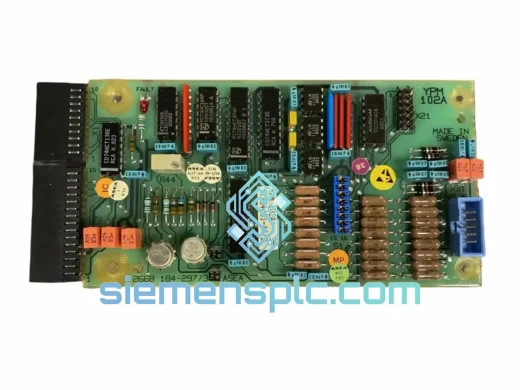
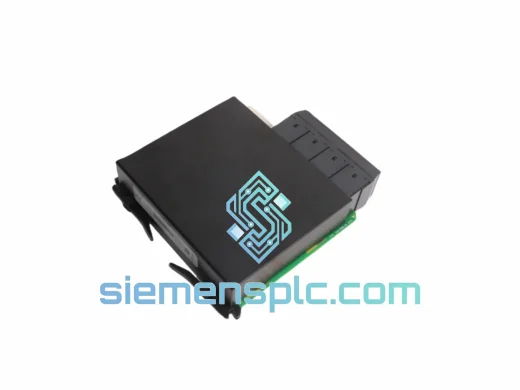
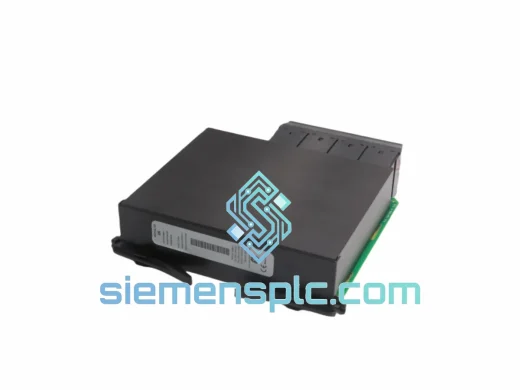
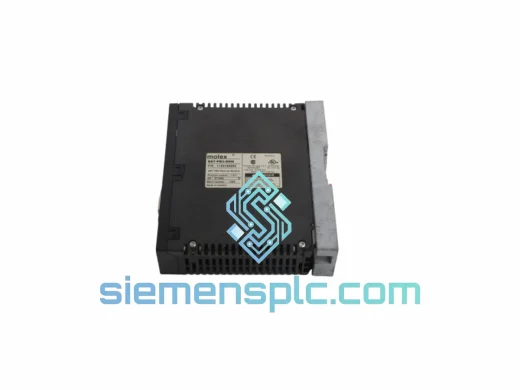
MOLEX SST-PB3-REM PROFIBUS DP Remote I/O Module
SST-PB3 Series
Origin US
PROFIBUS Remote I/O Module
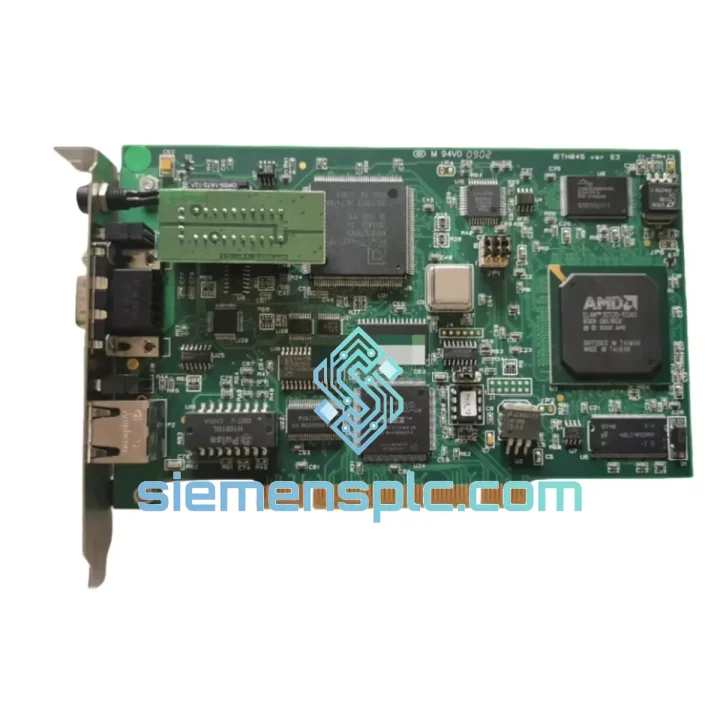
Request verified availability, condition, replacement risk review, packing options and courier lead time for PCU-DPIO.
Click Request Quote and the part number is inserted into the inquiry form automatically.
Core fields for model confirmation and RFQ routing. Detailed product narrative remains below.
The Molex PCU-DPIO occupies a well-defined position in distributed control architectures: it is the terminal interface between field-level discrete signals and the deterministic processing logic of the PCU (Process Control Unit) backplane. Unlike generic I/O expanders, the PCU-DPIO is engineered as a native backplane citizen — its electrical and protocol characteristics are matched to the PCU rack’s internal bus timing, eliminating the latency penalties and configuration overhead associated with external signal converters or protocol bridges.
In a typical control loop, field sensors generate 24 VDC discrete signals — proximity switches, limit switches, solenoid feedback contacts, and pushbutton interlocks. These signals arrive at the PCU-DPIO’s front-face terminal block, pass through an optically isolated input stage, and are presented to the backplane bus as conditioned, noise-free logic states. On the output side, the controller writes actuator commands to the backplane register; the PCU-DPIO’s output drivers translate those register states into 24 VDC sourcing or sinking signals capable of driving relay coils, solenoid valves, and indicator lamps directly. The entire signal path — from field terminal to backplane register — is completed within the module’s deterministic scan cycle, with no external arbitration required.
This architecture is particularly relevant in process industries where control loop integrity depends on scan-cycle predictability. A missed or delayed I/O update in a PID loop controlling a flow control valve, for example, introduces phase error that accumulates over time and degrades setpoint tracking. The PCU-DPIO’s direct backplane integration ensures that I/O data is available to the controller at every scan boundary, without the jitter introduced by fieldbus polling or gateway buffering.
Real-time Stock & RFQ: [email protected] | WhatsApp: +86 18359268345
| Model / SKU | PCU-DPIO |
| Manufacturer | Molex |
| Module Classification | Digital Process I/O (Mixed DI/DO) |
| Platform Series | PCU (Process Control Unit) |
| Nominal Signal Voltage | 24 VDC (IEC 61131-2 Type 1/3 compatible) |
| Input Signal Range | Logic 0: 0–5 VDC; Logic 1: 15–30 VDC |
| Output Drive Capability | Sourcing/Sinking, 0.5 A per channel (typical) |
| Isolation Method | Opto-isolation, channel-to-backplane bus |
| Isolation Voltage | 500 VAC rms (field-to-logic, 1 min) |
| Backplane Interface | PCU internal parallel backplane bus |
| Mounting | PCU rack backplane slot (DIN rail rack compatible) |
| Operating Temperature | 0°C to +60°C |
| Storage Temperature | −40°C to +85°C |
| Relative Humidity | 5%–95% RH, non-condensing |
| EMC Compliance | CE marked; IEC 61000-4-2/4/5/6 tested |
| Standards | IEC 61131-2, RoHS 2011/65/EU |
| Diagnostics | Per-channel LED status; backplane fault register reporting |
| Module Weight | Approx. 1,100 g |
| Warranty | 12 months from date of shipment |
| Country of Origin | China (Xiamen distribution) |
The PCU-DPIO’s hardware design reflects a set of deliberate engineering trade-offs that prioritize signal integrity and bus determinism over raw channel count.
Opto-Isolation Architecture: Each input channel routes the field signal through a current-limiting resistor network into the anode of an optocoupler LED. The phototransistor output is referenced to the backplane logic supply, creating a galvanic break between field wiring and the control bus. This topology suppresses common-mode transients — particularly the inductive kickback generated when solenoid valves de-energize — that would otherwise couple into the backplane data lines and corrupt register reads. The 500 VAC isolation rating provides margin against ground potential differences between field cabinets and the control room, a common source of latent failures in large-scale installations.
EMC Design Discipline: The PCU-DPIO’s PCB layout applies ground plane segmentation to separate the field-side analog ground from the digital logic ground, with the isolation barrier forming the boundary. Decoupling capacitors are placed at each power rail entry point to suppress high-frequency conducted emissions. The module’s metal housing provides shielding against radiated interference from adjacent variable-frequency drives and high-current switching equipment — a practical necessity in motor control centers where the PCU-DPIO is frequently deployed.
Output Driver Stage: Digital outputs use solid-state driver ICs rather than relay contacts, eliminating the mechanical wear and contact bounce that limit relay-based output modules to approximately 10⁶ switching cycles. Solid-state outputs support switching frequencies up to several hundred Hz, enabling pulse-width modulation of proportional solenoids or stepper motor indexing signals without additional signal conditioning hardware.
Backplane Bus Arbitration: The module’s backplane interface logic implements a passive arbitration scheme: the PCU controller initiates all bus transactions, and the PCU-DPIO responds within a defined window. This master-slave topology eliminates bus contention and ensures that I/O data is written to the controller’s process image at a fixed point in the scan cycle. The absence of active bus arbitration logic in the module reduces component count, improves mean time between failures (MTBF), and simplifies fault diagnosis.
Every PCU-DPIO unit supplied by siemensplc.com is sourced through verified channels with full traceability documentation. Pre-shipment inspection covers visual examination of housing and label authenticity, functional verification of input and output channels under load, and confirmation of date codes against manufacturer records. Units that do not pass inspection are quarantined and not dispatched.
Shipments originate from Xiamen, China — a major logistics hub with direct access to international express carriers including DHL Express, FedEx International Priority, and UPS Worldwide Expedited. Standard transit times to major industrial centers are 3–5 business days for express air freight. Sea freight consolidation is available for volume orders where lead time permits. All shipments are accompanied by a commercial invoice, packing list, and certificate of conformance. Export documentation for customs clearance is prepared in accordance with the destination country’s import requirements, including HS code classification and country-of-origin declaration.
A 12-month warranty covers manufacturing defects and functional failure under normal operating conditions from the date of shipment. Warranty claims are processed directly by the siemensplc.com technical team, with replacement units dispatched upon fault confirmation. Extended warranty and on-site support agreements are available for volume accounts and system integrators.
Email: [email protected]
WhatsApp: +86 18359268345
Web: siemensplc.com
Location: Xiamen, China
© 2026 siemensplc.com. All rights reserved.
We check the full part number, brand, series and visible nameplate information before quotation.
Sales confirms stock path, condition option, quantity and realistic lead time for export dispatch.
DHL, FedEx, UPS or buyer courier arrangements can be reviewed with packing requirements.
Similar brand or category products for fast comparison and multi-item RFQ lists.