Moore Industries
RFQ Ready
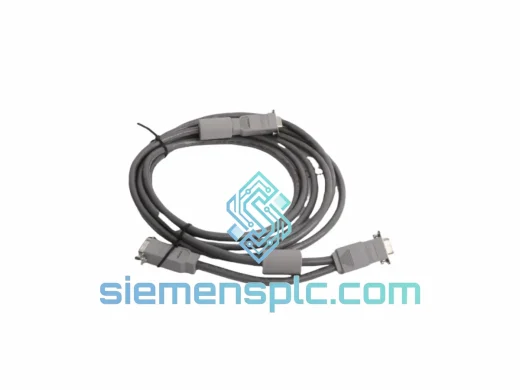
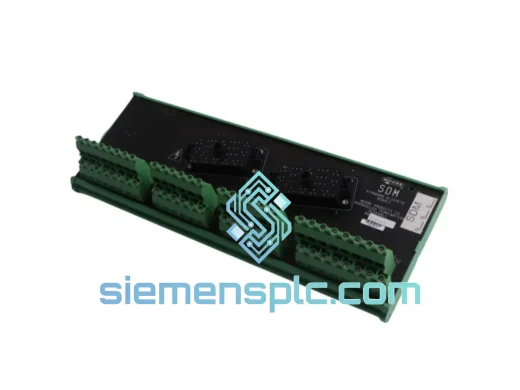
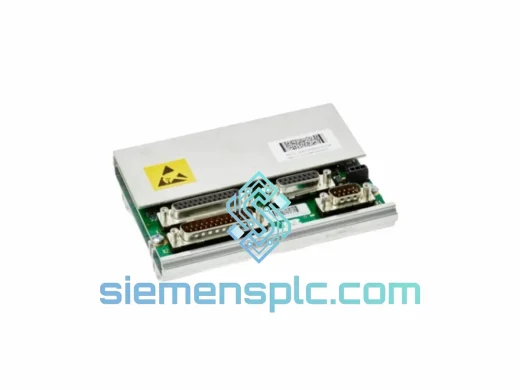
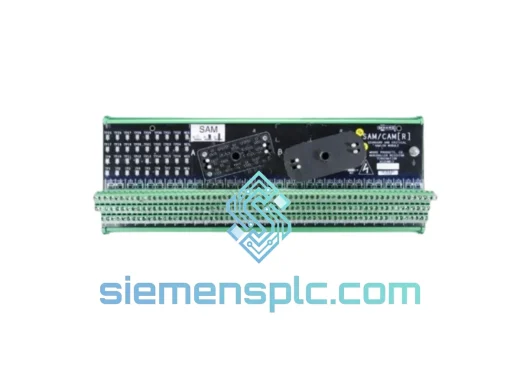
Moore 16416-1-2 Marshalled Termination Unit
Origin US
Marshalled Termination Unit
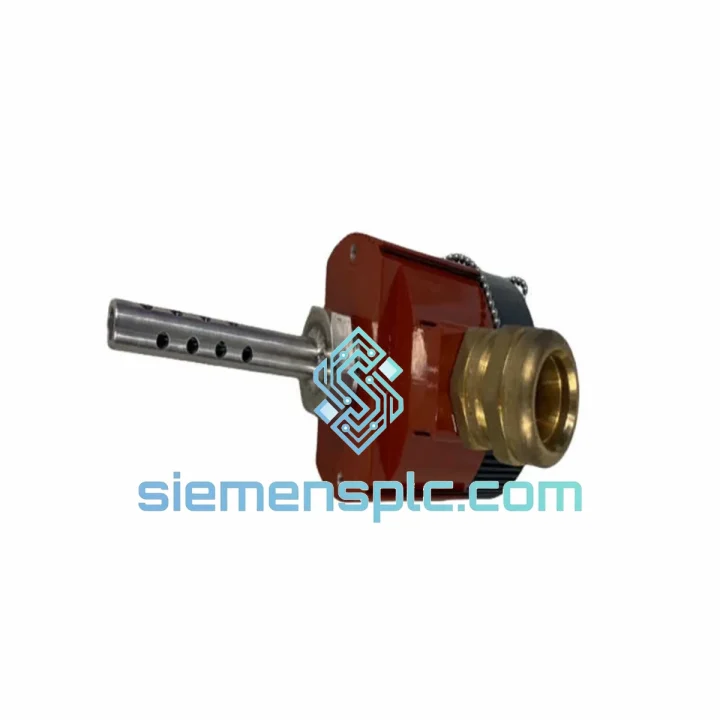
Request verified availability, condition, replacement risk review, packing options and courier lead time for TRY/PRG/4-20MA/10-30DC.
Click Request Quote and the part number is inserted into the inquiry form automatically.
Core fields for model confirmation and RFQ routing. Detailed product narrative remains below.
The Moore Industries TRY/PRG/4-20MA/10-30DC is a two-wire, loop-powered temperature transmitter engineered for continuous signal conditioning in industrial process measurement. Operating on a 10–30 V DC supply and delivering a 4–20 mA output, this unit converts thermocouple and RTD sensor signals into a standardised current signal compatible with any analog input card, DCS marshalling panel, or PLC analog module without additional signal conversion hardware.
Within a closed control loop, the transmitter occupies the field-instrument tier: it receives a raw millivolt or resistance signal from the primary sensing element, applies linearisation and cold-junction compensation (for thermocouple inputs), and outputs a proportional 4–20 mA current that represents the measured temperature across the configured span. The PRG (programmable) designation indicates that input type, range, and output behaviour are configurable via Moore Industries’ field programming interface, eliminating the need for model-specific hardware variants across different sensor types.
The device is designed for head-mount or DIN rail installation, making it suitable for both field-mounted transmitter heads and centralised marshalling cabinets. Its compact footprint and wide supply voltage tolerance (10–30 V DC) allow direct integration into existing panel infrastructure without dedicated power conditioning.
Real-time Stock & RFQ: [email protected] | WhatsApp: +86 18359268345
| Parameter | Specification |
|---|---|
| Part Number | TRY/PRG/4-20MA/10-30DC |
| Brand | Moore Industries (MOORE) |
| Series | TRY/PRG |
| Output Signal | 4–20 mA, two-wire loop-powered |
| Supply Voltage | 10–30 V DC |
| Input Type | Thermocouple (B, E, J, K, N, R, S, T) / RTD (Pt100, Pt1000, Ni100, Ni120) – field-programmable |
| Accuracy | ±0.1% of span (typical, thermocouple); ±0.05% of span (typical, RTD) |
| Ambient Temperature Range | -40°C to +85°C (operating) |
| Load Resistance | 0–600 Ω at 24 V DC supply |
| Response Time | <500 ms (63.2% step response) |
| Isolation | Input-to-output galvanic isolation (500 V AC, 1 min) |
| Mounting | DIN rail (EN 60715 / TS 35) or sensor head mount |
| Housing Material | Flame-retardant thermoplastic |
| Protection Class | IP20 (DIN rail); IP65 (head-mount enclosure, model-dependent) |
| Compliance | CE, RoHS 2011/65/EU |
| Warranty | 12 months from date of shipment against manufacturing defects |
The TRY/PRG/4-20MA/10-30DC is built around a microcontroller-based signal processing core that performs three sequential operations: analog front-end conditioning, digital linearisation, and current-loop drive.
Analog Front-End & Input Multiplexing: The input stage accepts millivolt-level thermocouple signals (typically 0–80 mV full scale) or low-resistance RTD bridge signals. A precision instrumentation amplifier with high common-mode rejection ratio (CMRR ≥ 100 dB) suppresses noise induced by long cable runs in electrically noisy plant environments. For thermocouple inputs, an on-board cold-junction compensation (CJC) sensor — typically a precision thermistor or bandgap reference — measures the terminal block temperature and applies a real-time offset correction, maintaining measurement accuracy independent of ambient temperature drift at the transmitter housing.
Galvanic Isolation Architecture: The input circuit is galvanically isolated from the 4–20 mA output loop. Isolation is implemented via a transformer-coupled DC/DC converter for power and an optocoupler or digital isolator for the signal path. This architecture breaks ground loops that would otherwise introduce measurement errors when the sensor and the control system share different ground potentials — a common condition in large plant installations where cable shields are grounded at multiple points.
Digital Linearisation & Span Calculation: Raw ADC counts are processed against IEC 60584 (thermocouple) or IEC 60751 (RTD) polynomial tables stored in non-volatile memory. The PRG interface allows the operator to define a custom zero and span, mapping any sub-range of the sensor’s physical range to the full 4–20 mA output. This sub-ranging capability improves effective resolution for narrow-span applications — for example, mapping a 50–150°C process window to the full 16 mA output swing rather than a 0–1000°C thermocouple range.
EMC Design: The PCB layout incorporates guard traces around high-impedance input nodes, ferrite bead filtering on the supply rail, and transient voltage suppression (TVS) diodes on the input terminals. These measures provide compliance with IEC 61000-4-2 (ESD), IEC 61000-4-4 (EFT/burst), and IEC 61000-4-6 (conducted RF immunity) — standard requirements for process instrumentation deployed near variable-frequency drives, contactors, and high-current bus bars.
Current Loop Driver: The output stage uses a precision voltage-to-current converter referenced to the loop supply. The circuit maintains output accuracy across the full 0–600 Ω load range at 24 V DC, with a maximum loop resistance determined by: R_max = (V_supply − V_min_transmitter) / 20 mA. At 24 V DC supply and a 10 V minimum transmitter operating voltage, the maximum loop resistance is 700 Ω — sufficient to drive standard 250 Ω HART resistors plus cable resistance without signal clipping.
Every TRY/PRG/4-20MA/10-30DC unit supplied by siemensplc.com is sourced as genuine Moore Industries OEM product. Units are not repackaged, relabelled, or modified. Physical inspection covers label integrity, housing finish, connector pin condition, and serial number format cross-referenced against Moore Industries’ part numbering conventions. Where bench testing is applicable, output signal linearity is verified using calibrated loop calibrators traceable to national measurement standards.
Shipments originate from our warehouse in Xiamen, China. Xiamen’s port infrastructure and proximity to major international freight hubs enable consistent transit times: DHL Express and FedEx International Priority typically deliver to Europe in 3–5 business days, to North America in 4–6 business days, and to Southeast Asia in 2–3 business days. All shipments include a commercial invoice, packing list, and certificate of origin. HS code classification and export documentation support are provided as standard for customs clearance.
In-stock units ship within 1–3 business days of order confirmation. A 12-month warranty against manufacturing defects applies from the date of shipment, subject to correct installation per Moore Industries’ installation instructions and operation within the specified environmental limits.
Email: [email protected]
WhatsApp: +86 18359268345
Web: siemensplc.com
Location: Xiamen, China
© 2026 siemensplc.com. All rights reserved.
We check the full part number, brand, series and visible nameplate information before quotation.
Sales confirms stock path, condition option, quantity and realistic lead time for export dispatch.
DHL, FedEx, UPS or buyer courier arrangements can be reviewed with packing requirements.
Similar brand or category products for fast comparison and multi-item RFQ lists.