
National Instruments
In Stock OK
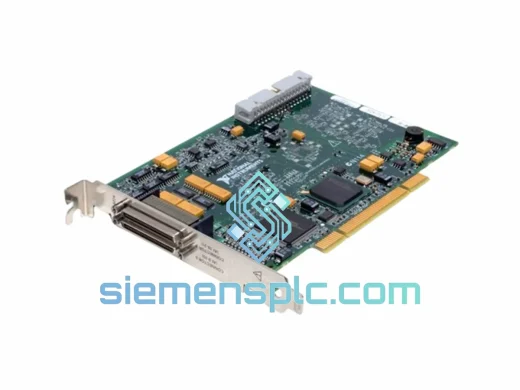
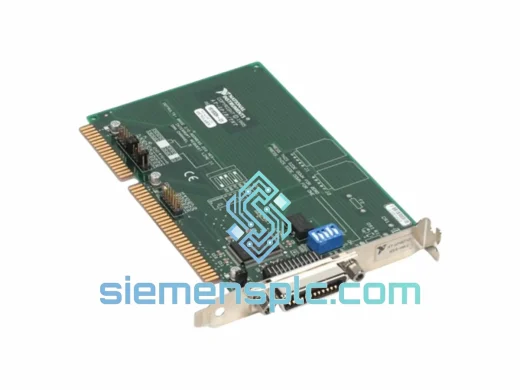
National Instruments PCI-6033E DAQ Card – E Series
Request verified availability, condition, replacement risk review, packing options and courier lead time for PCI-6033E.
BrandNational Instruments
Part NumberPCI-6033E
ConditionAvailability Check
Lead TimeRFQ Confirmation
DocumentsDatasheet / photos by RFQ
ShippingExport packing available
Auto-filled RFQ
PCI-6033E
Click Request Quote and the part number is inserted into the inquiry form automatically.
- Reply by email: [email protected]
- WhatsApp / Tel: +86 18359268345
- Mon-Sat 9:00-18:00 GMT+8
Procurement Data
Key Product Information
Core fields for model confirmation and RFQ routing. Detailed product narrative remains below.
- Brand
- National Instruments
- Primary Part Number
- PCI-6033E
- Product Type
- DAQ Card
- Product Family
- Other series
- Manufacturer
- National Instruments (NI)
- Country of Origin
- United States
- Catalog Category
- I/O Modules
- Operating Temp.
- 0 °C to +55 °C
- Warranty
- 12 months functional warranty against defects in materials and workmanship
Model confirmed for inquiry
PCI-6033E
Send quantity, destination and urgency. The RFQ form keeps this part number attached.
Request Quote
Product Overview
NI PCI-6033E: 64-Channel High-Density Analog Input DAQ Card for Precision Industrial Measurement
The NI PCI-6033E occupies a well-defined position in the E Series multifunction data acquisition platform: it is the highest-channel-count card in the family, delivering 64 single-ended or 32 differential analog input channels through a single 32-bit PCI slot. For system integrators working under slot-count constraints — embedded industrial PCs, rack-mount ATE chassis, or compact workstations — this channel density eliminates the need for multi-card configurations and the synchronization overhead they introduce. The card’s 16-bit successive-approximation ADC resolves signals to 1-in-65,536 steps, yielding a theoretical resolution of approximately 1.5 µV on the tightest ±0.05 V input range. At 100 kS/s aggregate throughput, the PCI-6033E is suited to low-to-mid-frequency measurement tasks: vibration envelope detection below 40 kHz, thermocouple and RTD scanning, strain gauge bridge monitoring, and multi-axis position feedback from LVDT or resolver conditioning modules.
The E Series architecture underpinning this card has accumulated over two decades of field deployment across laboratory automation, semiconductor test, and process control R&D. NI-DAQmx driver support — with its task-based API, hardware-timed buffered I/O, and deterministic trigger routing — remains actively maintained, ensuring compatibility with current Windows 10/11 and Linux RT environments. The RTSI (Real-Time System Integration) bus connector on the card’s edge enables hardware-level synchronization with other NI DAQ, motion, and vision boards sharing the same chassis backplane, a capability that software-only synchronization cannot replicate in latency-sensitive applications.
Real-time Stock & RFQ: [email protected] | WhatsApp: +86 18359268345
Technical Parameters
| Part Number / SKU | PCI-6033E |
| Manufacturer | National Instruments (NI) |
| Platform / Series | E Series Multifunction DAQ |
| Form Factor | PCI (32-bit, 5 V, PCI 2.1 compliant) |
| Analog Input Channels | 64 single-ended / 32 differential (software-selectable per channel) |
| ADC Resolution | 16-bit successive-approximation (SAR) |
| Aggregate Sampling Rate | 100 kS/s maximum |
| Input Voltage Ranges | ±0.05 V, ±0.1 V, ±0.5 V, ±1 V, ±2.5 V, ±5 V, ±10 V (8 software-selectable ranges via PGIA) |
| Input Impedance | >1 GΩ (with signal conditioning disabled) |
| CMRR | ≥100 dB at DC (differential mode) |
| Analog Output Channels | 2 × 16-bit, ±10 V, 1 MS/s update rate, ±5 mA drive |
| Digital I/O | 8 lines, TTL/CMOS bidirectional, 5 V logic |
| Counter/Timers | 2 × 24-bit general-purpose (up/down, frequency, period, pulse-width measurement) |
| Onboard FIFO | 512 samples (AI); prevents data loss during host CPU latency events |
| Trigger Modes | Analog threshold, digital edge, RTSI bus trigger; pre-trigger and post-trigger buffering |
| Synchronization Bus | RTSI (Real-Time System Integration) — hardware multi-board sync |
| Front-Panel Connector | 68-pin VHDCI (compatible with SH68-68-EP shielded cable, SCB-68A terminal block) |
| Driver Support | NI-DAQ 6.9+, NI-DAQmx (Windows 7–11, Linux RT) |
| Software Compatibility | LabVIEW, LabWindows/CVI, Measurement Studio, MATLAB, Python (nidaqmx ≥ 0.6) |
| Operating Temperature | 0 °C to +55 °C |
| Storage Temperature | -20 °C to +70 °C |
| Relative Humidity | 10% to 90% non-condensing |
| Board Dimensions | 170 mm × 107 mm (PCI half-length) |
| Weight | ~400 g |
| Calibration | NIST-traceable; onboard EEPROM stores calibration constants; self-calibration via NI-DAQmx |
| Warranty | 12 months functional warranty against defects in materials and workmanship |
| Country of Origin | United States |
Hardware Logical Analysis
The PCI-6033E implements a multiplexed single-ADC topology. All 64 single-ended channels share one programmable gain instrumentation amplifier (PGIA) and one 16-bit SAR ADC. The PGIA gain is set per-channel in the scan list, allowing mixed-range scanning — for example, scanning a ±10 V accelerometer channel immediately followed by a ±0.1 V thermocouple channel — without manual hardware reconfiguration. The settling time between gain changes is managed by the onboard scan clock, which enforces a minimum inter-channel interval to allow the PGIA output to settle within ½ LSB before the ADC samples. At 100 kS/s aggregate with 64 channels active, the per-channel effective rate is 1.5625 kS/s, which is adequate for DC and low-frequency AC signals up to approximately 625 Hz (Nyquist).
The 512-sample onboard FIFO is a critical buffer between the ADC and the PCI bus. In systems where the host CPU services interrupts with variable latency — common in Windows environments without real-time extensions — the FIFO absorbs burst latency without dropping samples, provided the average DMA transfer rate keeps pace with the acquisition rate. For applications requiring deterministic, gap-free acquisition beyond the FIFO depth, NI-DAQmx continuous buffered mode with DMA transfers is the correct configuration.
EMC design on the PCI-6033E follows NI’s standard E Series shielding approach: the analog signal path is routed on inner PCB layers with ground plane isolation from the digital logic domain. The 68-pin VHDCI connector shell is tied to chassis ground, and the recommended SH68-68-EP shielded cable provides continuous shield coverage from the card to the terminal block, attenuating capacitively coupled interference in the 1–100 MHz range. For environments with strong magnetic field interference (motor drives, transformers), differential input mode with twisted-pair wiring to the SCB-68A terminal block is the recommended configuration, leveraging the PGIA’s ≥100 dB DC CMRR to reject common-mode noise.
The RTSI bus is a 34-pin ribbon connector on the card’s top edge that carries eight bidirectional signal lines shared across all RTSI-equipped boards in the chassis. These lines can carry trigger signals, sample clocks, and start triggers between boards with sub-nanosecond skew, enabling phase-coherent multi-board acquisition that software-timed synchronization cannot achieve. In a typical multi-board ATE configuration, one board is designated the RTSI master and drives the shared sample clock; all other boards lock their ADC conversion clocks to this reference, ensuring all channels across all boards are sampled within the same clock cycle.
System Integration Benefits
- Single-slot 64-channel density: Consolidates what would otherwise require two or more lower-channel-count cards into one PCI slot, reducing chassis footprint, cable count, and inter-board synchronization complexity.
- Mixed-range per-channel scanning: The PGIA gain is programmable per entry in the channel scan list, allowing simultaneous acquisition of high-voltage and millivolt-level signals without external signal conditioning range switching.
- Hardware-timed deterministic sampling: The onboard scan clock operates independently of the host CPU, ensuring sample intervals are governed by hardware timing rather than OS scheduler jitter — critical for frequency-domain analysis where timing uncertainty corrupts spectral data.
- RTSI multi-board synchronization: Phase-coherent triggering and clocking across multiple NI boards enables distributed acquisition systems where all channels — regardless of which physical card they reside on — are sampled within a single clock cycle.
- NI-DAQmx task abstraction: The driver’s task-based API decouples application code from hardware specifics, allowing the same measurement program to run on different NI hardware generations without code modification — reducing long-term software maintenance burden.
- Dual 16-bit analog output: Integrated AO channels support closed-loop control architectures without requiring a separate output card, reducing system cost and eliminating inter-card synchronization latency in stimulus-response test setups.
- Onboard EEPROM self-calibration: NI-DAQmx self-calibration routines update gain and offset correction coefficients stored in onboard EEPROM, compensating for temperature-induced drift without requiring external reference instruments — maintaining measurement accuracy across ambient temperature variations.
- Broad software ecosystem: Native support for LabVIEW, MATLAB, Python (nidaqmx), and C/C++ via NI-DAQmx Base, with an extensive example code library covering buffered acquisition, hardware triggering, and RTSI synchronization — reducing integration time for new deployments.
Quality Assurance & Global Logistics
Every NI PCI-6033E unit offered through siemensplc.com is sourced from verified industrial automation supply channels and undergoes pre-shipment functional verification prior to dispatch. The verification protocol covers ADC linearity across all eight input ranges, channel continuity for all 64 analog input lines, digital I/O logic level compliance, counter/timer frequency accuracy, and NI-DAQmx driver enumeration and self-test on a reference host system. Original NI calibration EEPROM data is verified intact; units with corrupted or missing calibration data are not shipped.
Packaging follows IEC 61340-5-1 ESD protection requirements: each board is sealed in a conductive anti-static bag, placed in a foam-lined inner carton, and packed in a double-wall corrugated outer carton rated for international air freight handling. Shipments originate from our warehouse in Xiamen, China, with access to DHL Express, FedEx International Priority, and UPS Worldwide Express services. Typical transit times are 3–5 business days to Europe, 2–4 business days to Southeast Asia, and 3–6 business days to North America, depending on customs clearance. Export documentation — including commercial invoice, packing list, and ECCN classification letter — is prepared for every international shipment. For regulated procurement environments requiring ISO 9001 traceability documentation or NIST-traceable recalibration certificates, these are available on request prior to order confirmation. All units carry a 12-month functional warranty against defects in materials and workmanship from the date of shipment.
Contact Information
Email: [email protected]
WhatsApp: +86 18359268345
Web: siemensplc.com
Location: Xiamen, China
© 2026 siemensplc.com. All rights reserved.
Ready to quote
[email protected]
Send This Part Number to Sales
RFQ workflow
Quality workflow ->
Confirmation Process
01Model confirmation
We check the full part number, brand, series and visible nameplate information before quotation.
02Availability reply
Sales confirms stock path, condition option, quantity and realistic lead time for export dispatch.
03Packing & courier
DHL, FedEx, UPS or buyer courier arrangements can be reviewed with packing requirements.
Continue sourcing
Browse full catalog ->
Related Automation Parts
Similar brand or category products for fast comparison and multi-item RFQ lists.
National Instruments
RFQ Ready
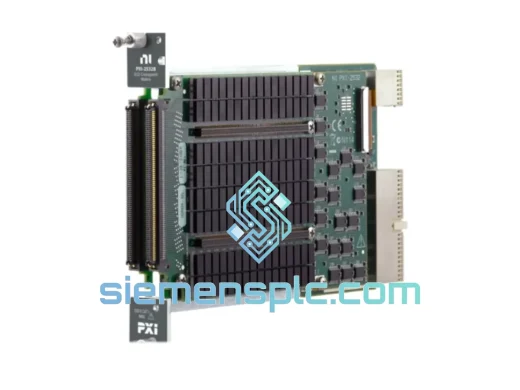
NI PXIe-2532B PXI Express Switch Module
Origin United States
PXI Express Switch Module
National Instruments
RFQ Ready
National Instruments AT-GPIB-TN GPIB Interface Card
Industrial ATE
Origin US
GPIB Interface Card