
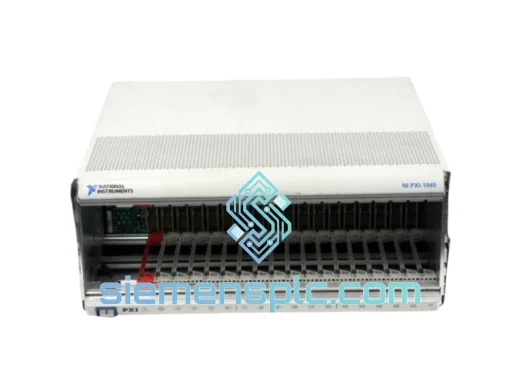
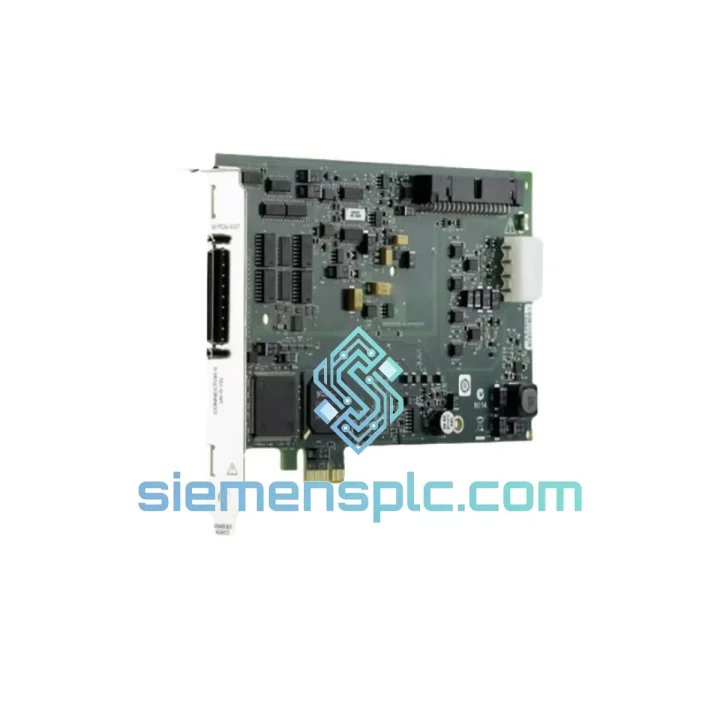
National Instruments
In Stock OK
National Instruments PCIE-6321 DAQ Card – X Series
Request verified availability, condition, replacement risk review, packing options and courier lead time for PCIE-6321.
BrandNational Instruments
Part NumberPCIE-6321
ConditionAvailability Check
Lead TimeRFQ Confirmation
DocumentsDatasheet / photos by RFQ
ShippingExport packing available
Auto-filled RFQ
PCIE-6321
Click Request Quote and the part number is inserted into the inquiry form automatically.
- Reply by email: [email protected]
- WhatsApp / Tel: +86 18359268345
- Mon-Sat 9:00-18:00 GMT+8
Procurement Data
Key Product Information
Core fields for model confirmation and RFQ routing. Detailed product narrative remains below.
- Brand
- National Instruments
- Primary Part Number
- PCIE-6321
- Product Type
- Data Acquisition Card
- Product Family
- Other series
- Country of Origin
- US
- Catalog Category
- Industrial Automation Spares
- Operating Temp.
- 0 °C to 55 °C
- Warranty
- 12 months from date of shipment
Model confirmed for inquiry
PCIE-6321
Send quantity, destination and urgency. The RFQ form keeps this part number attached.
Request Quote
Product Overview
NI PCIE-6321 PCIe Multifunction DAQ Card – X Series 16-Bit 250 kS/s
The National Instruments PCIE-6321 is a PCIe-based multifunction data acquisition card belonging to NI’s X Series platform. It integrates 16 analog input channels (16-bit resolution, 250 kS/s aggregate throughput), 2 analog output channels (16-bit, 900 kS/s), 24 bidirectional digital I/O lines, and 4 general-purpose 32-bit counter/timers onto a single half-length, low-profile PCIe ×1 card. Within a measurement or control loop, the PCIE-6321 functions as the primary signal interface layer between physical plant instrumentation and the host processor — converting real-world analog phenomena into digitized data streams while simultaneously issuing analog command signals to actuators and drives. Its NI-STC3 timing and synchronization controller arbitrates all subsystem clocks internally, enabling AI, AO, DIO, and counter operations to run concurrently without bus contention or resource locking.
Real-time Stock & RFQ: [email protected] | WhatsApp: +86 18359268345
Technical Parameters
| Parameter | Specification |
|---|---|
| Part Number | PCIE-6321 |
| Series | X Series (NI-STC3 architecture) |
| Form Factor | PCIe ×1, half-length, low-profile (168.3 mm × 111.15 mm) |
| Analog Input Channels | 16 single-ended / 8 differential (software-selectable) |
| AI Resolution | 16-bit |
| AI Aggregate Sample Rate | 250 kS/s |
| AI Input Voltage Ranges | ±0.1 V, ±0.2 V, ±0.5 V, ±1 V, ±2 V, ±5 V, ±10 V (8 programmable ranges) |
| AI FIFO Depth | 4,095 samples |
| AI Overvoltage Protection | ±25 V (powered on), ±15 V (powered off) |
| Analog Output Channels | 2 channels, 16-bit, 900 kS/s per channel |
| AO Output Range | ±10 V |
| AO FIFO Depth | 8,191 samples per channel |
| AO Current Drive | ±5 mA per channel |
| Digital I/O Lines | 24 bidirectional, 3.3 V / 5 V TTL compatible |
| DIO Drive Current | 24 mA source/sink per line; 128 mA port aggregate |
| Counter/Timers | 4 × 32-bit, 100 MHz internal timebase |
| Counter Min Pulse Width | 10 ns |
| Trigger Types | Digital start, digital reference, digital pause; analog start, analog reference |
| Bus Interface | PCI Express Gen 1 ×1 (compatible with ×4, ×8, ×16 slots) |
| Power Supply (PCIe slot) | +3.3 V @ 0.5 A; +12 V @ 0.5 A |
| Operating Temperature | 0 °C to 55 °C |
| Storage Temperature | −20 °C to 70 °C |
| Relative Humidity | 10% to 90% non-condensing |
| OS Support | Windows 10/11, Windows Server 2016/2019/2022, Linux (kernel 4.x+) |
| Driver Software | NI-DAQmx 19.0 or later |
| Programming Environments | LabVIEW, LabWindows/CVI, ANSI C/C++, Python (nidaqmx), .NET, MATLAB |
| Certifications | CE (EMC 2014/30/EU, LVD 2014/35/EU), FCC Part 15 Class A, RoHS 2, ISO 9001 |
| Warranty | 12 months from date of shipment |
Hardware Logical Analysis
The PCIE-6321’s signal chain begins at the 68-pin VHDCI connector, where analog inputs pass through a software-programmable instrumentation amplifier (PGIA) before reaching the multiplexer. The PGIA gain is set digitally per scan, allowing the ADC to operate near full-scale on each channel regardless of the source amplitude — this per-channel gain switching is completed within the inter-channel settling time budget, which NI specifies at 1 µs for adjacent channels at ±10 V range and up to 10 µs when switching between widely separated ranges (e.g., ±0.1 V to ±10 V). The single 16-bit successive-approximation register (SAR) ADC samples at up to 250 kS/s aggregate; at 16 channels, the effective per-channel rate is 15.625 kS/s — sufficient for most vibration envelope, temperature, and process-control loops.
The NI-STC3 ASIC is the architectural centerpiece. It contains independent DMA engines for AI, AO, and DIO subsystems, each with dedicated FIFO buffers. The AI FIFO (4,095 samples) and AO FIFO (8,191 samples per channel) decouple the host CPU’s DMA service latency from the hardware timing engine, preventing sample overruns during OS scheduling interruptions of up to several milliseconds — a critical property in Windows environments where interrupt latency is non-deterministic. The PCIe ×1 link provides a theoretical 250 MB/s bandwidth ceiling; at 16-bit AI running 250 kS/s, the sustained data rate is 500 kB/s, leaving the bus effectively idle and eliminating throughput as a bottleneck.
EMC design on the PCIE-6321 follows NI’s standard X Series shielding architecture: the analog signal ground plane is isolated from the digital ground plane on the PCB, with a single-point star connection at the chassis ground lug. The VHDCI connector shell is directly bonded to the card’s metal bracket, providing a low-impedance return path for shield currents from the SHC68-68-EPM cable. This arrangement suppresses common-mode noise injection from cable shields into the analog measurement ground, a frequent failure mode in industrial environments with variable-frequency drives and switching power supplies operating nearby. The card meets EN 55011 Class A radiated and conducted emission limits and EN 61000-4-2 (ESD ±4 kV contact / ±8 kV air), EN 61000-4-4 (EFT ±1 kV), and EN 61000-4-5 (surge ±0.5 kV) immunity levels.
The four 32-bit counter/timers share the 100 MHz onboard timebase (10 ns resolution) and can be cascaded to form 64-bit counters for long-duration event counting without rollover. Each counter supports edge counting, pulse-width measurement, period measurement, semi-period measurement, two-edge separation, position measurement (X1, X2, X4 quadrature encoding), and pulse-train generation — covering the full range of encoder feedback and frequency measurement tasks encountered in motion control and power electronics test applications.
System Integration Benefits
- Concurrent subsystem operation: NI-STC3 hardware arbitration allows AI acquisition, AO waveform generation, DIO pattern output, and counter measurement to execute simultaneously on independent timing engines — eliminating the round-robin scheduling overhead present in software-timed DAQ architectures.
- Hardware-timed triggering eliminates software jitter: Analog start and reference triggers are processed entirely in hardware; trigger latency is deterministic at ±10 ns, versus ±1–10 ms for software-polled trigger schemes. This is essential for synchronized multi-card or multi-instrument test systems.
- NI-DAQmx task abstraction: A single API call configures channel scaling, timing, triggering, and buffering. Engineers migrating from legacy PCI-6221 or PCI-6251 cards reuse existing NI-DAQmx code without modification — the driver handles hardware-layer differences transparently.
- PCIe DMA streaming: Continuous AI streaming at 250 kS/s generates 500 kB/s of data; the PCIe DMA engine transfers this directly to host RAM without CPU intervention, keeping processor utilization below 2% during sustained acquisition — freeing CPU cycles for real-time signal processing or control algorithm execution.
- Programmable AI input ranges: Eight selectable input ranges from ±0.1 V to ±10 V allow the card to interface directly with 4–20 mA transmitters (via shunt resistor), ±10 V servo drive command signals, 0–5 V sensor outputs, and millivolt-level bridge outputs without external signal conditioning in many cases.
- Integrated analog triggering: The analog reference trigger captures a pre-trigger buffer of configurable depth, enabling post-hoc analysis of signal behavior leading up to a threshold crossing — a standard requirement in power electronics fault capture and vibration transient analysis.
- Quadrature encoder support on all four counters: X1/X2/X4 decoding modes with Z-index reset allow direct connection of incremental encoders for position feedback in closed-loop motion test rigs, without requiring a separate encoder interface card.
- Linux NI-DAQmx support: The PCIE-6321 is fully supported under NI-DAQmx for Linux (kernel 4.x and later), enabling deployment in real-time Linux (PREEMPT_RT) environments for deterministic control loops with sub-millisecond jitter budgets — a requirement in hardware-in-the-loop (HIL) simulation platforms.
- Diagnostic self-calibration: NI-DAQmx self-calibration routine adjusts AI offset and gain coefficients against an onboard reference, compensating for temperature drift without removing the card from the chassis. Calibration interval recommended by NI is 1 year; the routine completes in under 2 minutes.
Quality Assurance & Global Logistics
Every PCIE-6321 unit supplied by siemensplc.com is sourced through verified channels with documented provenance. Pre-shipment inspection includes visual examination of the PCB, connector pins, and label integrity; NI-DAQmx self-test and self-calibration execution with pass/fail logging; and functional verification of AI, AO, DIO, and counter subsystems using a calibrated breakout fixture. Units are packed in anti-static shielding bags with humidity indicator cards, placed in foam-lined cartons rated for international air freight handling.
Shipments originate from Xiamen, China. Standard international delivery via DHL Express or FedEx International Priority reaches most destinations in Europe, North America, Southeast Asia, and the Middle East within 3–7 business days from dispatch. Sea freight consolidation is available for multi-unit orders where lead time permits. All export shipments include a commercial invoice, packing list, and certificate of origin. HS code 8471.80 applies to this product class for customs classification purposes. A 12-month warranty covers manufacturing defects and functional failures under normal operating conditions; warranty claims are processed with replacement dispatch within 5 business days of confirmed fault diagnosis.
Contact Information
Email: [email protected]
WhatsApp: +86 18359268345
Web: siemensplc.com
Location: Xiamen, China
© 2026 siemensplc.com. All rights reserved.
Ready to quote
[email protected]
Send This Part Number to Sales
RFQ workflow
Quality workflow ->
Confirmation Process
01Model confirmation
We check the full part number, brand, series and visible nameplate information before quotation.
02Availability reply
Sales confirms stock path, condition option, quantity and realistic lead time for export dispatch.
03Packing & courier
DHL, FedEx, UPS or buyer courier arrangements can be reviewed with packing requirements.
Continue sourcing
Browse full catalog ->
Related Automation Parts
Similar brand or category products for fast comparison and multi-item RFQ lists.
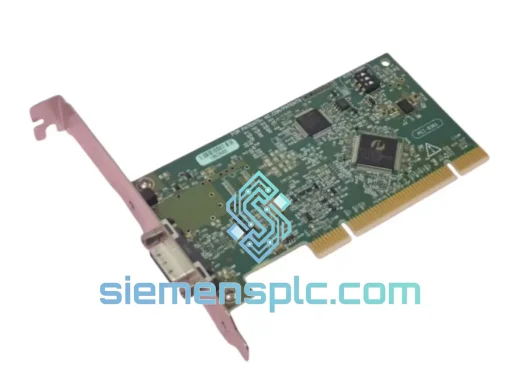
National Instruments
RFQ Ready
National Instruments PCI-8361 PCI Host Interface Card
Origin United States
PCI Interface Card
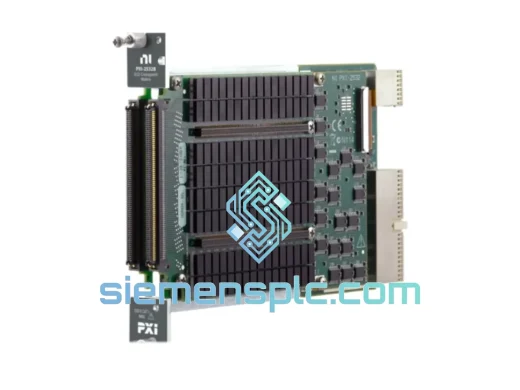
National Instruments
RFQ Ready
NI PXIe-2532B PXI Express Switch Module
Origin United States
PXI Express Switch Module
National Instruments
RFQ Ready
National Instruments PCI-6033E DAQ Card – E Series
Origin United States
DAQ Card