
NIKON
In Stock OK
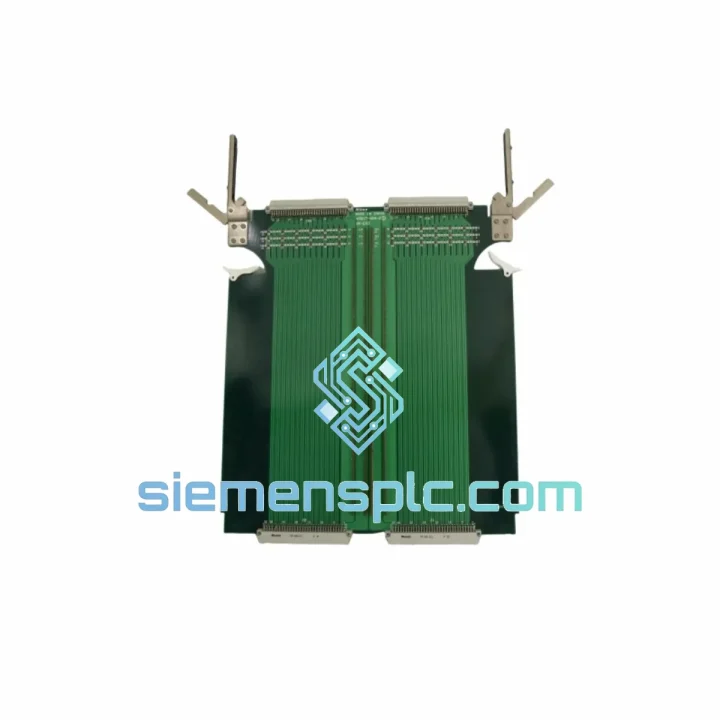
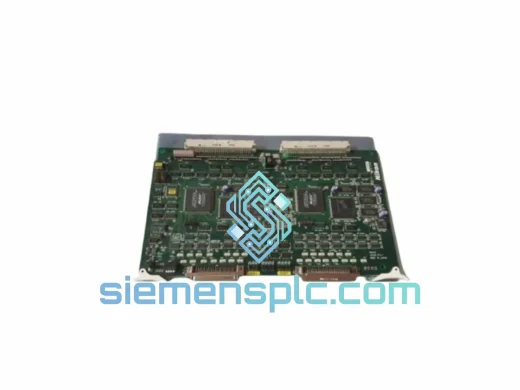
NIKON SR-EX3 4S017-489-2 PCB Assembly – SR-EX3 Series
Request verified availability, condition, replacement risk review, packing options and courier lead time for SR-EX3.
BrandNIKON
Part NumberSR-EX3
ConditionAvailability Check
Lead TimeRFQ Confirmation
DocumentsDatasheet / photos by RFQ
ShippingExport packing available
Auto-filled RFQ
SR-EX3
Click Request Quote and the part number is inserted into the inquiry form automatically.
- Reply by email: [email protected]
- WhatsApp / Tel: +86 18359268345
- Mon-Sat 9:00-18:00 GMT+8
Procurement Data
Key Product Information
Core fields for model confirmation and RFQ routing. Detailed product narrative remains below.
- Brand
- NIKON
- Primary Part Number
- SR-EX3
- Product Type
- PCB Assembly
- Product Family
- Other series
- Manufacturer
- NIKON Corporation, Japan
- Country of Origin
- Japan
- Catalog Category
- Industrial Automation Spares
- Operating Temp.
- 10°C – 35°C (controlled cleanroom environment)
- Warranty
- 12 months from date of shipment
Model confirmed for inquiry
SR-EX3
Send quantity, destination and urgency. The RFQ form keeps this part number attached.
Request Quote
Product Overview
NIKON SR-EX3 LBC-GX Logic Control Board (4S017-489-2 / 0021-12555 / 400-0332-000B): Precision Stage Control in Semiconductor Lithography Systems
The NIKON SR-EX3 PCB Assembly — catalogued under part numbers 4S017-489-2, 0021-12555, LBC-GX, and 400-0332-000B — is the dedicated logic and control board governing the motion arbitration, alignment feedback, and subsystem communication within the NIKON SR-EX3 series step-and-repeat lithography platform. This board occupies the LBC-GX slot in the SR-EX3 backplane architecture, where it interfaces directly with the stage servo controller, the reticle alignment sensor array, and the host system controller via a proprietary parallel bus. Its role is not peripheral: without a correctly programmed and revision-matched LBC-GX board, the SR-EX3 cannot execute wafer stepping sequences, cannot close its alignment feedback loop, and cannot maintain the sub-micron overlay accuracy that defines the platform’s production value.
The SR-EX3 was designed for high-throughput i-line (365 nm) exposure in volume semiconductor and flat panel display (FPD) manufacturing. The LBC-GX board was engineered to match that throughput demand — handling real-time interrupt arbitration between the stage encoder feedback, the autofocus sensor, and the reticle interferometer at cycle times that do not introduce latency into the exposure sequence. Understanding the hardware architecture of this board is essential for maintenance engineers, MRO procurement teams, and fab equipment managers responsible for sustaining SR-EX3 uptime.
Real-time Stock & RFQ: [email protected] | WhatsApp: +86 18359268345
Technical Parameters
| Parameter | Specification |
|---|---|
| Manufacturer | NIKON Corporation, Japan |
| Platform | SR-EX3 Step-and-Repeat Lithography System |
| Board Designation | LBC-GX (Logic Board, Control — GX Revision) |
| Primary OEM Part Numbers | 4S017-489-2 / 0021-12555 / 400-0332-000B |
| Assembly Revision | Revision B (suffix -000B) |
| Board Form Factor | Proprietary NIKON SR-EX3 backplane card |
| Bus Interface | Proprietary parallel backplane bus (SR-EX3 internal) |
| Primary Function | Stage motion arbitration, alignment feedback processing, subsystem I/O control |
| Operating Voltage | +5 VDC / ±12 VDC (backplane supplied) |
| Operating Temperature | 10°C – 35°C (controlled cleanroom environment) |
| Humidity Range | 40% – 70% RH, non-condensing |
| ESD Sensitivity | Class 2 (HBM), handle with ESD precautions |
| Connector Type | Multi-pin DIN backplane edge connector (Rev. B pinout) |
| Firmware | Factory-programmed; version must match SR-EX3 host controller firmware |
| Weight (with packaging) | Approx. 2,600 g |
| Condition Available | New OEM / Tested Refurbished |
| Warranty | 12 months from date of shipment |
| HS Code | 8537.10 |
| Country of Origin | Japan |
Hardware Logical Analysis
The LBC-GX board’s architecture reflects the deterministic real-time demands of a production lithography environment. Several design characteristics are worth examining in detail for engineers evaluating replacement or refurbishment decisions.
Backplane Bus Arbitration: The SR-EX3 backplane uses a time-division multiplexed (TDM) parallel bus. The LBC-GX board acts as a bus master for the motion control segment, issuing position commands to the stage servo amplifier cards and receiving encoder feedback within fixed arbitration windows. Any board that does not match the Revision B bus timing parameters will introduce phase errors into the servo loop, manifesting as stage settling time degradation or, in severe cases, alignment fault trips. This is why cross-revision substitution (e.g., using a Revision A board in a Revision B system) is not supported without engineering validation.
Alignment Feedback Processing: The LBC-GX board receives raw differential signals from the SR-EX3’s wafer alignment sensor array. Onboard signal conditioning circuitry — including instrumentation amplifiers with common-mode rejection ratios (CMRR) exceeding 80 dB — filters sensor noise before the data is passed to the host controller for overlay calculation. This analog front-end design is critical in fab environments where ground loops and switching power supply noise are endemic.
EMC Design: The board employs a multi-layer PCB stack with dedicated ground planes separating the analog signal layer from the digital logic layer. Ferrite bead filters are placed at all backplane power entry points to suppress conducted emissions from the servo amplifier cards. The board’s edge connector is shielded with a grounded metal bracket that bonds to the SR-EX3 chassis, providing a low-impedance return path for high-frequency interference. These measures allow the LBC-GX to maintain signal integrity in the presence of the high-current switching transients generated by the stage linear motors.
Watchdog and Fault Arbitration Logic: An independent hardware watchdog timer monitors the board’s main processor. If the processor fails to reset the watchdog within the defined interval (typically 50–100 ms), the watchdog asserts a system fault signal on the backplane, triggering a controlled stage stop and logging a fault code to the SR-EX3 error register. This prevents uncontrolled stage motion in the event of a firmware hang — a critical safety feature in a system where uncontrolled motion could damage the reticle or wafer chuck.
Firmware Storage: Program code is stored in non-volatile flash memory on the board. The firmware version is encoded in a readable register accessible via the SR-EX3 service terminal. Before installing a replacement LBC-GX board, the firmware version on the replacement must be verified against the host controller’s expected version table. Mismatched firmware versions will result in a communication handshake failure at system startup.
System Integration Benefits
- Deterministic stage settling: The LBC-GX’s fixed-latency bus arbitration ensures stage position commands are executed within a bounded time window, preserving the SR-EX3’s specified wafer-to-wafer throughput rate without introducing variable delays into the stepping sequence.
- Closed-loop alignment integrity: By processing alignment sensor signals onboard before transmission to the host controller, the board reduces the data path length and associated latency in the overlay correction loop, supporting sub-micron alignment repeatability across the wafer field.
- Fault transparency: The board’s hardware watchdog and fault register architecture provides maintenance engineers with structured, machine-readable fault codes rather than ambiguous system crashes, reducing mean time to diagnose (MTTD) during unplanned downtime events.
- Revision-controlled compatibility: The Revision B designation (suffix -000B) is a hard compatibility boundary. Using a correctly matched revision eliminates the risk of bus timing conflicts, connector pinout mismatches, and firmware handshake failures that would otherwise require field engineering intervention to resolve.
- EMC-hardened signal paths: The board’s multi-layer ground plane architecture and ferrite filtering maintain analog signal integrity in the electrically noisy environment of a production fab, preventing sensor noise from propagating into the alignment calculation and degrading overlay performance.
- Non-volatile firmware retention: Flash-based firmware storage ensures that the board retains its programming through power cycling and does not require re-initialization after installation, reducing commissioning time for replacement units.
- Backplane power isolation: Onboard DC-DC isolation between the backplane supply rails and the analog signal conditioning circuitry prevents power supply ripple from the servo amplifier cards from coupling into the low-level sensor signals processed by the board.
- Cleanroom-compatible packaging: Replacement units are shipped in ESD-safe anti-static bags within foam-lined cartons, maintaining board cleanliness and electrostatic protection through the logistics chain to the point of installation in a controlled environment.
Quality Assurance & Global Logistics
Every NIKON SR-EX3 LBC-GX PCB Assembly supplied through siemensplc.com is sourced from verified OEM channels or decommissioned NIKON SR-EX3 systems that have undergone documented service histories. New OEM units carry full NIKON factory traceability. Refurbished units are subjected to functional verification on SR-EX3-compatible test fixtures, including bus communication handshake testing, analog signal conditioning verification, and watchdog timer validation, before being released for shipment.
All units are packaged in Class 2 ESD-compliant anti-static bags, sealed, and placed in foam-lined corrugated cartons rated for international air freight handling. A certificate of conformance is available on request for ISO-certified procurement processes.
Shipments originate from our warehouse in Xiamen, China. In-stock units are dispatched within 1–3 business days via DHL Express, FedEx International Priority, or UPS Worldwide Expedited, with typical transit times of 3–7 business days to major industrial hubs in Southeast Asia, Europe, and North America. Export documentation, including commercial invoices, packing lists, and HS code 8537.10 classification, is prepared for all international shipments. Customers requiring specific customs documentation for fab import compliance should advise at the time of order.
A 12-month warranty covers all units against defects in materials and workmanship from the date of shipment. Warranty claims are processed with a target response time of 48 hours.
Contact Information
Email: [email protected]
WhatsApp: +86 18359268345
Web: siemensplc.com
Location: Xiamen, China
© 2026 siemensplc.com. All rights reserved.
Ready to quote
[email protected]
Send This Part Number to Sales
RFQ workflow
Quality workflow ->
Confirmation Process
01Model confirmation
We check the full part number, brand, series and visible nameplate information before quotation.
02Availability reply
Sales confirms stock path, condition option, quantity and realistic lead time for export dispatch.
03Packing & courier
DHL, FedEx, UPS or buyer courier arrangements can be reviewed with packing requirements.
Continue sourcing
Browse full catalog ->
Related Automation Parts
Similar brand or category products for fast comparison and multi-item RFQ lists.
NIKON
RFQ Ready
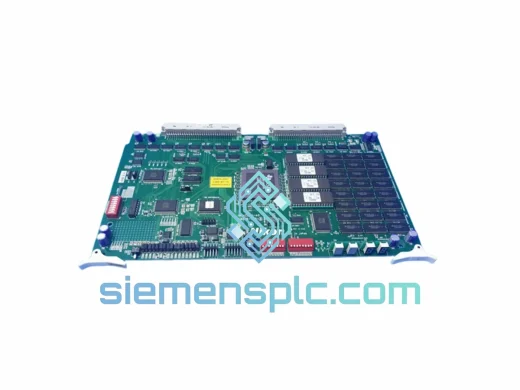
NIKON 4S018-713-1 PCB Control Board – NSR-S306C i-Line Stepper
Origin JP
PCB Control Board