ProSoft Technology
RFQ Ready
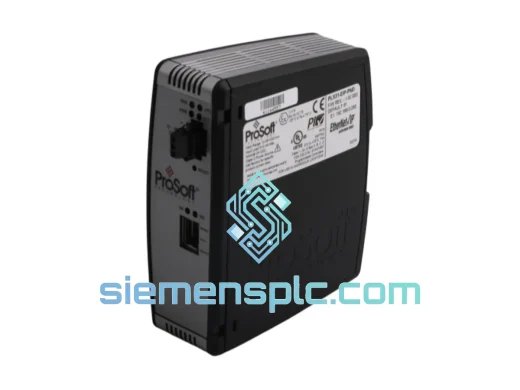
ProSoft PLX31-EIP-PND Protocol Gateway – PLX31 Series
Origin US
Protocol Gateway
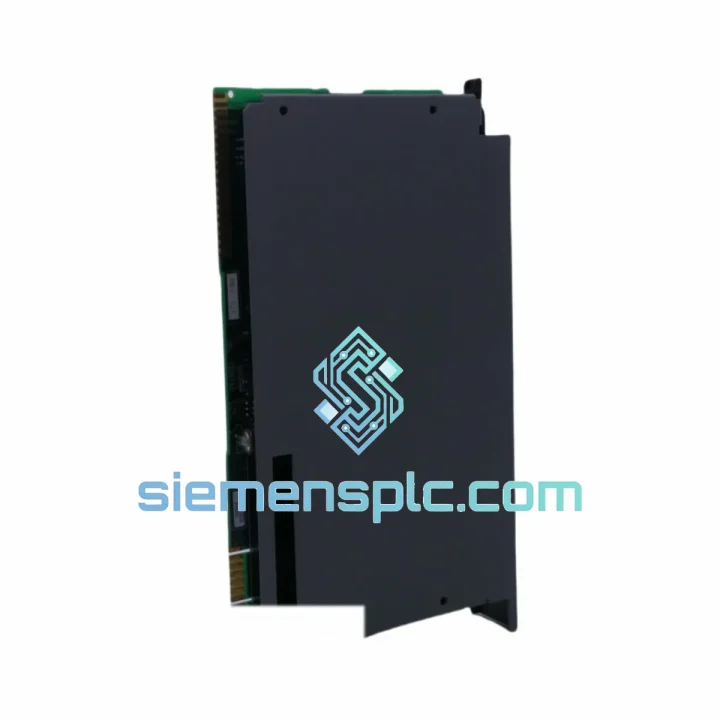
Request verified availability, condition, replacement risk review, packing options and courier lead time for 3100-INUSA.
Click Request Quote and the part number is inserted into the inquiry form automatically.
Core fields for model confirmation and RFQ routing. Detailed product narrative remains below.
The ProSoft Technology 3100-INUSA is a dual-port Modbus RTU and ASCII serial communications module designed for direct installation into Allen-Bradley ControlLogix 1756-series chassis. It occupies a standard backplane slot and exchanges process data with the ControlLogix CPU via the proprietary 1756 backplane bus — a fundamentally different architecture from external Ethernet-to-serial gateways that introduce variable network latency and additional failure nodes into the control topology.
The module supports simultaneous Master and Slave operation across its two independent serial ports. Port 1 can actively poll a network of up to 247 Modbus RTU slave devices — variable-frequency drives, flow computers, remote terminal units, gas analyzers, and smart meters — while Port 2 concurrently responds to Modbus queries originating from an upstream SCADA host or historian. This bidirectional, dual-role capability is managed entirely within the module’s onboard firmware without consuming ControlLogix CPU scan time or requiring additional ladder logic beyond scheduled MSG instructions.
Each port is independently configurable for RS-232, RS-422, or RS-485 physical layer operation through ProSoft Configuration Builder (PCB), a no-cost Windows configuration utility. Baud rates from 110 bps to 115,200 bps are supported per port, with selectable data bits (7 or 8), parity (None, Even, Odd), and stop bits (1 or 2) — accommodating legacy field instruments that deviate from the standard Modbus 8N1 framing convention. The module’s 4,000-register (16-bit) internal SRAM buffer serves as the data exchange interface between the serial network and the ControlLogix tag database, with the CPU accessing this buffer through MSG instructions at the configured Requested Packet Interval (RPI), typically 10 to 100 ms.
Real-time Stock & RFQ: [email protected] | WhatsApp: +86 18359268345
| Parameter | Specification |
|---|---|
| Part Number | 3100-INUSA |
| Manufacturer | ProSoft Technology |
| Compatible Platform | Allen-Bradley ControlLogix 1756-series chassis |
| Supported Protocols | Modbus RTU Master, Modbus RTU Slave, Modbus ASCII Master, Modbus ASCII Slave |
| Serial Ports | 2 × independently configurable |
| Physical Layer Options | RS-232, RS-422, RS-485 (per port, software-selectable) |
| Baud Rate Range | 110 bps – 115,200 bps per port |
| Max Modbus Slave Nodes | 247 per port (Modbus protocol addressing limit) |
| Internal Data Memory | 4,000 × 16-bit registers (read/write partitioned) |
| Backplane Current Draw | 800 mA @ 5 VDC |
| Operating Temperature | 0 °C to +60 °C |
| Storage Temperature | −40 °C to +85 °C |
| Relative Humidity | 5% – 95% RH, non-condensing |
| Module Weight | 230 g |
| Certifications | UL, cUL, CE (EN 61131-2) |
| Configuration Tool | ProSoft Configuration Builder (PCB) — no license fee |
| Firmware Update Method | Field-upgradeable via PCB over serial port; no chassis power cycle required |
| Warranty | 12 months from date of shipment |
The 3100-INUSA implements a processor-per-port architecture in which each serial port is managed by a dedicated UART controller with its own interrupt-driven receive FIFO. This design prevents head-of-line blocking: a slow-responding Modbus slave on Port 1 does not stall the polling cycle on Port 2. The two UART controllers share a common internal bus connected to the module’s main processor, which arbitrates register writes into the 4,000-register SRAM block and manages the backplane MSG transaction queue independently of serial port timing.
Physical layer switching between RS-232, RS-422, and RS-485 is implemented via an onboard transceiver IC with software-controlled direction pins. For RS-485 half-duplex operation, the module derives automatic driver-enable turnaround timing from the configured baud rate and character framing parameters — eliminating the need for manual RTS/CTS delay tuning that is a common source of commissioning errors in external gateway products. The RS-485 receiver input impedance is ≥12 kΩ per port, permitting up to 32 unit loads per bus segment before a repeater is required, consistent with TIA-485-A specifications.
EMC hardening is achieved through a layered approach: isolated signal ground planes on the PCB separate the digital logic domain from the serial signal domain; ferrite bead filters are placed in series on all serial I/O lines to suppress high-frequency common-mode noise; and transient voltage suppression (TVS) diodes rated at ±15 kV ESD per IEC 61000-4-2 contact discharge protect each port’s signal lines against electrostatic discharge events. The module’s metal faceplate maintains a continuous conductive path to the 1756 chassis ground rail, providing a Faraday shielding effect that attenuates radiated emissions from adjacent VFD panels or high-current switching equipment.
A dual-layer watchdog mechanism monitors both the backplane communication heartbeat and per-port serial activity timers. If the ControlLogix CPU fails to refresh the module’s output register block within the user-configured timeout window (1 to 65,535 ms), the module asserts a fault status tag in the controller tag database and can drive the serial ports to a defined safe state. This behavior is critical in process control applications where a stale Modbus write command must not persist indefinitely to a downstream actuator such as a control valve positioner or motor drive.
Each 3100-INUSA unit dispatched from siemensplc.com is sourced through verified supply channels with full lot traceability documentation. Before shipment, every module undergoes a structured functional verification sequence: backplane communication handshake confirmation, serial port loopback test at both 9,600 bps and 115,200 bps, and a full read/write integrity check across all 4,000 internal register addresses. Units that do not pass all verification stages are quarantined and excluded from inventory.
Packaging conforms to IEC 60068-2-27 shock and vibration handling guidelines. Modules are individually sealed in anti-static polyethylene bags, placed in foam-lined corrugated cartons rated at 32 ECT, and secured with void-fill material to prevent movement during air freight transit. International shipments are accompanied by a commercial invoice, packing list, and certificate of origin issued from Xiamen, China, with HS Code 8537.10 declared on all customs documentation.
Logistics operations are based in Xiamen, Fujian Province — a major port city with direct air cargo connections to Hong Kong, Singapore, Frankfurt, Los Angeles, and Dubai. Standard dispatch lead time is 1 to 3 business days from order confirmation. Express air freight via DHL, FedEx, or UPS delivers to most destinations in Asia within 2 to 4 business days, Europe within 3 to 5 days, and North America within 4 to 6 days. Sea freight consolidation is available for bulk orders. All shipments include cargo insurance and end-to-end tracking with AWB numbers provided at dispatch.
A 12-month warranty covers manufacturing defects and functional failures under normal operating conditions as defined in ProSoft Technology product documentation. RMA numbers are issued within 24 business hours of a verified fault report. Replacement units are dispatched from Xiamen stock upon receipt of the defective module.
Email: [email protected]
WhatsApp: +86 18359268345
Web: siemensplc.com
Location: Xiamen, China
© 2026 siemensplc.com. All rights reserved.
We check the full part number, brand, series and visible nameplate information before quotation.
Sales confirms stock path, condition option, quantity and realistic lead time for export dispatch.
DHL, FedEx, UPS or buyer courier arrangements can be reviewed with packing requirements.
Similar brand or category products for fast comparison and multi-item RFQ lists.