ProSoft Technology
RFQ Ready
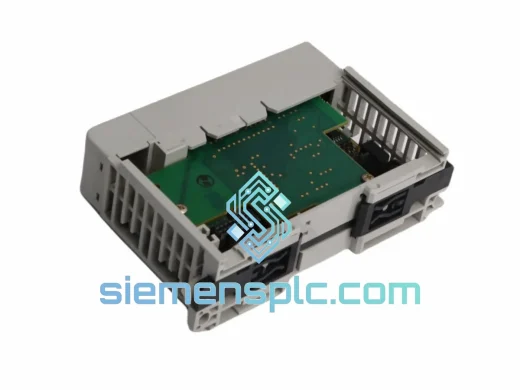
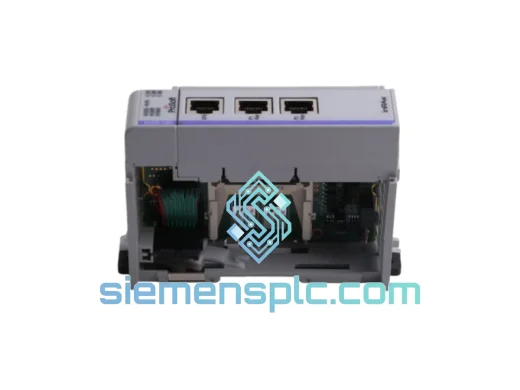
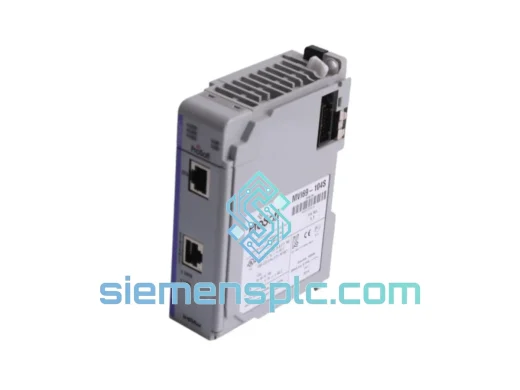
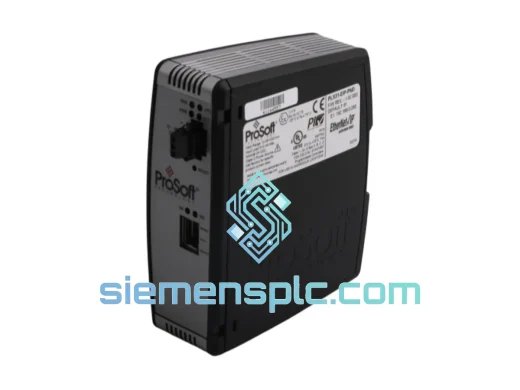
ProSoft PLX31-EIP-PND Protocol Gateway – PLX31 Series
Origin US
Protocol Gateway
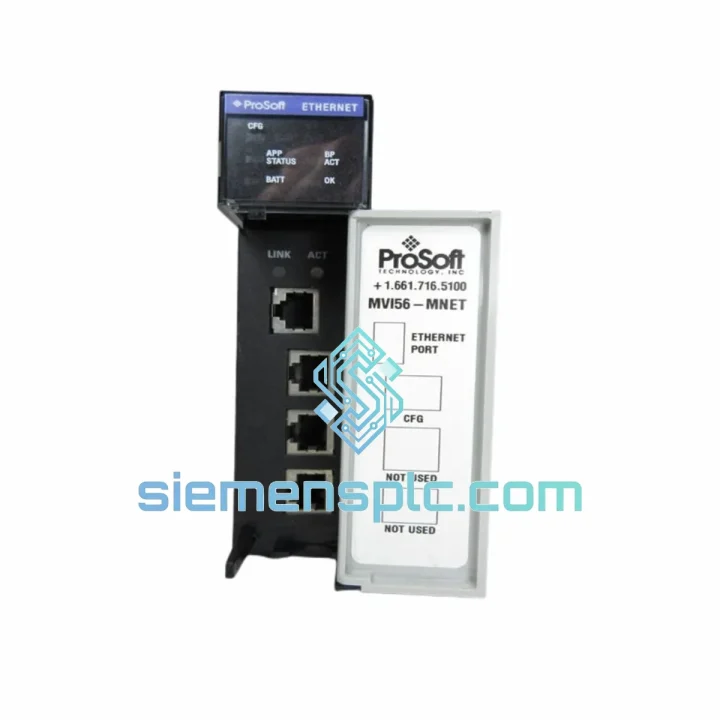
Request verified availability, condition, replacement risk review, packing options and courier lead time for MVI56-MCMR.
Click Request Quote and the part number is inserted into the inquiry form automatically.
Core fields for model confirmation and RFQ routing. Detailed product narrative remains below.
The MVI56-MCMR occupies a single slot in any Allen-Bradley 1756 ControlLogix chassis and presents two independently configurable serial ports to the host controller via the ControlLogix backplane. Each port operates as a Modbus RTU or ASCII master, slave, or both simultaneously — a hardware capability that eliminates the external gateway hardware otherwise required when a control node must respond to a supervisory SCADA poll while concurrently initiating its own downstream device queries. The module’s internal processor handles all Modbus transaction scheduling, retry logic, and exception-code management autonomously, offloading that deterministic overhead from the ControlLogix CPU scan cycle and preserving controller bandwidth for closed-loop process tasks.
In a typical refinery or water-treatment architecture, the MVI56-MCMR sits between the ControlLogix controller and a field bus populated with flow computers, energy meters, variable-frequency drives, and legacy RTUs — devices that predate EtherNet/IP but remain operationally critical. The module maps up to 5,000 holding registers and 5,000 input registers into the controller’s tag database through a contiguous block of I/O image memory, making field-device data immediately accessible to ladder logic, function block diagrams, and Add-On Instructions without any custom messaging instruction overhead. Write operations from the controller to downstream slaves are queued in the module’s internal command list and executed at configurable polling intervals, with per-command error counters written back to the tag database for real-time diagnostic visibility.
The RS-232/RS-422/RS-485 physical layer is selectable per port via DIP switch, supporting point-to-point wiring at RS-232 distances up to 15 m and multi-drop RS-485 networks at distances up to 1,200 m with up to 32 electrical nodes per segment (247 with repeaters). Baud rates from 110 bps to 115,200 bps are supported, with hardware and software flow control options for RS-232 connections to legacy modems or radio transceivers. This physical-layer flexibility means a single module type covers the full spectrum of serial field-device wiring topologies encountered in brownfield retrofit projects.
Real-time Stock & RFQ: [email protected] | WhatsApp: +86 18359268345
| Parameter | Specification |
|---|---|
| Part Number | MVI56-MCMR |
| Manufacturer | Prosoft Technology |
| Host Platform | Allen-Bradley ControlLogix (1756 backplane) |
| Protocol | Modbus RTU / ASCII — Master & Slave, simultaneous per port |
| Serial Ports | 2 × independently configurable (Port 1 & Port 2) |
| Physical Layer | RS-232, RS-422, RS-485 (DIP-switch selectable per port) |
| Baud Rate Range | 110 bps – 115,200 bps |
| Max Slave Devices per Port | 247 (with repeaters on RS-485 multi-drop) |
| Data Table — Holding Registers | Up to 5,000 registers (read/write) |
| Data Table — Input Registers | Up to 5,000 registers (read-only) |
| Backplane Current Draw | 800 mA @ 5 VDC |
| Chassis Slot Requirement | 1 slot (standard 1756 form factor) |
| Operating Temperature | 0 °C to +60 °C |
| Storage Temperature | −40 °C to +85 °C |
| Relative Humidity | 5 % – 95 % non-condensing |
| Module Dimensions (H × W × D) | 94 mm × 45 mm × 94 mm |
| Approx. Weight | 400 g |
| Agency Approvals | UL Listed, cUL Listed, CE (EMC Dir. 2014/30/EU, LVD 2014/35/EU), RoHS |
| Firmware Update Method | Field-upgradeable via ProSoft Configuration Builder (PCB) |
| Configuration Software | ProSoft Configuration Builder v4.x or later (no-cost download) |
| Compatible Controllers | 1756-L6x, 1756-L7x, 1756-L8x (ControlLogix 5580 series) |
| Warranty | 12 months against manufacturing defects from date of shipment |
The MVI56-MCMR is built around a dedicated embedded processor that runs the Modbus protocol stack independently of the ControlLogix CPU. This architectural separation is the module’s most consequential design decision: the host controller is never stalled waiting for a serial transaction to complete. Instead, the module’s processor manages all master polling cycles — issuing function-code requests (FC01–FC06, FC15, FC16, FC23), monitoring slave response windows, applying configurable retry counts on timeout, and logging exception codes — while the ControlLogix CPU reads and writes the shared backplane image memory at its own scan rate. The result is a fully asynchronous data exchange that preserves controller determinism regardless of serial network latency.
The two serial ports are electrically isolated from the backplane logic through optocoupler barriers on the transmit and receive data lines. This galvanic isolation breaks ground loops that are endemic in industrial panel wiring where field-device commons are referenced to earth at multiple points. Without isolation, common-mode voltages induced by motor drives, welding equipment, or long cable runs can corrupt serial data frames or damage UART circuitry; the MVI56-MCMR’s isolation barrier sustains these transients without data loss. The RS-485 driver stage includes integrated termination resistor switching and fail-safe biasing resistors, ensuring the bus presents a defined logic state during idle periods when no driver is actively transmitting — a requirement for reliable multi-drop operation at baud rates above 38,400 bps.
EMC performance is addressed at the PCB layout level: the serial signal traces are routed away from the backplane connector and clock distribution lines, and the board carries a continuous ground plane beneath the analog front-end to suppress capacitive coupling from adjacent digital switching nodes. The module’s metal housing provides an additional Faraday shield, and the backplane connector pins are sequenced so that ground connections mate before signal pins during hot-insertion — a detail that prevents transient currents from flowing through signal lines during module insertion into a powered chassis.
The internal command list architecture allows up to 100 independently parameterised Modbus commands per port, each with its own slave address, function code, register start address, register count, polling interval, and enable/disable flag. Commands can be triggered on a fixed time base or conditionally enabled by a controller-writable bit in the backplane image, giving ladder logic the ability to suppress polling of a device that is known to be offline — reducing unnecessary timeout delays that would otherwise inflate the effective scan time of the command list.
Every MVI56-MCMR unit dispatched from our Xiamen, China facility is sourced through verified industrial distribution channels and carries full manufacturer traceability documentation. Prior to shipment, each module undergoes physical label and PCB marking inspection, firmware version confirmation, and serial port continuity verification. Units are packaged in anti-static bags inside foam-lined cartons with moisture-barrier outer packaging, conforming to IEC 60068-2 transport stress requirements for electronic assemblies.
Logistics are handled via DHL Express, FedEx International Priority, and UPS Worldwide Expedited, with in-stock units typically dispatched within 1–2 business days of order confirmation. Full export documentation — commercial invoice, packing list, certificate of origin, and ECCN classification statement — is provided as standard. Declared-value cargo insurance is available on request. Our team in Xiamen coordinates customs clearance support for destinations with complex import procedures, including pre-shipment HS code confirmation and end-user declaration preparation where required by export control regulations.
A 12-month warranty against manufacturing defects is included with every unit. Warranty claims are processed directly through our technical team; replacement units are dispatched from Xiamen stock upon fault confirmation, minimising plant downtime. Technical pre-sales support — including configuration file review, wiring diagram verification, and Studio 5000 AOI integration guidance — is provided at no charge by our engineering team.
Email: [email protected]
WhatsApp: +86 18359268345
Web: siemensplc.com
Location: Xiamen, China
© 2026 siemensplc.com. All rights reserved.
We check the full part number, brand, series and visible nameplate information before quotation.
Sales confirms stock path, condition option, quantity and realistic lead time for export dispatch.
DHL, FedEx, UPS or buyer courier arrangements can be reviewed with packing requirements.
Similar brand or category products for fast comparison and multi-item RFQ lists.