ProSoft Technology
RFQ Ready
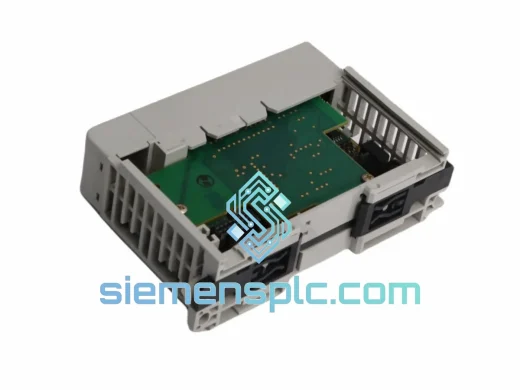
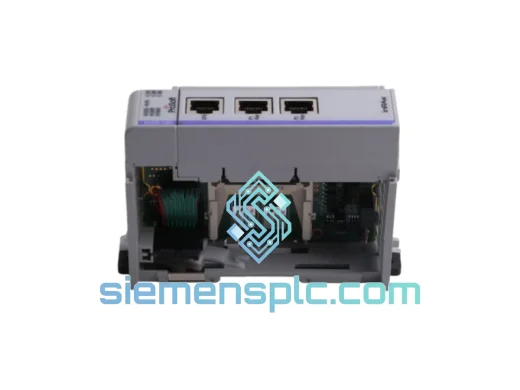
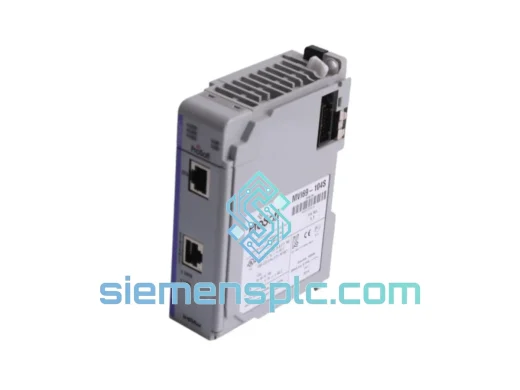
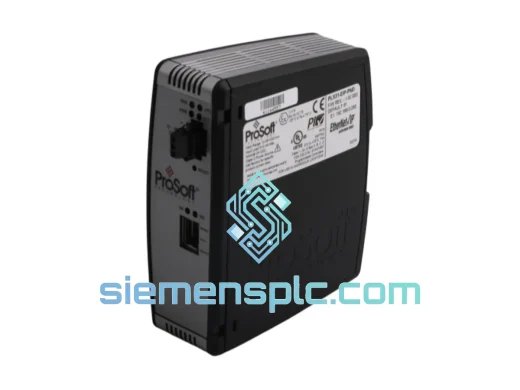
ProSoft PLX31-EIP-PND Protocol Gateway – PLX31 Series
Origin US
Protocol Gateway
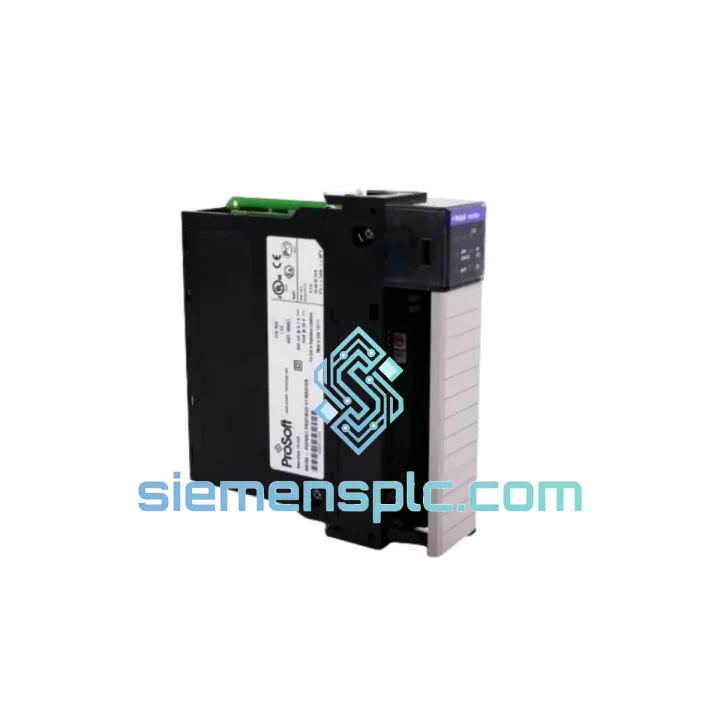
Request verified availability, condition, replacement risk review, packing options and courier lead time for MVI56-PDPMV1.
Click Request Quote and the part number is inserted into the inquiry form automatically.
Core fields for model confirmation and RFQ routing. Detailed product narrative remains below.
In distributed control architectures where field device density exceeds 60 nodes per segment, the integrity of the PROFIBUS master interface becomes the single most consequential variable in system determinism. The ProSoft Technology MVI56-PDPMV1 is a single-slot ControlLogix 1756 communication module that implements the full PROFIBUS DP-V1 Class 1 Master specification — encompassing both DP-V0 cyclic polling and DP-V1 acyclic read/write services — within the Allen-Bradley backplane environment. Its role in the control loop is not supplementary: it is the arbitration layer between the ControlLogix CPU’s ladder/function block execution cycle and the deterministic token-passing bus that governs field device state.
Unlike gateway-based PROFIBUS solutions that introduce an additional protocol translation layer and associated latency, the MVI56-PDPMV1 mounts directly in the 1756 chassis and exchanges data with the CPU via the ControlLogix backplane at the module’s internal scan rate. This eliminates the Ethernet or serial hop that external gateways require, reducing worst-case cycle jitter from tens of milliseconds to sub-millisecond backplane transfer times. For applications where drive ramp synchronization, valve sequencing, or encoder position feedback must align within a single PLC scan, this architectural difference is measurable in process output quality.
The module manages the PROFIBUS token ring independently of the ControlLogix CPU scan. Its onboard processor handles bus arbitration, slave polling, GSD-defined I/O mapping, and DP-V1 acyclic request queuing without consuming ControlLogix CPU cycles. Data is staged in the module’s internal dual-port memory and transferred to the controller’s tag database as Produced/Consumed data — a mechanism that preserves scan-cycle independence and allows the CPU to read the most recent field data without waiting for bus cycle completion.
Real-time Stock & RFQ: [email protected] | WhatsApp: +86 18359268345
| Parameter | Specification |
|---|---|
| Model Number | MVI56-PDPMV1 |
| Manufacturer | ProSoft Technology |
| Series | MVI56 In-Rack Communication Modules |
| Host Platform | Allen-Bradley ControlLogix 1756 (any chassis slot count) |
| Protocol Standard | PROFIBUS DP-V0 (cyclic) + DP-V1 Class 1 (acyclic) |
| Bus Role | Class 1 Master (DPM1) |
| Max Slave Nodes | 125 (addresses 1–125, full DP address range) |
| Supported Baud Rates | 9.6 kbps / 19.2 kbps / 45.45 kbps / 93.75 kbps / 187.5 kbps / 500 kbps / 1.5 Mbps / 3 Mbps / 6 Mbps / 12 Mbps |
| Baud Rate Detection | Automatic (no manual configuration required) |
| Physical Interface | 9-pin D-sub female (RS-485), 150 Ω characteristic impedance |
| Backplane Interface | ControlLogix 1756 standard backplane (Produced/Consumed tags) |
| Onboard Memory | Dual-port RAM for CPU-module data exchange |
| Configuration Tool | ProSoft Configuration Builder (PCB) — no license fee |
| GSD File Support | Yes — import slave GSD/GSDML files for automatic I/O mapping |
| DP-V1 Acyclic Services | Read (DS_Read), Write (DS_Write), Alarm Acknowledge |
| Diagnostic Support | Slave diagnostics, extended diagnostics, bus fault detection, alarm forwarding |
| Operating Temperature | 0 °C to +60 °C (32 °F to 140 °F) |
| Storage Temperature | −40 °C to +85 °C |
| Relative Humidity | 5 % to 95 % non-condensing |
| Power Supply | Backplane-powered (no external supply required) |
| Backplane Current Draw | 800 mA @ 5 VDC (typical) |
| Form Factor | Single-slot ControlLogix module |
| Certifications | CE, UL, PROFIBUS International certified |
| Warranty | 12 months from date of shipment |
The MVI56-PDPMV1’s internal architecture separates bus management from host data exchange through a dual-processor design. The primary processor — dedicated exclusively to PROFIBUS bus arbitration — executes the token-passing protocol, manages slave polling sequences, and handles DP-V1 acyclic request queuing without any dependency on the ControlLogix CPU’s scan state. This isolation is architecturally significant: a CPU scan overrun or task watchdog event on the ControlLogix side does not corrupt the PROFIBUS bus cycle, preventing cascading faults from propagating from the controller layer to the field device layer.
The RS-485 physical layer implementation incorporates galvanic isolation between the bus connector and the module’s internal logic circuitry. This isolation barrier — rated to withstand common-mode voltages typical of industrial cable runs — suppresses ground loop currents that arise when field devices and the control cabinet share different earth reference potentials. In environments with variable-frequency drives operating at switching frequencies of 4–16 kHz, the induced common-mode noise on cable shields can reach several volts; the isolation stage prevents this from coupling into the module’s receiver circuitry and generating spurious framing errors.
EMC performance is further reinforced by the module’s internal signal routing. The RS-485 transceiver is positioned close to the D-sub connector with minimal trace length between the isolation barrier and the bus interface, reducing the antenna effect of unshielded PCB traces. The module’s metal faceplate provides a continuous shielding plane that connects to the chassis ground rail, creating a Faraday enclosure around the bus interface circuitry. This design approach aligns with IEC 61000-4-4 (electrical fast transient) and IEC 61000-4-6 (conducted RF immunity) test requirements without relying solely on external cable shielding.
The dual-port RAM interface between the PROFIBUS processor and the ControlLogix backplane controller uses a semaphore-based arbitration scheme. Read and write access to shared memory regions is governed by hardware semaphore flags that prevent simultaneous access from both processors, eliminating data corruption at the memory boundary. The backplane controller maps the dual-port RAM contents to ControlLogix I/O image table addresses, making field device data available as standard integer or DINT arrays in the controller tag database — no custom function blocks or add-on instructions are required for basic cyclic data exchange.
Every MVI56-PDPMV1 unit supplied through siemensplc.com is sourced from verified original-equipment channels and undergoes a structured pre-shipment inspection protocol. Physical inspection covers label authenticity, D-sub connector pin integrity, PCB surface condition, and firmware version marking against the manufacturer’s published revision history. Units exhibiting any indication of remanufacture, relabeling, or non-original firmware are rejected at intake.
Functional verification includes backplane communication confirmation and PROFIBUS bus initialization testing where test bench infrastructure permits. Each unit is packed in anti-static shielding bags with desiccant inserts, enclosed in foam-lined cartons rated for air freight handling. Export documentation — including commercial invoice, packing list, and certificate of origin — is prepared for every international shipment to support customs clearance in the destination country.
Logistics from our Xiamen, China facility operate through DHL Express, FedEx International Priority, and UPS Worldwide Express. Standard transit times to major industrial hubs: Europe 3–5 business days, North America 3–4 business days, Southeast Asia 2–3 business days, Middle East 4–6 business days. Shipment tracking numbers are issued within 24 hours of dispatch. For urgent requirements, same-day dispatch is available on confirmed orders received before 14:00 CST. All units carry a 12-month warranty covering manufacturing defects, with DOA replacement processed within 5 business days of confirmed fault diagnosis.
Email: [email protected]
WhatsApp: +86 18359268345
Web: siemensplc.com
Location: Xiamen, China
© 2026 siemensplc.com. All rights reserved.
We check the full part number, brand, series and visible nameplate information before quotation.
Sales confirms stock path, condition option, quantity and realistic lead time for export dispatch.
DHL, FedEx, UPS or buyer courier arrangements can be reviewed with packing requirements.
Similar brand or category products for fast comparison and multi-item RFQ lists.