ProSoft Technology
RFQ Ready
ProSoft PLX31-EIP-PND Protocol Gateway – PLX31 Series
Origin US
Protocol Gateway
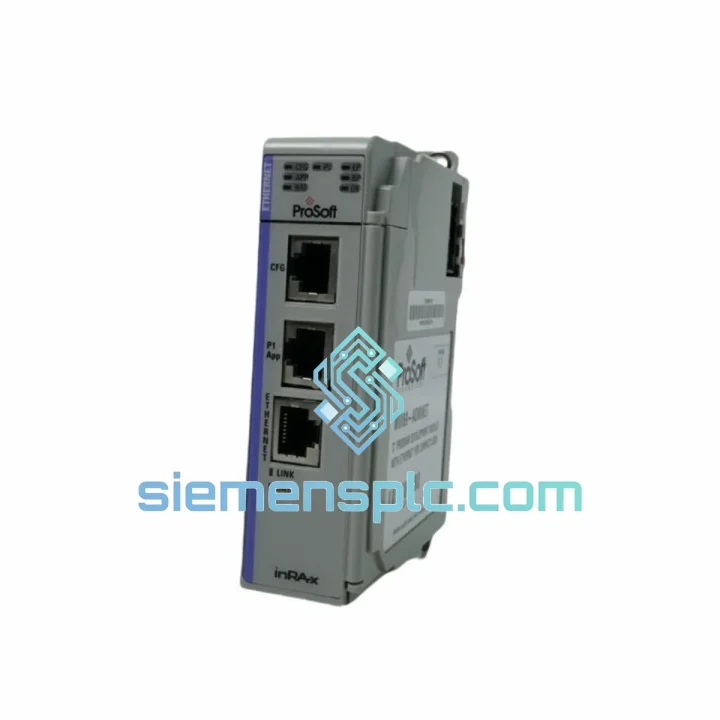
Request verified availability, condition, replacement risk review, packing options and courier lead time for MVI69-ADM.
Click Request Quote and the part number is inserted into the inquiry form automatically.
Core fields for model confirmation and RFQ routing. Detailed product narrative remains below.
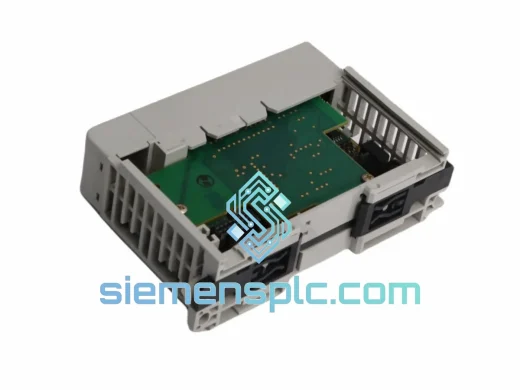
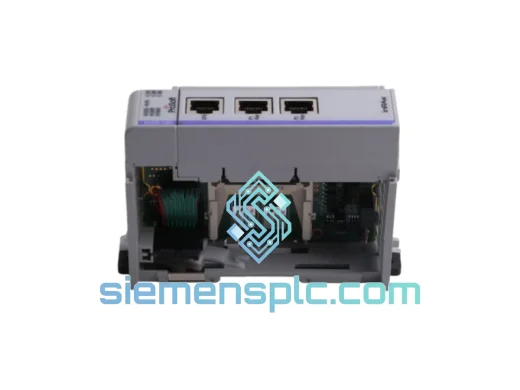
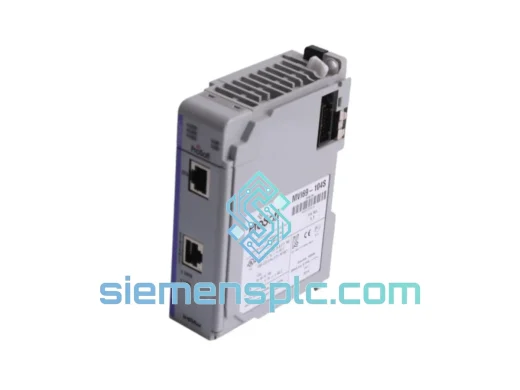
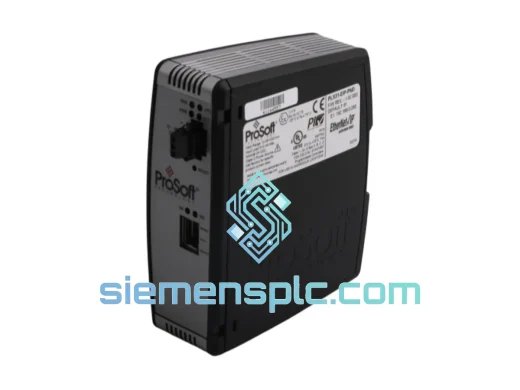
The MVI69-ADM occupies a single slot on the Allen-Bradley 1769 CompactLogix backplane and presents the control engineer with a fully programmable ANSI-C execution environment. Where standard protocol modules enforce fixed message structures, the MVI69-ADM exposes raw socket APIs, serial port registers, and a shared-memory exchange block — allowing the application developer to implement any serial or Ethernet protocol without external hardware. The module’s embedded processor handles all communication stack execution independently of the CompactLogix scan cycle, ensuring that custom protocol timing does not introduce jitter into the controller’s deterministic I/O loop.
In practice, this architecture resolves a recurring integration problem: legacy field devices, proprietary analytical instruments, and third-party subsystems that speak non-standard protocols cannot be connected to a CompactLogix system using off-the-shelf modules. The MVI69-ADM eliminates the need for an external protocol converter, a standalone gateway PC, or a custom embedded board — all three of which introduce additional failure modes, panel space requirements, and maintenance overhead. The protocol logic runs on-module, the data appears in the controller tag database via backplane transfer, and the field device sees a native communication peer.
Real-time Stock & RFQ: [email protected] | WhatsApp: +86 18359268345
| Parameter | Specification |
|---|---|
| Part Number | MVI69-ADM |
| Manufacturer | ProSoft Technology |
| Series | MVI69 (CompactLogix 1769 Platform) |
| Module Classification | ‘C’ Programmable Application Development Module with Ethernet |
| Backplane Interface | Allen-Bradley 1769 side-mount (CompactLogix L3x / L4x / L5x) |
| Backplane Data Exchange | 250 input words / 250 output words (shared memory block) |
| Ethernet Port | 1 × 10/100 Mbps, RJ-45, auto-negotiation, full/half duplex |
| Serial Ports | 2 × RS-232 / RS-422 / RS-485 (DB-9, software-selectable) |
| Programming Language | ANSI C via ProSoft ADM SDK (GCC cross-compiler, Eclipse IDE) |
| Ethernet Protocol Support | TCP/IP, UDP, raw socket — user-defined application layer |
| Serial Protocol Support | User-defined (Modbus RTU/ASCII, DNP3, IEC 60870, proprietary) |
| Supply Voltage | 5 VDC from 1769 backplane, 800 mA maximum |
| Operating Temperature | 0°C to +60°C |
| Storage Temperature | −40°C to +85°C |
| Relative Humidity | 5% to 95%, non-condensing |
| Module Weight | ~230 g |
| Form Factor | Standard 1769 single-slot |
| Firmware Update | Field-upgradeable via Ethernet port |
| Certifications | CE (EMC Directive 2014/30/EU), UL 508, RoHS 2011/65/EU, FCC Part 15 Class A |
| Warranty | 12 months from shipment date — covers manufacturing defects and DOA units |
| Stock Status | Ready to Ship — Xiamen, China |
The MVI69-ADM is built around an embedded 32-bit RISC processor running a real-time operating system (RTOS) kernel. This processor is entirely separate from the CompactLogix CPU — it does not share clock cycles, memory space, or interrupt vectors with the controller. The architectural consequence is that a blocking serial read, a TCP socket timeout, or a protocol retry loop in the C application has zero impact on the CompactLogix scan time. The two processors communicate exclusively through a dual-port shared memory region mapped to the 1769 backplane interface ASIC.
Backplane Interface ASIC: The 1769 backplane protocol is implemented in dedicated silicon on the module, not in firmware running on the application processor. This means backplane transfers execute at fixed, deterministic latency regardless of what the C application is doing. The CompactLogix controller reads the input word block and writes the output word block on every scan; the C application reads and writes the same memory region asynchronously. Semaphore-based arbitration prevents torn reads — a critical requirement when transferring multi-word floating-point values or status registers that must be read atomically.
EMC Design: The module PCB uses a multi-layer stackup with dedicated ground planes separating the digital logic layer from the I/O interface layer. RS-485 and RS-422 serial drivers include transient voltage suppression (TVS) diodes rated for ±15 kV ESD per IEC 61000-4-2, and common-mode chokes on the differential pairs suppress conducted emissions from cable runs exceeding 10 m. The Ethernet magnetics (integrated into the RJ-45 connector assembly) provide 1500 V isolation between the module circuitry and the network cable, protecting against ground potential differences in distributed panel installations.
Serial Port Architecture: Each of the two serial ports is driven by a dedicated UART controller with independent baud rate generators, supporting rates from 300 bps to 115,200 bps. The RS-232/422/485 mode is selected via software register — no hardware jumpers or DIP switches are required. RS-485 half-duplex mode includes automatic RTS/CTS direction control with programmable pre/post-transmission delay, which is essential for driving long cable runs to field devices with slow driver enable circuits.
Ethernet Stack: The TCP/IP stack runs as a task within the RTOS, with configurable socket buffer sizes and connection timeout parameters exposed through the ADM SDK API. The module supports up to 8 simultaneous TCP connections, allowing it to act as a multi-client Modbus TCP master, a TCP server for MES data collection, and a UDP broadcast listener concurrently — all within a single C application.
Every MVI69-ADM unit supplied through siemensplc.com is sourced from verified industrial distribution channels and processed through a structured pre-shipment quality workflow before dispatch from our Xiamen, China facility.
Incoming Inspection: Units are inspected for physical integrity, label authenticity, and original factory packaging upon receipt. Firmware version is confirmed against the current ProSoft release matrix. Any unit with evidence of repackaging, label tampering, or physical damage is quarantined and not offered for sale.
ESD-Safe Storage: Modules are stored in anti-static bags within foam-lined cartons in a climate-controlled warehouse. Temperature and humidity are logged continuously to ensure storage conditions remain within the manufacturer’s specified range.
Serialization Logging: Each unit’s serial number is recorded against the outbound order at the time of packing. This record supports post-sale warranty claims, batch traceability, and customs documentation.
12-Month Warranty: All units carry a 12-month warranty from the shipment date covering manufacturing defects and dead-on-arrival failures. Warranty claims are processed within 5 business days of receipt of the returned unit.
Global Express Logistics: Orders ship from Xiamen via DHL Express, FedEx International Priority, or UPS Worldwide Express. Typical transit times: Southeast Asia 1–2 days, Europe 3–5 days, North America 3–5 days, Middle East 3–4 days. Commercial invoice, packing list, and HS code 853710 documentation are prepared for all international shipments. Expedited customs clearance support is available for urgent plant shutdown requirements. Track-and-trace numbers are issued within 24 hours of dispatch.
Email: [email protected]
WhatsApp: +86 18359268345
Web: siemensplc.com
Location: Xiamen, China
© 2026 siemensplc.com. All rights reserved.
We check the full part number, brand, series and visible nameplate information before quotation.
Sales confirms stock path, condition option, quantity and realistic lead time for export dispatch.
DHL, FedEx, UPS or buyer courier arrangements can be reviewed with packing requirements.
Similar brand or category products for fast comparison and multi-item RFQ lists.