ProSoft Technology
RFQ Ready
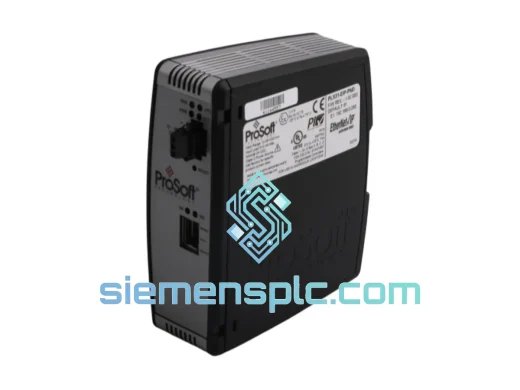
ProSoft PLX31-EIP-PND Protocol Gateway – PLX31 Series
Origin US
Protocol Gateway
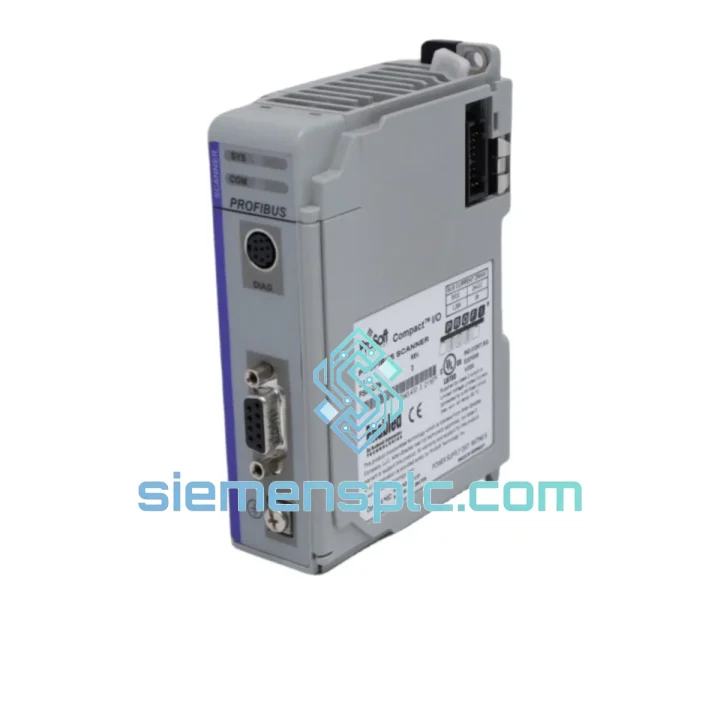
Request verified availability, condition, replacement risk review, packing options and courier lead time for PS69-DPM.
Click Request Quote and the part number is inserted into the inquiry form automatically.
Core fields for model confirmation and RFQ routing. Detailed product narrative remains below.
The PS69-DPM occupies a well-defined position in distributed control architectures: it functions as the sole PROFIBUS DPV1 master on a segment, issuing cyclic data exchange (DPV0) to up to 125 slave nodes while simultaneously executing acyclic read/write services (DPV1 Class 1 and Class 2) for parameterization and diagnostic retrieval. Unlike passive protocol converters, the PS69-DPM maintains its own internal data table that the host PLC reads and writes via the ProLinx backplane interface, decoupling the PROFIBUS scan cycle from the host scan cycle. This architecture prevents PROFIBUS bus stalls from propagating latency into the host controller’s deterministic loop, a critical requirement in process applications where PID execution must remain unaffected by field-device diagnostic traffic.
The module’s dual-port memory model allocates separate input and output image areas for each configured slave, mapped contiguously in the ProLinx internal register file. The host PLC accesses these registers through the backplane at rates independent of the PROFIBUS token rotation time, allowing engineers to tune each domain independently. On segments running at 12 Mbps with 32 active slaves, measured token rotation times remain below 2 ms, supporting fast-response applications such as servo drive coordination and high-speed conveyor synchronization.
Real-time Stock & RFQ: [email protected] | WhatsApp: +86 18359268345
| Parameter | Specification |
|---|---|
| Part Number | PS69-DPM |
| Brand | ProSoft Technology |
| Series | ProLinx |
| Protocol Role | PROFIBUS DP / DPV1 Class 1 & Class 2 Master |
| Max Slave Nodes | 125 per segment |
| Supported Baud Rates | 9.6 kbps, 19.2 kbps, 45.45 kbps, 93.75 kbps, 187.5 kbps, 500 kbps, 1.5 Mbps, 3 Mbps, 6 Mbps, 12 Mbps (auto-detect) |
| Physical Interface | DB9 female, RS-485 differential, 2-wire |
| Host Interface | ProLinx backplane (internal dual-port RAM) |
| Input Data Area | Up to 244 bytes per slave (DPV0 cyclic) |
| Output Data Area | Up to 244 bytes per slave (DPV0 cyclic) |
| DPV1 Acyclic Data | Class 1 (MS1) and Class 2 (MS2) services supported |
| Power Consumption | Via ProLinx backplane; typically 500 mA at 5 VDC |
| Operating Temperature | 0 °C to +60 °C |
| Storage Temperature | -40 °C to +85 °C |
| Relative Humidity | 5 % to 95 % non-condensing |
| EMC Compliance | CE (EMC Directive 2014/30/EU), FCC Part 15 Class A |
| Safety Certification | UL Listed (refer to current ProSoft datasheet for file number) |
| RoHS Status | Compliant |
| Module Weight | Approx. 150 g |
| Warranty | 12 months from date of shipment (siemensplc.com standard) |
Optical Isolation on the PROFIBUS Physical Layer: The RS-485 transceiver stage of the PS69-DPM incorporates galvanic isolation between the field bus connector and the module’s internal logic ground. This isolation barrier, rated at a minimum of 500 V DC, prevents ground-loop currents—common in large industrial plants where cable runs exceed 100 m across multiple earthing points—from corrupting the differential signal pair. In environments with variable-frequency drives generating common-mode noise in the 150 kHz–30 MHz range, this isolation stage attenuates coupled interference before it reaches the PROFIBUS ASIC, maintaining signal integrity at 12 Mbps without requiring additional external repeaters on short segments.
PROFIBUS ASIC and Token Management: The module uses a dedicated PROFIBUS controller ASIC rather than a software-emulated stack running on a general-purpose MCU. The ASIC handles token passing, frame CRC generation and verification, and GAP maintenance autonomously in hardware, offloading these deterministic tasks from the application processor. This separation means that even when the host PLC is executing a complex ladder scan or the ProLinx firmware is processing a DPV1 acyclic request, the PROFIBUS token is never dropped. The ASIC’s internal watchdog independently monitors bus activity and re-enters the ring within the configured Ttr (target token rotation time) if a token loss event occurs.
Dual-Port RAM Architecture: The internal data exchange between the PROFIBUS ASIC and the host-side backplane interface is mediated through a dual-port static RAM block. Each port has independent address and data buses with hardware arbitration logic that resolves simultaneous access conflicts in a single clock cycle, eliminating the need for software semaphores. This design guarantees that the host PLC always reads a coherent snapshot of the PROFIBUS input image, even if a slave update arrives mid-read cycle. The arbitration latency is fixed at one bus clock period (typically 20 ns at 50 MHz), making the data exchange latency deterministic and bounded.
EMC Design Practices: The PCB layout follows IEC 61000-4 series test requirements. High-frequency signal traces are length-matched and routed with continuous ground planes beneath them to minimize radiated emissions. Bypass capacitors are placed within 1 mm of each IC power pin to suppress switching transients. The module’s metal housing provides additional shielding, and the DB9 connector shell is bonded to chassis ground through a low-impedance path, ensuring the cable shield drain wire terminates correctly per PROFIBUS International installation guidelines.
Every PS69-DPM unit supplied through siemensplc.com is sourced from verified distribution channels with full traceability to ProSoft Technology’s manufacturing records. Physical inspection covers label integrity, firmware revision markings, connector pin condition, and housing authenticity. Functional verification includes power-on self-test confirmation and PROFIBUS communication handshake validation where test fixtures are available.
Shipments originate from our warehouse in Xiamen, China, a major logistics hub with direct access to DHL Express, FedEx International Priority, and UPS Worldwide services. Standard in-stock orders are dispatched within 1–3 business days. Export documentation—commercial invoice, packing list, and certificate of origin—is prepared for each shipment to facilitate customs clearance in destination countries. All units are packed in anti-static ESD bags with foam-lined cartons to withstand the mechanical stress of international air freight. A 12-month warranty covers functional defects under normal operating conditions from the date of shipment.
Email: [email protected]
WhatsApp: +86 18359268345
Web: siemensplc.com
Location: Xiamen, China
© 2026 siemensplc.com. All rights reserved.
We check the full part number, brand, series and visible nameplate information before quotation.
Sales confirms stock path, condition option, quantity and realistic lead time for export dispatch.
DHL, FedEx, UPS or buyer courier arrangements can be reviewed with packing requirements.
Similar brand or category products for fast comparison and multi-item RFQ lists.