ProSoft Technology
RFQ Ready
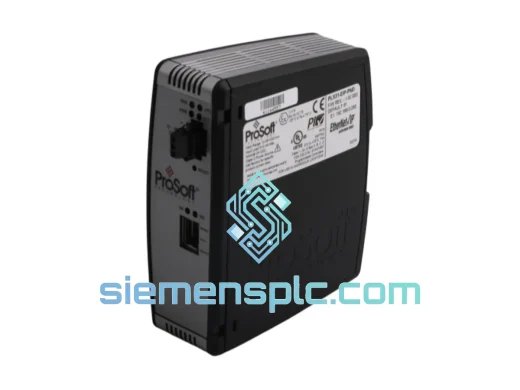
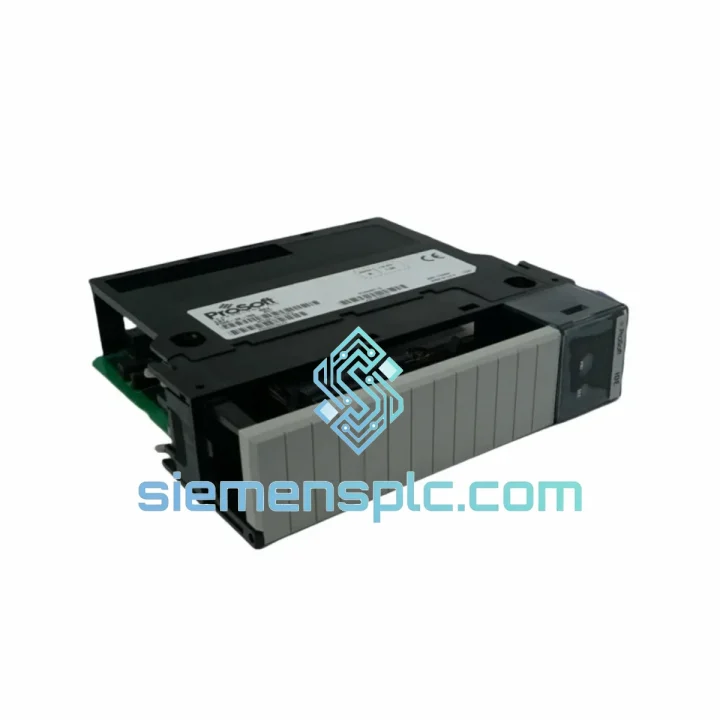
ProSoft PLX31-EIP-PND Protocol Gateway – PLX31 Series
Origin US
Protocol Gateway
Request verified availability, condition, replacement risk review, packing options and courier lead time for PC56-2K-IDE.
Click Request Quote and the part number is inserted into the inquiry form automatically.
Core fields for model confirmation and RFQ routing. Detailed product narrative remains below.
The PC56-2K-IDE is a single-slot module engineered to install directly into any Allen-Bradley ControlLogix 1756 chassis — 4-slot through 17-slot configurations — and provide a self-contained x86 computing environment that communicates with the resident controller through the native 1756 backplane. The fundamental design premise is the elimination of the Ethernet segment that conventionally separates an industrial PC from the PLC it serves. By sharing the chassis backplane with the controller, I/O modules, and communication bridges, the PC56-2K-IDE exchanges tag data at a latency bounded by the controller’s configured periodic task interval rather than by TCP/IP stack timing, OS scheduling jitter, or switch port congestion.
The module’s onboard 2K tag-buffer functions as a shared-memory window between the x86 processor subsystem and the ControlLogix tag database. During each backplane arbitration cycle, the controller’s scheduler services the module’s read and write requests in the same deterministic sequence it applies to I/O modules. For a 10 ms periodic task, worst-case tag-update latency is one scan period — a figure that Ethernet-based OPC-UA polling cannot reliably match in plant networks carrying VFD traffic, PROFINET broadcasts, or high-density EtherNet/IP implicit messaging.
The IDE storage interface accepts 2.5-inch ATA hard drives or passive IDE-to-CompactFlash adapters. In environments with sustained mechanical vibration — press lines, compressor rooms, mobile platforms — integrators routinely substitute a CompactFlash card rated to 500 G shock (JEDEC JESD22-B110) for the rotating-media drive. The ATA-33 bus (33 MB/s burst) is adequate for the sequential I/O patterns of historian logging, recipe file management, and SPC data capture that represent the module’s primary storage workloads. The storage media is field-replaceable without removing the module from the chassis, which simplifies media lifecycle management in long-running installations.
Thermal management relies on the chassis fan tray’s forced-air flow. The processor operates within its junction temperature envelope at ambient temperatures up to 60 °C when chassis airflow meets the minimum CFM specification in the 1756 chassis installation manual. No supplemental heat sink or external cooling circuit is required under standard operating conditions. The module draws all operating power from the 1756 backplane power rail, eliminating the separate 24 VDC supply, circuit breaker, and wiring run that a panel-mounted IPC would require.
Every unit dispatched from our Xiamen warehouse is a genuine ProSoft Technology product sourced through verified supply channels. Pre-shipment inspection covers label authenticity, hardware revision marking, connector-pin integrity, and chassis-slot keying alignment. Units are stored in anti-static bags inside humidity-controlled racking at 40–60 % RH to prevent moisture-related board degradation during storage periods.
Real-time Stock & RFQ: [email protected] | WhatsApp: +86 18359268345
| Parameter | Specification |
|---|---|
| Part Number / SKU | PC56-2K-IDE |
| Manufacturer | ProSoft Technology |
| Product Series | PC56 ControlLogix In-Rack PC |
| Chassis Compatibility | Allen-Bradley ControlLogix 1756 — 4, 7, 10, 13, 17 slot |
| Form Factor | Single-slot 1756 ControlLogix module |
| Storage Interface | IDE (ATA-33) — 2.5″ HDD or IDE-to-CompactFlash adapter |
| Tag Buffer (Backplane) | 2K allocation for backplane data exchange |
| Backplane Protocol | ControlLogix native 1756 backplane |
| Operating Temperature | 0 °C to +60 °C (IEC 60068-2-1 / IEC 60068-2-2) |
| Storage Temperature | −40 °C to +85 °C |
| Relative Humidity | 5 % to 95 % non-condensing |
| Power Source | 1756 chassis backplane power rail |
| Vibration Resistance | IEC 60068-2-6 compliant |
| Shock Resistance | IEC 60068-2-27 compliant |
| EMC Compliance | CE Mark (EN 61000-4 series); UL Listed |
| RoHS Status | Compliant |
| Country of Origin | United States |
| Module Weight | Approx. 750 g |
| Warranty | 12 months from date of shipment |
Backplane Arbitration and Tag-Buffer Mechanics. The 1756 backplane operates as a time-division multiplexed bus. The chassis controller acts as bus master, granting each installed module a service window during each scan cycle. The PC56-2K-IDE’s 2K tag buffer is mapped into the controller’s I/O image table, allowing the x86 application layer to read and write controller tags through a memory-mapped interface rather than through a network socket. This architecture removes the TCP/IP stack from the data path entirely. The practical consequence is that historian clients or SPC agents running on the module can sample controller variables at the controller’s task rate — typically 2 ms to 250 ms — without the 20–200 ms jitter introduced by Ethernet polling in congested plant networks.
IDE Storage Subsystem and Media Selection Logic. The IDE bus on the PC56-2K-IDE operates at ATA-33 transfer rates. For historian logging at 100 ms sample intervals across 500 tags (each tag record approximately 20 bytes), the sustained write throughput requirement is approximately 100 KB/s — well within the ATA-33 envelope. Integrators selecting CompactFlash media should verify that the card’s write endurance rating (typically expressed in total bytes written, TBW) is compatible with the expected logging duty cycle over the intended service life. A card rated at 100 TBW logging at 100 KB/s continuous would reach its endurance limit in approximately 31.7 years, making endurance a non-issue for most process applications.
EMC Design and Chassis Ground Plane. Installed inside a grounded 1756 chassis, the PC56-2K-IDE benefits from the chassis’s multi-point ground plane, which provides a low-impedance return path for high-frequency common-mode currents induced by adjacent VFDs, contactors, and switching power supplies. The module’s PCB layout separates digital ground planes from analog signal traces using guard rings, reducing susceptibility to conducted emissions in the 150 kHz–30 MHz band (EN 55011 Class A). The chassis backplane connector provides both signal and chassis-ground continuity, ensuring the module’s reference potential tracks the chassis ground without requiring a separate bonding conductor.
Thermal Dissipation Profile. The PC56-2K-IDE’s processor operates at a junction temperature below its rated maximum when chassis airflow meets the 1756 chassis minimum CFM specification. In high-ambient installations (45–60 °C), integrators should verify that the chassis fan tray is functioning and that module slots adjacent to the PC56-2K-IDE are not occupied by high-dissipation modules that could create localized hot spots. ProSoft Technology’s published thermal derating curves for the PC56 series provide guidance for worst-case ambient scenarios.
All PC56-2K-IDE units shipped from our Xiamen, China facility are genuine ProSoft Technology products sourced through verified supply channels. We do not handle refurbished, remarked, or grey-market hardware. Pre-shipment inspection covers label authenticity, hardware revision marking, connector-pin integrity, and chassis-slot keying alignment. Units are stored in anti-static bags inside humidity-controlled racking maintained at 40–60 % RH to prevent moisture-related board degradation during storage periods.
Export documentation is prepared in full compliance with Chinese customs regulations and destination-country import requirements, including commercial invoice, packing list, and certificate of origin. For shipments to regulated markets, ECCN classification and EAR compliance documentation are available on request.
Logistics partners: DHL Express, FedEx International Priority, UPS Worldwide Express. In-stock units are dispatched within 1–3 business days of order confirmation. Tracking numbers are issued at the time of dispatch. Bulk orders (5+ units) qualify for consolidated freight options with reduced per-unit shipping cost. All shipments carry a 12-month warranty from the date of dispatch, covering manufacturing defects and hardware failures under normal operating conditions.
Email: [email protected]
WhatsApp: +86 18359268345
Web: siemensplc.com
Location: Xiamen, China
© 2026 siemensplc.com. All rights reserved.
We check the full part number, brand, series and visible nameplate information before quotation.
Sales confirms stock path, condition option, quantity and realistic lead time for export dispatch.
DHL, FedEx, UPS or buyer courier arrangements can be reviewed with packing requirements.
Similar brand or category products for fast comparison and multi-item RFQ lists.